Team Principals James Vowles and Andrea Stella commented on the Mercedes power unit performance following the 2026 F1 Australian GP.
In 2026, Mercedes-AMG High Performance Powertrains are being utilised by four teams: Mercedes, McLaren, Williams, and Alpine. While many expected to see the Mercedes-powered teams have an advantage over the rest of the field, only the works team seemed to have a significant advantage. Mercedes drivers George Russell and Kimi Antonelli finished P1 and P2 in the race, with Ferrari’s Charles Leclerc finishing over 15 seconds behind Russell.
As Mercedes customers, Vowles and Stella spoke about their first race with the new power unit following the F1 Australian GP.
Vowles: Williams are “three tenths off” Mercedes’ pace on the power unit side in F1 2026
Williams struggled during their first outing of the season. Both drivers missed out on points, with Alex Albon finishing P12 and Carlos Sainz finishing P15. Both cars finished a lap down to Mercedes.
When asked about the deficit in performance between Williams and Mercedes in a print media session, Vowles explained that the car’s weight takes majority of the blame. However, Mercedes appeared to unlock potential with their power unit that the customer teams have yet to uncover.
“The exact amounts, it’s hard to know because you’re breaking down in the background at the moment. What I would say though is you’re absolutely right to highlight that there’s definitely mass, and a large amount of mass.
“What Mercedes are doing on the power unit is something that caught us off guard. It took qualifying for us to really see just how off the pace we are. In that regard, that’s probably three tenths, so I’ll give that ballpark.”
Vowles continued, highlighting the importance of having two running cars to collect data — Sainz missed FP3 and Qualifying due to a power unit issue.
“Then I think when you only have one car running, which is all we had yesterday, you need to have both of them in order to really start bouncing off each other and learning how to deploy the energy. And that would be a little bit of a deficit we had yesterday as well.
“But I think really the majority number, the really big number is weight.”
Vowles: Mercedes is “fair” to F1 customer teams in 2026

Vowles expressed confidence that Williams have the potential to unlock the same pace advantage as Mercedes. Right now, they are unsure how to do so.
“I’m confident Mercedes have provided us — because they’re very good to this — I’m confident what they have provided us is the ability to do what they are doing. I don’t know how to do that right now as I spoke to you today, and that’s what we’re working through in the background right now. What have we missed, and how do we get there faster?
“It is not an open door as you would imagine, because that’s where the performance is found. So it is down to us to try and work around it. But I would say we have to acknowledge we, as Williams, do not have the sophistication that they have in the level of technologies, and definitely that’s on us. I would say the converse is that there’s some inherent knowledge they have, which we don’t, and that’s down to us to try and figure out.“
When asked if he’d expected more knowledge to filter down from Mercedes about deployment, Vowles responded, “I would have expected it to, to a certain extent, yes. That’s why I said I was caught out yesterday [during Qualifying].”
Unlike 2014, where Mercedes did not have to provide customer teams with the same specification of power unit as the works team, Vowles emphasised that Mercedes is being “incredibly fair” in F1 2026.
“No, and I still maintain this. Mercedes are incredibly fair to customer teams. I state this already, we have everything that they have access to.They have just been cleverer than we have, and it’s our job to get on top of it. I’m just a little bit shocked by how much more clever.”
Stella and Vowles aim to extract more from Mercedes’ 2026 F1 power unit
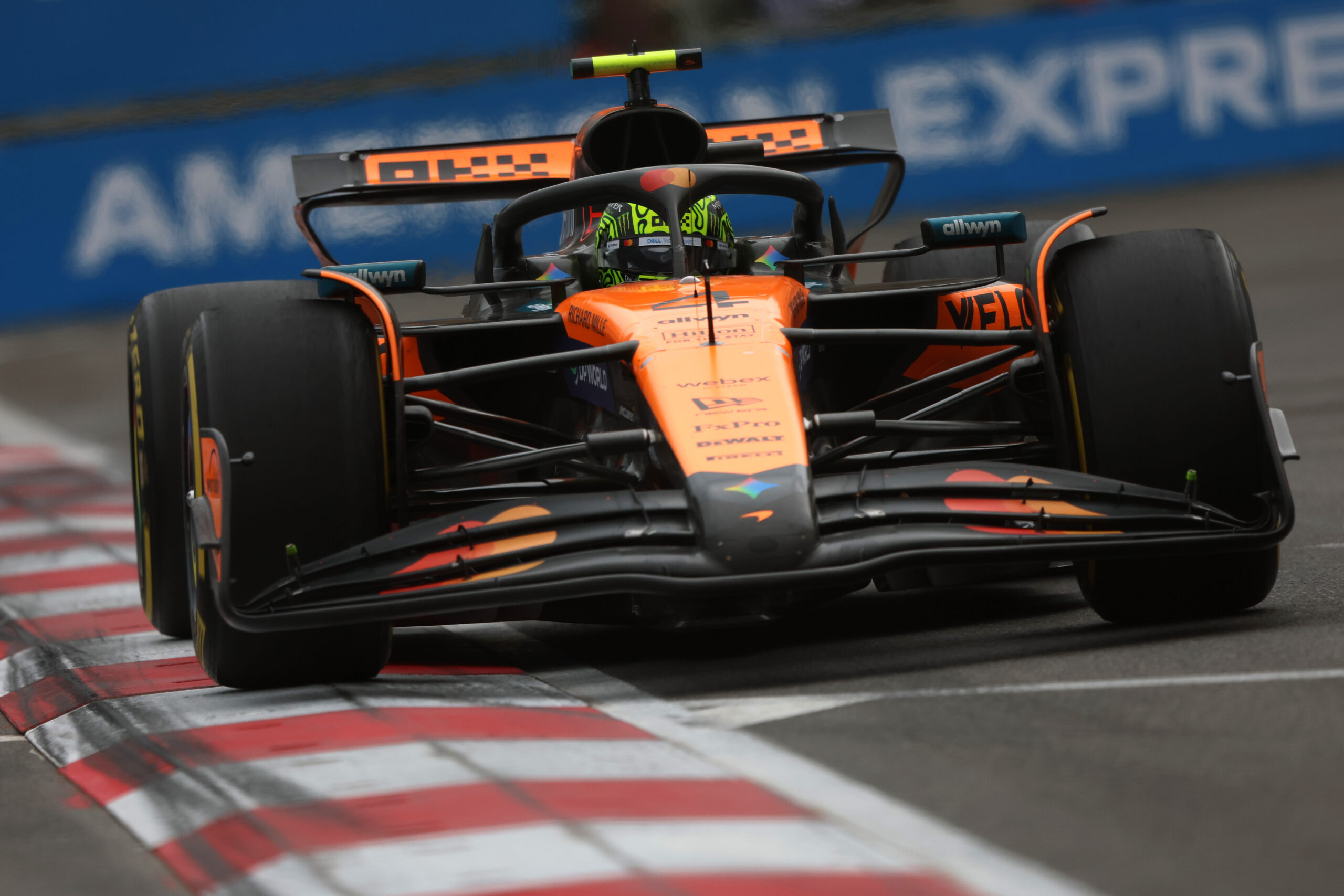
Similar to Williams, McLaren also had a difficult start to the season. Oscar Piastri crashed during the reconnaissance laps, and was unable to take part in his home race. Reigning World Champion Lando Norris fell considerably behind the top four drivers, but held off Max Verstappen for P5. Ultimately, Norris finished the race 51 seconds behind Russell.
When asked if he felt “caught off guard” like Vowles by Mercedes’ pace during the F1 season-opener, Stella responded in a print media session, “I don’t know about Williams.
“I can say that we spent a lot of time looking at several overlays, even with, not only with HPP [Mercedes-AMG High Performance Powertrains] teams, in particular Mercedes, but also to other competitors.
“And definitely, like I said before, the result of this analysis seemed to direct to the fact that we have work to do as a team in collaboration with our HPP engineers. We have work to do to exploit the potential of the power unit, which, once I see the potential that HPP is extracting, looks like there’s more that is available.
“Now, it’s not obvious how you do that. For us, we are in a journey of knowledge. Probably, or maybe I should say certainly, a journey that is earlier than the works team.“
Stella continued, highlighting that the relationship between the power unit team and Mercedes is different than customers like McLaren.
He highlighted that Mercedes’ performance at the 2026 F1 Australian GP showed that McLaren has pace they can unlock. However, the Italian also discussed his hopes for a closer collaboration with HPP.
“The works team and HPP will have worked together for a long time. So, they will have collaborated, talked about how to use the power unit. That’s fair enough.
“But we’ll definitely intensify the collaboration with HPP because our understanding is that there is some low-hanging fruit that we should be able to cash in. When it comes to, is this all that is available and that we are under-exploiting, I am not sure.
“I think we will need some more analysis to understand whether this is only about parameters that we can control or driver’s input that we can control. Or there are some other factors, more systemic, that not necessarily a customer team can control.“
Stella: McLaren are “on the back foot”
The McLaren Team Principal did not mince his words when discussing the team’s struggles. He explained that the team is having trouble predicting the car’s behaviour compared to previous seasons. Instead of using the simulators to model optimal car performance, the team is working backwards, relying on track data and real-time running.
He also added about the talks taking place with HPP to help on the power unit side.
“The discussion with HPP about having more information has been going on for weeks. Because even in testing, we were pretty much going on track, run the car, look at the data, ‘Oh, that’s what we have.’ Good, now we react to what we have. That’s not how you work in Formula 1.
“Formula 1, what happens on track, you simulate, you know what is happening, you know what you are programming, you know how the car is going to behave. So you also have your plans as to how you evolve it that you have figured out before because you know what you are expecting from the car.
“So, I have to say, in the three years, well, this was since 2003, but let me say, since we are a customer team, this is the first time that we feel we are on the back foot even when it comes to the ability to predict how the car will behave and the ability to anticipate how we can improve the car.“
Battery deployment in F1 2026 is a priority
Stella explained that battery deployment is a significant tool to understand in order to obtain optimal car performance. Since previous seasons relied less heavily on these tools, it is imperative for teams to take a new approach to development this season.
“There is one more factor, though. And this is perhaps, for you, useful to understand what kind of Formula 1 we are experiencing. Everything is very sensitive. Why the tools are important?
“Because you may change the amount of lift and cost before corner 1 and this affects the deployment through the entire lap, which is also what puts off the drivers when they have to optimise the driving, the battery, because this is now a fundamental way of driving a Formula 1 now — You are driving the battery. So, when everything is so sensitive, the reliance on the tools is even more important.
“Like with last year, where everything was calmer in terms of power unit behaviour and electrical energy deployment, we had the tools, but we weren’t so reliant on the tools. But now it’s pretty much all about the tools because changing a detail in one place affects something much bigger in a very faraway place of the circuit, which is just difficult to predict.”