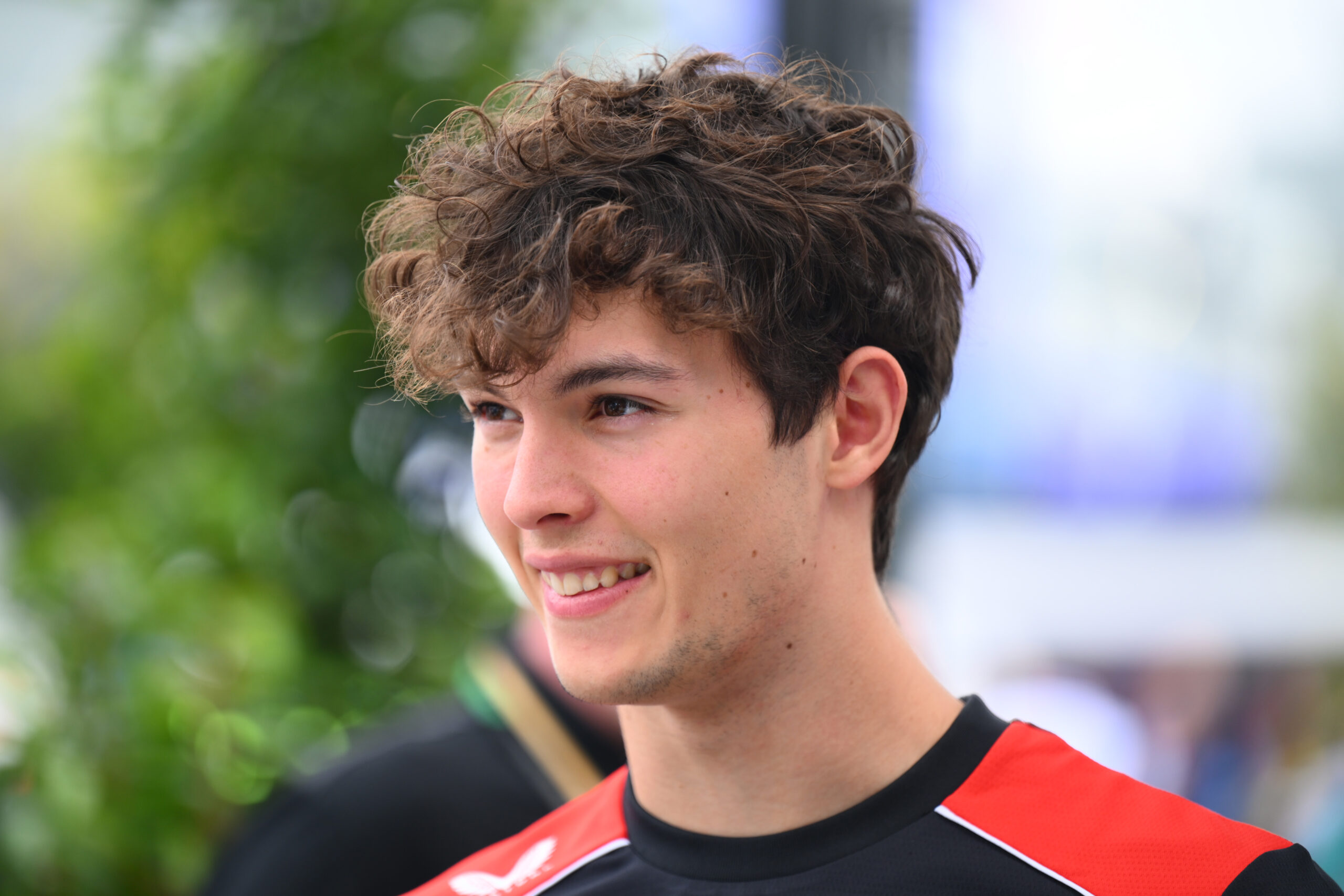
Despite finishing P7 at the 2026 F1 Australian GP, Ollie Bearman was highly critical of the “ridiculous” new boost system and the racing produced by the new generation of cars.
The Haas driver was in and around the top 10 all weekend, with practice results ranging from P14 to P10, before ultimately qualifying in P12. At lights out at the Albert Park Circuit, Bearman dropped to P14 early but climbed to P7 by Lap 13 during his rival’s first pit stops under a VSC.
Running on a one-stop strategy, the Brit made his way into the pit lane on Lap 19, switching to hard tyres. However, soon after, rookie Arvid Lindblad held off Bearman for several laps, defending well as the Haas driver stayed less than a second behind.
Finally, after a close battle, the Haas man got past the Brit on Lap 40 into turn 1 and defended it in turns 3 and 9, bolting away to claim six points.
Bearman on his tough battle with Lindblad in the 2026 F1 Australian GP
Speaking after the 2026 F1 Australian GP, Bearman reflected on his struggle to overtake Lindblad, explaining that the new boost mode offered little advantage to overtake despite his strong pace.
“Well, it was not a nice battle. I was stuck there for like 20, 30 laps.
“It’s tough, I mean, what you gain in the boost mode or the overtake mode, sorry, on this track is nothing. It’s one tenth, and of course you lose a lot more than that in dirty air, so it’s very frustrating at that stage. You know, I had a good pace at that stage.
“Arvid was defending very well and using his car performance very well and hats off to him, but it was very frustrating because I just, I mean, they have a very strong power unit as well, which helps them, but I was just stuck there, one second, one second, one second, and at least with the DRS last year, you could gain. You know, the DRS delta last year on this track was six tenths, and the overtaking delta was nine tenths, so in 10, 15 laps, if you were a bit faster, you had the chance to overtake.
“Now it’s one tenth with the same overtaking delta, it took me 30 laps almost to get faster, or 20 laps, you know, and I had a delta that would have taken me 3 laps probably to overtake him last year, so that sucked a little bit.”
He continued: “But at the start, I was having some good moves, like on lap 1 and lap 2. I don’t really know what’s happening, I was just like, I guess I’ll try this boost button, see how it works, and just flying past everyone on the straight, so it was quite funny.”
From video games to Formula E
When asked whether the 2026 Australian GP felt like a video game, Bearman further reflected on the challenges of the new F1 cars as he said:
“Yeah, a little bit, a little bit, like when, you know, it was like I was in F1 and everyone else was in F2, but then of course, then you have to recharge the battery again, because otherwise you’re dead into the next straight, so it’s a lot of stuff to think about, which is complicated, but, you know, the fact that I finished P7 means that I’m happy, even if the car has not been the most fun to drive this weekend,” he said, finding a positive among the frustration.
Other than Bearman, reigning F1 World Champion Lando Norris also highlighted the boost mode in a negative light, describing it as “very artificial” after the 2026 Australian GP.
“It’s a bit ridiculous, to be honest, to have that much delta in a button, and to lose that much on the next straight,” Bearman said, supporting Norris’s comment. “It’s also very non-linear, so what you gain on the straight where you use the boost is a quarter as much as what you lose on the next straight, so unless you basically complete the move at the start of the straight, as in you exit the corner, you complete the move, and then you harvest, harvest, harvest, the next straight they’re going to get you back, and that’s not racing, that’s Formula E.”