Heading into the Chinese GP this weekend, Charles Leclerc has opened up about the impact of multiple set-up changes on his performance in Melbourne, whether the SF-26 suits Lewis Hamilton more, whether Ferrari can challenge Mercedes in Shanghai, and how difficult it is to process the new regulations and effectively deal with the energy requirements of the 2026 F1 cars.
After experimenting with set-up directions in free practice and experiencing deployment issues in Q2, Leclerc only managed to set the fourth-fastest time in the final segment of qualifying at Albert Park.
A chaotic start to the race saw Leclerc leap forward from P4 on the grid and seize the lead from George Russell before the two continued to swap positions over the next few laps.
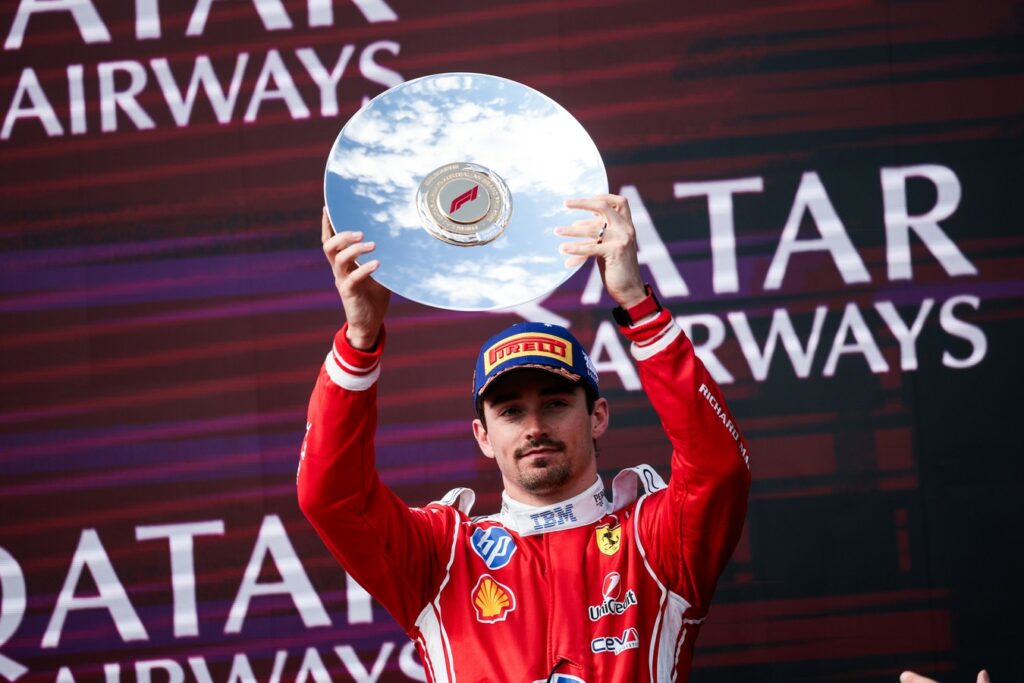
While Ferrari opted to not box their drivers under the first VSC, they found the pit entry closed when the FIA deployed it for the second time on Lap 18. Ultimately, Leclerc had no answer for Mercedes’s pace on the hard tyres, and he took the chequered flag in third place, keeping Hamilton behind in P4 by only 0.625 seconds.
Leclerc on what compromised his performance in Australia
Speaking in his print media session ahead of the 2026 F1 Chinese GP, Charles Leclerc addressed his post-race comment from Melbourne on how Hamilton being more content with the SF-26 was linked to his contributions to the car’s design.
Asked if Ferrari’s new F1 challenger catered more to Hamilton’s needs, the Monégasque pushed back at the suggestion and explained that his decision to experiment with the SF-26’s set-up several times during the practice sessions prevented him from extracting the car’s full potential and negatively impacted his performance last Sunday.
“No, not at all. I mean, the first race was only down to me and that was a comment that was purely based on me not looking around whatsoever.
“It’s just that I wasn’t happy with the way I managed the weekend. I went one way with the setup in FP1, then the other way in FP2 to extreme. Then FP3, I tried to find a middle ground but the track had evolved.
“So anyway, I was always on the back foot set-up-wise, and I wasn’t happy with the way I managed my weekend. So, there was performance on the table, on me.”
Leclerc on whether the SF-26 favours Hamilton more ahead of 2026 Chinese GP
Emphasising how complicated the technical aspects have become under the brand-new regulations in 2026, Charles Leclerc clarified in the lead-up to the Chinese GP that Ferrari primarily determine the development path of their F1 car. Nonetheless, he was quick to add that the team takes drivers’ feedback into account and that they have enough leeway to set the car up according to their own preferences.
Stating that he is satisfied with Ferrari’s vision for the car at present, Leclerc also proclaimed that the SF-26 favours neither driver on the track when it comes to its inherent design philosophy.
“Again, I think honestly Formula 1 now is at a point where technology is, I think, a lot more advanced than maybe people expect from the outside sometimes.
“And yes, of course, we have a say on what are the latest details on the car. But the overall car is based mostly on the team direction.
“I’m happy with where we are with the car and I don’t think it helps Lewis [Hamilton] more than me or vice versa. I think we have enough freedom with the set-up of the car to make sure that everything is to our liking.”
Leclerc on whether Ferrari can challenge Mercedes at the 2026 Chinese GP
Although the Italian outfit looked rather quick in the corners in Australia, Mercedes had the edge over them owing to their superior energy deployment on the straights.
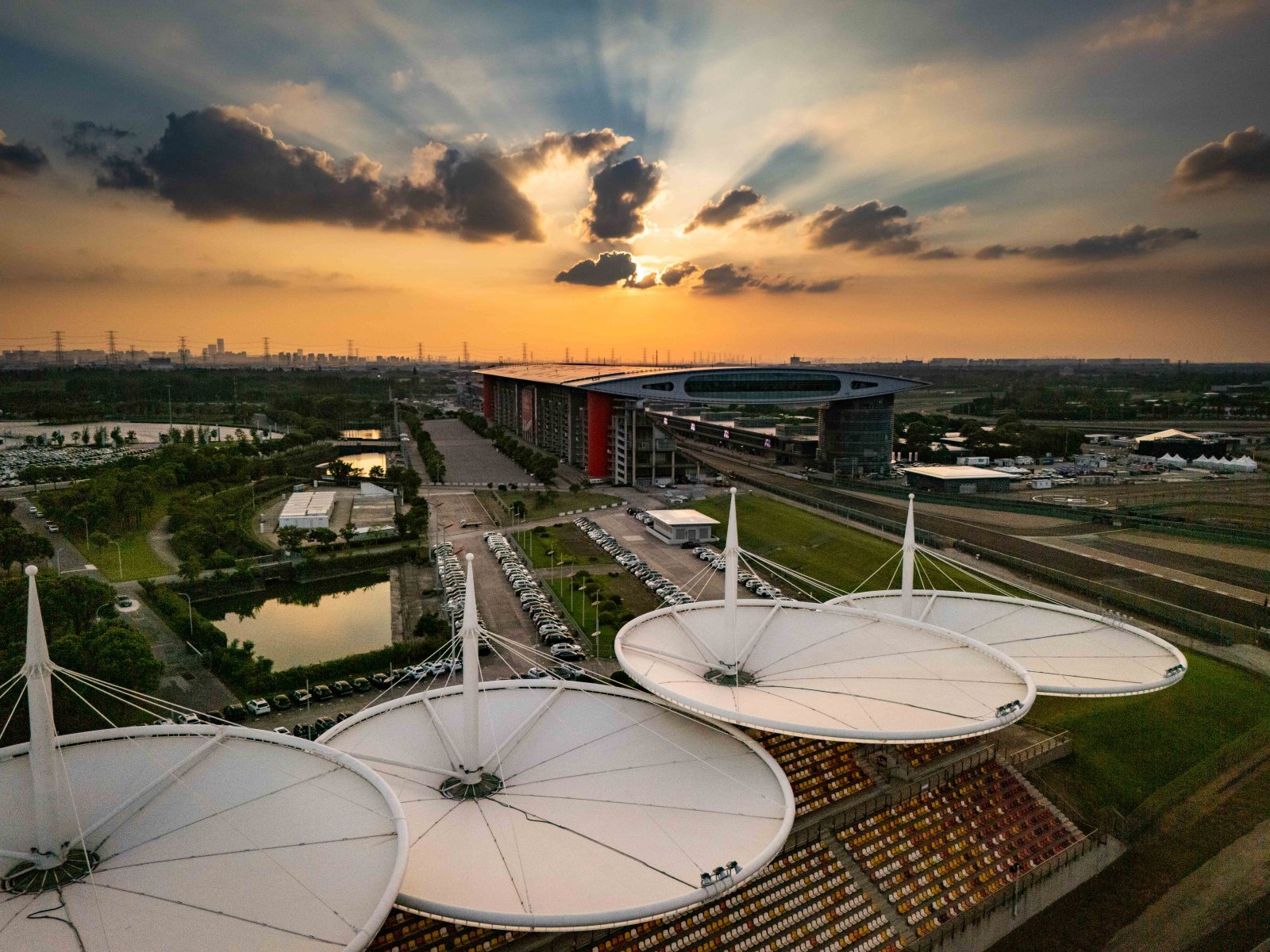
With regard to the Shanghai International Circuit boasting long straights and even longer corners and whether they can take the fight to Mercedes, Charles Leclerc confessed that he doesn’t expect Ferrari to come out on top in qualifying for the 2026 Chinese GP.
At the same time, acknowledging how they were unable to fully optimise their car in Melbourne, the 28-year-old reckoned that the gaps would shrink a bit in China, particularly in the race.
“I think so, but I think the picture will stay relatively the same.
“In qualifying, I don’t expect us to be at their level just yet. For sure, we’ll be closer because in Melbourne we did many things that we hadn’t optimised and there was quite a bit of lap time in that. But we are definitely not on their level. In the race, I think it will be closer.”
Knowledge of the new Mercedes F1 car not enough to predict how they will fare
Highlighting that their understanding of the W17 is still limited at this stage of the F1 season, Charles Leclerc argued that it’s quite challenging to make an informed assessment of how far ahead Mercedes will be at the 2026 Chinese GP. Additionally, he noted that it’s harder in general to determine how big of an advantage a specific team holds, unlike last year.
Referring to the performance of the Mercedes teammates over a single lap at Albert Park, Leclerc surmised that their respective driving styles contributed to the gap of 2.93 tenths that separated them. Furthermore, he admitted that he doesn’t have the necessary data yet to predict how a particular team will fare from one race weekend to the next.
“Then to have a good prediction at this time of the year with a relatively small amount of knowledge on their car, etc., we start to understand what effect is caused by what, on what we see on the race traces of Mercedes in qualifying.
“When you look also in between cars, it’s not like last year where you could very easily understand this car has a big advantage.
“You look between George [Russell] and Kimi [Antonelli] in qualifying and there is like three tenths in between the cars. There’s a lot in the driving style.
“There are many, many more things to analyse and it takes time. So, I don’t think we are confident yet to understand where it goes from track to track.”
How tricky it is to process new information and optimise energy management in 2026

With the 2026 F1 engines boasting a near 50-50 split between electric and internal combustion power, the degree of energy management required has a substantial impact on driving styles over a single lap and race distance.
In terms of how difficult it is to process the 2026 regulations and configure the new settings with utmost efficiency, Charles Leclerc responded in a print media session held before the Chinese GP, “It’s very tricky.”
Conceding that his fixation with the one big issue of set-up in Melbourne caused him to ignore other crucial yet smaller details, the eight-time race winner lamented how his misjudgement left him more or less blind going into qualifying, as he didn’t have adequate information to make the difference on the track.
“Probably looking back at also Melbourne, that was probably a mistake of mine as well, where you focus a lot on one thing and what’s the biggest issue.
“But then you get to qualifying when you need to go into the details, and I ended up realising that I didn’t pay enough attention to the details, which eventually makes the difference.”