Audi team principal Jonathan Wheatley has opened up about Gabriel Bortoleto’s DNS, the wheelgun problem Nico Hülkenberg encountered, the complexity of the 2026 regulations, the drivability of the new cars, and the F1 grid suffering from reliability concerns in general following their point-less finish at the Chinese GP on Sunday.
Hülkenberg missed out on a spot in the final segment of qualifying by the tiniest of margins, 0.002s. Meanwhile, Bortoleto could only set the sixteenth-fastest time. Although he was improving his time, the Brazilian’s final attempt in Q2 came to nought with an off-track moment at the final corner.
In Sunday’s race, Hülkenberg bolted on the hard tyres for his first stint and fought for a place in the points from start to finish. However, a wheelgun issue led to a rather long pit stop, and the German finished in eleventh place. Audi ultimately went one place away from scoring back-to-back points.
Bortoleto’s R26 unfortunately ran into a technical issue, resulting in him not making the race start at the Shanghai International Circuit.
Wheatley addresses Bortoleto’s DNS at the 2026 Chinese GP
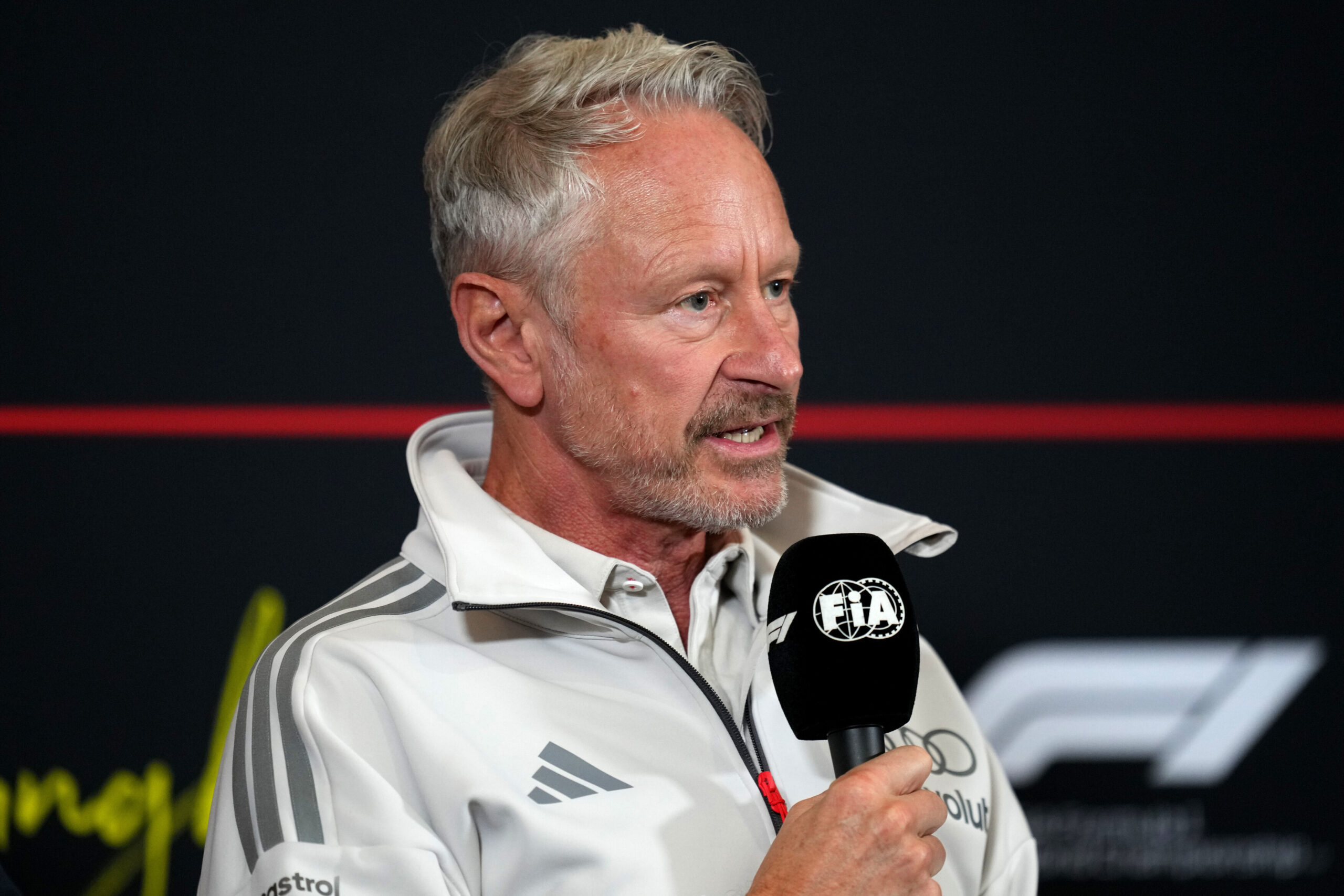
Speaking in a print media session after the F1 race, Jonathan Wheatley shared his insights on the technical problem that sidelined Bortoleto from the 2026 Chinese GP. Admitting that he was still unsure what the issue precisely was, he surmised that it was similar in nature to the one Hülkenberg had experienced in Australia.
Acknowledging that it was dispiriting to have suffered from a DNS in back-to-back races, Wheatley also offered an apology to Bortoleto on behalf of the team and stated that Audi’s biggest priority right now is to improve their reliability.
“I’ve literally just come in from the debrief and they’re literally just about to take the car apart. So, I can’t tell you what the issue was. I think it was a similar issue to Nico’s [Hülkenberg], but I don’t know for sure. But I’ll certainly know by the next time I see you.
“But look, it’s hugely disappointing. I mean, first of all, it’s the second race in a row where we’ve only got one car to start the race. It’s hugely disappointing.
“Gabriel [Bortoleto], you know, as a team, we apologise to him for that. It’s something we need to really focus on in terms of our reliability at the moment.”
Hülkenberg’s wheelgun problem and reliability concerns across the grid
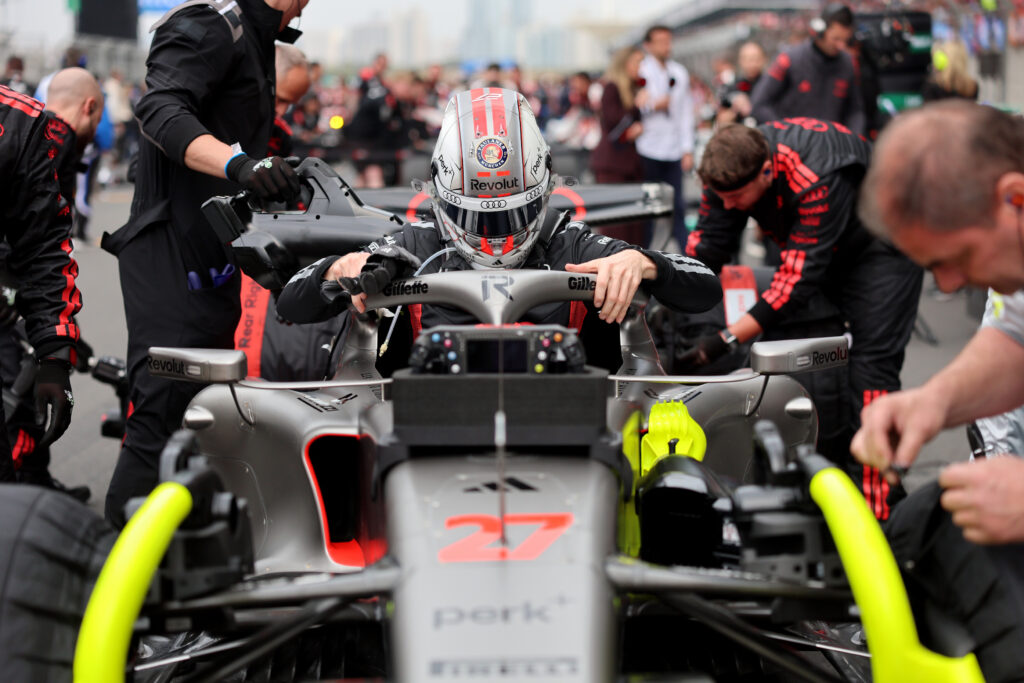
With regard to the wheelgun issue that Hülkenberg came across on Lap 35, Jonathan Wheatley asserted that the 38-year-old would’ve finished in the top ten at the 2026 Chinese GP without the slow pit stop. It lasted 16s, around 13s longer than an ideal one.
While he lamented their inability to score points with both cars in the first two rounds of the season, the Brit appeared somewhat relieved that Audi are not the only squad to experience teething troubles as the F1 grid tries to get to grips with the all-new regulations.
“I think without the wheelgun issue that we experienced in the pit stop today, there’s every reason to think Nico would have been well in the points, you know, which makes it more frustrating because you think if you had two cars in the race, you’d maybe have two cars in the points.
“But I think we can’t also overlook the fact that we had two McLarens not start the race, a Williams not start the race, an Audi, and then three DNFs in the race itself, you know. So, I don’t think anyone’s finding it easy at the moment.”
Wheatley’s thoughts after the Chinese GP on whether the 2026 regulations are too complicated
Asked to comment on the McLaren drivers’ claim that the 2026 power units are too complex, Jonathan Wheatley shied away from a definitive answer in his post-Chinese GP print media session on Sunday.
Underlining how all teams are experiencing unique issues when it comes to the new power units, the Audi team principal was hesitant to brand the 2026 regulations as too complex. He simply labelled the ruleset as ambitious instead.
Referring to the 2014 season, which ushered in the turbo-hybrid era in F1, Wheatley also recounted how multiple teams were battling unreliability back then and revealed that he is looking to the future with a positive outlook.
Moreover, the 58-year-old implied that the winter break wasn’t long enough to prepare well for a brand-new regulation cycle and reckoned that the month-long break due to the cancellation of the Bahrain and Saudi Arabian Grands Prix in April would allow a number of teams to get on top of their issues.
“It’s interesting, isn’t it, that they’re [McLaren] experiencing issues and all of us have experienced our own issues with that. I mean, too technical, too complicated, I don’t know. It’s an ambitious set of technical regulations.
“It does remind me very much of early 2014. You know, people were struggling with that. Some teams in particular were struggling with that.
“I’m trying to keep my eye on the future. I’m an eternally positive person and I think we’ll get on top of these issues. And you never know, perhaps this gap in April will allow a lot of people to get on top of that.
“It’s been a very short winter and a very intense few months this year.”
Shanghai exposing more weaknesses of the Audi F1 car
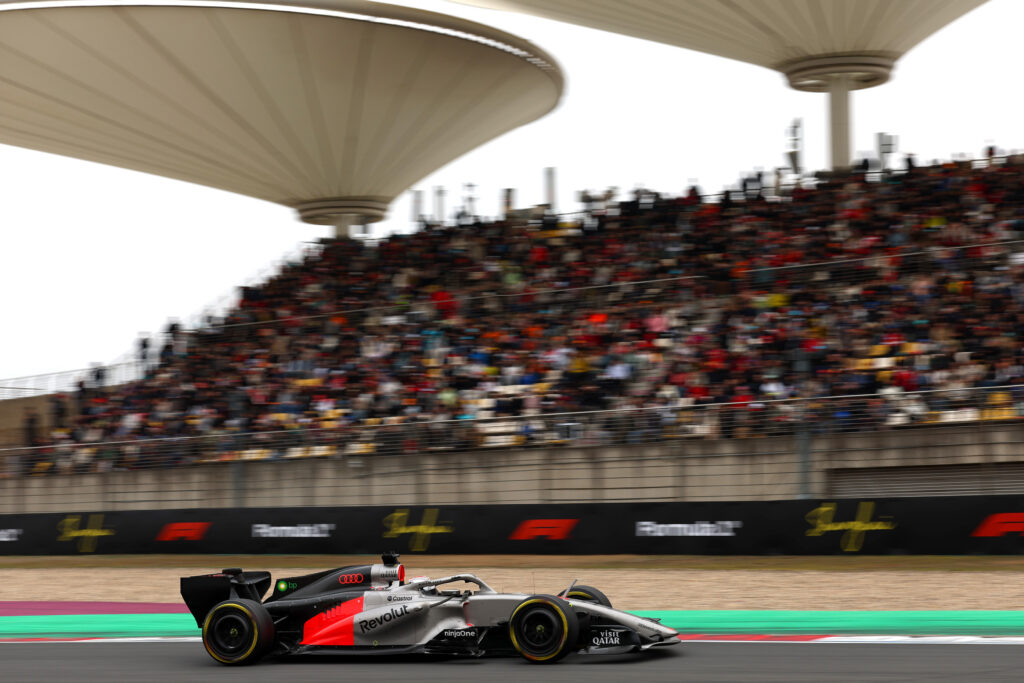
In respect of their overall performance during the 2026 Chinese GP weekend, Jonathan Wheatley conceded that Albert Park had suited them better and explained that the Shanghai International Circuit exposed the R26’s shortcomings in multiple areas. He recalled how Hülkenberg had struggled to tackle the car at Turn 6 a couple of times and singled out drivability as a weakness they still need to work on.
“I think you’re right; I think it’s a track that exposed our weaknesses in many areas.
“I mean, one of the things that was interesting here is that in racing situations, how key drivability is. And it remains a challenge for us to get on top of these drivability issues.
“Because basically, Nico had a couple of situations, I think Turn 6, where it was hard to recover from them because you’ve got to get the engine back in its operating window.”
Asked whether the aforementioned complication stemmed from a deployment problem, Wheatley quipped that the question ventured into the territory of Mattia Binotto, the head of the Audi F1 project. Nonetheless, he surmised that the inherent traits of the new power units now prompt the drivers to react a certain way when they come across these hairy situations.
“You’re getting very close to Mattia [Binotto] type questions and not Jonathan type questions. But look, basically, it’s the response of the PU [power unit] in those situations where you have to react rather than act, I suppose.”
Wheatley on drivability being a key issue for all teams after the 2026 Chinese GP
In terms of the 2026 F1 power units impacting how drivers take the corners, Jonathan Wheatley proclaimed that Mercedes and Ferrari are currently the only two teams that boast pretty navigable packages after they occupied the top four positions at the Chinese GP.
However, the Brit was quick to recollect how Kimi Antonelli had run deep at the hairpin during Sunday’s race despite being under no pressure and maintained that drivability is a major challenge for all teams at present. Charles Leclerc also ran into a similar moment, losing P3 to Lewis Hamilton at the time.
“We’re at race two, I think what I’m seeing at the moment is that Mercedes and Ferrari obviously have a very usable package. But I don’t see anyone else having an easy time with it.
“Honestly, you know, and even Kimi [Antonelli], how unusual. I mean, first of all, congratulations to Kimi, fantastic. You know, you mentioned his first ever, it was a dominating Grand Prix victory as well. But then he had a lock up and went wide, you know, under no pressure at all.
“I think they’re a challenge to drive these cars at the moment.”