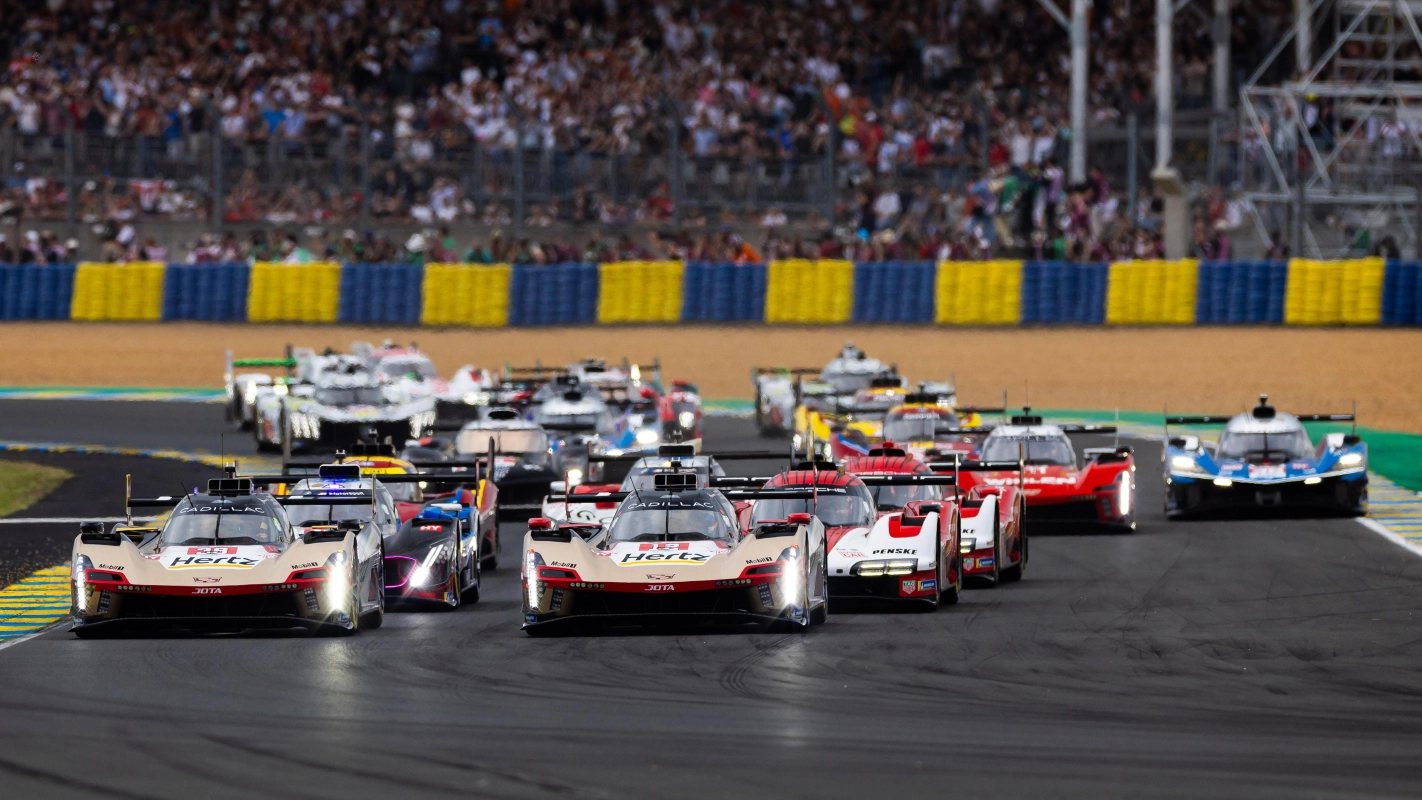
The FIA World Endurance Championship (WEC) represents the pinnacle of long-distance circuit racing. Established in 2012 by the FIA and the Automobile Club de l’Ouest (ACO), the series combines cutting-edge technology, world-class drivers and demanding races that last anywhere from six hours to a full 24-hour marathon.
Crucially, WEC continues to grow in popularity thanks to its unique blend of innovation and unpredictability. With a record-equalling 14 manufacturers competing in 2026, the championship provides both fierce competition and a proving ground for technologies that often transfer directly to road cars.
What is WEC?
WEC is a global championship that visits some of the most iconic circuits in motorsport. Races take place across Europe, Asia, the Middle East and the Americas, offering manufacturers and teams worldwide exposure.
At the heart of the calendar sits the 24 Hours of Le Mans, the most prestigious endurance race in the world. This event not only tests speed but also reliability, strategy and driver stamina to the absolute limit.
Moreover, WEC’s format—featuring multiple classes racing simultaneously—creates constant action, as faster Hypercars navigate through traffic made up of LMGT3 competitors.
The two main categories to feature at 2026 FIA WEC
Hypercar: The elite prototype class
The Hypercar category sits at the top of the WEC pyramid. These machines are purpose-built prototypes designed for peak performance, incorporating hybrid systems, advanced aerodynamics and cutting-edge engineering.
Importantly, the regulations prioritise cost control and performance balance rather than outright spending. Consequently, manufacturers can compete effectively without excessive budgets, leading to closer racing.
Two world titles are awarded:
- FIA Hypercar World Endurance Manufacturers’ Championship
- FIA Hypercar World Endurance Drivers’ Championship
Additionally, only Silver, Gold and Platinum-rated drivers are permitted, ensuring a grid filled with elite-level talent.
LMGT3: Competitive and accessible racing
LMGT3 replaced the long-standing GTE category in 2024 and quickly established itself as a fan favourite. These cars are based on production models, making them instantly recognisable.
Unlike Hypercar, LMGT3 focuses on Pro-Am competition. Each team must include at least one Bronze-rated driver, creating a mix of experienced professionals and amateur racers.
As a result, the category delivers highly competitive racing with unpredictable outcomes.
Key titles include:
- FIA Endurance Trophy for LMGT3 Teams
- FIA Endurance Trophy for LMGT3 Drivers
Furthermore, drivers compete for the Goodyear Wingfoot Award, recognising consistent performance across a season.
The 2026 FIA WEC Manufacturers: A detailed breakdown
The 2026 FIA WEC grid showcases an exceptional blend of heritage, innovation and ambition. With 14 manufacturers competing across Hypercar and LMGT3, the series continues to represent the cutting edge of endurance racing while maintaining remarkable competitive diversity.
Hypercar manufacturers
Alpine
Alpine enters the 2026 season on the back of a breakthrough year that firmly established the A424 as a competitive package. Its maiden victory at Fuji marked a turning point, proving the French manufacturer can challenge at the highest level. With a well-balanced car powered by a Mecachrome engine, Alpine now looks to build consistency across a full campaign rather than relying on standout performances.
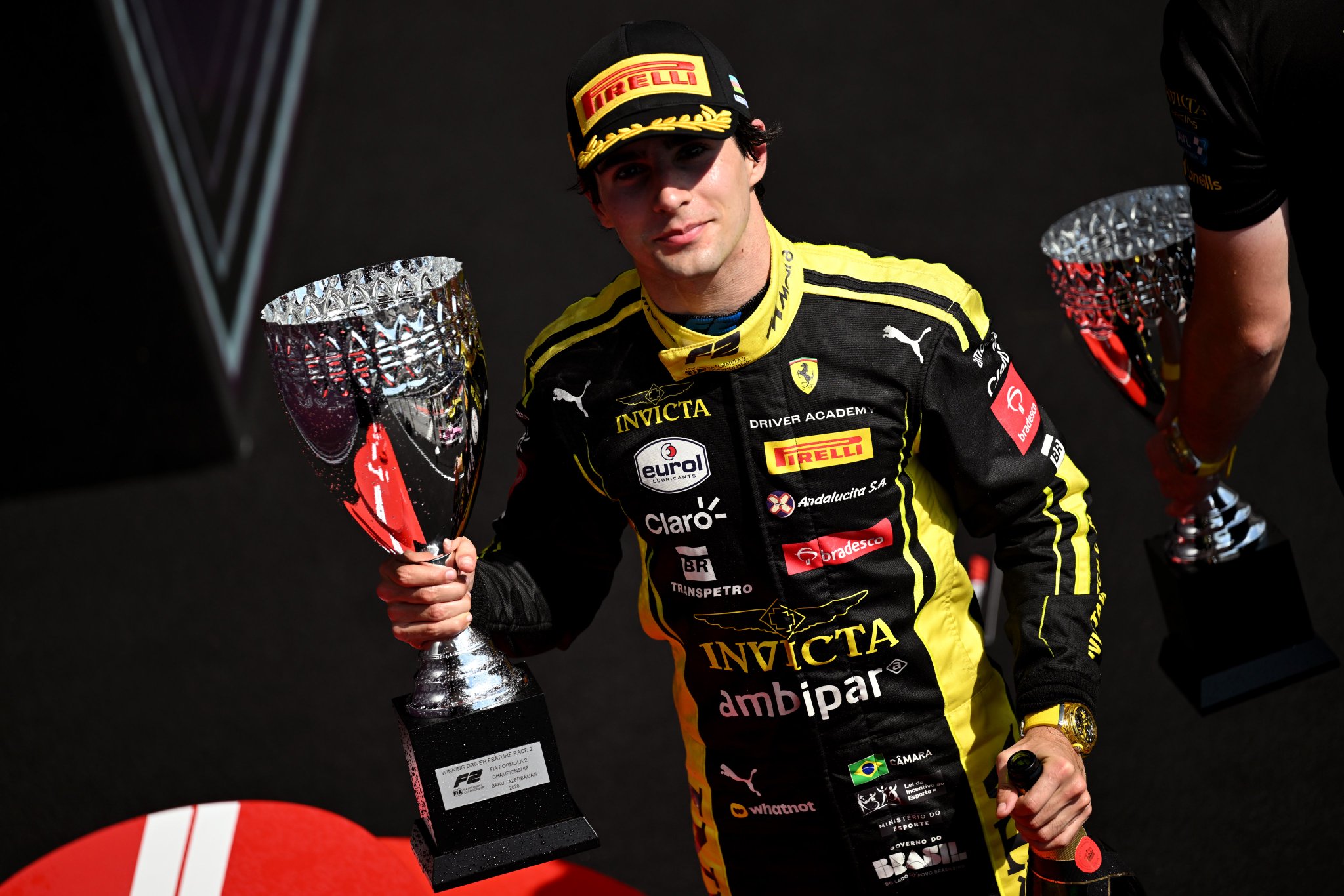
For 2026, the team has strengthened its driver line-up with the addition of António Félix da Costa, bringing further endurance pedigree to the #35 crew. Meanwhile, Victor Martins joins the sister car as part of Alpine’s long-term investment in young talent. Under the leadership of Philippe Sinault and with Nicolas Lapierre’s experience guiding development, Alpine aims to translate promise into regular podium contention.
Aston Martin
Aston Martin’s Valkyrie Hypercar remains one of the most distinctive entries on the grid, thanks to its naturally aspirated V12 engine and direct link to its road-going counterpart. After returning to top-level endurance racing in 2025, the British marque used its first season to gather crucial data and refine its approach.
Encouraging performances at Le Mans, Fuji and Bahrain highlighted the car’s potential, particularly in race conditions. With unchanged driver line-ups in both entries, Aston Martin benefits from continuity and experience, placing it in a stronger position to convert its eye-catching presence into consistent results in 2026.
BMW
BMW heads into the new season with high expectations following a comprehensive update to its M Hybrid V8. Rather than introducing an entirely new concept, the German manufacturer has focused on refining key areas such as aerodynamics and airflow efficiency, resulting in a more competitive and stable platform.
Equally significant is the continuity in its driver roster, which remains unchanged across both cars. This stability, combined with the operational expertise of Team WRT, provides BMW with a solid foundation as it aims to move from midfield contention to regular appearances at the front of the field.
Cadillac
Cadillac continues to establish itself as a major force in endurance racing, combining American engineering with European race execution through its partnership with JOTA. The V-Series R Hypercar, powered by a distinctive V8 engine, offers both strong performance and a unique identity within the field.
Following a breakthrough victory and multiple pole positions in 2025, Cadillac now targets greater consistency. Retaining its core drivers while introducing Jack Aitken to the line-up reflects a balanced approach, as the team looks to transform its potential into a sustained championship challenge.
Ferrari
Ferrari enters 2026 as the benchmark in Hypercar competition, having dominated the previous season with multiple victories and both world titles. The 499P proved to be the most complete package on the grid, excelling in speed, reliability and strategic execution.
Crucially, Ferrari has retained all of its driver line-ups, ensuring maximum continuity. With three competitive entries and a wealth of experience, the Italian marque is well-positioned to defend its titles, and anything less than a sustained championship fight would fall short of expectations.
Genesis
Genesis Magma Racing joins the Hypercar category as an ambitious new entrant, bringing fresh energy to the championship. Backed by Hyundai’s luxury division, the programme introduces the GMR-001 prototype, designed with a focus on efficiency and long-term development.
The project benefits from experienced leadership, including Cyril Abiteboul and François-Xavier Demaison, alongside a well-balanced driver roster that blends seasoned racers with emerging talent. While immediate success may be unlikely, Genesis aims to establish a strong foundation for future competitiveness.
Peugeot
Peugeot continues its efforts to return to the front of the Hypercar field with its distinctive 9X8 prototype. Although the car has shown flashes of speed, inconsistency has limited its ability to challenge for victories on a regular basis.
For 2026, the focus shifts towards maximising reliability and extracting consistent performance across race distances. The addition of Nick Cassidy strengthens the line-up, and with a mix of experienced drivers and young talent, Peugeot aims to convert potential into tangible results.
Toyota
Toyota approaches the 2026 season with determination after a challenging campaign in 2025. Despite years of dominance, the Japanese manufacturer struggled to maintain its usual level of performance, prompting a series of technical updates.
The revised Hypercar features aerodynamic improvements aimed at restoring competitiveness, while the experienced driver line-ups remain unchanged. With its proven operational strength and depth of knowledge, Toyota remains a formidable contender as it seeks to return to winning ways.
LMGT3 manufacturers
Aston Martin
Aston Martin continues with a balanced LMGT3 programme, combining experienced endurance racers with promising newcomers, creating a line-up capable of both development and competitive results.
BMW
BMW fields a strong and structured effort through Team WRT, blending proven talent with rising stars to ensure both immediate competitiveness and long-term growth.
Corvette
Corvette builds on a successful 2025 season, with its Z06 GT3 demonstrating the performance and durability required to consistently challenge for race victories.
Ferrari
Ferrari relies on continuity and consistency in LMGT3, maintaining established driver combinations that provide stability and a strong foundation for championship contention.
Ford
Ford’s Mustang LMGT3 continues to impress with its distinctive V8 power and improving performance, supported by a well-structured programme from Proton Competition.
Lexus
Lexus enters 2026 with increased confidence following recent successes, focusing on refining its performance and achieving greater consistency across the season.
McLaren
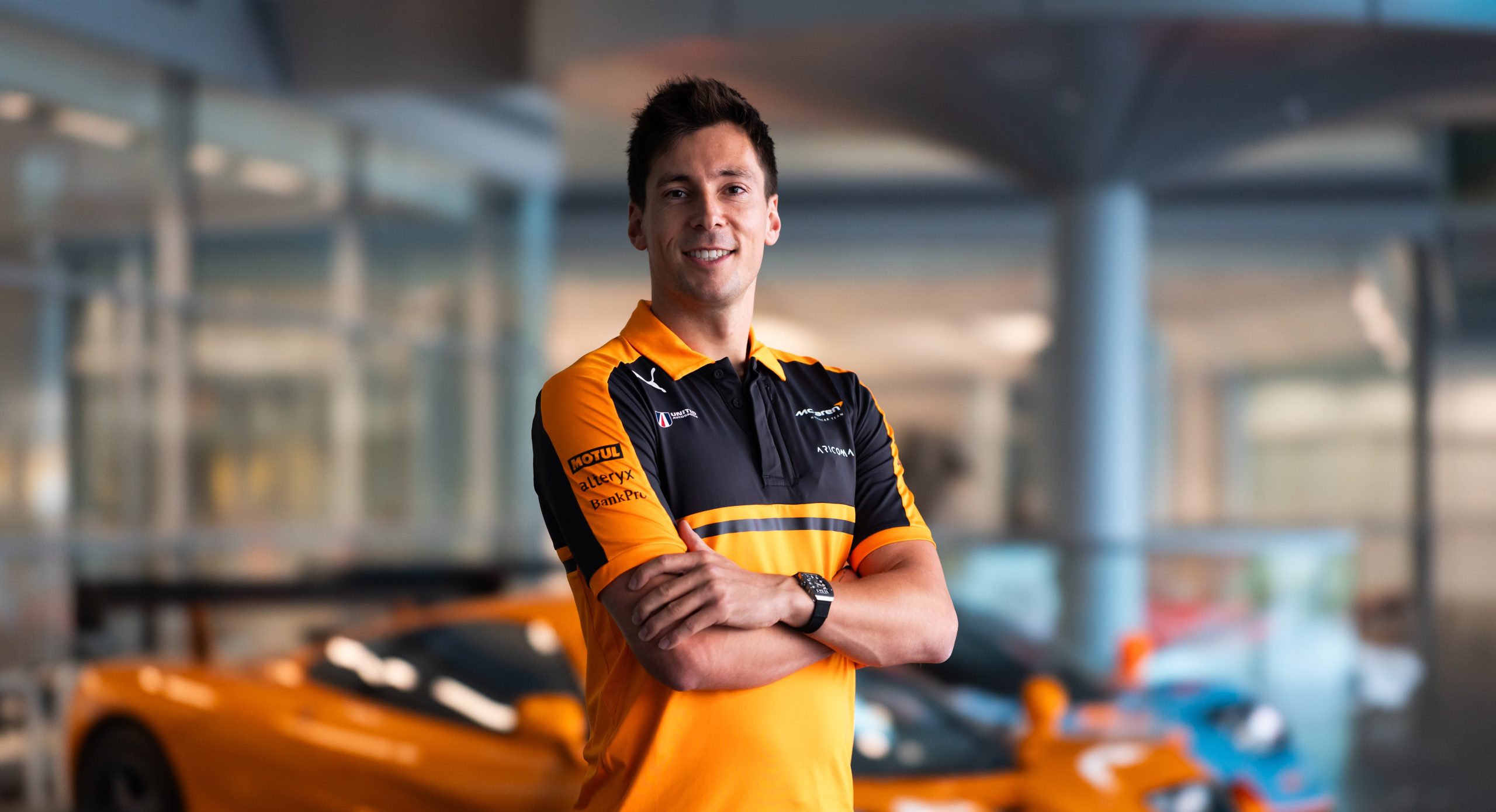
McLaren undergoes a transitional year as it prepares for a future Hypercar entry, but remains competitive in LMGT3 with a refreshed structure and driver line-up.
Mercedes-AMG
Mercedes-AMG builds on a promising end to last season, aiming to convert growing experience into consistent podium finishes in 2026.
Porsche
Porsche remains the benchmark in LMGT3, having dominated the category since its introduction, and continues to set the standard for performance and consistency.
2026 FIA World Endurance Championship entry guide
The 2026 grid for the FIA World Endurance Championship reflects the series’ growing strength, with a packed Hypercar field and a fiercely competitive LMGT3 category. Below is a clear, structured guide to every entry, alongside key changes shaping the season.
Hypercar entries
The premier class features factory-backed prototypes and elite driver line-ups, with every team chasing outright victory.
Aston Martin THOR Team
- Car: Aston Martin Valkyrie
- Engine: 6.5L V12
- Tyre: Michelin
- #007 Drivers: Tom Gamble, Harry Tincknell, Ross Gunn
- #009 Drivers: Alex Riberas, Marco Sørensen, Roman De Angelis
Aston Martin continues its Valkyrie Hypercar programme with consistency across both entries. The naturally aspirated V12 remains a fan favourite and a unique engineering statement on the grid.
Toyota Racing
- Car: Toyota TR010 Hybrid
- Engine: 3.5L Turbo V6 Hybrid
- Tyre: Michelin
- #7 Drivers: Mike Conway, Kamui Kobayashi, Nyck de Vries
- #8 Drivers: Sébastien Buemi, Brendon Hartley, Ryō Hirakawa
Toyota introduces an evolved challenger after a difficult 2025. Despite the redesign, the team retains its highly experienced driver crews to spearhead its comeback.
Cadillac Hertz Team JOTA
- Car: Cadillac V-Series.R
- Engine: 5.5L V8 Hybrid
- Tyre: Michelin
- #12 Drivers: Norman Nato, Will Stevens, Alex Lynn
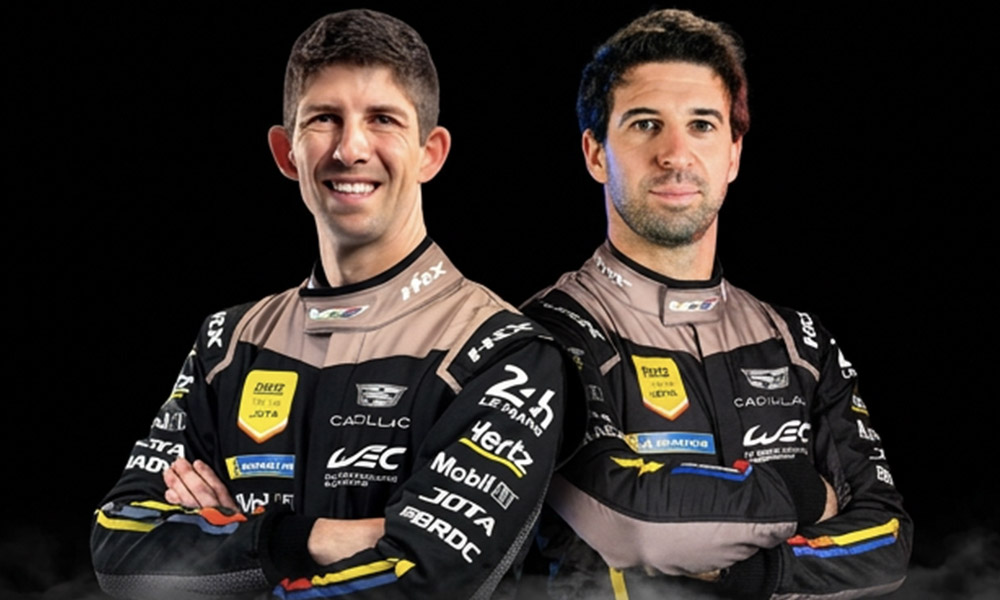
- #38 Drivers: Earl Bamber, Sébastien Bourdais, Jack Aitken
Cadillac builds on momentum from 2025, combining raw V8 power with JOTA’s operational expertise. The arrival of Aitken strengthens the second crew.
BMW M Team WRT
- Car: BMW M Hybrid V8
- Engine: 4.0L Turbo V8 Hybrid
- Tyre: Michelin
- #15 Drivers: Kevin Magnussen, Raffaele Marciello, Dries Vanthoor
- #20 Drivers: Robin Frijns, René Rast, Sheldon van der Linde
BMW fields an updated package with refined aerodynamics. Stability in its driver line-up signals confidence after extensive development work.
Genesis Magma Racing
- Car: Genesis GMR-001
- Engine: 3.2L Turbo V8 Hybrid
- Tyre: Michelin
- #17 Drivers: Pipo Derani, Mathys Jaubert, André Lotterer
- #19 Drivers: Paul-Loup Chatin, Mathieu Jaminet, Daniel Juncadella
Genesis debuts in WEC with a strong blend of youth and experience. The programme marks a major expansion for Hyundai’s luxury division.
Alpine Endurance Team
- Car: Alpine A424
- Engine: 3.4L Turbo V6 Hybrid
- Tyre: Michelin
- #35 Drivers: António Félix da Costa, Ferdinand Habsburg, Charles Milesi
- #36 Drivers: Jules Gounon, Frédéric Makowiecki, Victor Martins
After a breakthrough win in 2025, Alpine aims to build consistency. New signings add depth to an already competitive operation.
Ferrari AF Corse / AF Corse
- Car: Ferrari 499P
- Engine: 3.0L Turbo V6 Hybrid
- Tyre: Michelin
- #50 Drivers: Antonio Fuoco, Miguel Molina, Nicklas Nielsen
- #51 Drivers: James Calado, Antonio Giovinazzi, Alessandro Pier Guidi
- #83 Drivers: Phil Hanson, Robert Kubica, Yifei Ye
Ferrari enters as the benchmark team following dominant success. Its trio of entries provides both depth and strategic flexibility.
Peugeot TotalEnergies
- Car: Peugeot 9X8
- Engine: 2.6L Turbo V6 Hybrid
- Tyre: Michelin
- #93 Drivers: Nick Cassidy, Paul di Resta, Stoffel Vandoorne
- #94 Drivers: Loïc Duval, Malthe Jakobsen, Théo Pourchaire
Peugeot continues refining its radical concept. A refreshed driver line-up injects new energy into the programme.
Key Hypercar Changes
- Porsche exits the Hypercar category, reshaping the competitive order.
- Jenson Button retires, prompting Cadillac to recruit Aitken.
- Genesis joins as a new manufacturer, expanding the grid further.
- Several rookies, including Victor Martins and Théo Pourchaire, step up to Hypercar.
LMGT3 Entries
The LMGT3 category features Pro-Am crews and production-based machinery, delivering close, unpredictable racing.
Garage 59 (McLaren)
- #10 Drivers: Antares Au, Tom Fleming, Marvin Kirchhöfer
- #58 Drivers: Finn Gehrsitz, Benjamin Goethe, Alexander West
Garage 59 takes over McLaren’s programme, introducing fresh talent and a new operational structure.
Vista AF Corse (Ferrari)
- #21 Drivers: François Hériau, Simon Mann, Alessio Rovera
- #54 Drivers: Francesco Castellacci, Thomas Flohr, Davide Rigon
Ferrari maintains continuity, relying on proven combinations and consistent results.
Heart of Racing Team (Aston Martin)
- #23 Drivers: Jonny Adam, Gray Newell, Kobe Pauwels / Eduardo Barrichello
- #27 Drivers: Mattia Drudi, Ian James, Zacharie Robichon
The American squad expands its presence, blending youth with experience.
Team WRT (BMW)
- #32 Drivers: Augusto Farfus, Sean Gelael, Darren Leung
- #69 Drivers: Dan Harper, Anthony McIntosh, Parker Thompson
WRT mixes experienced racers with emerging names to stay competitive.
TF Sport / Racing Team Turkey (Corvette)
- #33 Drivers: Nicky Catsburg, Jonny Edgar, Ben Keating / Blake McDonald
- #34 Drivers: Charlie Eastwood, Salih Yoluç, Peter Dempsey
Corvette remains a strong contender with proven endurance specialists.
Iron Lynx (Mercedes-AMG)
- #61 Drivers: Rui Andrade, Martin Berry, Maxime Martin
- #79 Drivers: Matteo Cressoni, Lin Hodenius, Johannes Zelger
Mercedes-AMG builds on a strong finish to 2025 and targets consistent podiums.
Proton Competition (Ford)
- #77 Drivers: Eric Powell, Sebastian Priaulx, Ben Tuck
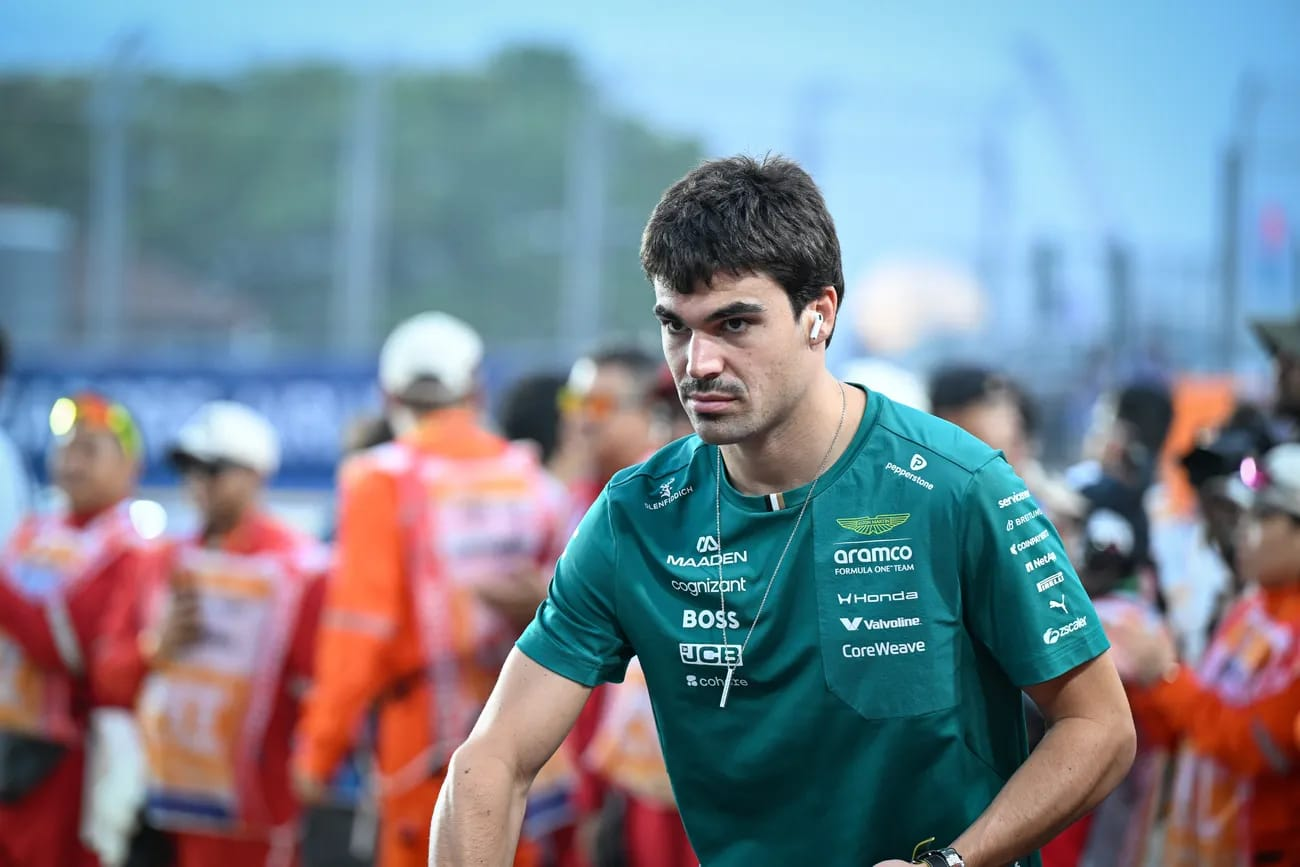
- #88 Drivers: Stefano Gattuso, Giammarco Levorato, Logan Sargeant
Ford continues its GT3 push, with Sargeant adding star appeal ahead of a Hypercar move.
Akkodis ASP Team (Lexus)
- #78 Drivers: Hadrien David, Esteban Masson, Tom Van Rompuy
- #87 Drivers: José María López, Clemens Schmid, Răzvan Umbrărescu
Lexus builds on momentum after multiple wins last season.
Manthey (Porsche)
- #91 Drivers: Timur Boguslavskiy, James Cottingham, Ayhancan Güven
- #92 Drivers: Richard Lietz, Riccardo Pera, Yasser Shahin
Porsche remains unbeaten in LMGT3, with Manthey continuing to lead its efforts.
Key LMGT3 Changes
- Garage 59 replaces United Autosports as McLaren’s partner.
- The Iron Dames programme withdraws after five seasons.
- Manthey assumes full control of Porsche’s LMGT3 operations.
- Racing Team Turkey returns, expanding TF Sport’s Corvette presence.
Tyres and technical innovation for 2026 FIA WEC
Tyres
Michelin (Hypercar)
Michelin supplies all Hypercar teams and uses endurance racing to develop sustainable technologies. The latest tyres incorporate 50% renewable and recycled materials while maintaining high performance.
Goodyear (LMGT3)
Goodyear exclusively supplies LMGT3, focusing on durability and consistency. Its tyres often last multiple stints, demonstrating remarkable endurance under extreme conditions.
Sustainable fuel
WEC uses TotalEnergies Excellium Racing 100, a fully renewable biofuel derived from agricultural waste. This innovation reduces greenhouse gas emissions by at least 65%, highlighting the championship’s commitment to sustainability.
FIA driver categorisation
In the FIA WEC, drivers are classified by the Fédération Internationale de l’Automobile using a structured grading system. This system ensures fair competition across professional and amateur combinations while maintaining a clear separation between top-tier prototype racing and entry-level GT competition.
Each driver receives a rating based on experience, results and overall career achievements. The categories are Platinum, Gold, Silver and Bronze, with Platinum representing the highest level and Bronze representing the least experienced classification.
Category structure and entry rules
The classification system directly influences who can compete in each class. In Hypercar, only Platinum, Gold and Silver drivers are permitted, ensuring that the category remains reserved for the sport’s elite professionals.
- Hypercar class: No Bronze drivers allowed
- LMGT3 class: Must include at least one Bronze driver and a second Bronze or Silver-rated driver
In LMGT3, this structure creates mixed-ability crews. As a result, teams must balance raw speed with consistency, experience management and strategic depth across longer race distances.
Each car typically fields two or three drivers, depending on the event, with mandatory combinations ensuring competitive parity across the grid.
Classifications
Platinum
Platinum drivers represent the highest tier in the FIA system. They are the most experienced and successful competitors in international motorsport, often with extensive backgrounds in top-level series such as Formula 1, Le Mans prototypes or major global endurance championships.
These drivers are typically race winners or champions at the highest level. Their role in WEC is often to lead car development, deliver peak performance in qualifying, and anchor key race stints under pressure.
Gold
Gold drivers are highly experienced professionals who consistently perform at an elite international level. Many have strong records in major championships and may also have prior Formula 1 or top-class endurance experience.
While slightly below Platinum status, Gold drivers are still considered world-class. They are often central figures within their teams, capable of delivering strong qualifying performances and maintaining competitive race pace over long stints.
Silver
Silver drivers are experienced competitors who are still developing towards the highest level of the sport. They may have achieved success in junior formulas, regional GT championships or emerging prototype categories.
They often include young, rising talents progressing through the motorsport ladder, as well as experienced drivers who have not yet achieved consistent top-level results. In LMGT3, Silver drivers frequently act as key performance contributors alongside Bronze-rated teammates.
Bronze
Bronze drivers are generally less experienced in professional motorsport, although some may be older competitors with limited high-level results. The FIA assigns this category to drivers who have not yet achieved significant international success or consistent results in major championships.
Despite being classified as amateurs or semi-professionals, Bronze drivers play a crucial role in LMGT3. Their presence ensures accessibility and diversity in the category, while also creating strategic variation between teams as they manage driver combinations across long endurance races.
The 2026 FIA WEC Calendar
The 2026 WEC calendar was initially announced during the 2025 24 Hours of Le Mans weekend. While it remained largely unchanged from the previous year, geopolitical developments forced a significant adjustment.
Originally scheduled for early in the season, the Qatar 1812 km was postponed to October due to instability in the Middle East. Consequently, the 6 Hours of Imola became the season opener.
Full 2026 Calendar
- Prologue – Imola Circuit, Italy – 14 April
- Round 1 – 6 Hours of Imola, Italy – 19 April
- Round 2 – 6 Hours of Spa-Francorchamps, Belgium – 9 May
- Round 3 – 24 Hours of Le Mans, France – 13–14 June
- Round 4 – 6 Hours of São Paulo, Brazil – 12 July
- Round 5 – Lone Star Le Mans, Circuit of the Americas, USA – 6 September
- Round 6 – 6 Hours of Fuji, Japan – 27 September
- Round 7 – Qatar 1812 km, Lusail – 24 October
- Round 8 – 8 Hours of Bahrain, Sakhir – 7 November
Race weekend format
Free Practice
Teams begin the weekend with multiple free practice sessions. These sessions allow engineers and drivers to fine-tune car setup, test different aerodynamic and mechanical configurations, and assess tyre behaviour over both short and long runs.
In addition, teams evaluate performance under changing track conditions, including variations in temperature and grip levels. Because WEC races take place over several hours, long-run consistency is often prioritised over outright lap time. Drivers also use this time to build confidence at each circuit and adapt to traffic from multiple classes on track.
Pit stop practice and driver change rehearsals are also carried out, ensuring that operations run smoothly when the race begins. Small improvements in these areas can have a significant impact over the full race distance.
Qualifying and Hyperpole
Qualifying is split into a two-part system designed to reward both pace and precision.
- A 12-minute initial session for each category (Hypercar and LMGT3) determines the fastest competitors
- The top ten from each session progress to a 10-minute Hyperpole shootout
In Hyperpole, teams typically run low fuel and fresh tyres in pursuit of maximum performance. As a result, lap times improve significantly, and the margins between competitors become extremely tight.
Drivers must deliver a clean, error-free lap under intense pressure, as even minor mistakes can result in losing multiple grid positions. Track position is especially important in endurance racing, where early traffic and incidents can influence long-term strategy.
Pole position not only determines the leading grid spot in each class but also awards a valuable championship point, which can prove important in close title battles.
The Race
Race durations vary across the calendar, with each format presenting different strategic demands:
- 6 hours – standard rounds at circuits such as Autodromo Internazionale Enzo e Dino Ferrari and Circuit de Spa-Francorchamps
- 8 hours – Bahrain, often influenced by evolving track temperatures and night conditions
- 10 hours / 1812 km – Qatar, a unique distance-based endurance challenge
- 24 hours – the 24 Hours of Le Mans, the most demanding event of the season
Across these events, teams must carefully balance outright speed with reliability and strategy. Cars are shared between two or three drivers, meaning consistent performance across stints is essential.
During the race, teams manage tyre degradation, fuel strategy, traffic from multiple classes and changing weather or lighting conditions. Pit stop timing and error-free execution often prove just as important as on-track pace.
2026 FIA WEC points system
The FIA WEC uses a tiered points system that rewards consistency across the season while placing extra emphasis on longer and more demanding events. The structure ensures that endurance performance, not just outright speed, defines championship success.
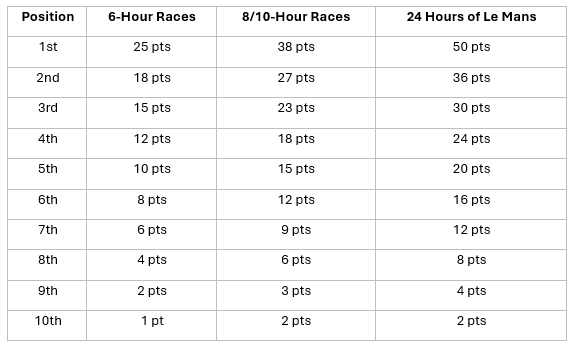
Shorter six-hour races award a standard points scale, while longer endurance events such as eight- and ten-hour races increase the value of each finishing position. This reflects the greater physical, mechanical and strategic demands placed on teams.
The pinnacle of the calendar is the 24 Hours of Le Mans, which offers the highest points of the season. Victory at Le Mans can therefore significantly influence both the Drivers’ and Manufacturers’ Championship standings.
An additional single point is awarded for pole position in each class, further rewarding qualifying performance and adding importance to the Hyperpole shootout during race weekends.
Conclusion
The FIA World Endurance Championship stands apart in global motorsport because it combines multiple disciplines into one continuous test of speed, strategy and endurance. Unlike sprint formats, success depends on long-term execution across changing conditions, traffic and race phases.
Its identity is defined by several key characteristics:
- Multi-class racing: Hypercar and LMGT3 cars share the track, creating constant traffic challenges and strategic complexity
- Long-duration events: Races range from six hours to the demanding 24 Hours of Le Mans, testing reliability as much as pace
- Manufacturer diversity: Multiple global brands compete directly, ensuring a tightly matched and competitive field
- Technological innovation: Teams develop cutting-edge hybrid systems, aerodynamics and sustainable fuels that often influence future road cars
As a result, no single approach guarantees success. Race outcomes shift through strategy calls, pit execution, tyre management and the ability to perform consistently over extended stints. This naturally produces variability in results, with multiple winners across a season and frequent changes in competitive order.