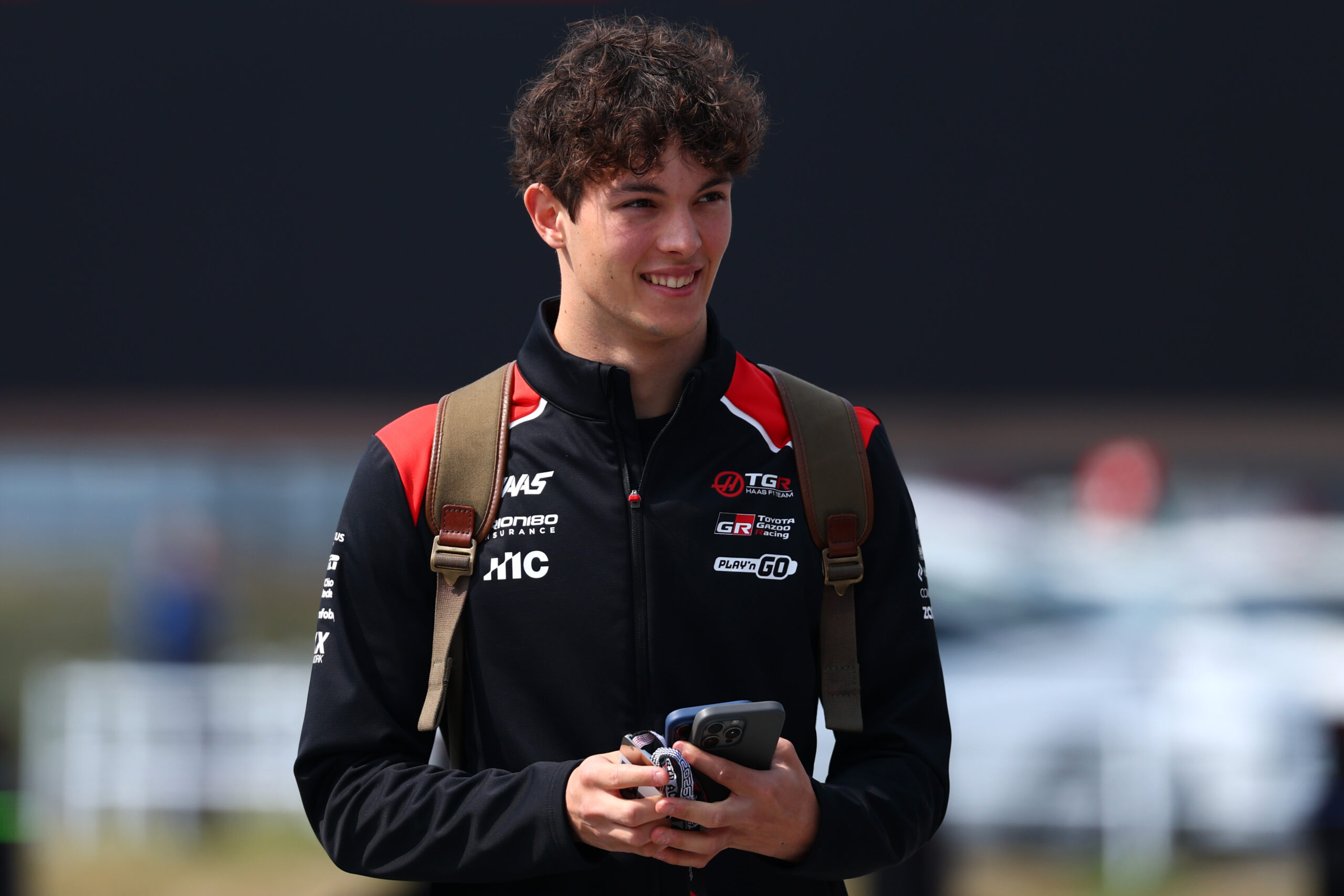
In a featured appearance on the High Performance podcast, Ollie Bearman sat down to share an insightful look at the intense transition from a junior standout to a Haas F1 Team driver. Following a superb debut at the 2024 F1 Saudi Arabian Grand Prix, Bearman’s rookie season in 2025 served as a good example of professional growth within the Formula 1 paddock.
Navigating the learning curve with his team
One of the most striking aspects of Bearman’s reflection is the focus on his inner circle. On the podcast, he highlighted that his journey was a shared learning experience for his entire team.
While Ollie Bearman was experiencing his first F1 season, his manager Chris Harfield, his physio, and his mental coach Enzo Mucci all were having first time experiences within Formula 1 as well. The Haas driver explained how they had to maintain a balance of patience and progress, stating that they “weren’t harsh on each other”, but weren’t paying enough attention to some things.
This meant that many operational improvements only became visible in hindsight.
“Yeah, and it’s also those things, you’re kind of stepping over the most obvious points. And then you think back and you’re like, God, it’s so obvious. But you have to remember, it wasn’t just my first season as a rookie. It was my manager’s first season as an F1 driver manager. It was my physio’s first season with a rookie F1 driver. It was my mental coach’s first season in F1 as well. So we’re all learning as we go. And therefore we weren’t harsh on each other. But some of the things that we weren’t maybe paying attention to.”
Aligning personal goals with the car’s performance
Bearman detailed how he would dive headfirst into strategy and set-up discussions, trying to get the most out of the car. Therefore leaving no room or time for his own mental objectives. To avoid this “freestyling” approach, in the summer break, the team introduced a mandatory 10 minute alignment period before every session.
By stepping away from the engineering office and returning to the driver’s room, Bearman and his physio align the car’s technical goals with his personal performance targets. This shift ensured that the British driver was in the right headspace to “drive the car perfectly”.
“And one thing that I kind of remember, one thing that stood out to me was, I was at a stage where the car performance was challenging and we weren’t quite able to get the most out of it. It was a bit unpredictable and like on a knife edge, like I said. And I was trying everything to try and get the most out of this car. I was working with the engineers on the set-up. I was even dipping into the strategy. You know, what tyres are we going to use this session and how are we going to plan the session? Spending no time thinking about where am I before getting into the car. Mentally.
“So I would get in the car and be like, wait a second, I haven’t thought for one second about my personal objectives. What am I going to do to build up the session? You know, how am I going to approach the session? What’s the goal of the session? And so I would get in and just almost be freestyling it and have not planned it at all. You know, so at the summer break, he said, okay, prior to every session, because you need to do all of the engineering stuff, you need to optimise the set-up and everything.
“But if the driver is not in a position to drive the car perfectly, then all of that is a waste of time, you know? So we said, let’s do all the engineering stuff as normal. But instead of going from the office straight into the car and just driving out the garage, come back to your driver room, let’s spend 10 minutes and everyone align ourselves prior to driving the car. So the car’s goals and then the driver’s goals. Literally 10 minutes, even less sometimes.
“You know, we would sit there while I was warming up with my physio, we’d be speaking with my coach and we’d say, okay, these are the things we need to look out for. You know, this corner on this track doesn’t necessarily suit our car. So let’s really build into that one and feel what the car is all about.“
Ollie Bearman on unlearning the junior category habits in F1
The transition in the weekend structure from Formula 4, 3 and 2 to Formula 1 was another hurdle Ollie Bearman addressed. In junior categories, the limited practice time forces a driver to find the limit immediately before qualifying.
Bearman explained that it took him several races to realize that an F1 Friday is “all laid back” and not competitive, coming to the conclusion that “Friday is not for me”. By learning to drive at 90% during practice instead of 100% on non-Sprint weekends, he could identify the car’s limitations and provide better feedback to the engineers without taking unnecessary risks.
This learning curve and patience allows him to build a stronger foundation for Saturday and ultimately Sunday.
“Also, another thing for me, you come from Formula 2, Formula 3, Formula 4 even, you have one free practise and then you go and qualify the car. So the goal of free practise is to put the car on the limit because the next time you drive it, it’s qualifying. So then you get to F1 and you’ve had that mindset in every single car you’ve driven, right?
“And you get to F1 and suddenly you’ve got Friday, which is all laid back and you’re just learning about the car and there’s no competitive session on Friday, right? You’re just doing free practise. And it took me a good few races to make that shift and say, actually, Friday is not for me.
“Of course, I’m learning the track and everything, but Friday is about optimising the car set-up. So if you can find out exactly what the car’s limitations are while driving at 90% instead of at 100%, do that. You’re not taking any risks then, you’re not going to do any mistakes and then you’re in a better place by Saturday.”