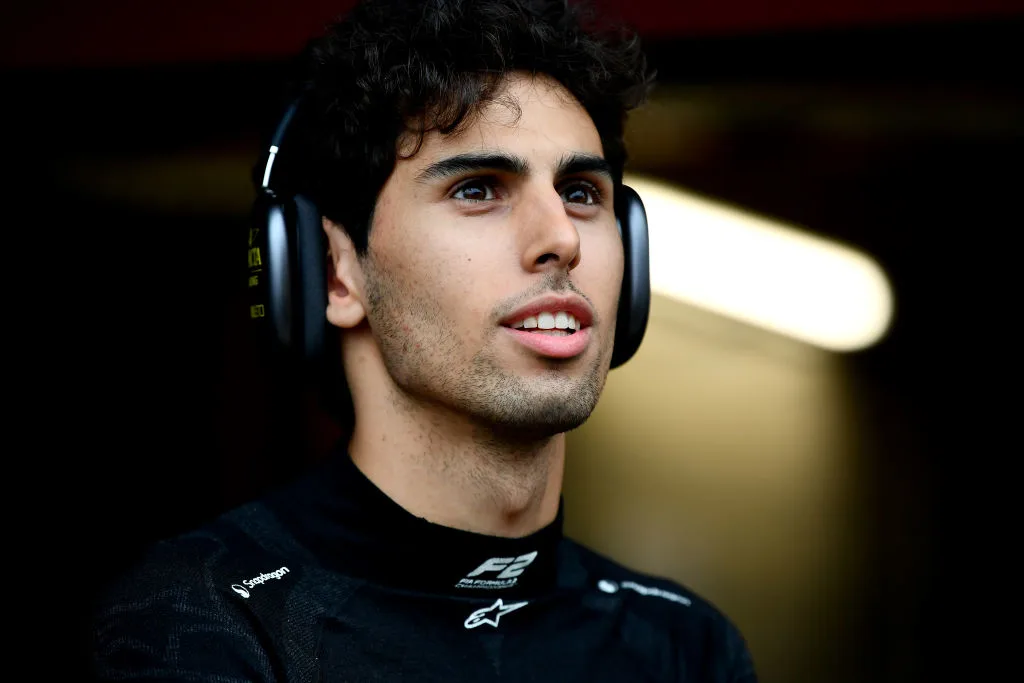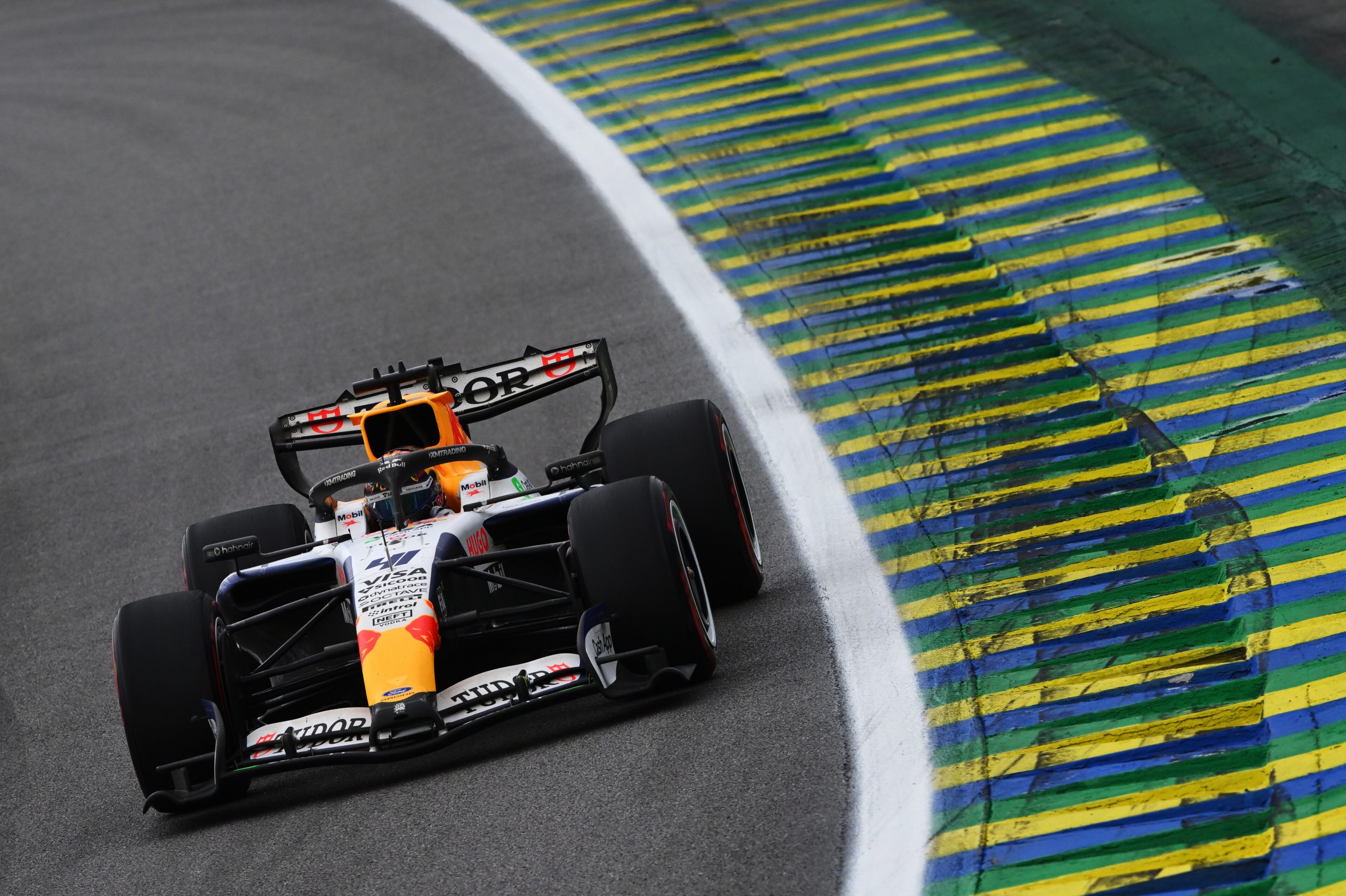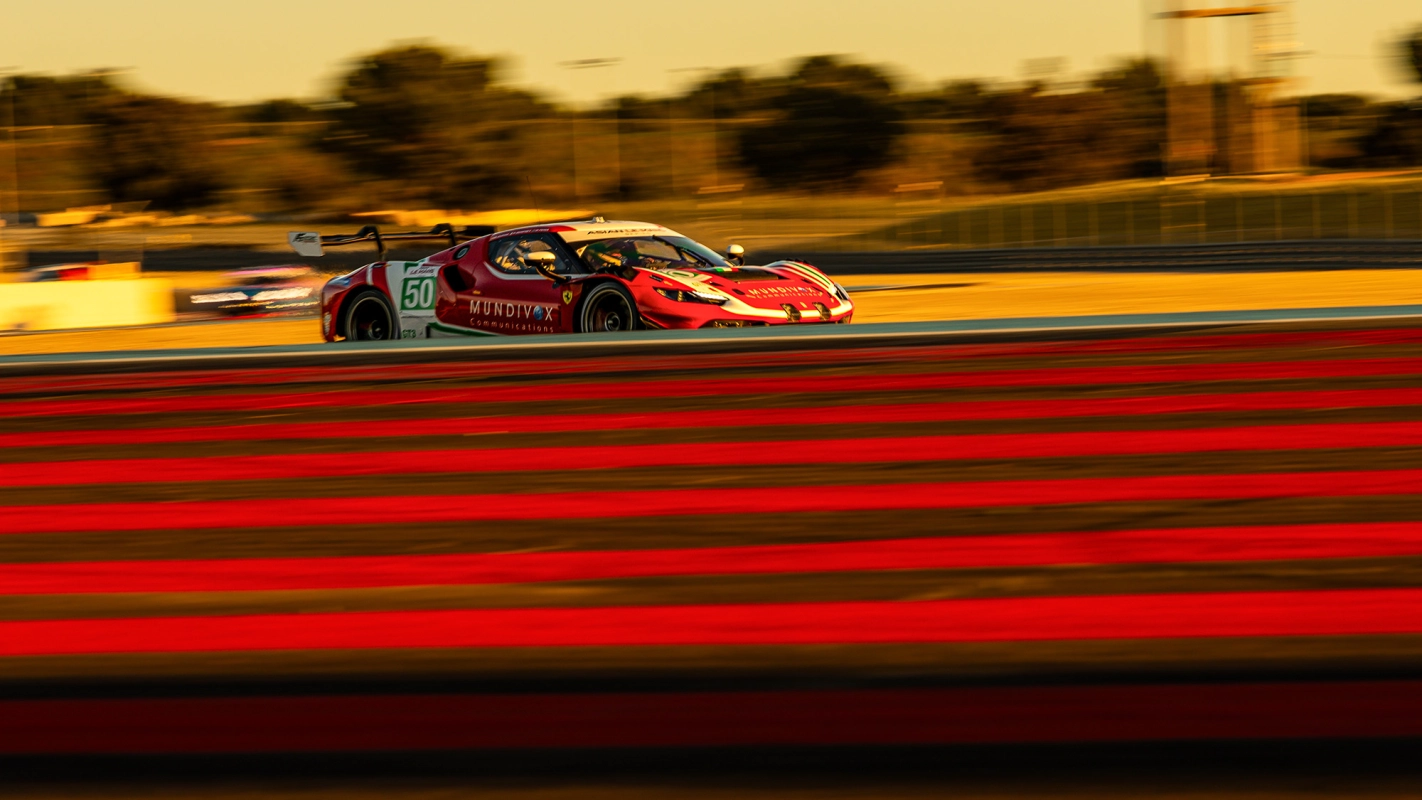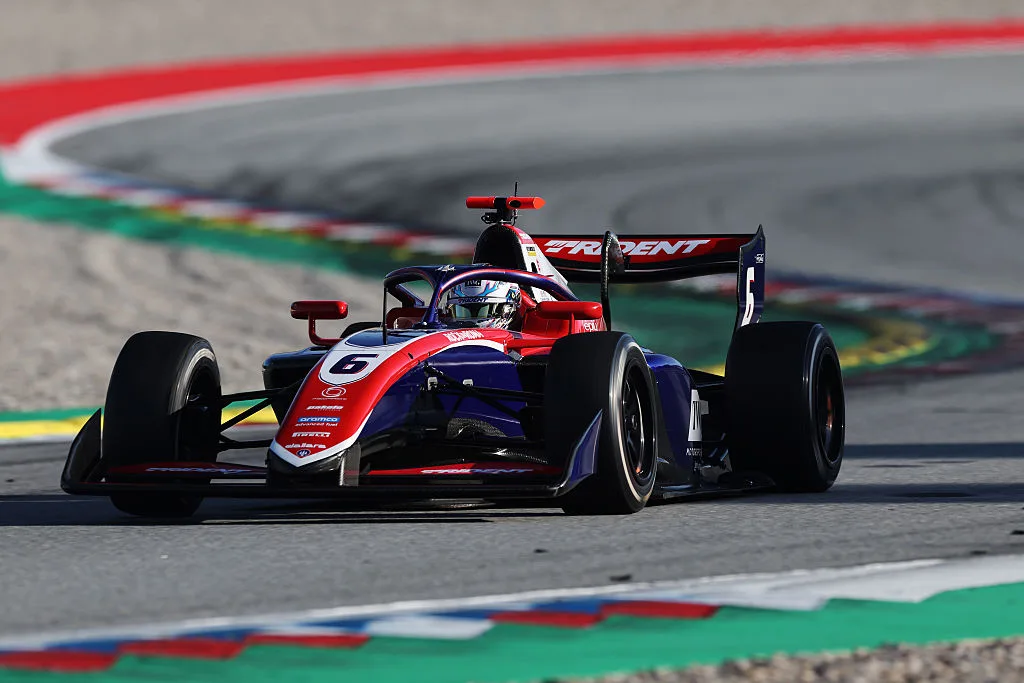
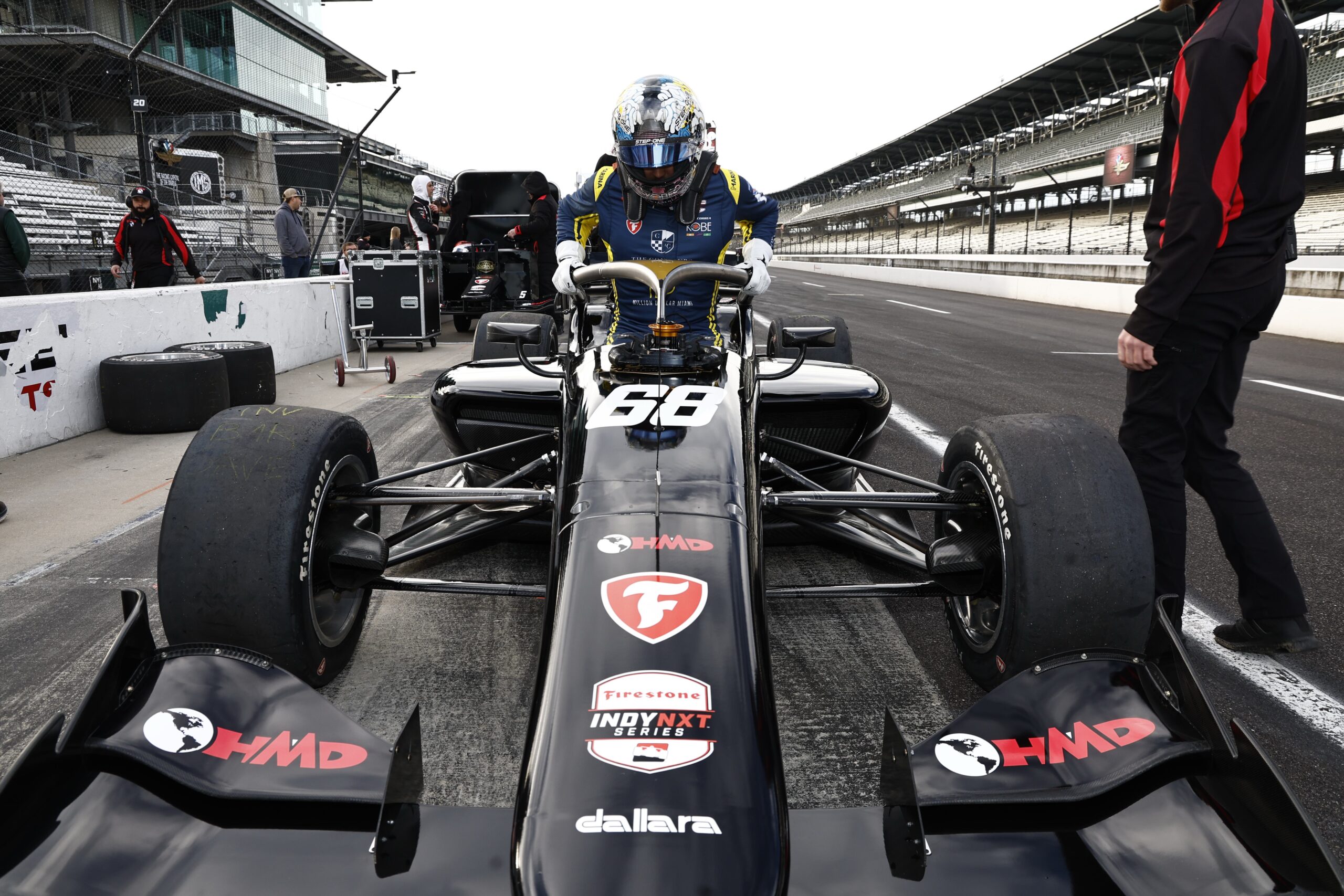
Juan Manuel Correa’s career through the junior single-seater ladder reflects the difficult balance between ambition, adaptation and resilience. Across Formula 4, GP3, Formula 2, and now Indy NXT, Correa has faced sudden changes, steep learning curves and demanding machinery that forced him to grow quickly. Each step brought a different challenge and taught valuable lessons—GP3 demanded immediate adaptation after a mid-season move, Formula 2 required a higher level of preparation, and his F1 test with Alfa Romeo Sauber gave him a glimpse of the pinnacle. Now, as he competes in Indy NXT, Correa carries those experiences into a new racing environment with different tyres, circuits and driving demands.
In an exclusive interview with Pit Debrief, Correa reflected on his jump to GP3 with Jenzer Motorsport, his 2019 F1 test at Paul Ricard, and the lessons from Europe that continue to shape his approach in North America.
A sudden GP3 move with Jenzer Motorsport
Correa’s GP3 debut came in unusual circumstances. Rather than joining the grid after a full winter programme, he stepped into the championship mid-season with Jenzer Motorsport. That move brought immediate pressure, especially as he had to leave behind a difficult Formula 4 campaign and adapt to a much faster car.
“Yeah, it was challenging because, as you said, it was mid-season, I think it was 2017. I was doing my second year in Formula 4, but things were not going good at all in Formula 4. I was having some issues with the team.
He continued, “I just felt like my performance was much better for the results I was getting, and something was just not clicking.”
That period clearly tested Correa’s confidence. However, it also pushed him towards a decisive career change. Instead of staying in an environment that no longer worked for him, he and his management chose a more aggressive route.
“It was a weird season for me, so together with my management, we decided to stop our contract in Formula 4, and we got this opportunity to jump in mid-season to GP3 with Jenzer. At that point, it was going from a Formula 4 car that, I think, is 200 horsepower, probably less than 200, to the GP3, which had 400 horsepower. It had real aerodynamics; it’s a proper car. It’s actually very similar to what an Indy NXT [car] is now.”
That comparison gives his current Indy NXT chapter greater context. Long before racing in North America, Correa had already experienced machinery with a similar level of seriousness and physical demand.
Spa shock and the reality of downforce
The challenge became clear immediately at Spa-Francorchamps. Correa entered one of the fastest circuits on the calendar in a car far more powerful than anything he had raced before. Rain made that first session even more demanding.
“So imagine what I’m racing now—I did it on basically my second year ever in Formula, and jumping in mid-season. I remember our first race was Spa-Francorchamps, and the Free Practice was raining, and I was about four seconds off the pace. I mean, I was terrified. It was a very fast car compared to what I was used to.”
Even so, Correa turned that difficult introduction into a valuable learning phase. Rather than judging the move only by immediate results, he used the second half of the season to understand downforce, race pace and the demands of a bigger car.
“So I used that second half of the season just to get activated, get used to downforce. It wasn’t bad, to be honest. I mean, in race pace, I was pretty competitive. I struggled a little bit more in Quali, like the one-lap type of format that you would get in Europe with the Pirelli tyres. So everything was a bit of a learning experience.”
That learning curve proved crucial. By accepting the discomfort of the transition, Correa built the adaptability that later helped him in higher categories.
Building momentum in 2018
After the shock of his GP3 debut season, Correa returned with a stronger foundation in 2018. Pre-season testing gave him the preparation he had lacked the previous year, and he used it to establish himself more firmly within the championship.
“But then 2018—I came back, I stayed with Jenzer, I was able to do the pre-season tests, everything. And actually, 2018 was a very competitive year for me in the championship, considering that Jemzer was a midfield team. We weren’t expecting to go out there and win the championship, but we had a few top fives. We were close to a few podiums. So it was a pretty good season.”
That campaign gave Correa more than results. It gave him a sense of readiness. As he moved towards Formula 2, he felt better equipped to handle the speed, pressure and level of competition.
“And I feel like those year and a half, two years, were very critical into pushing me forward to make the step up to Formula 2 in 2018. And when I got to Formula 2, I was pretty well prepared. I was driving at a high level.”
In that sense, GP3 acted as a bridge. It forced Correa to grow quickly, then rewarded him with the experience he needed for the next stage of his career.
The Alfa Romeo Sauber F1 test at Paul Ricard
Correa’s 2019 Formula 1 test with Alfa Romeo Sauber at Paul Ricard marked another major milestone. After years of chasing progress through the junior ladder, he finally experienced F1 machinery first-hand.
“Yeah, it was, it was really nice to drive. Relatively easy to drive as well, which was surprising. Biggest performance improvement that I felt was just the braking. Braking was pretty impressive, even compared to the F2. So it took a few laps to get used to. Like you’re arriving quicker and you can actually brake later. So that was pretty cool. And my neck was very sore at the end of the day, the back part of the neck.”
“It was an amazing day”
Interestingly, Correa did not describe the car as intimidating in every area. Instead, he highlighted its braking performance and physical load, while also noting how refined it felt compared to junior machinery.
“And yeah, it was, it was an amazing day. It was super cool to have the actual team there. We got to do some test items. We got to put on some new tyres, like push the car to the limit. And it was, it was a lot of fun.”
The test also helped him understand why Formula 1 teams invest so heavily in development. The car gave him a level of feedback and connection that stood apart from anything he had driven before.
“It was really a pleasure to drive it. You start to realise why they spent the money they do to develop those cars. It really, the level of feedback it gives you as a driver, you feel everything it’s doing. It’s pretty cool. “
For Correa, that day remains more than a technical memory. It also carries personal significance.
“So, I think it’ll always be a great memory for me. It was a fun day. My parents were there. They didn’t want to miss that opportunity.”
Correa on carrying a “bookbag” of lessons into Indy NXT
As Correa now builds his career in Indy NXT, he brings lessons from every stage of his junior single-seater journey. His experience across Formula 4, GP3, Formula 3 and Formula 2 has shaped both his driving and his mindset.
“Yeah, I mean, so many. I feel like, as you go through your racing career, you’re just carrying this big bookbag, and every session, every race, every year, you add books into your bookbag, and you add tools. And some are good to add; others—like, some things are better to just forget and move on. So yeah, it’s shaped the way I drive. It’s shaped who I am as a driver, on and off track.”
For Correa, one lesson stands out clearly.
“You know, for me, some of the biggest lessons, if I have to pinpoint specific ones, are: one, like, never let emotions get the best of you during a race.”
He expanded on that point by explaining how frustration inside the cockpit can quickly lead to errors.
“I think that’s something that you see a lot of the younger guys do often, where you get overtaken. Racing can be very frustrating. You’re putting it all on the line, and many times it doesn’t go well. And I think it’s very easy to get emotional behind the wheel. And when you get emotional, that’s when mistakes happen. That’s when you usually don’t finish races. So that was a big one that I learned early on—that whatever the circumstance, you’ve got to be able to reset inside the car and do your best starting from that point forward.”
That approach matters even more in a series like Indy NXT, where close racing, physical tracks and unpredictable conditions demand composure throughout a race.
Avoiding overthinking during race weekends
Correa also highlighted the mental side of performance. Although he values technical feedback and works closely with engineers, he knows that too much analysis can disrupt his natural rhythm behind the wheel.
“And then another big one for me has been to not overthink throughout the race weekend. And maybe this is just something personal for me. I know that a lot of drivers are super analytical. They take notes about everything, and they’re involved with their engineers. I like the technical side, I am very, very good at giving feedback, I know what’s happening in the car. But I really have to keep myself from overthinking and getting too emotional, because then I lose a little bit of the instinct and the feeling when I’m behind the wheel, and I tend to not perform as well when I do that. So that’s been a big one that I still need to remind myself every time I’m driving—to stick to the plan.”
That balance between analysis and instinct often separates strong drivers from inconsistent ones. Correa understands the car, yet he also recognises when he must trust feel, rhythm and execution.
Europe versus North America: tyres, tracks and attitude
Correa’s move to Indy NXT has also exposed him to key differences between the European and North American racing ladders. He identified tyres as one of the clearest contrasts.
“There’s a big difference between the European ladder and the USA, North American ladder. Biggest one being the tyres. Pirelli tyres are very particular. Firestone tyres also have their sort of tricks that I’ve been learning.”
The circuits create another major difference. In Europe, Formula 3 and Formula 2 often race on polished Grand Prix venues with large run-off areas. In North America, Correa has encountered a more rugged style.
“Then the tracks—very different style of tracks here in the US compared to Europe. Especially when I talk about Europe, I’m talking about the ladder to Formula 1, so Formula 3, Formula 2. All the tracks are very manicured, very smooth, big runoffs. I want to say, in a way, a little more tame.”
Adapting to “very raw” American circuits
That contrast has forced Correa to adjust again. However, his earlier career already taught him how to adapt quickly, and that skill now helps him tackle the rawness of American circuits.
“Whereas the tracks here in the US are very raw. And some places are really cool—like, this is sketchy, but it’s really cool. Other places are so bumpy, like Arlington. You know, all of the European drivers—I know if you would have taken them there and just dropped them in, they would have been like, ‘nah, this is undrivable, this is way too bumpy.’ And we actually saw, I think it was Mick Schumacher, he was on the radio, like, ‘this is crazy,’ you know.”
For Correa, that rougher edge forms part of the appeal.
“And it is crazy. But I feel like, once you race a little bit more in the US, you’re just like, yeah… you’ve got to be a bit of a cowboy to be able to race over here. So I feel like that’s pretty cool out here in North America.”
A career built on adaptation:
Each chapter of Correa’s career has demanded a new kind of growth. His GP3 leap taught him to handle fear and uncertainty, while his Formula 1 test gave him a sharper understanding of elite machinery. Meanwhile, his junior racing years taught him to manage emotion, avoid overthinking and build a flexible mental approach.
Now, Indy NXT presents a different challenge again. The cars, tyres and circuits demand commitment, and the North American ladder rewards drivers who embrace unpredictability. Yet Correa’s career has already prepared him for that task. Through every transition, he has continued to adapt, learn and carry the right lessons forward.