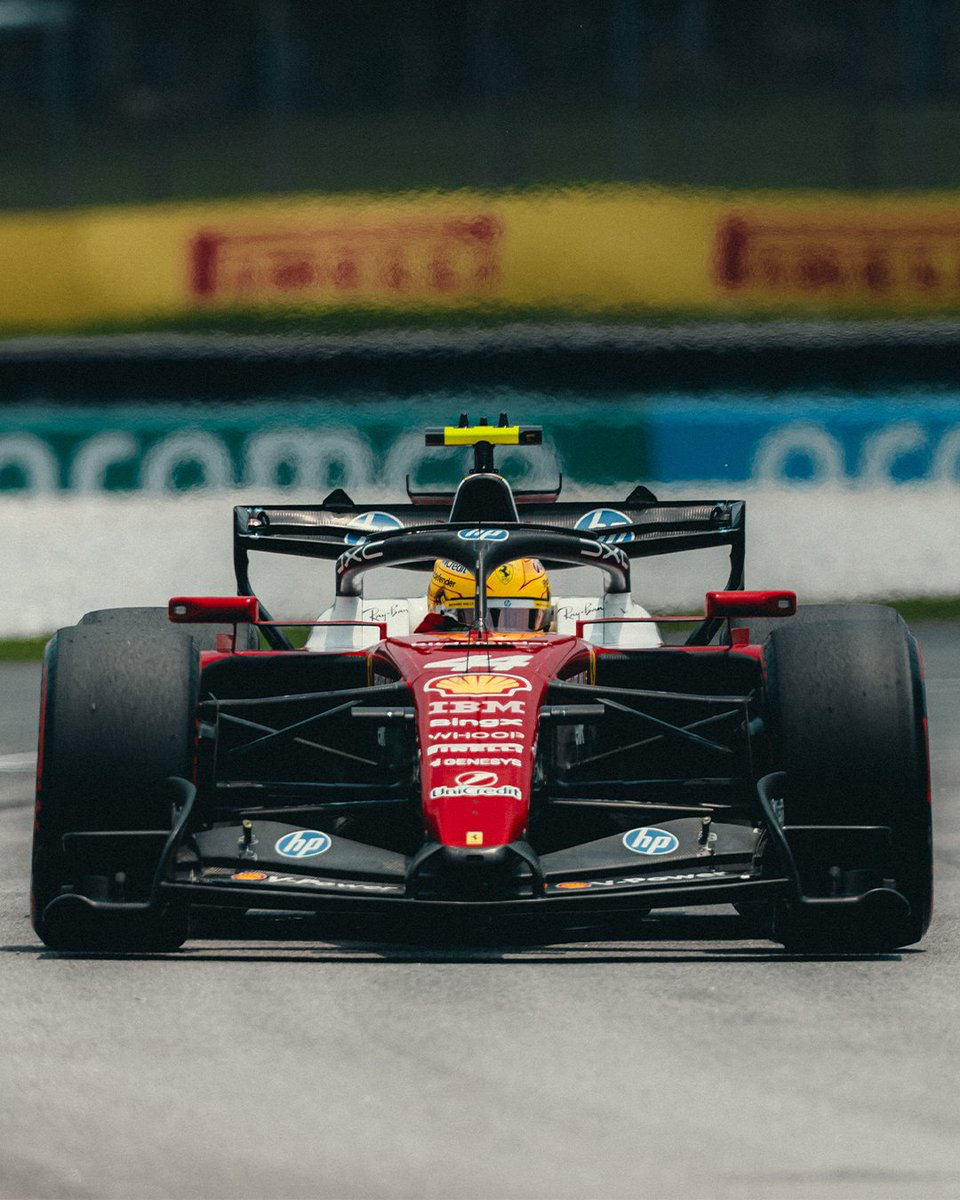
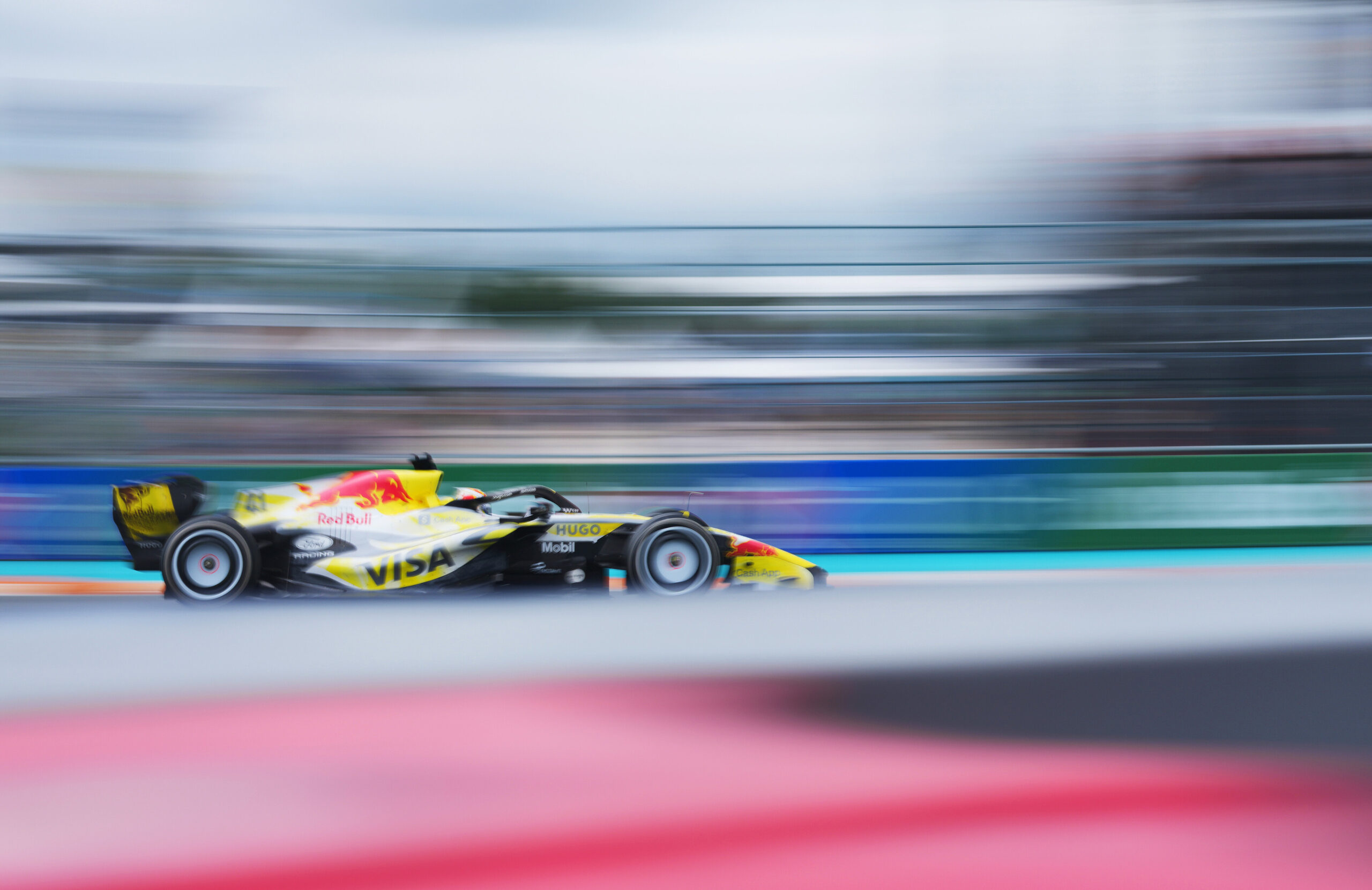
Racing Bulls will be entering the 2026 F1 Canadian GP weekend with its latest upgrade package for its challenger.
The team is looking to redeem itself after a disappointing weekend in Miami, where they left empty-handed. Liam Lawson faced an early end to his weekend at the Miami International Autodrome. The New Zealander made contact with Alpine‘s Pierre Gasly and was forced to retire thanks to a gearbox failure. Meanwhile, his teammate Arvid Lindblad experienced a challenging debut in Miami. He finished the race outside the points in P14.
As they approach round 5 of the 2026 F1 season at the Circuit Gilles-Villeneuve, Racing Bulls is confident in the upgrades and behind-the-scenes work they have done in preparation for the Canadian GP. There are also reports of a high chance of rain this weekend. A factor Racing Bulls’ Chief Technical Officer, Tim Goss, says will give the team “a slight edge”.
Goss on Racing Bulls returning to the historic Circuit Gilles-Villeneuve for the 2026 F1 Canadian GP
Goss is excited to return to the Circuit Gilles-Villeneuve. He went into detail on the different aspects of the circuit and the challenges Racing Bulls would have to tackle. The Briton added that the prospect of rain will bring another set of significant challenges.
“The fifth race of the 2026 season takes Fl to the Circuit Gilles-Villeneuve in Canada with its superb setting on a semi-permanent track, on an island on the St. Lawrence River not far from the city of Montreal. The circuit is characterised by some long, fast straights, heavy braking into low-speed corners and a difficult final chicane. Where the challenge is to be able to ride the kerbs and retain enough control to avoid hitting the concrete ‘Wall of Champions’ on the exit. On top of this, wet weather is often thrown into the mix.“
How the 2026 technical regulations will affect how Racing Bulls approaches the 2026 F1 Canadian GP
Goss also touched on how the 2026 F1 technical regulations will change how teams approach the Canadian GP. A defining characteristic of the Circuit Gilles-Villeneuve is the back straights that lead into the Turn 8 chicane.
Hence, teams usually prioritise straight-line speed and aerodynamic efficiency at the track. In the past, teams would have chosen to use lower-downforce rear wings; however, in 2026, teams including Racing Bulls will instead stick to the standard rear wing level.
The Briton explained this was due to the introduction of the Straight-mode active aerodynamic settings, which significantly reduce drag at both ends of the car.
“The long straights of the circuit have traditionally led to teams choosing a lower downforce rear wing setting to shed drag and shift the priority towards maximising speed in a straight line. However, with the 2026 regulations, the use of the Straight-Mode active aerodynamic settings will drop the drag level significantly, and as a result, we retain the standard rear wing level.”
Goss shared that this reduces the responsibilities of the engineering team. However, he also added that preparation for the 2026 F1 Canadian GP will be more complex when it comes to the power unit.
“This to some extent simplifies the engineering task and removes any difficult decisions on wing level, but with the complexities of matching chassis and power unit settings with different circuit characteristics, there is still much to do.”
The prospect of rain at the 2026 F1 Canadian GP
Goss says Racing Bulls will have an added advantage at the 2026 F1 Canadian GP should there be rain. Since the team has completed the Pirelli tyre test following the Japanese GP, the Briton is confident the team will be able to tackle the wet weather.
“The chance of the forecasted rain for Saturday and Sunday will introduce a new dimension for teams. We have a slight edge in this area, having run Wet and Inter tyres in a Pirelli tyre test session after the Japanese GP, and we will use this knowledge on wet weather tyre warm-up and balance to our advantage.”
He added that the VCARB03 standard setup will serve as a good base for the team to work from if needed.
“The baseline car set-up focus for dry weather will be on good braking performance, stability on entry, good low-speed through corner balance, kerb riding and traction.”
Goss is confident in Racing Bulls’ performance
The Briton also shared how the Racing Bulls have been preparing for the upcoming 2026 F1 Canadian GP. He added that the team is confident that the new upgrades they are bringing with them to Montreal will place them in a position to fight for points.
“Our race preparation has gone well since Miami. The engineers have worked through the data, and we have completed good simulator sessions with the drivers on both circuit familiarity, car set-up and race pace optimisation. We bring the next phase of our early-season aerodynamic upgrades, and we are confident that this will allow us to build on our performance to put us firmly into the mix for a points-scoring weekend.”
Goss then took the time to acknowledge the team’s new Technical Director, Dan Fallows, who will be making his trackside debut.
“This race weekend in Canada also represents the first trackside race for our Technical Director Dan Fallows, after he joined the team in April.”