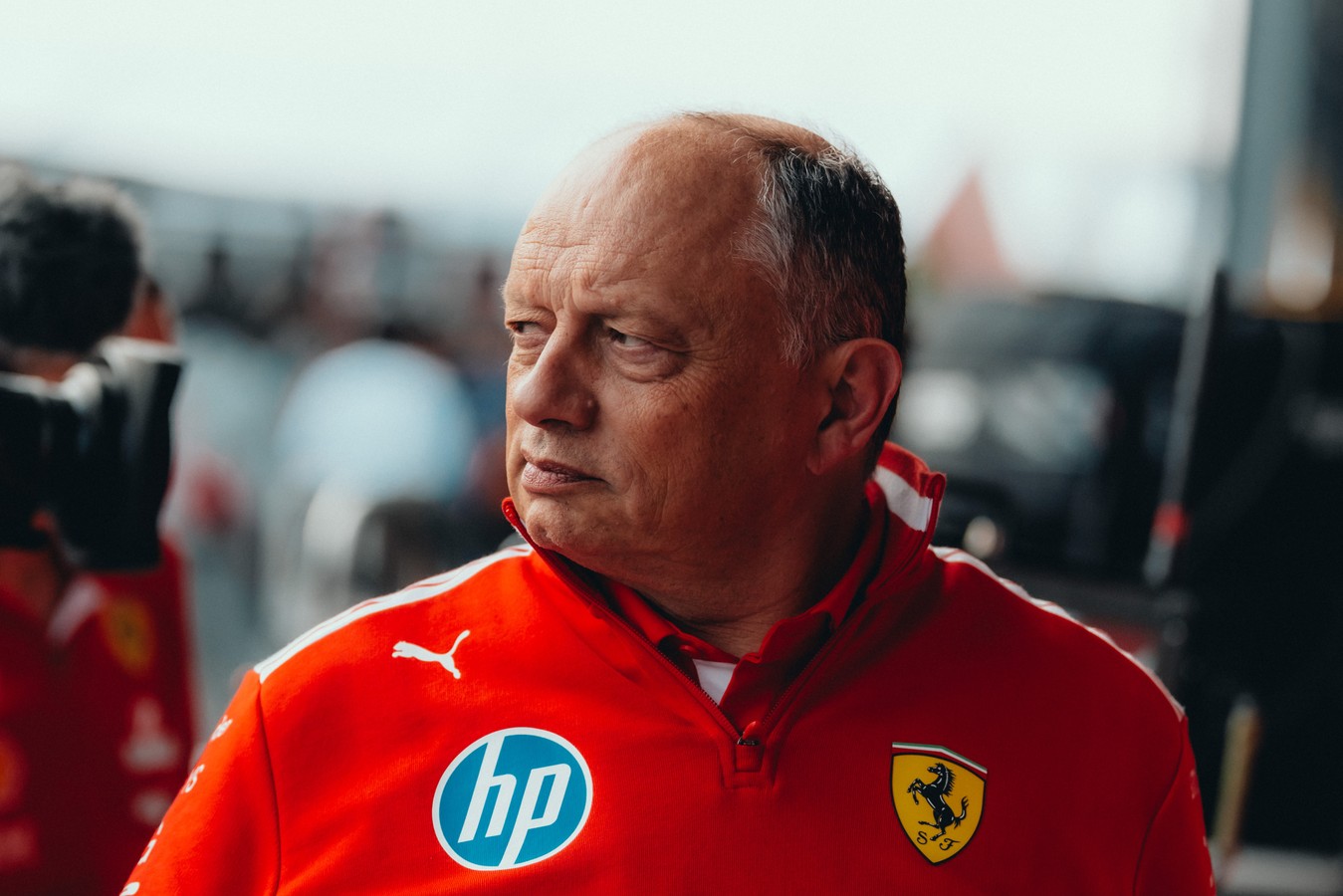
Fred Vasseur opened up about whether a clean race at Monza would’ve demonstrated the SF-26’s true potential, if there were any positives to take away from the race weekend, and whether the new ADUO engine met their expectations following a meagre haul of 8 points at the 2026 Italian GP on Sunday.
After nearly missing out on the final segment of qualifying, Lewis Hamilton set the fifth-fastest time in Q3. Charles Leclerc pipped his teammate for P4. Oscar Piastri’s grid penalty meant they lined up on the second row of the grid on Sunday.
The Ferrari duo went wheel-to-wheel immediately as the race got underway. Hamilton launched an aggressive move up the inside of his teammate at the first corner. Since the Monégasque held onto the inside line, he ran into the gravel at the exit of the chicane and lost several positions.
Although the Scuderia have yet to confirm it, a potential issue with power delivery might’ve led to Leclerc losing control of the car and experiencing a massive shunt on Lap 2.
With the session getting red-flagged, Hamilton swapped his softs for mediums. As the action resumed, he produced a solid recovery drive that took him as high as third.
When Lance Stroll encountered a hydraulic issue and triggered the VSC on Lap 28, the Ferrari pit wall opted to not box Hamilton and maintain track position.
However, the 41-year-old struggled on the straights as the race progressed, and the loss of tyre performance towards the end meant that he was unable to defend his position even against the McLaren drivers, who were also managing heavily worn rubber—albeit it was the hard compound.
Hamilton ultimately took the chequered flag in P6, and Ferrari are now 122 points adrift of Mercedes in the Constructors’ standings.
Straight-line speed primary concern at Monza
Speaking in a print media session after the 53-lap F1 race, Fred Vasseur reflected on what the SF-26’s optimal performance would’ve been like without the scrap between the Ferrari teammates and Leclerc’s crash on the second lap of the 2026 Italian GP.
Unable to provide a definitive answer, the Frenchman stated that their race pace on Sunday was average. At the same time, he pointed out that their horsepower deficit and lack of straight-line speed made it extremely difficult for Hamilton to defend his position against faster cars.
Vasseur maintained that Ferrari’s lack of top speed in comparison to the frontrunners would’ve undermined their performance anyway, irrespective of the deployment strategy, pit stop choice, and overall pace.
“There are a lot of ifs. And honestly, I can’t predict. I think race pace, as we showed yesterday the race pace was probably okay-ish.
“Main issue was top speed and overtaking. It means that it was quite impossible for us to attack or to defend. Or when we are attacking someone, we are draining the battery, and the next straight line we are losing the position.
“More than the pace, I think we were a little bit in the corner honestly with the strategy, the strategy of the lap and of the strategy of the pit stop. And we were just stuck with the top speed.”
Vasseur on whether Ferrari took away any positives from the 2026 Italian GP weekend
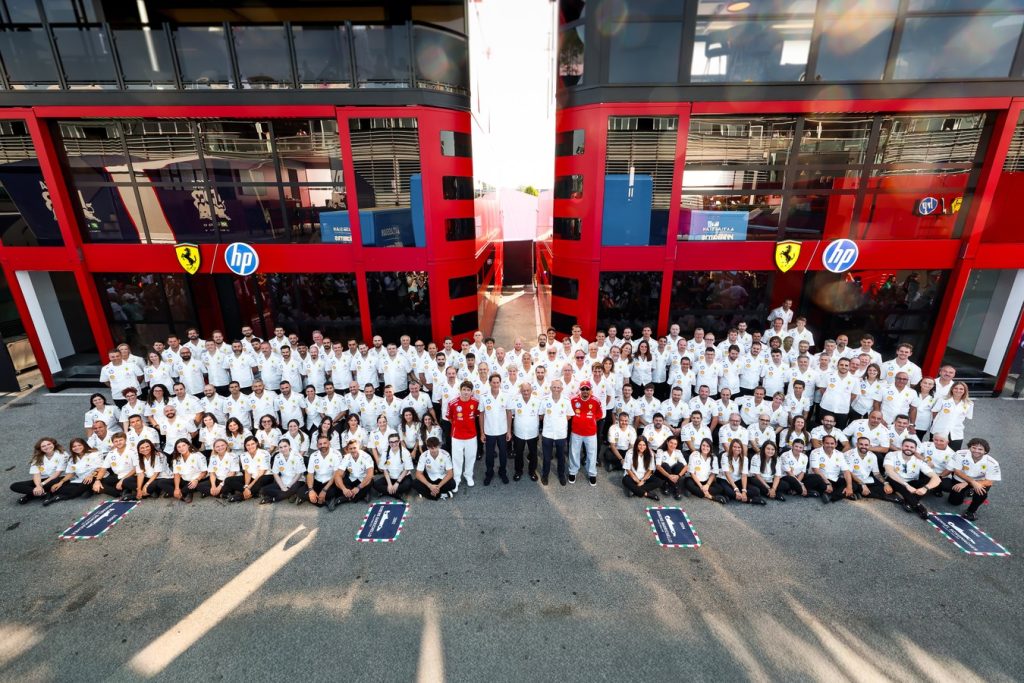
Claiming that Ferrari had made some progress over a single lap on Saturday, Fred Vasseur revealed that they were well aware of the challenges the Autodromo Nazionale Monza would pose before heading into the 2026 Italian GP weekend.
The Ferrari Team Principal noted how certain cars had a massive top-speed advantage over them in Sunday’s event and that pushing the SF-26 harder in the corners left them with suboptimal energy to deploy on the following straight. While he conceded that the incidents they experienced in the first two laps were unfavourable, he reiterated that the Maranello-based squad had anticipated these headaches ahead of their home race.
“It’s difficult to be positive 10 minutes after the race. If I want to be positive, I would be much more focused on yesterday. I think we did a step.
“But clearly, we knew before the weekend that the fight in the race will be critical because some teams were fighting between them. They were 10 kph faster in one straight and 10 slower [on another one]. The issue was that we were almost 10 [kph] slower everywhere.
“When we were putting a bit more energy in one corner, it was even bigger the gap in the next straight line. And it was quite impossible to manage.
“But honestly, this is not a news. Coming to Monza, we knew that it will be like this. Then the circumstances of the race didn’t help for sure.”
Vasseur comments on how potent the second engine upgrade introduced at the 2026 Italian GP is
With respect to his earlier prediction that the second ADUO upgrade wouldn’t be a game changer and whether Ferrari’s new engine is more efficient in terms of deployment, Fred Vasseur refused to divulge any sensitive details.
However, the 58-year-old explained how the lack of adequate horsepower and the subsequent tinkering with deployment strategies to eke out more power on the straights can lead to complications elsewhere on a lap.
Maintaining that the SF-26’s deployment is fairly satisfactory, Vasseur restated post-Italian GP that their fundamental limitation in 2026 is their power deficit to the Mercedes and Red Bull engines.
“At least I was right on something.
“No, but I don’t want to give details. When you have a lack of pure power, then you start to play with deployment to try to compensate in one straight line. But if you deploy more somewhere, for sure you will deploy less somewhere else and then you are going in the wrong spiral to try to play with this when you are fighting. Honestly, it’s not about deployment.
“I think deployment was okay-ish. Even McLaren, they were playing a little bit Friday and Saturday morning. At the end, we are missing pure power.”
Asked if the progress with the second upgraded engine has been in line with their expectations, Vasseur responded, “Yes.”
Quipping about using a variable, the Frenchman simply remarked that the delta to the benchmark power units varies from track to track.
“But the reality of this is that if you are missing ‘x’ in Zandvoort, you are at two or three tenths. [I’m] using letter because you will try to extrapolate. If you are missing a bit less than ‘x’ in Monza, the delta with the Merc is two times bigger.
“No, don’t try to interpret the ‘x’.”