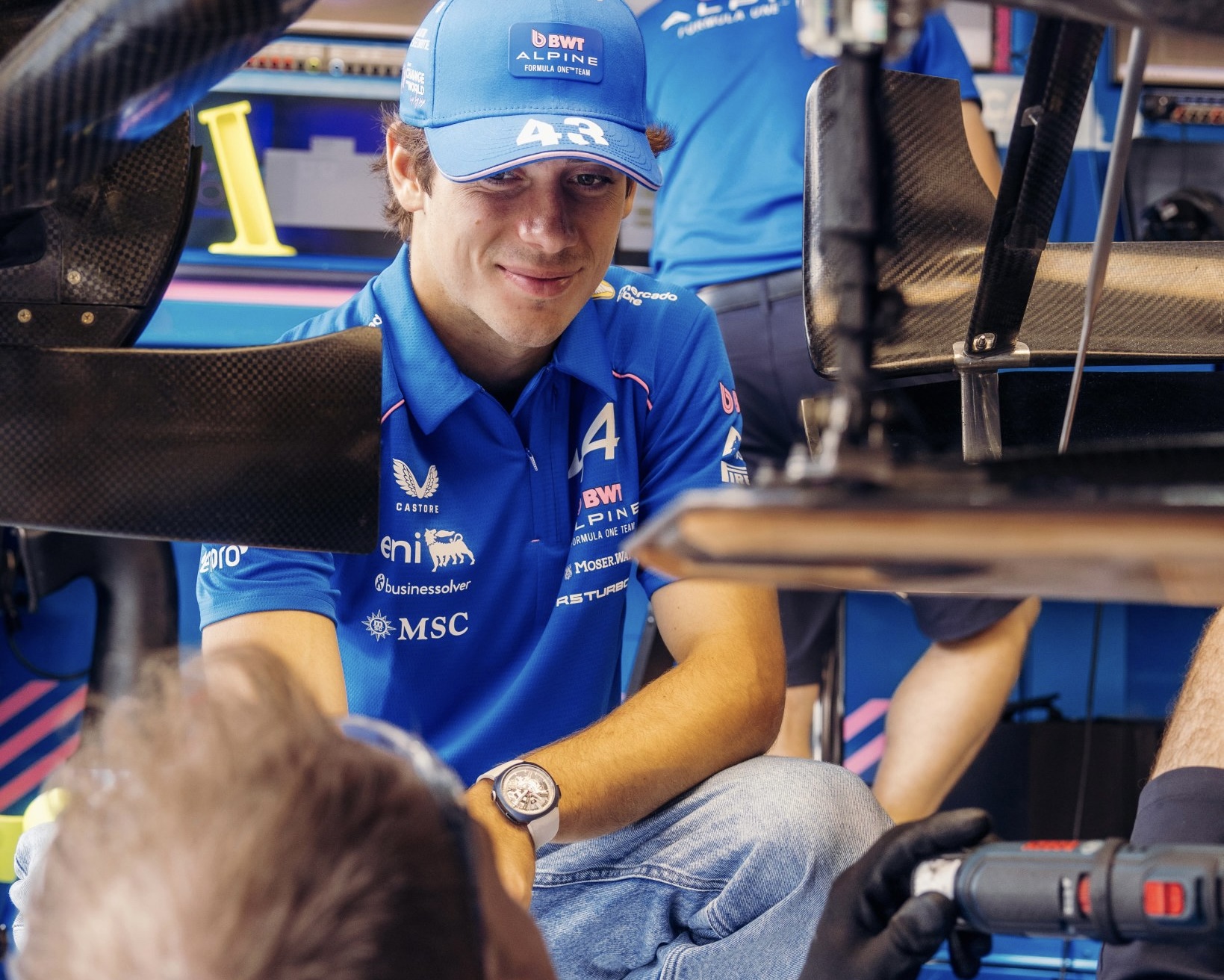
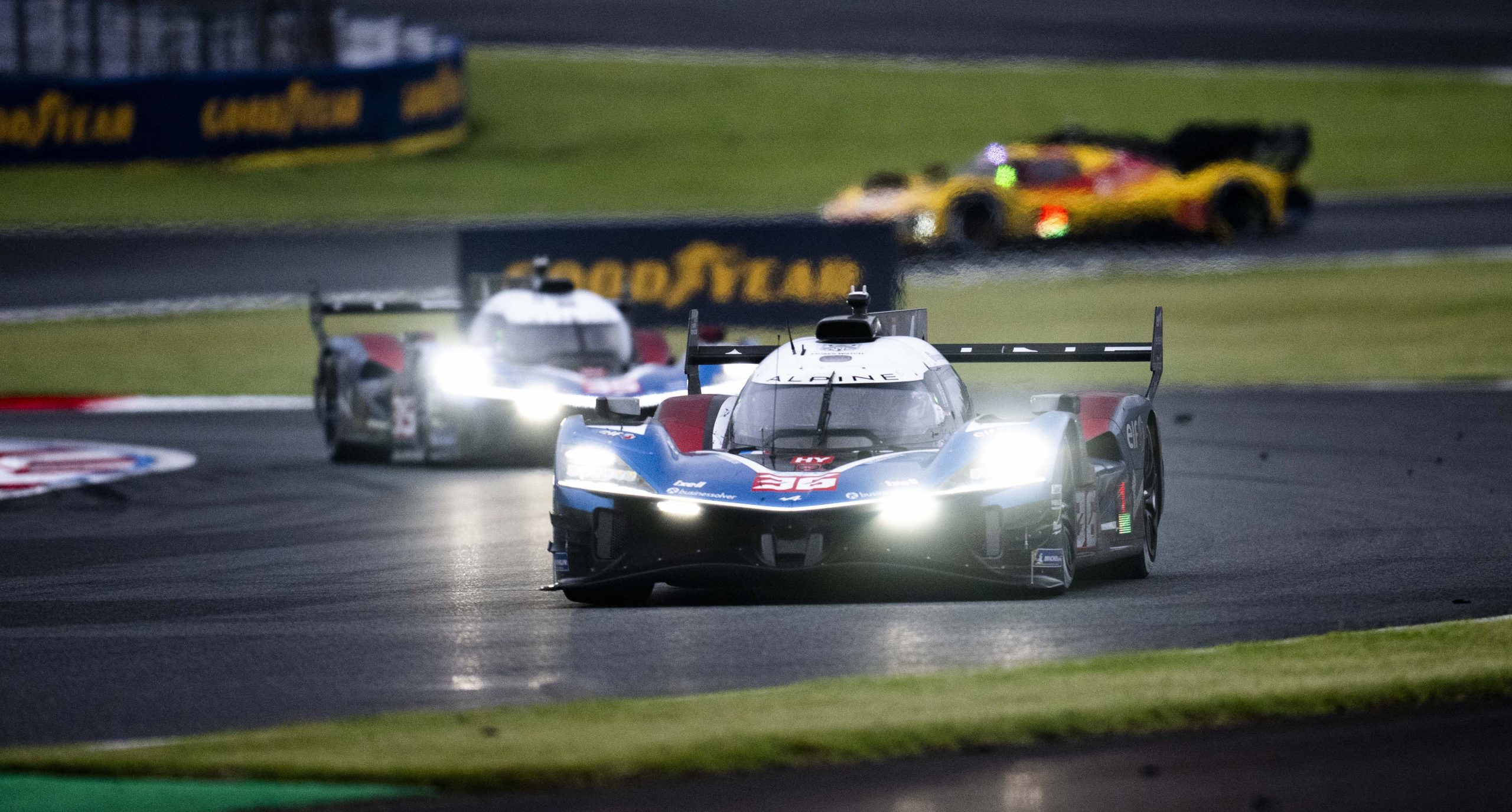
Alpine came within six-tenths of victory at the 2026 FIA World Endurance Championship 6 Hours of Fuji after producing its strongest collective performance of the A424 era, with Victor Martins and Jules Gounon finishing second while Charles Milesi and Ferdinand Habsburg took fourth.
The French manufacturer controlled much of the six-hour contest after locking out the front row, but a late Safety Car transformed the race and allowed Toyota and BMW to jump both A424s during the final pit-stop cycle. Martins subsequently charged back through the order and finished only 0.591s behind Ryō Hirakawa, narrowly missing victory in the dramatic closing stages of the 2026 WEC 6 Hours of Fuji as Alpine ultimately placed both cars inside the top four.
The result continued Alpine’s recent upward trajectory after third and fifth at the Lone Star Le Mans. The team’s first podium of the 2026 season at COTA had already provided encouragement before Fuji, but the Japanese weekend demonstrated that the A424 could sustain a challenge at the head of the Hypercar field in both wet and dry conditions.
Martins sets the pace in changing Fuji conditions
Alpine returned to Fuji 12 months after securing the A424’s maiden WEC victory at the Japanese circuit and quickly emerged as one of the leading Hypercar contenders. Martins, who joined Alpine’s Hypercar programme for the 2026 WEC season, led the headlining class during Friday afternoon’s dry second Free Practice session before repeating the achievement when rain transformed conditions for FP3 on Saturday morning.
The Frenchman’s 1:40.594 during the wet final Free Practice session at Fuji kept Alpine at the head of the order and reinforced the A424’s competitiveness across substantially different conditions. Martins had already produced the outright fastest time of the weekend in FP2, placing the No. 36 in position to benefit when worsening weather prevented the scheduled Qualifying session from taking place.
Officials subsequently formed the grid using each car’s fastest lap from the three Free Practice sessions. Martins’ FP2 benchmark consequently handed the No. 36 its first Hypercar pole, while the sister No. 35 moved alongside after a penalty for the No. 007 Aston Martin. The resulting Alpine front-row lockout at Fuji placed Martins and Gounon ahead of Milesi and Habsburg as the manufacturer targeted consecutive victories at the circuit.
Alpine establishes control at the front
Gounon and Habsburg took the wheel for the opening stint on Sunday, with both drivers starting on slick tyres despite the slightly damp surface. The decision worked as the two A424s gradually separated themselves from the chasing Hypercar pack and began exchanging the lead through the opening pit-stop cycles.
A succession of neutralisations repeatedly erased the margins Alpine established, but the interruptions did little to change the underlying competitive order. Each time racing resumed, the two blue prototypes rebuilt their advantage and reasserted their position at the front in front of a 72,326-strong crowd at Fuji Speedway.
The race was not completely straightforward for either crew. Martins overshot Turn 1 while dealing with cold tyres, while Habsburg made light contact with Toyota driver Nyck de Vries. Neither moment fundamentally compromised Alpine’s position, and the No. 36 continued to lead the No. 35 with a significant advantage over the cars behind as the final hour approached.
For much of the contest, Alpine appeared increasingly capable of converting its front-row lockout into a one-two finish. However, another Safety Car with less than an hour remaining completely changed the strategic picture.
Late Safety Car turns race against Alpine
An LMGT3 accident brought out the Safety Car shortly before the final planned refuelling stops, compressing the Hypercar field just as the race entered its decisive phase. The neutralisation presented teams with several strategic options, and Alpine’s rivals took advantage.
As the field headed into the pit lane, Toyota prioritised track position with the No. 8 car by electing not to change tyres and short-fuelling Hirakawa. BMW also gained ground with the No. 15, while Alpine fitted fresh Michelin tyres and completed a more conventional service.
The different approaches completely changed the order. The No. 35 rejoined in third, while the previously leading No. 36 fell to fifth. What had looked like a controlled Alpine one-two suddenly became a recovery drive with very little racing time remaining.
Barrier repairs extended the neutralisation and left only around 20 minutes on the clock when the race finally restarted. Therefore, Martins had fresh tyres and substantial pace, but very little time to use either advantage.
Martins charges back towards victory
Martins immediately attacked once racing resumed and rapidly began recovering the positions Alpine had lost during the pit-stop sequence. The young Frenchman first overhauled Marco Sørensen’s Aston Martin for fourth before Milesi strategically allowed the sister A424 through, freeing Martins to attack BMW’s Dries Vanthoor.
Vanthoor proved considerably more difficult to dislodge, but Martins continued applying pressure until the BMW ran wide at Turn 6. That mistake allowed the No. 36 into second and released Martins to chase Hirakawa during the final minutes.
The tyre advantage allowed Martins to close rapidly, setting up the tense conclusion detailed in the Fuji race report as Toyota attempted to defend its home victory against the faster Alpine. Martins continued reducing the gap but ran out of time, crossing the line only 0.591s behind Hirakawa after six hours.
Milesi brought the No. 35 home fourth, only 1.284s away from the podium. Alpine therefore missed the one-two that had looked possible for more than five hours, but second and fourth still represented the manufacturer’s strongest combined result of the A424 programme.
Martins proud despite narrow defeat
Martins acknowledged the frustration of missing victory after Alpine had controlled so much of the race, but the WEC rookie also focused on the strength of the team’s overall performance.
“Second place and a podium is a strong result after an amazing race,” Martins commented to FIAWEC.com. “With 50 minutes remaining, we were running first and second, which shows how well the team executed everything operationally, but the final safety car did not fall our way and I had to fight back after our last stop. Still, the A424 was extremely quick throughout the weekend and even if victory felt within our reach, we can be proud of our performance.”
The podium also strengthened Martins’ impressive first WEC campaign. His Fuji performance combined outright pace across changing conditions with an aggressive late recovery, turning what could have become a disappointing fifth place into a genuine challenge for victory.
Gounon left with mixed emotions
Gounon shared Martins’ disappointment after spending so much of the six-hour race in control. However, he also recognised the significance of placing both Alpine cars inside the top four against a competitive Hypercar field.
“We have mixed feelings,” Gounon said. “We led for most of the race, but the final pit-stop required a difficult choice that ultimately changed the outcome. Nevertheless, second and fourth is a strong result for the team. After running at the front for so long, we really wanted the victory, so missing out is frustrating but that’s racing, and I want to thank the entire team for everybody’s tremendous work.”
The No. 36 crew’s second place also represented another substantial points gain after finishing fifth at COTA. Alpine had arrived in Japan fifth in the Manufacturers’ Championship, but its Fuji performance provided the opportunity to overhaul Cadillac.
Milesi takes positives from missed one-two
Milesi had experienced victory at Fuji 12 months earlier and therefore understood exactly what Alpine had narrowly missed. Nevertheless, he highlighted the broader significance of another weekend in which the A424 demonstrated that it could consistently compete near the front.
“It was a strong result, but we were a little gutted to miss the one-two after occupying those positions for more than five hours,” Milesi said. “The entire team did a great job throughout the week, and everybody can be proud. We achieved our target of outscoring Cadillac, and now we want to carry this level of performance into the final two races.”
The No. 35’s fourth place followed its third at COTA and continued a particularly productive run for Milesi and Habsburg. Their recent results have also moved them further up the Hypercar Drivers’ standings as Alpine’s improved form begins to translate into sustained championship progress.
Alpine moves ahead of Cadillac
Second and fourth delivered a major haul in the Manufacturers’ Championship and moved Alpine level with Cadillac on 96 points. The WEC standings after Round 6 at Fuji classify Alpine ahead in fourth, with Ferrari only 19 points further ahead in third.
That represents a significant turnaround from three weeks earlier. Alpine had left COTA on 66 points after its first podium of 2026, but another competitive weekend in Japan has increased its total by 30 points and strengthened its position entering the final two rounds.
Milesi and Habsburg also climbed to 56 points in the Drivers’ Championship after their fourth-place result, while Gounon and Martins moved to 32 following their runner-up finish. The points remain secondary to Alpine’s wider development story, however, with consecutive strong weekends suggesting the A424 has become an increasingly consistent front-running package.
Sinault sees growing momentum
Team Principal Philippe Sinault viewed the disappointment surrounding a second-place finish as evidence of how much Alpine’s expectations have changed. After celebrating a podium at COTA, the team left Fuji frustrated that it had not converted prolonged race leadership into victory.
“This is another sign that we are performing at the level we expect,” Sinault said. “Naturally, there is some disappointment because we ran first and second for almost 80 per cent of the race, but the final safety car compromised our strategy.
“Victor did a tremendous job to recover and fight for victory, but it was not quite enough. After being disappointed with third and fifth in Austin, feeling the same about second and fourth at Fuji is a positive sign. We’re building real momentum and will be ready to fight again in Barcelona!”
Alpine now heads to Barcelona on 16–18 October carrying consecutive weekends of strong Hypercar results. Fuji ultimately denied the manufacturer another victory, but the combination of outright pace, a front-row lockout and two cars finishing inside the top four provided further evidence that the A424 has become a serious contender as the 2026 WEC season enters its final two rounds.