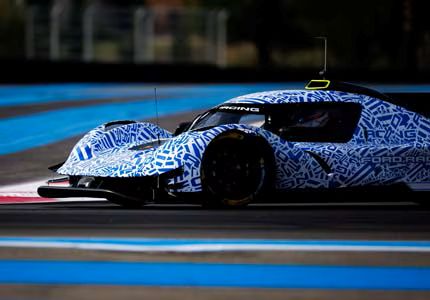
Ford Racing will take a major step forward in the development of its 2027 FIA World Endurance Championship (WEC) Hypercar when it begins running two examples of the car at Monza later this month.
The American manufacturer has completed three tests with a single version of its yet-to-be-named LMDh challenger since beginning its on-track programme at Paul Ricard in August. Subsequent visits to Portimão and Silverstone have added significant mileage, but the four-day Monza test from 27-30 October will mark the first time Ford operates both of its cars simultaneously.
The expansion comes as Ford moves beyond the early systems-validation phase and begins focusing more heavily on mechanical set-up, driver integration and the development of its new 5.4-litre Coyote V8 powertrain ahead of its 2027 WEC debut.
Two cars set to accelerate Ford Hypercar development
Ford WEC Hypercar Programme Manager Dan Sayers expects the addition of a second car to significantly increase the amount of development work the team can complete at each test, even if the larger operation creates additional logistical challenges.
Ford has so far concentrated on establishing a reliable baseline and ensuring the car’s major systems function as intended. The manufacturer’s first full Hypercar test at Paul Ricard produced more than 1,000 kilometres of running and provided the first substantial opportunity for the drivers and engineers to work with the complete package.
With two cars now available, Ford can divide its development priorities rather than working through them sequentially with one chassis.
“The focus is switching a small amount now the systems are operational, let’s say, we’re into the stage where they need to be developed around the drivers and the chassis,” Sayers explained.
He added that running two cars would allow the programme to separate control-system development from conventional chassis work.
“So the beauty of having two cars now at the tests is that we can focus one on control systems and one can do pure mechanical setup work so we can learn twice as much, twice as quickly.”
That increased capacity should prove particularly valuable as Ford approaches the latter stages of its European testing programme and moves closer to determining its final race specification.
Monza and Imola precede first endurance test
Monza represents the next stop in a development schedule that will continue at Imola before Ford undertakes its first dedicated endurance test at MotorLand Aragón in November.
The Aragón running will represent an important transition in the programme. Previous tests have allowed Ford to accumulate substantial mileage and identify early development priorities, but the longer endurance test should expose the car to the sustained demands it will face during WEC competition.
Ford plans to use the information gathered in Spain to prepare for another endurance test at Sebring in the new year. Sayers views the notoriously demanding Florida circuit as one of the most important proving grounds on the schedule.
“All of the learnings from that, which I’m sure there will be some, will then be put in place for the later endurance test at Sebring, which is in the new year,” he said.
Ford will also test at Circuit of The Americas as its development programme moves to the United States. COTA already forms part of the WEC calendar, while Sebring offers a different purpose because of the physical punishment its surface places on machinery.
“The primary reason for going out to the States is Sebring. As we all know, it’s a decent car-breaker so we want to go there and test it for durability,” Sayers explained. “That’s relatively late in the test program for obvious reasons but to go there in the new year in an endurance test is the best sign off for it.”
Early mileage encourages Ford
Ford began its programme close to ORECA’s base at Paul Ricard, with the French constructor supplying the LMDh chassis platform underpinning the new car. The manufacturer has since increased its mileage considerably as the programme moves through Portimão and Silverstone.
After covering more than 1,000 kilometres during the early French running, Ford completed approximately 1,300 kilometres at Silverstone. The growing mileage has encouraged the team, particularly as it learns more about its in-house-developed powertrain.
Sayers said the programme has so far experienced encouraging reliability but stressed that endurance testing often exposes smaller issues that shorter runs may not reveal.
“At the moment, things are going well in terms of reliability — we’re obviously learning things the whole time,” he said. “It’s normally more the smaller things that catch you out in these longer races, so it’s the smaller details whether it be rubbing looms or whatever it might be that we need to get on top of, log and then fix.”
While the gearbox and chassis use established LMDh technology, Ford has greater development responsibility on the powertrain side. Its naturally aspirated 5.4-litre Coyote V8 therefore remains a major focus as engineers work through different specifications.
The engine formed one of the central elements of Ford’s initial 2027 announcement, alongside the first three drivers confirmed for the Hypercar programme. Development has continued since then as Ford works towards a specification that it expects to have largely defined by the Aragón endurance test.
“We’re learning a huge amount from the powertrain and there’s development coming on all of the time,” Sayers said. “There will be various different specifications throughout testing with a view of us getting to the final spec, or very close to the final spec, at Motorland.”
Driver pairings to follow Aragón endurance test
Although Ford has already announced all six drivers for its two-car WEC programme, it has not yet decided how it will divide them between the two Hypercars.
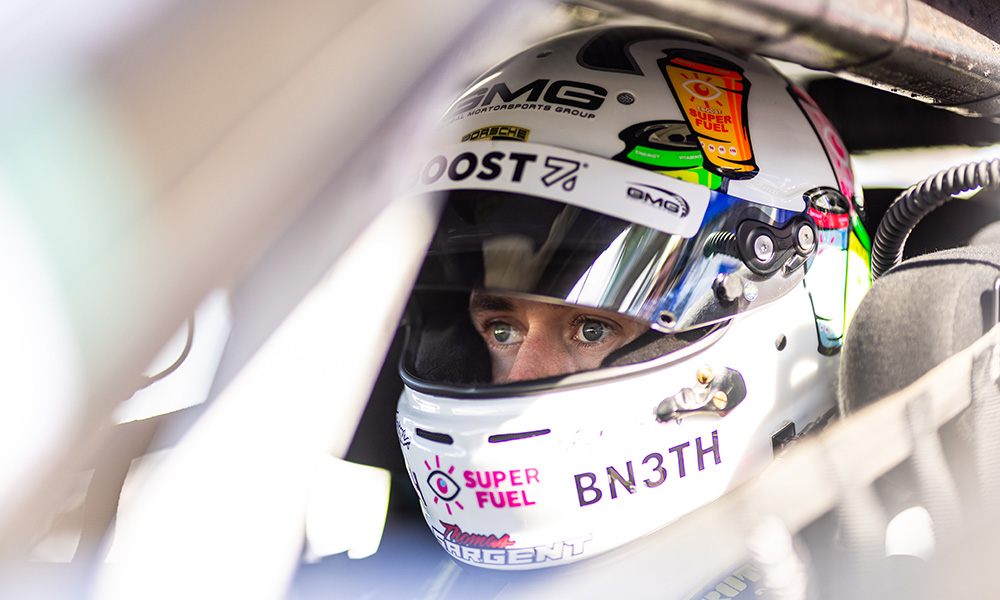
Mike Rockenfeller, Sebastian Priaulx and Logan Sargeant formed the first group announced for the project before Ford completed its six-driver Hypercar roster with Matt Campbell, Nick Yelloly and Tom Blomqvist. All six have now driven the developing LMDh car.
Ford intends to wait until after the first endurance test at Aragón before settling on its two three-driver crews. The decision will involve more than outright performance, with compatibility, ergonomics and how the drivers work together across longer runs all forming part of the assessment.
“No we’ve not decided who’s in which car at the moment,” Sayers said. “That will come towards the end of the year when we’ve done the first endurance test and we’ve seen how they operate together.”
He added: “Even down to the ergonomics in the car, there’s several factors that go into it, so it’s something we’re not rushing. We don’t feel the need to decide that straight away.”
The six-driver group gives Ford considerable prototype and endurance experience as it prepares to return to the highest level of the WEC. Sargeant has also used his 2026 LMGT3 programme to gain more experience of the championship before moving into Hypercar competition, describing his developing relationship with Ford as one that “almost feels like home” ahead of the COTA round.
Ford Hypercar name reveal approaching
One major piece of the programme remains under wraps. Ford has yet to announce the official name of its LMDh challenger, but the manufacturer plans to reveal it within the next few weeks.
The announcement will add another element to a project that has accelerated rapidly since its first track running in August. Ford has already assembled its six-driver roster, strengthened its engineering structure and completed thousands of kilometres of testing as it prepares for its return to top-class endurance racing.
The arrival of a second car at Monza now marks another important milestone. Rather than concentrating solely on bringing individual systems online, Ford can begin developing separate areas concurrently and accumulating data at a much faster rate.
With Monza, Imola and the Aragón endurance test still to come before the programme shifts towards COTA and Sebring, the final months of 2026 will play a major role in shaping the car that Ford ultimately brings to the WEC grid in 2027.