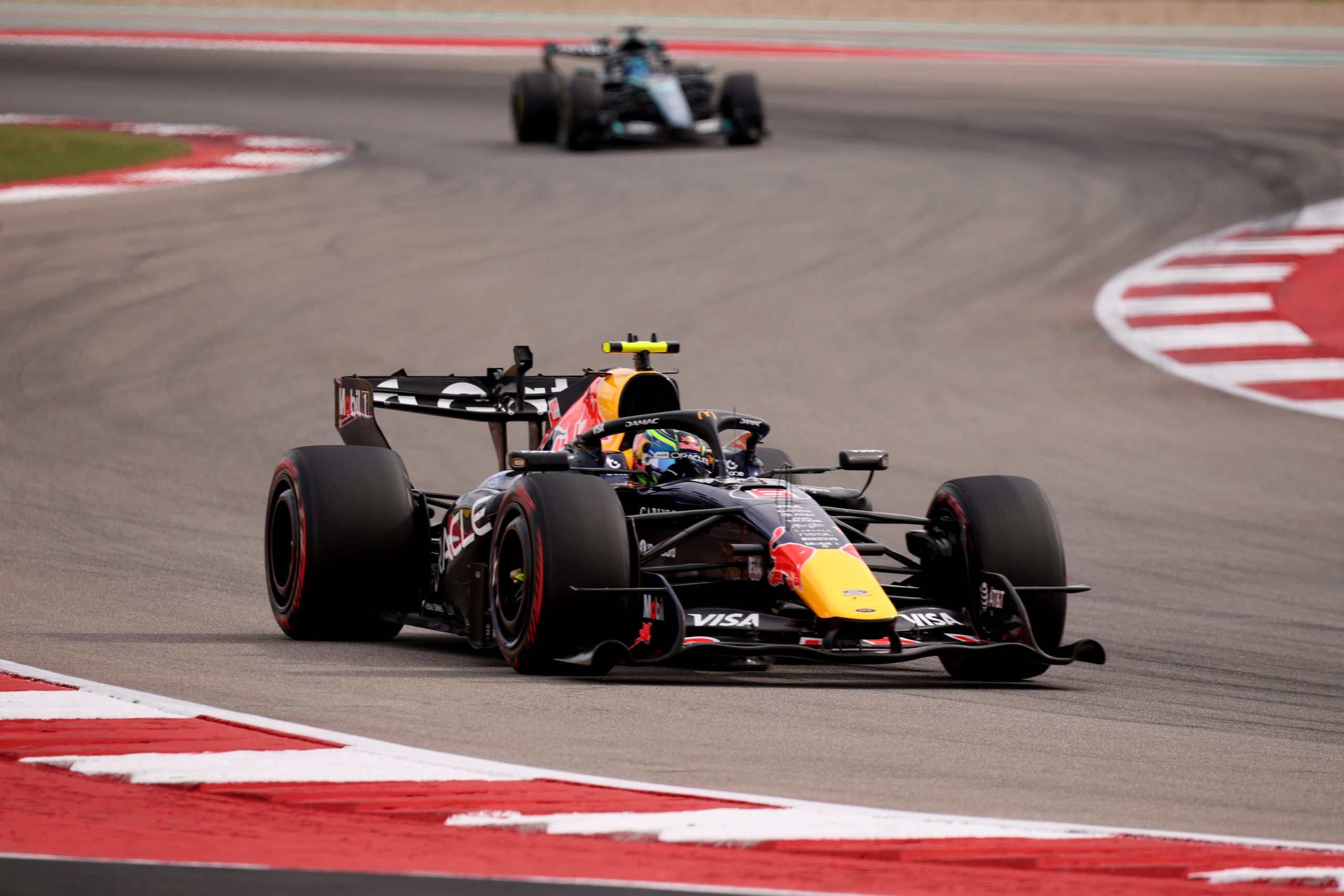
Isack Hadjar expressed frustration with Red Bull’s operational difficulties following the 2026 F1 United States GP, arguing that clutch problems, an incorrect throttle map and radio failures prevented him from maximising his impressive race pace. Despite starting third at the Circuit of the Americas (COTA), the Frenchman finished sixth, 34.373 seconds behind race winner Kimi Antonelli.
Hadjar entered Sunday’s race with renewed confidence after recovering from a difficult Friday to secure his strongest Qualifying result of the weekend. However, another problematic start immediately compromised his chances, while a throttle-map issue following his pit stop significantly affected his pace during the second half of the Grand Prix.
Although Hadjar demonstrated competitive speed during his extended opening stint on soft tyres, he questioned Red Bull’s strategy decisions and communication throughout the race. Nevertheless, while speaking to the media after the race, the 22-year-old acknowledged the team’s progress in understanding the RB22, while emphasising that recurring operational mistakes continue to prevent him from converting that performance into stronger results.
Hadjar reflects on Red Bull’s turnaround after difficult Austin practice sessions
Hadjar’s United States GP weekend began with considerable difficulties as he struggled to extract consistent performance from the RB22 throughout Friday’s Free Practice sessions. The Frenchman encountered balance problems and repeated track limits infringements, preventing him from completing representative laps.
However, Red Bull made significant progress ahead of Saturday’s Qualifying session. Following further setup adjustments during FP3, Hadjar demonstrated considerably stronger pace and qualified third, just 0.036 seconds behind teammate Max Verstappen.
The result represented an encouraging turnaround after Hadjar had described his earlier struggles as a disaster. Reflecting on the weekend following Sunday’s race, he praised Red Bull’s ability to resolve its more substantial performance limitations.
“Friday was a total mess in the end. My race pace was not good, and now we turned things around already in FP3. FP3 to Quali, we had a good car. Race pace was good today. All that is the hard part of it, and we nailed it. And the little stupid things, the little details, we can’t… We need to nail them as well.”
Hadjar had previously discussed the team’s extensive setup changes following his impressive recovery in Qualifying. However, despite maintaining that improved competitiveness on Sunday, he struggled to translate his starting position into a podium finish.
Hadjar blames recurring clutch problems for disappointing race start at the 2026 United States GP
Having qualified third behind Antonelli and Verstappen, Hadjar entered Sunday’s race with an opportunity to challenge for a podium. However, another difficult launch immediately compromised his position as both Ferrari drivers applied pressure through the opening corners.
The Frenchman subsequently found himself defending against George Russell, although he successfully kept the Mercedes driver behind him. Nevertheless, the loss of momentum prevented Hadjar from capitalising on his strong Qualifying performance.
Despite the disappointing start, Hadjar recovered his rhythm once he reached clear air. He extended his opening stint on the soft compound and demonstrated competitive pace, comparing his lap times with those of race leader Antonelli. However, he also identified the clutch as a significant ongoing concern.
“Yeah, I mean, once I was in clean air, on that soft stint, I was looking at the lap times of Kimi, and we were matching it, and I was like, okay, this sounds like a one-stop race in the end. So yeah, honestly I was happy, now we need a new clutch because I’m a spot on the procedure, but it keeps over-delivering sometimes, and we just need to change what’s going on.”
Asked whether he remained confident that Red Bull could resolve its starting difficulties before the end of the season, Hadjar offered a brief response.
“No, I’m not confident.”
Competitive soft tyre pace strengthens Hadjar’s hopes of a one-stop strategy
Despite his difficult start, Hadjar demonstrated encouraging pace throughout his opening stint. While several leading drivers, including Verstappen, Charles Leclerc and Lewis Hamilton, made relatively early pit stops, the Frenchman continued extending his run on soft tyres.
As the United States GP progressed, Hadjar climbed into second, benefiting from his rivals’ earlier stops. More importantly, he believed his pace in clean air remained sufficiently competitive to support a one-stop strategy.
His assessment reflected the unexpectedly strong durability of the tyres, particularly as Antonelli also continued extending his opening stint on mediums. Mercedes ultimately committed to a one-stop approach, allowing the Italian to maintain a substantial advantage over his closest rivals.
However, Hadjar’s extended stint created a strategic complication for Red Bull, which had already committed Verstappen to a two-stop race. Although both drivers remained competitive, their different tyre strategies required the team to manage their positions carefully.
Consequently, Hadjar found himself balancing his own strategy against Verstappen’s recovery through the field. The situation eventually prompted Red Bull to instruct him to allow his teammate through.
Hadjar questions Red Bull’s handling of Verstappen team orders
Hadjar expressed frustration with Red Bull’s management of the differing strategies, particularly when the team instructed him to allow Verstappen through during his extended opening stint.
The Frenchman believed that the race had developed into a relatively straightforward one-stop contest, having demonstrated competitive pace on his increasingly worn soft tyres. However, Verstappen had already completed his first pit stop and approached Hadjar on fresher rubber.
Although Hadjar complied with Red Bull’s instruction, he argued that the situation compromised both drivers by costing them time during the exchange.
“The problem is, in the end, on my side, I realised it’s a one-stop race. On their side, they’re like, ah, it’s a one-stop race, and they had already pitted. In the end, he’s coming by like a bullet behind me, and it’s a confusing situation for both of us. In the end, I let him by.
I’m making him lose time because he’s in my dirty air. I’m losing time because I have to let him buy. And that’s because we didn’t anticipate it was an easy one-stop.”
The incident highlighted Red Bull’s difficulties adapting its strategy as the race unfolded. While Hadjar had identified the potential of extending his stint, Verstappen’s earlier stop complicated the team’s ability to maximise both drivers’ performances.
Incorrect throttle map compromises Hadjar’s race after pit stop
Hadjar’s difficulties intensified after he completed his only pit stop on Lap 26, switching from the soft compound to the hard tyres for the remainder of the race.
Although the Frenchman had demonstrated competitive pace throughout his opening stint, he encountered a significant drivability problem immediately after leaving the pit lane.
According to Hadjar, the car remained in a pit stop throttle map, preventing him from accessing the expected throttle response and significantly compromising his lap times.
“In the pits, you know, exiting the pits, I was stuck in a pit stop throttle map, and you don’t want to drive that.”
The problem prevented Hadjar from capitalising on his extended opening stint and left him vulnerable to drivers running alternative strategies.
Although he continued racing, he struggled to maintain the performance he had demonstrated earlier in the Grand Prix. The issue ultimately contributed to his sixth-place finish, despite the competitive pace Red Bull had shown throughout the weekend.
Hadjar dismisses tyre compound concerns amid throttle-map problems at the 2026 F1 United States GP
Hadjar also addressed his frustration with Red Bull’s decision to fit hard tyres during his pit stop. Although the Frenchman understood the team’s reasoning, particularly given Lando Norris’ competitive performance on the compound, he objected to the lack of communication regarding the change.
“Honestly, I knew why they did it, I knew Norris was out there and was doing well with it. At the same time, we had a plan in mind, and I was not aware of it, and that pissed me off.”
However, Hadjar rejected suggestions that the hard compound itself had caused his lack of pace. Instead, he reiterated that the incorrect throttle map represented a considerably greater limitation than Red Bull’s tyre selection.
“I think my pace on the hard was pretty good. I don’t know if you understood what I said, but I’m stuck with a pit stop throttle map. This is a second a lap already. So yeah, this is the issue.
Honestly, what tyre I have, it’s the least of my issues. I have a drivability problem, and you can put wet tyres on, and it’s not going to change anything.”
His assessment distinguished the underlying performance of Red Bull’s car from the technical problem that compromised his second stint. Although the team had successfully improved the RB22’s handling throughout the weekend, the throttle issue prevented Hadjar from fully exploiting those gains.
Radio communication failures compound Red Bull’s operational difficulties
Beyond the throttle-map issue, Hadjar also reported significant radio communication problems during Sunday’s race. The Frenchman explained that he struggled to hear instructions from his engineer, complicating his ability to understand and respond to the team’s strategy decisions.
The problems proved particularly frustrating during a race in which tyre management and pit stop timing became central to the outcome.
Hadjar also suggested that Red Bull’s operational difficulties had prevented him from converting competitive race pace into a stronger result.
“At the moment, it’s the little things we can’t do, you know. I have a poor radio, I don’t even know what’s happening. I dropped the clutch, it’s going into a nightmare. So [if] we fixed these two already, we might be on the podium. It’s the hardest things it seems like we can do and the silly things we can’t.”
Although Verstappen had experienced recurring radio difficulties earlier in the season, Hadjar explained that Sunday’s problems represented a new experience for him.
“Honestly, for me, it’s the first time it’s happening the whole year.”
The communication failures added another complication to an already challenging afternoon, particularly as Hadjar attempted to manage his compromised car while responding to instructions from the pit wall.
Hadjar reveals radio issues nearly caused an incorrect pit stop at the 2026 United States GP
Hadjar subsequently provided further details about the extent of his communication difficulties, explaining that he struggled to understand the messages reaching him through the radio.
When asked whether he could hear anything from his engineer, the Frenchman responded directly.
“I can’t hear anything.”
The problem extended beyond occasional interference. Hadjar explained that he could only distinguish fragments of the team’s instructions, creating confusion over when he needed to return to the pit lane.
“I don’t know, I just hear some kind of box-box and an I box. I almost pitted at the wrong time once.”
The situation added another layer of uncertainty to Red Bull’s strategy management, particularly given the differences between Hadjar’s and Verstappen’s approaches.
Although Hadjar ultimately completed his planned stop, the lack of clear communication complicated his ability to follow the team’s instructions and understand changes to his race strategy.
Combined with the clutch difficulties and incorrect throttle map, the radio problems reinforced Hadjar’s concerns about Red Bull’s operational execution despite the improvements in the car’s underlying pace.
Hadjar frustrated by missed opportunity after promising Austin performance
Despite finishing sixth, Hadjar maintained that Red Bull had made considerable progress throughout the United States GP weekend.
The Frenchman recovered from a difficult Friday to qualify third, narrowly missing out on a place alongside Antonelli on the front row. He subsequently demonstrated competitive race pace during his opening stint, suggesting that he could challenge for a stronger result.
However, his poor start immediately compromised his position, while the throttle-map problem and radio difficulties prevented him from capitalising on that performance.
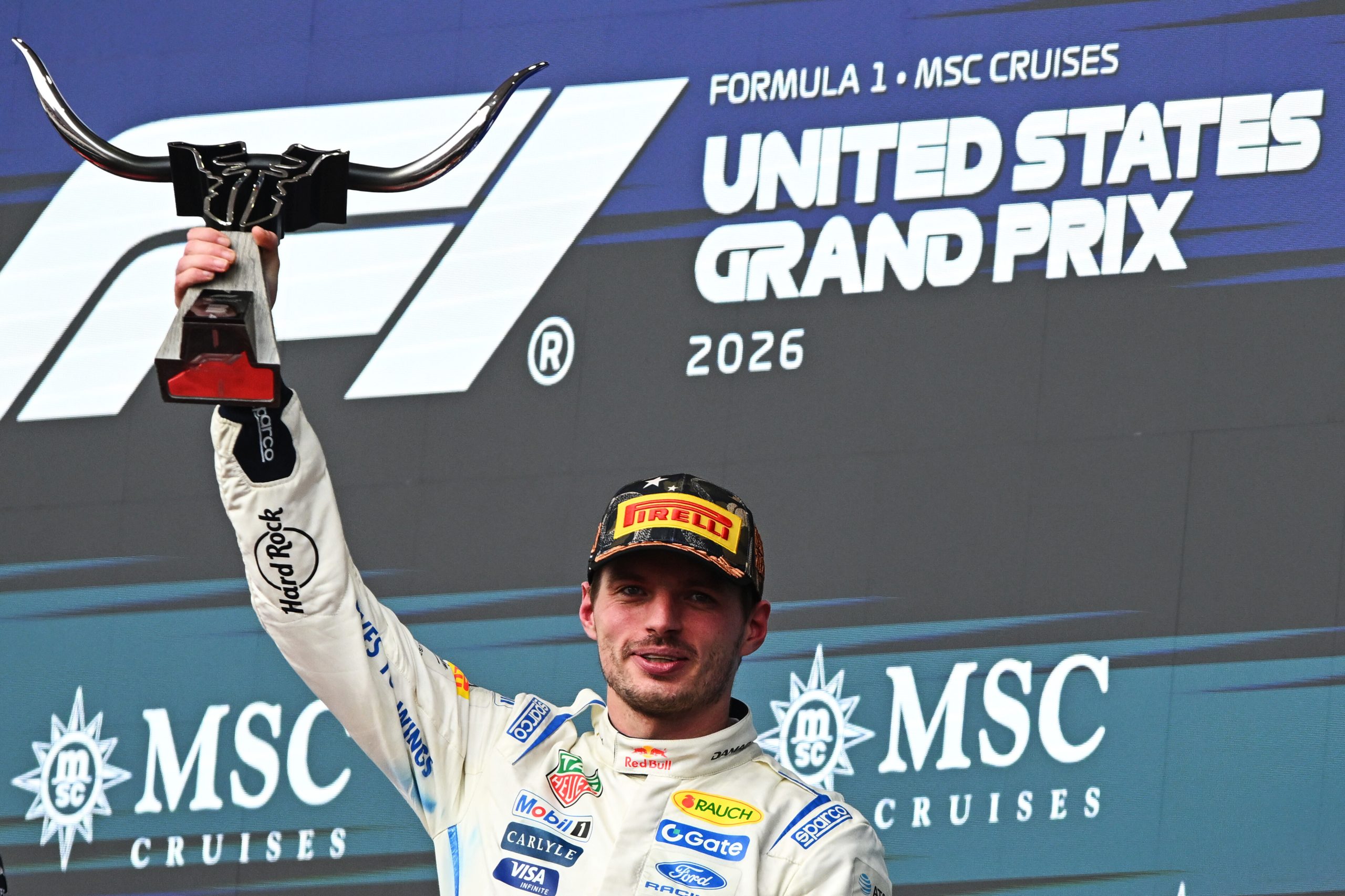
Meanwhile, teammate Verstappen also encountered difficulties, eventually finishing third after struggling with tyre strategy, power unit inconsistencies and a slow pit stop.
The contrasting fortunes of Red Bull’s two drivers highlighted the team’s wider challenges in Austin. Although the RB22 demonstrated competitive pace, technical and operational issues prevented the team from fully exploiting its performance.
With Formula 1 heading to Mexico City for the next round, Hadjar will hope Red Bull can address those weaknesses. Having already demonstrated the pace to challenge near the front, the Frenchman will aim to translate that competitiveness into a stronger result as the 2026 season enters its final stages.