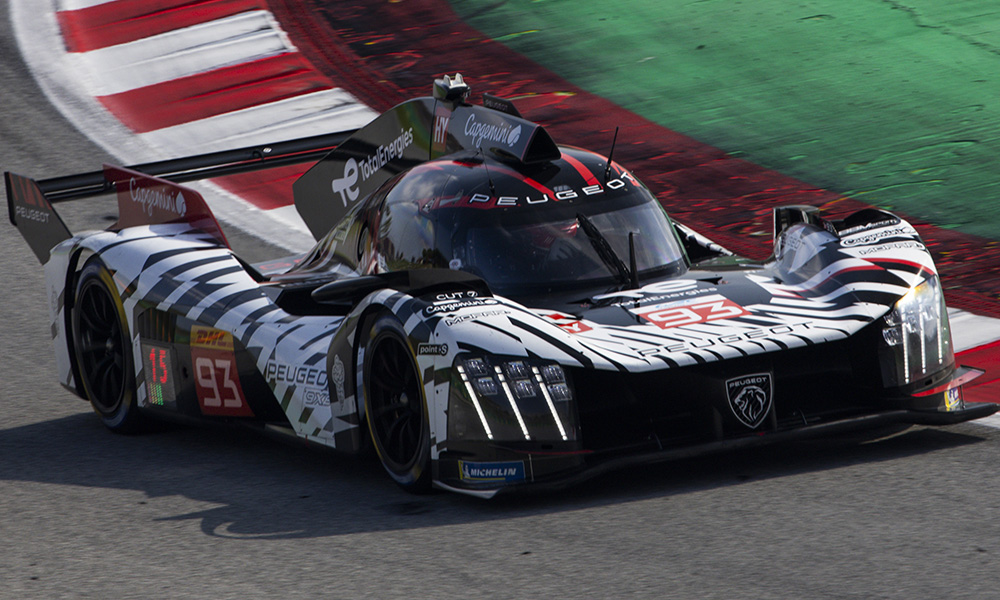
Stellantis is reportedly preparing to end its factory motorsport investments, potentially bringing Peugeot’s FIA World Endurance Championship (WEC) Hypercar programme to an abrupt conclusion while threatening Citroën and Opel’s Formula E commitments. The multinational automotive group is expected to announce the decision on Monday, 23 November 2026, following reports that it intends to discontinue its wider motorsport operations.
French newspaper Le Figaro first reported the plans on Friday, 20 November, with Reuters subsequently confirming that Stellantis had scheduled extraordinary meetings with employee representatives. Although the manufacturer has acknowledged the meetings, it has not officially confirmed the reported withdrawals, leaving the future of several major international racing programmes uncertain.
Stellantis reportedly preparing to halt motorsport investment
According to Le Figaro, Stellantis intends to stop funding its factory motorsport activities, a decision that would affect several brands competing across international championships. The reported restructuring centres on Stellantis Motorsport, which the automotive group established in 2021 following the merger of PSA Group and Fiat Chrysler Automobiles.
Based at Versailles-Satory in France, the division oversees programmes spanning endurance racing, Formula E, rallying and customer competition. Its activities include Peugeot’s Hypercar operation, Citroën’s existing Formula E participation and Opel’s preparations to enter the all-electric championship under the new GEN4 regulations.
However, the manufacturer’s response has remained limited. In a statement provided to Motorsport-Total.com and other publications, Stellantis Motorsport confirmed that extraordinary meetings with employee representatives had been scheduled, but refused to offer further comment.
“At this stage, we cannot provide any indication about these topics to respect the information and the consultation process.”
The meetings will take place on Monday, 23 November, with Stellantis expected to clarify its intentions following discussions with representatives of the affected workforce. Until then, the reported closure of the motorsport division remains unconfirmed.
Peugeot reportedly set to withdraw from FIA WEC Hypercar after 2026
The most immediate consequence of the reported restructuring would be Peugeot’s withdrawal from the FIA WEC. The French manufacturer returned to top-level endurance racing in 2022 with its 9X8 Le Mans Hypercar, marking the beginning of an ambitious programme intended to challenge for overall victories and return Peugeot to the forefront of the 24 Hours of Le Mans.
However, the project has struggled to establish consistent competitiveness against manufacturers such as Toyota, Ferrari and Cadillac. Despite several podium finishes and securing its first WEC pole position at Spa-Francorchamps in 2026, Peugeot has yet to record an outright victory with the 9X8.
The manufacturer concluded the 2026 season at Monza, where its #94 crew secured fourth following a challenging race. With the championship already completed, the reported withdrawal would primarily affect Peugeot’s planned participation from 2027 onwards.
According to Motorsport.com, the decision emerged unexpectedly despite preparations for another season. Multiple sources indicated that Peugeot could end its Hypercar programme before the 2027 campaign begins, potentially abandoning development work undertaken over several years.
Peugeot’s extensively revised 2027 Hypercar faces uncertain future
A withdrawal would represent a significant reversal of Peugeot’s previously announced plans. The manufacturer had been developing an extensively revised 9X8 for 2027, aiming to address the performance limitations that prevented its existing car from consistently challenging the championship’s leading competitors.
Earlier in the year, Peugeot outlined an ambitious development strategy intended to maintain its involvement in the WEC through 2029. The manufacturer subsequently continued preparations for its revised Hypercar, with considerable resources already committed to the project.
Peugeot had also assembled its six-driver line-up for 2027, confirming Robert Shwartzman and Alex Quinn alongside Jean-Éric Vergne, Nick Cassidy, Loïc Duval and Paul di Resta.
The reported decision therefore creates uncertainty for several drivers who had already committed to the programme. Quinn recently stepped into a full-time Peugeot race seat, while Shwartzman joined the manufacturer as part of its preparations for 2027.
The uncertainty is particularly striking given Peugeot’s previous confidence in its development plans. The manufacturer had outlined a new homologation strategy intended to support its long-term Hypercar ambitions, making the prospect of an immediate withdrawal an unexpected development.
Citroën and Opel Formula E programmes also face potential cancellation
The reported restructuring extends beyond endurance racing, with Stellantis’ Formula E operations also facing an uncertain future. Citroën and Opel had been preparing for the championship’s new GEN4 era, which begins with the 2026/27 season.
Citroën entered Formula E during the 2025/26 campaign, taking over the group’s existing involvement in the championship. The French manufacturer subsequently retained Nick Cassidy and Jean-Éric Vergne for its second season, aiming to build on the experience gained during its debut campaign.
Meanwhile, Opel had announced plans to make its Formula E debut in 2027, representing another significant expansion of Stellantis’ electric racing activities. The German manufacturer intended to use the championship to strengthen its GSE performance identity while competing under the new technical regulations.
The reported withdrawal would therefore affect both an established competitor and a brand preparing to enter the championship for the first time. As previously covered by Pit Debrief, Opel’s planned Formula E entry formed a central part of its future electric motorsport strategy.
Neither brand has officially confirmed its departure, and questions remain over whether their operations could continue under different ownership or arrangements.
Formula E GEN4 preparations already underway
The timing of the reports is particularly significant for Formula E, with teams having already begun their preparations for the GEN4 regulations. The championship conducted its first collective pre-season test at the Circuito del Jarama in Madrid between 16 and 20 November, introducing a new generation of electric racing machinery.
The GEN4 cars feature up to 600 kW of power and permanent all-wheel drive, representing a substantial technical step forward. Manufacturers have consequently invested significant resources in developing new powertrains and adapting their operations to the regulations.
Citroën and Opel were among the brands preparing to compete under the new framework. Their potential withdrawals could therefore create uncertainty surrounding their drivers, engineering operations and the future of Stellantis-developed Formula E technology.
The situation is especially significant for Théo Pourchaire, who recently confirmed his departure from Peugeot’s WEC programme to prioritise his Formula E commitments with Opel.
However, Stellantis has not confirmed whether the reported restructuring would immediately end either Formula E programme, and the sporting consequences remain unclear.
Rallying and customer racing could also be affected
Beyond Peugeot, Citroën and Opel, the reported restructuring raises questions about Stellantis’ wider motorsport activities. The group also maintains involvement in rallying through brands including Lancia, alongside several customer racing initiatives.
According to Le Figaro, the proposed withdrawal concerns Stellantis Motorsport as a broader organisation rather than a single championship programme. Consequently, the implications could extend to engineering operations, customer racing support and other competition-related activities.
However, the scope of any potential closure remains uncertain. The manufacturer has not clarified whether existing customer racing programmes could continue independently or whether particular brands might retain racing activities outside the central Stellantis Motorsport structure.
The distinction is important because the reported decision concerns factory motorsport investment, rather than a confirmed withdrawal of every Stellantis brand from every form of competition worldwide.
Nevertheless, any substantial restructuring would represent a significant change to the manufacturer’s international motorsport strategy, particularly after its recent investments in new programmes and technical development.
Potential Peugeot exit would leave WEC without French Hypercar manufacturer
A confirmed withdrawal would also have important consequences for the FIA WEC. Peugeot’s departure would follow Alpine’s decision to conclude its Hypercar programme after the 2026 season, potentially leaving the championship without a French manufacturer competing in its leading category in 2027.
Alpine completed its final WEC appearance at Monza, bringing its factory endurance racing programme to an end after the French brand confirmed its withdrawal earlier in the year.
The loss of Peugeot would consequently represent another departure from the championship’s expanding manufacturer field. However, the category will also welcome Ford and McLaren in 2027, with both preparing new LMDh programmes to compete against established manufacturers.
If Peugeot withdraws, the expected Hypercar manufacturer line-up would comprise Aston Martin, BMW, Cadillac, Ferrari, Genesis, Toyota, Ford and McLaren.
Although the championship would retain a substantial manufacturer presence, losing Peugeot after years of investment would represent a setback for its ambitions to maintain a diverse international field.
Stellantis restructuring comes amid wider cost-cutting measures
The reports emerge as Stellantis continues implementing a broader financial restructuring programme. Under Chief Executive Officer Antonio Filosa, the automotive group has pursued measures intended to improve profitability following declining sales and financial pressures.
According to Reuters, the manufacturer launched a Value Creation Program earlier in 2026, targeting €6 billion in cost savings by 2028. The proposed motorsport withdrawal has emerged against that backdrop, although Stellantis has not publicly confirmed that the reported decisions form part of the programme.
Le Figaro also reported that approximately 300 people work within Stellantis Motorsport, raising concerns about the potential consequences for employees should the manufacturer proceed with closing the division.
However, the precise workforce implications remain uncertain pending the consultations scheduled for Monday.
The situation recalls Peugeot’s previous departure from endurance racing in 2012, when financial pressures prompted the manufacturer to abandon its programme shortly before the inaugural FIA WEC season.
Stellantis expected to clarify motorsport future on 23 November
Attention now turns towards Monday, 23 November, when Stellantis is expected to provide further information following its extraordinary meetings with employee representatives. The date also coincides with the deadline for submitting entries for the 2027 FIA WEC season, making the timing particularly significant for Peugeot’s Hypercar programme.
Although multiple publications have reported that the withdrawal is imminent, the manufacturer has yet to confirm the decision or explain the full extent of any proposed restructuring.
For Peugeot, Citroën and Opel, the uncertainty comes after substantial preparations for the 2027 season, including the development of new machinery, confirmed driver line-ups and investments in future competition programmes.
The coming announcement could therefore have significant consequences across endurance racing and Formula E, while also determining the wider future of Stellantis Motorsport. Until the manufacturer provides official confirmation, however, the status of its racing programmes remains unresolved.