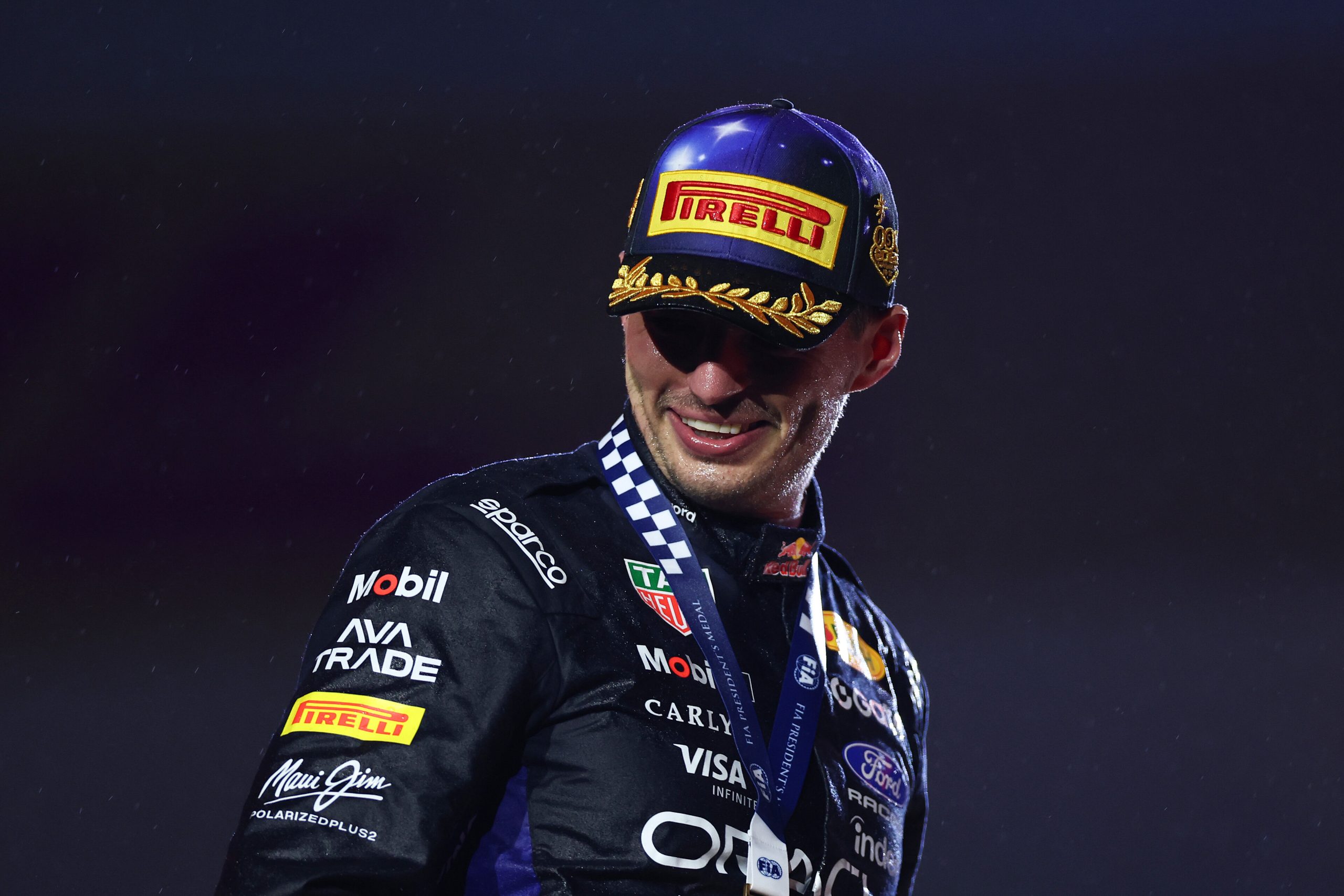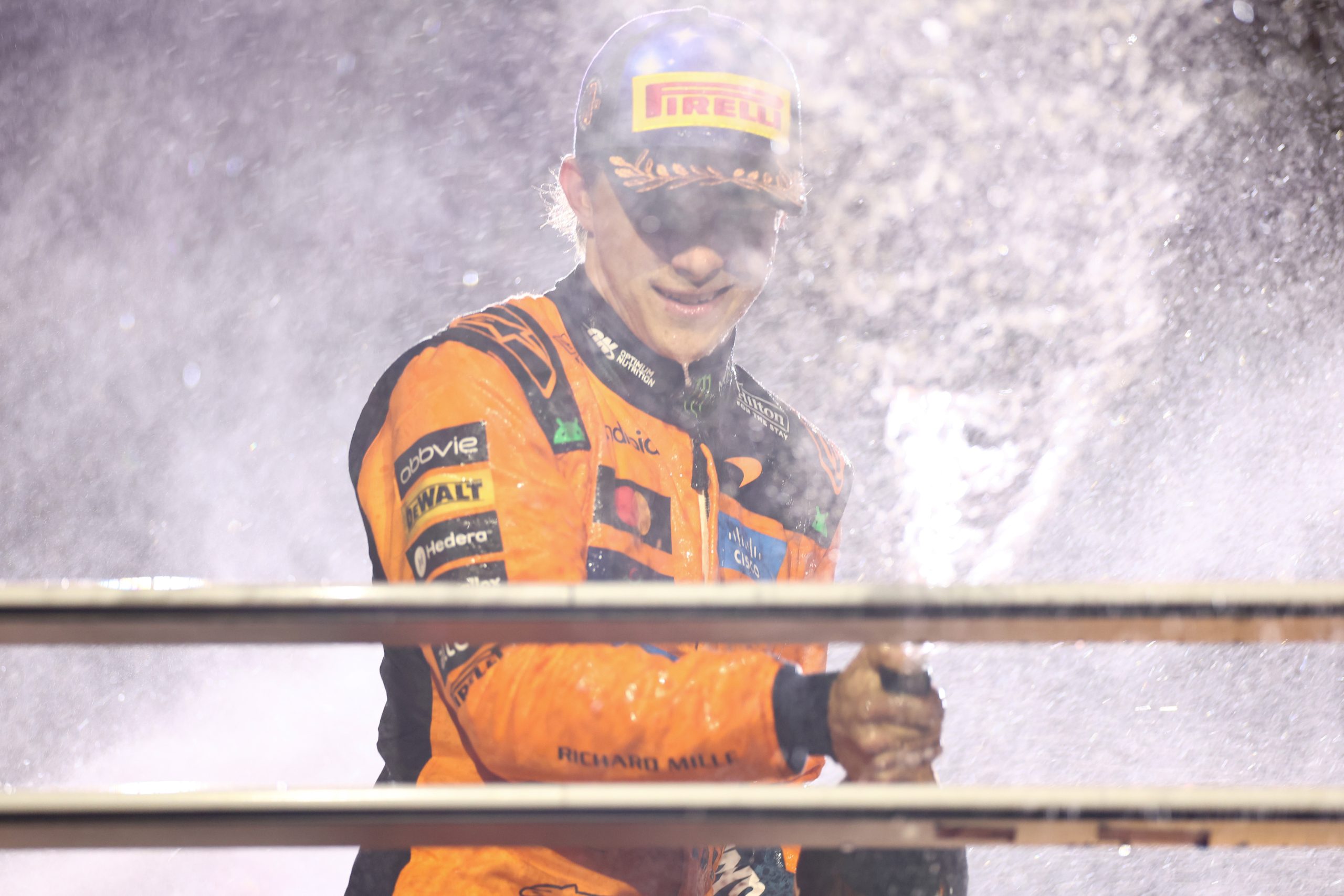
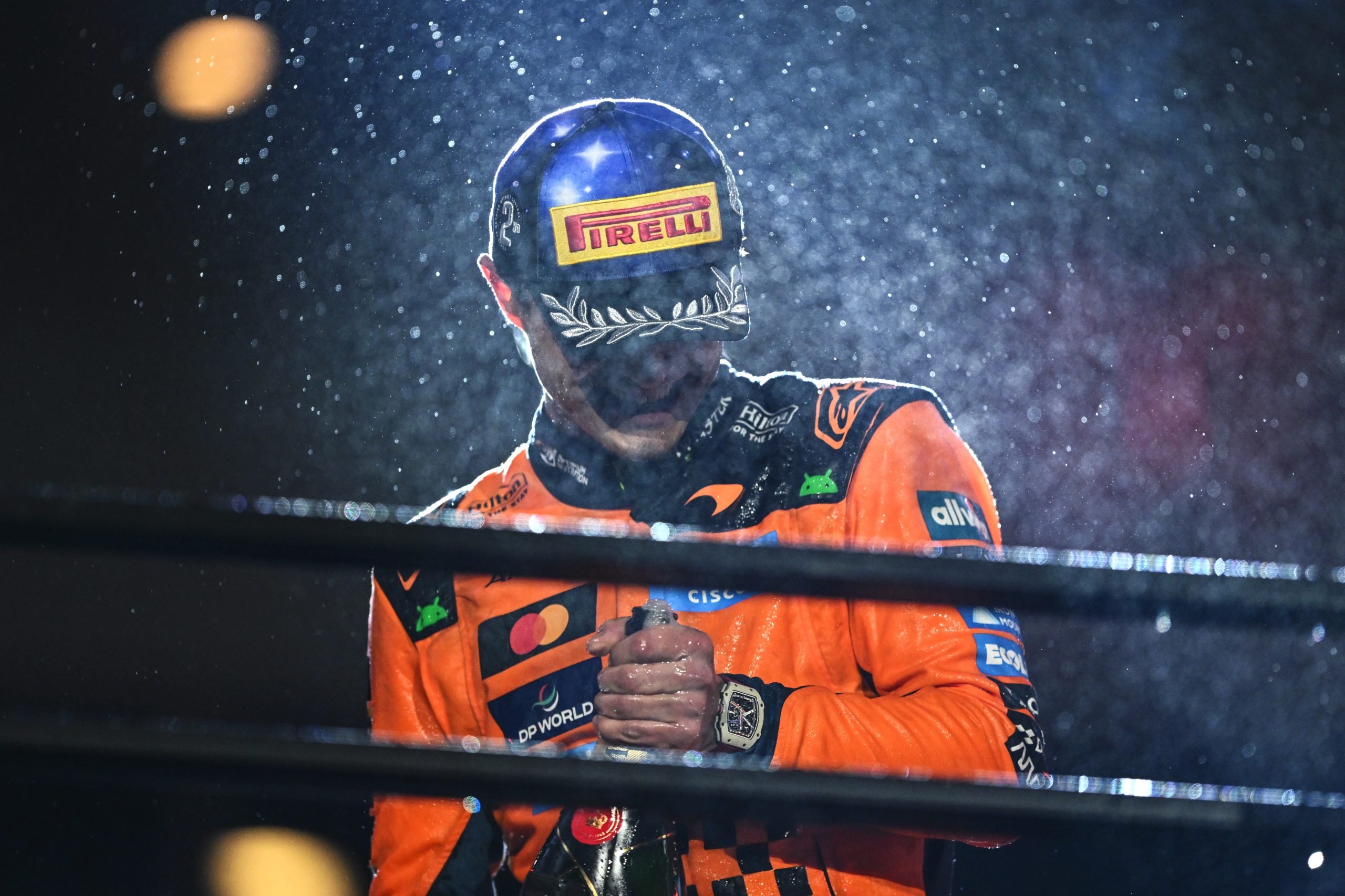
Lando Norris has described the Las Vegas GP as potentially the most chaotic race in Formula 1 history after recovering from a difficult first half to secure a podium finish for McLaren.
The Briton finished second in an extraordinary race that featured 352 overtakes and 35 lead changes, with energy deployment playing a significant role in determining the order throughout the field.
With drivers repeatedly exchanging positions around the Las Vegas Strip, Norris admitted post race there were moments when he was unsure whether he would be fighting for victory or struggling towards the back of the field.
“I think that must have been the most chaotic race ever in the history of Formula 1, I didn’t know what was happening half the time. He said,” I didn’t know if I was going to have the best race and have a chance to win or end up last.
“I had everything in this race, so it was tough. I timed things well in terms of getting back to the front. It was also a race of not making mistakes, like a lot of other people made.”
Strong result for McLaren in Las Vegas
Despite the unpredictable nature of the 2026 F1 Las Vegas GP, Norris was pleased with how McLaren managed the situation, describing it as a chaotic but enjoyable afternoon that delivered a strong result for the team.
The podium also exceeded his expectations heading into the race, with the Briton acknowledging the difficulty of challenging Red Bull for the victory.
Asked whether this style of racing was something Formula 1 should look to see more often, Norris highlighted just how unpredictable the result had become, with almost any driver potentially capable of coming out on top.
“I mean, this, you could get any winner in the whole grid, I would say. So, it was a fun race. It was a fun race,” he explained.
“Well done to Max. Max drove a good race at the front. I led for about 15 seconds, I think. So, I’m very proud. I led the race, but it was well driven by Max. He didn’t make any mistakes. They were very quick, so a good day for us. I wasn’t expecting a P2 or a P3 for us, so very positive.”
Norris explains McLaren’s recovery in Las Vegas
During the 2026 F1 Las Vegas GP post-race press conference, Norris was asked about his recovery from outside the points at the halfway stage of the race to eventually secure second place.
The McLaren driver credited improvements in his own performance, alongside the timing of the Safety Car, for helping him move back towards the front.
“I just started to drive a bit better, and the Safety Car helped. I think I went from P10 or something to P6, but the pace was good the whole time,” he explained.
However, Norris revealed that managing the battery had been one of his biggest challenges throughout the opening stages, with the timing of his energy deployment repeatedly leaving him vulnerable to attacks from behind.
The Briton explained that whenever he was overtaken, he often found himself without sufficient battery to respond, allowing other drivers to take advantage and push him further down the order.
“It’s just at the very beginning of the race, trying to figure out the battery, and I always just seem to be on the bad side of every time I got overtaken, I had no battery, someone else had more battery behind, and I just kept dropping back.”
Energy management writing the story of the Las Vegas GP
Norris added that the entire Las Vegas GP had been heavily influenced by energy management, to the point where monitoring the battery became more important than focusing on the circuit itself.
“Even at the end of the first stint, it was just, I mean, the whole race was judging battery the whole time. I’m looking at the battery more than I’m looking where I’m going around this track. So it’s the most important thing.”
Despite the early difficulties, the second half of the race proved much stronger for McLaren, with Norris focusing on avoiding mistakes, staying clear of incidents and positioning himself correctly for the closing laps.
The Briton explained that securing second place was the realistic target, rather than attempting to challenge Verstappen for the victory.
“But the second half of the race was very strong, I think, in terms of obviously not making mistakes, staying out of the chaos of some of the others around us, and playing things right in the last three, four laps in terms of positioning and slipstreams, again battery, to give myself the best chance to finish second.”
“Because today wasn’t a race about trying to win. There was no chance we could win the race today, but P2 was the best, and we achieved it, so I’m happy.”
Battery deployment proves crucial to McLaren’s podium
Although Norris appeared considerably stronger during the second half of the race, he dismissed suggestions that the improvement was primarily down to the medium tyre compound.
Instead, the McLaren driver pointed towards energy deployment and the team’s ability to manage its vulnerabilities on the straights as the deciding factors.
“Yeah, it was nothing to do with tyres. The pace was just as good in the first stint as it was in the second. It was just, you know, we were so vulnerable down the straight.”
Norris explained that the team had to make constant adjustments to its approach, with the driver regularly changing settings to ensure the battery was being used as effectively as possible.
“A lot of it was just trying to figure out where to use the battery, where not to. I think I must have been pressing like nine buttons a lap, trying to just get the correct things and make the battery work as it should and give ourselves a bit of a chance.”
The Briton acknowledged that McLaren was particularly vulnerable compared to some of its rivals on the straights, meaning the team had to work harder to remain competitive throughout the race.
“Because we were so slow in the straights compared to others, we just had to do a lot to try and give ourselves any hope.”
Nevertheless, Norris praised the team’s efforts in communicating throughout the race and making adjustments to improve its position, with those changes ultimately helping him secure the runner-up result.
“But we did it, and the team did a very good job in relaying things to us and trying to make improvements through the race. So, yeah, good from that side too.”
Norris questions whether F1 could improve on Las Vegas spectacle
With 352 overtakes recorded throughout the race, Norris was also asked for his thoughts on the spectacle and whether the unusual racing had made for an enjoyable experience.
The McLaren driver agreed that the action would likely have been entertaining for spectators, with the unpredictability of the result and the number of position changes creating an unusual Grand Prix.
“Yeah, I mean, I think Max explained it well. I think from a racing point of view, from the outside, I’m sure it probably was the best race ever in Formula 1. You never know what’s going to happen. There was overtakes out of nowhere.”
However, Norris suggested that the number of overtakes did not necessarily reflect traditional wheel-to-wheel racing, with significant differences in closing speeds often making it relatively straightforward for drivers to pass their rivals.
“The thing is, sometimes you have a closing speed of 20, 30 kilometres per hour to people, especially to us, and some of the overtakes weren’t overtakes, you press boost and you go past someone.”
Despite that, he acknowledged there were still plenty of positive elements to the racing, with drivers continuing to fight for position throughout the field.
“But the racing was still good. You’re still fighting for position, and there are a lot of good things in there.”
Changes to the battery recovery
Looking ahead, Norris suggested the spectacle could be even better if drivers were able to race without having to devote so much attention to managing their batteries and energy recovery.
He argued that reducing the emphasis on deployment could allow drivers to push harder and enjoy the racing more from inside the cockpit, rather than constantly having to consider when to use or save their available energy.
“But I’m sure if you didn’t have the battery how it was, you would still have just as many overtakes, and we would enjoy it even more as drivers because we would be able to just push and go flat out and not have to think about regen and battery and not deploying and deploying and all of this stuff.”
“So, yeah, we could have been even better, is what I’m trying to say. So, imagine in 2030. Oh my God, that’s going to be the best race you’ve ever seen.”
While Norris was pleased to come away from Las Vegas with a strong result for McLaren, his comments highlighted the complicated relationship between the spectacle created by the current racing format and the experience of competing from inside the cockpit.
After a race that required constant adjustments, careful energy management and precise positioning, the Briton ultimately secured a valuable second place, while leaving questions over how Formula 1 could deliver even better racing in the future.