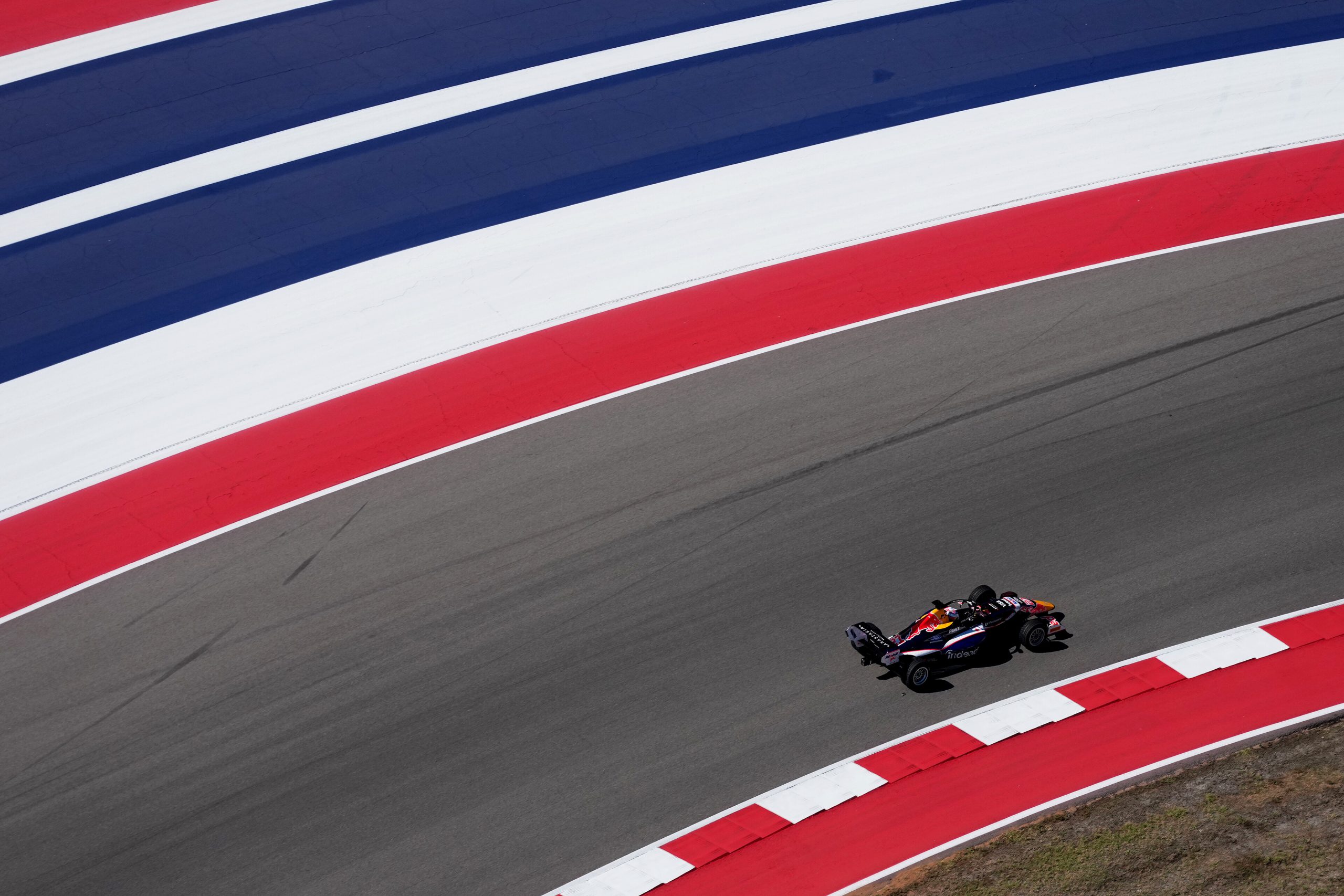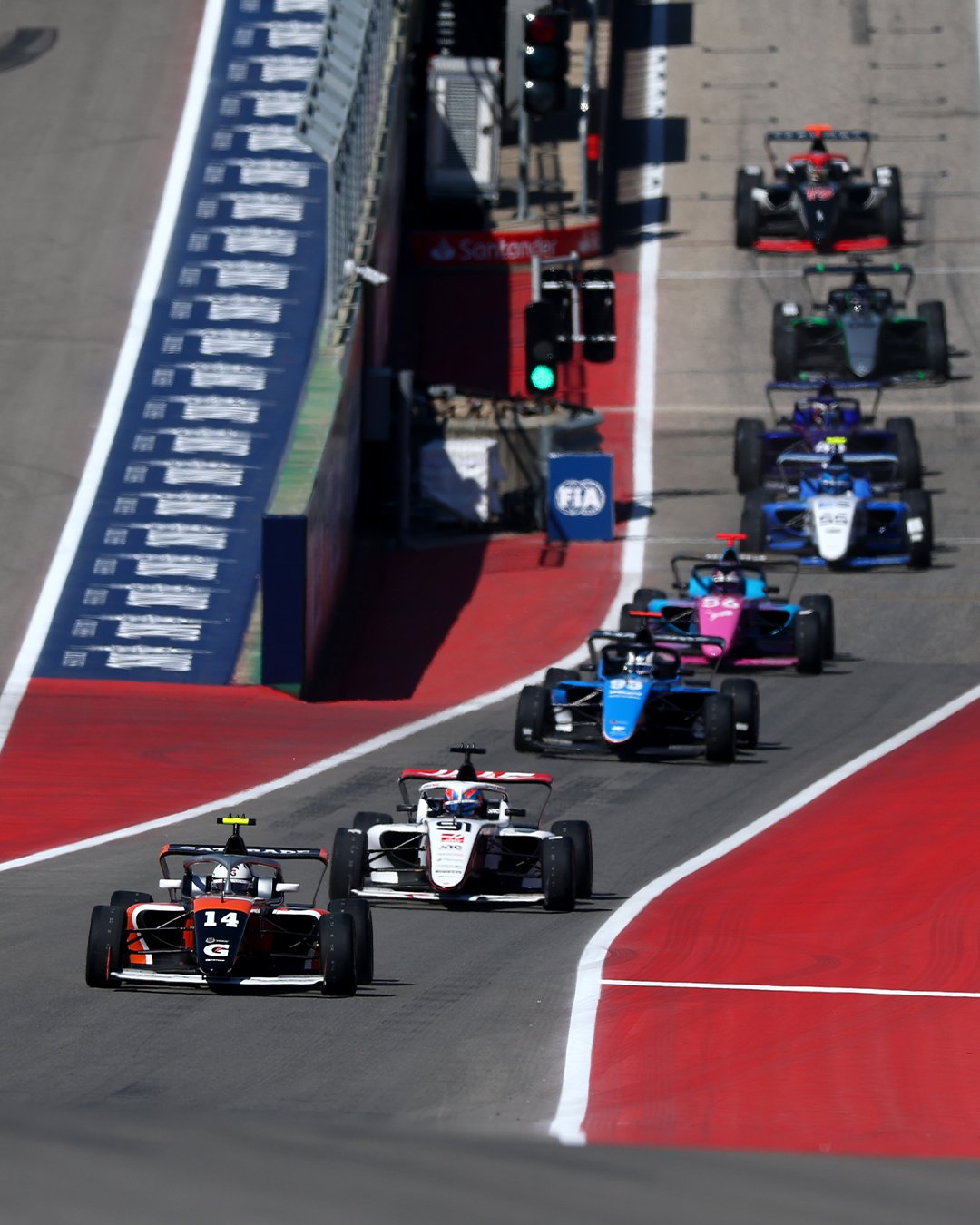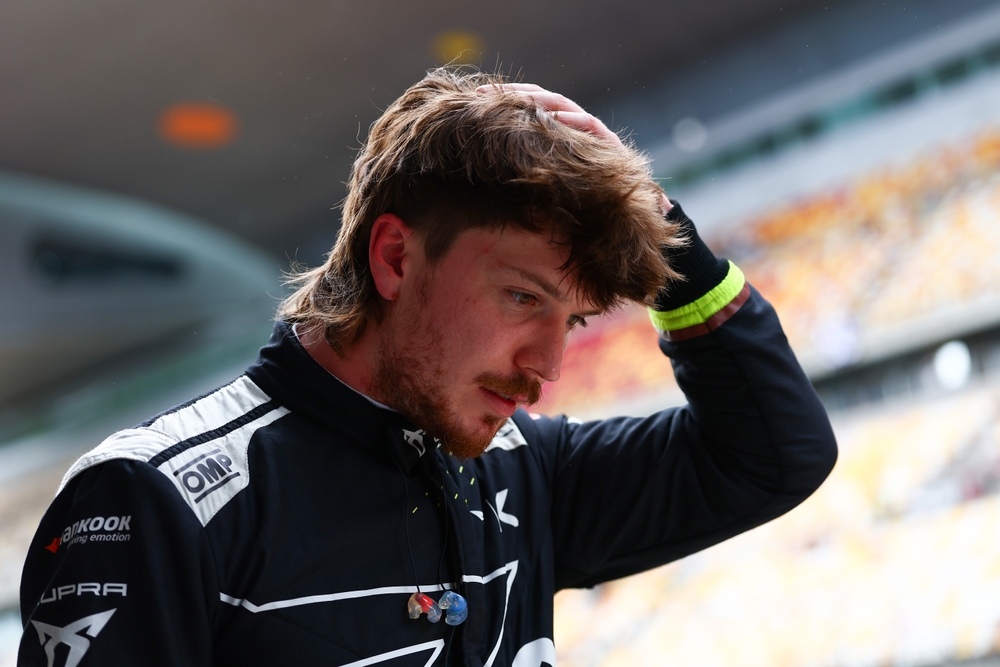
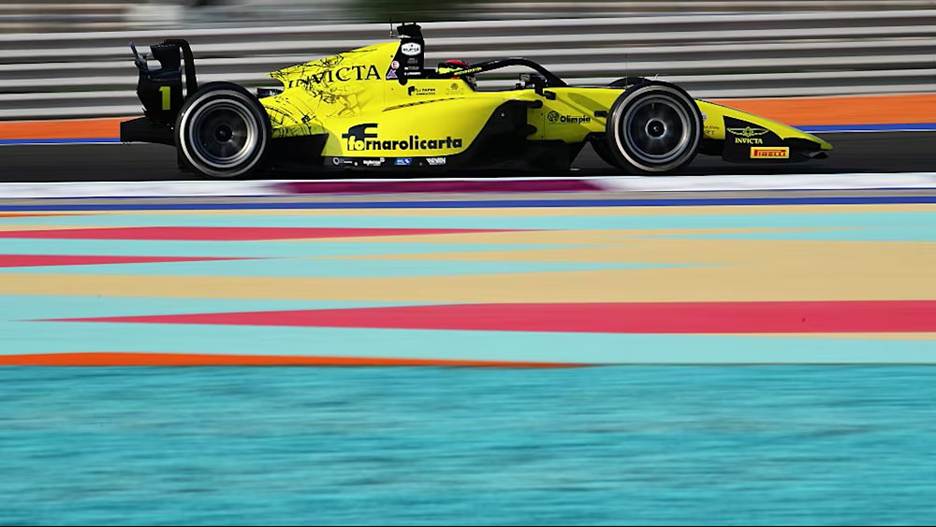
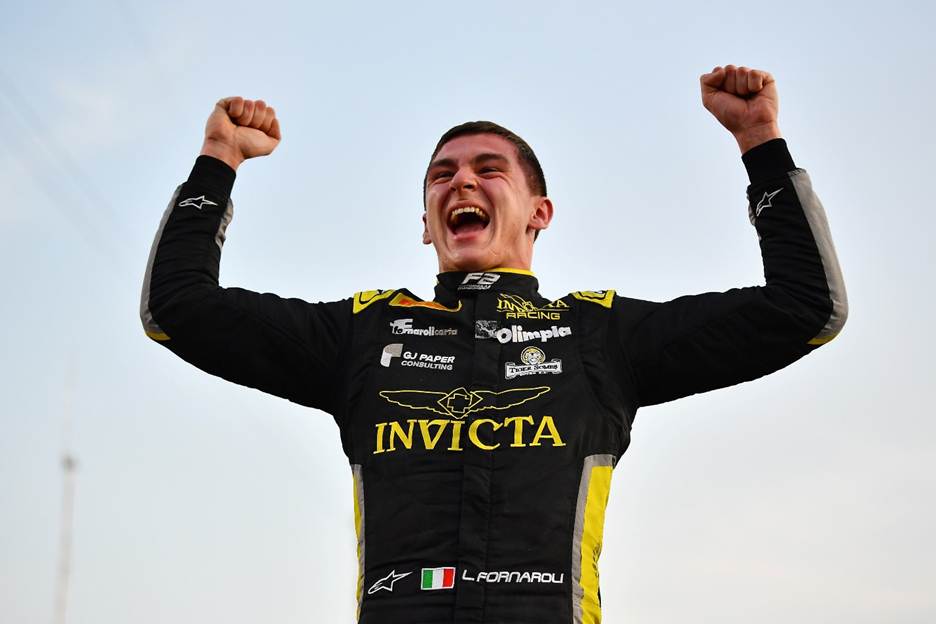
Invicta Racing’s rise across the 2024 and 2025 Formula 2 seasons has become one of the category’s defining success stories, with CEO Team Principal James Robinson and the Invicta F2 squad demonstrating how disciplined engineering and operational clarity can elevate even one of the grid’s smallest teams into a championship force. Despite their modest size, the British outfit has transformed precision, structure, and consistency into back-to-back title-challenging campaigns. In 2024, Gabriel Bortoleto claimed the Drivers’ Championship before graduating to Formula 1 with Sauber. This year, in 2025, Leonardo Fornaroli secured the 2025 F2 crown at the Qatar GP after finishing second in the Feature Race, wrapping up the title one round early.
As the team heads to Abu Dhabi with 296 points, leading the Teams’ Championship ahead of Hitech TGR (261) and Campos Racing (239), Invicta stands on the brink of another historic achievement. With a maximum of only 65 points available to each team, they remain in prime position to seal consecutive Teams’ titles.
In an exclusive interview with Pit Debrief, Robinson outlined the philosophy behind Invicta’s success. His insights revealed how simplicity, adaptability, and consistency form the backbone of the operation—and how these principles shaped both Bortoleto’s 2024 title and Fornaroli’s 2025 triumph.
Controlling the controllables: Engineering discipline at the core
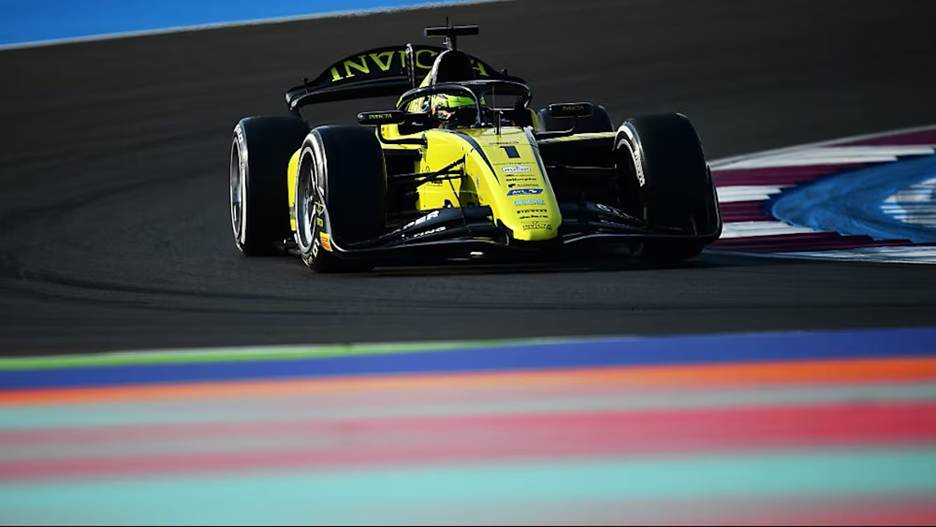
Invicta’s technical approach begins well before the cars reach the circuit. Robinson explained that the organisation’s day-to-day methodology is built around simplifying processes and concentrating on areas directly within the team’s control.
“So, from our point of view, we really try and look at, we look at the controllables. We try and keep things as simple as possible.”
This focus becomes particularly significant when considering the team’s operational size. Invicta does not operate with the large in-house departments seen at some rival outfits. Instead, the team relies on a streamlined structure that prioritises efficiency and clarity, allowing personnel to concentrate on the elements that most directly influence track performance.
“From an infrastructure perspective here, we’re probably the smallest team in Formula 2. We outsource a lot of our operations versus some of the other teams who probably do more in-house.”
Robinson detailed how this approach shapes the workflow leading into each event. By concentrating on clearly defined processes—ranging from car setup work to driver simulation programmes—the team ensures that preparation remains focused on the limited but crucial areas they can fully control.
“And we look at the processes that are involved from where we are to going on track. And we look at what we can do in the best way possible around the things that we control. So that really includes car setup, that includes sim work with the drivers, and that includes our approach to the weekend around those three very important or four very important days on each race weekend. And we really try and focus our attention very much around that.”
Through this methodical approach, Invicta directs its resources toward the core activities that underpin consistent performance across the racing calendar.
Track-centred preparation and driver collaboration
Robinson noted that while drivers handle much of their personal preparation away from the team, Invicta’s operational focus shifts firmly to the racetrack once the weekend begins. This structure enables both engineers and drivers to approach each session with clear objectives and a shared understanding of priorities.
“Outside of the racetrack, really, the drivers have their own support teams. Obviously, we work very closely with them in terms of ensuring that their preparation before the weekend is maximised.”
As Robinson explained, the emphasis within the team remains on the periods when performance can be directly influenced. By centring their efforts on the race event itself, Invicta ensures that every minute on track contributes meaningfully to overall execution and results.
“But really, our focus has to be around the race events, because that’s when it counts, and ensuring that the time spent on the circuit every single second is used to optimise the end result in terms of race results.”
This track-centred approach allows Invicta to manage data gathering, assess setup decisions, and refine feedback processes within a focused and efficient framework. By aligning preparation closely with live running, the team maintains a clear operational structure that supports quick responses to changing conditions, maximises learning opportunities, and provides consistent, real-time support to drivers across the varied and often unpredictable demands of an F2 weekend.
The consistency factor: How champions are made
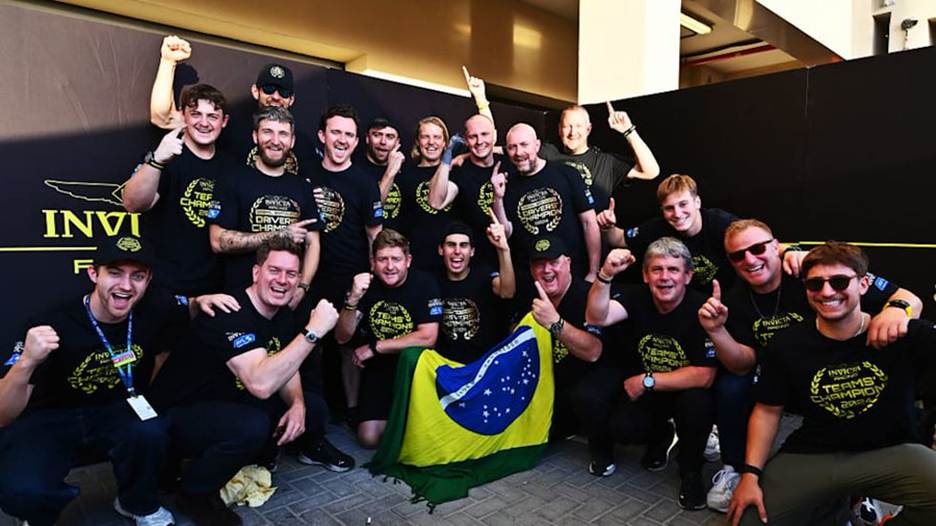
Building on this track-centred approach, Robinson emphasised that success over a full season requires more than strong weekend performances. For him, talent alone does not determine whether a young driver has the potential to become champion material. Instead, sustained, mistake-free execution across the entire championship forms the foundation of title-winning campaigns.
“So in terms of winning championships, F1 and F2 are the same in so far as consistency is really important. And flashes of speed are all well and good, but it’s always a long championship. In Formula 1, it’s 24 races. In Formula 2, it’s 28 races. And inevitably, the winner of the championship is the guy who often has the fewest bad weekends.”
This philosophy explains why Invicta focuses on maximising every session, treating each lap and setup adjustment as an opportunity to secure points and minimise errors.
“And so from our perspective, we try and always optimise every single session to ensure that we don’t leave points on the table at the end of the season, or leave as few points on the table as possible at the end of the season.”
Championships earned through consistency and steady performance
Nowhere is Invicta’s philosophy more evident than in the careers of Gabriel Bortoleto and Leonardo Fornaroli. Across two seasons, both drivers earned their championships not through streaky dominance but through consistent, reliable point-scoring. Robinson highlighted how this pattern of consistency manifests in their results.
“So if you look at somebody like Leo and Gabi, in fact, for the last two years, Leo has scored points in every single race this year, but the Feature Race in Barcelona, Gabi scored points in every single round last year, except the Feature Race in Melbourne, and maybe in the Feature Race [in Jeddah] as well.”
He further explained how the drivers’ ability to minimise non-scoring weekends has been a defining factor in their success.
“And if you look in terms of the drivers who had the fewest non-point scoring races of the last two years, last year was Gabi and this year is Leo Fornaroli. So I think that’s fundamentally important.”
These results illustrate why Invicta remains at the front of the Formula 2 standings year after year. By emphasising low-risk, high-consistency performance, the team ensures that strong, steady execution across an entire season aggregates into championship-winning outcomes rather than relying solely on occasional flashes of speed.
Understanding the driver: Tailoring feedback for maximum performance
Building on the importance of consistency and point-scoring, Robinson emphasised that engineering precision alone is not enough; how feedback is delivered can be equally critical. Each driver interprets information differently, and Invicta’s ability to adapt communication to individual styles has become a defining factor in their success. He illustrated this through the contrasting approaches of Bortoleto and Fornaroli.
“Yeah, in terms of sort of driver feedback, that’s quite an interesting area. If I look at Gabi and Leo, for example, two very, very different approaches. Leo is incredibly literal in how he takes feedback. You have to be very direct. We are very direct with him, whilst Gabi was maybe more inquisitive, was maybe slightly more nuanced in the way that he took on data and feedback.”
This distinction influences how engineers structure debriefs, prioritise information, and communicate during sessions. Every discussion is filtered to ensure clarity and relevance, avoiding unnecessary or inconsequential detail.
“So we have to make sure that we adapt to the driver’s approach to being in the car, but also just to ensure that they are getting the most, they are getting the important data and that they’re not getting, they’re not getting feedback that is irrelevant or is inconsequential to car performance.”
Robinson summarised the team’s approach succinctly: “We need to focus on the things that make the biggest difference first. Only then do we go into the minutiae.”
By prioritising key information and tailoring guidance to each driver, Invicta ensures every detail has purpose, enabling the smaller team to operate efficiently, maximise performance, and consistently extract strong results from both cars and drivers.
A blueprint for sustained success
Invicta Racing’s back-to-back Drivers’ Championships and their position atop the Teams’ Standings reflect more than just exceptional driving talent. They reveal a culture built on technical discipline, open communication, and a relentless focus on extracting maximum value from every track session.
As the 2025 season heads into its final round at Yas Marina, Invicta stands on the verge of completing another extraordinary campaign. Whether analysing simulation data, refining setup directions, or delivering race-critical feedback, the team operates with a clarity that continues to set them apart.
Their story proves that, in a category as competitive as F2, success does not always come from scale. Sometimes, it comes from simplicity—applied with absolute precision.