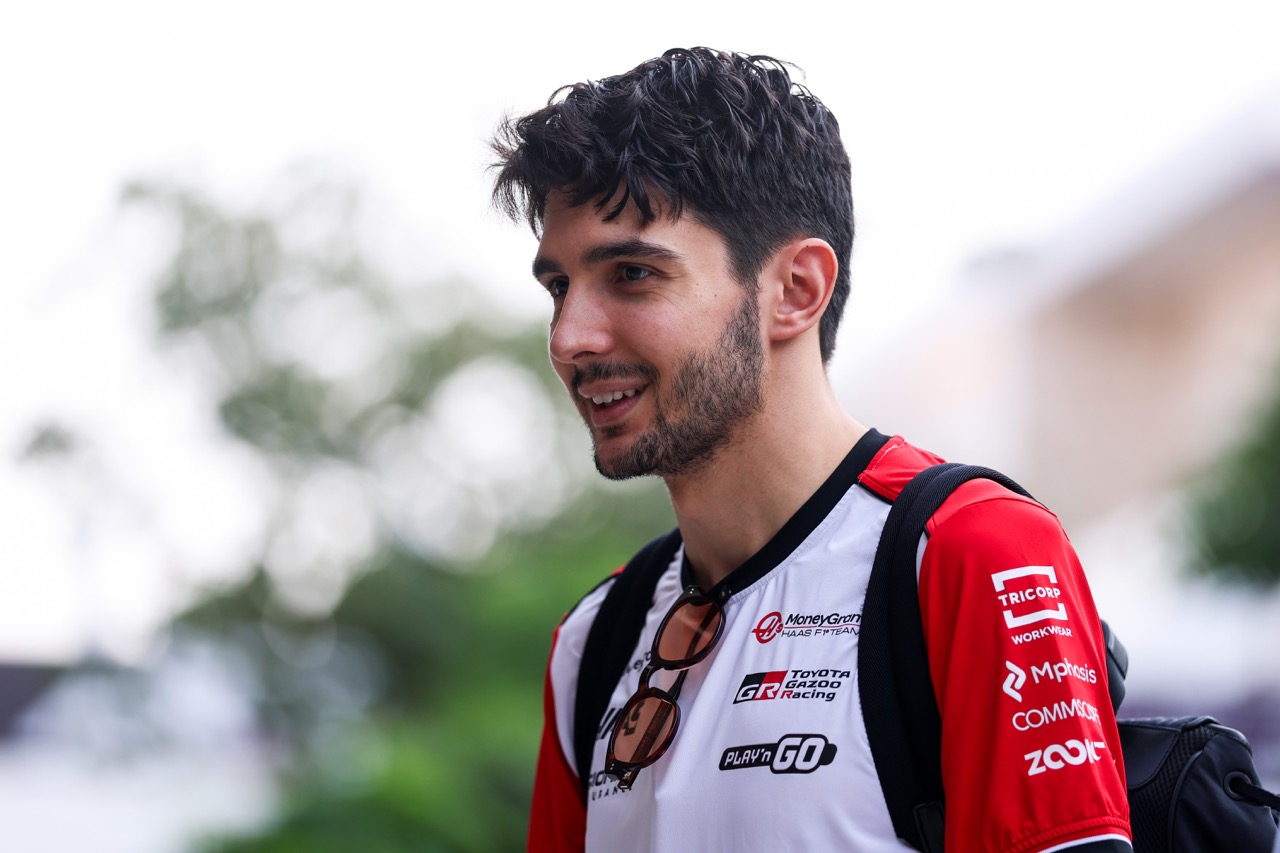
Esteban Ocon endured a bruising night at the F1 Qatar GP, his race unravelling almost as soon as it began. He picked up a five-second penalty for a suspected false start and served it under the early safety car, losing crucial track position just as the field condensed. From there, he slipped out of contention, lacking the pace to fight back through the midfield. Every stint asked more of the Haas than it could give, and despite his efforts, Ocon drifted further from the points as the laps ticked down. He crossed the line a muted fifteenth, his race defined by penalty, imbalance, and opportunity lost.
Ocon fumes over jump-start penalty as strict grid rules derail Haas’s F1 Qatar GP hopes
After climbing from the car, the Haas driver struggled to hide his frustration. Ocon said he felt stunned by the sanction, likening it to a previous brush with the regulations over grid positioning. In his view, he had followed the same launch routine he had used for years, only caught out by the slight creep that can come when high revs and a delicate clutch bite meet a sloping grid.
“I’m amazed about that penalty, I don’t know what to say. It’s probably similar to the one I got two years ago, with the wrong position in the box. It’s just new rules that they come about with.
“I’ve done hundreds plus starts, and I’ve always done the same thing. The only place where we have to apply the brakes is either Suzuka, Spa, or it’s clearly uphill or downhill. But yeah, if the car was rolling forward, then it’s just that you put 12,000 rpm and obviously if the clutch is slightly touching or engaging, then maybe you’re crawling slightly forward, but it’s nothing like a gain or anything.”
He pointed out that there was no advantage to be gained, only the illusion of movement, and noted that a similar incident had tripped up Kimi Antonelli at the prior round. For him, it underlined how quickly fresh interpretations of the rules could punish familiar habits. Haas would now need to rewrite its starting procedures, but during the F1 Qatar GP, that learning came too late to save Ocon’s race.
“I don’t know where that came from really, but it happened to not only me, also Antonelli last race. It’s something that we have to learn on and put new procedures on, but we didn’t see that one coming. And it completely killed our race really, so that was it.”
Haas driver accepts harsh ruling despite minimal movement
Ocon saw little point in challenging the decision with the stewards. If the regulations treated even the slightest movement as an offence, Haas would simply have to adjust. In his mind, the launch was fully committed, with power up and clutch engaged. The only explanation, he felt, was engine vibration nudging the car forward. Any motion was almost unnoticeable, and the kind you measure in tiny fractions rather than whole numbers. Still, the rule was the rule. Ocon resolved to work within it, even as frustration lingered over a penalty that brought no performance gain and ended his race at the F1 Qatar GP before it had truly begun.
“No, if that’s the rule, then we’ll put something in place for it not to happen. I’m 100% engaged with the clutch, going on power. Maybe it’s just the vibration of the engine that’s making the car roll forward.
“It’s that small. We’re not talking about 1 kph here, we’re talking about 0.1 maybe or a kph, so it’s extremely small. If that’s the rule, then we’ll work and comply with it, but yeah, disappointing.”
Ocon looks beyond penalty focus as Haas targets surprise finish to season
Ocon said the recent meetings with the FIA and stewards had centred on how to make racing fairer and clearer, rather than on new start rules. He welcomed the chance to sit in the room and help shape the direction of the sport, and felt those open exchanges were a positive step. This penalty sat outside that process in his mind, and the priority shifted to the season finale. The Frenchmen pointed to Nico Hülkenberg’s strong qualifying at the same venue last year as a sign that Haas F1 could still spring a surprise, and hoped the next weekend would offer a cleaner platform to show the car’s true pace.
“That hasn’t been discussed, that one. Yeah, it’s more about racing. It’s great that we have conversations with the stewards about what to do moving forward. We’re building our sport basically with what we have to say, which is fantastic. I’m glad that we’re all having an open conversation like that.
“This is a completely different topic obviously now. We’ll see about next year. At the moment we just need to focus on the next race and see what we get. Last year Nico [Hülkenberg] had a really decent qualifying and I hope that we will also have a decent qualifying in the next race.”