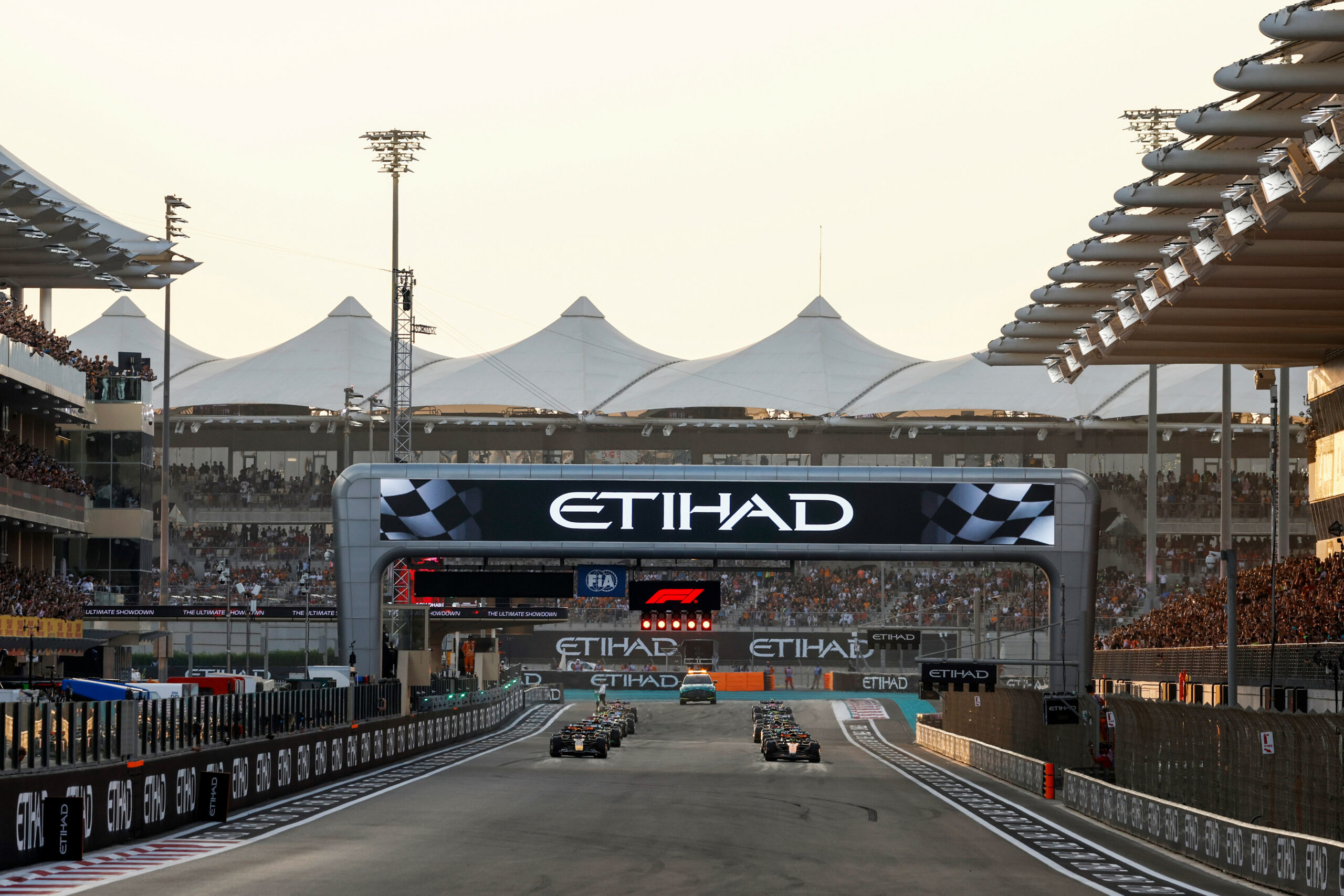
Now that F1 has bid farewell to the ground effect regulations, which came into effect in 2022, let’s delve into how the current grid has fared over the course of the last four seasons with Pit Debrief’s end-of-era rankings.
While the usual suspects like Red Bull and McLaren jousted for the top position in our classification, how much of an impression did Ferrari make? Did any midfield team manage to set themselves apart from the rest of the pack? How about a certain Grove-based squad that dragged themselves from the very back of the grid in 2022 to podiums in 2025?
The final points tally and the teams’ positions in the F1 championship standings each year certainly carry a lot of weight when it comes to our rankings. However, we also take into account how far they progressed or regressed relative to their immediate rivals and how well their campaigns were executed.
A brief history of ground effect in F1
Before we rate the performance of all ten teams that have taken to the track since 2022, shall we briefly look into the origins of ground effect in F1 and why it reemerged in the first place four years ago?
The use of ground effect in racing goes all the way back to the second decade of the 20th century. However, it wasn’t until the late 1970s that this aerodynamic phenomenon started paying dividends.
The car that made the breakthrough was Colin Chapman’s Lotus 78 of 1977, which ushered F1 into the first era of ground effect. The use of inverted wing shapes placed within the sidepods created two substantial Venturi tunnels. But the genuine masterstroke was the incorporation of sliding skirts, which crucially increased downforce.
The Lotus 79, with its longer Venturi tunnels and diffuser, became the first ground effect car to win the world championship, with Mario Andretti at the wheel.
What ensued was an innovation race, and the beginning of the next decade saw teams push the boundaries for even more aggressive ground effect solutions. As cornering speeds and G-forces sharply increased, the FIA intervened, banning side skirts in 1981 and mandating a 6 cm ground clearance.
Nevertheless, the aforementioned directives weren’t enough to ensure driver safety, and the FIA ultimately introduced a flat bottom for 1983 and completely removed the ground effect the sport had come to know.
Reintroduction of ground effect

Ground effect eventually returned to F1 in a major way with the 2022 regulations, over 40 years after its initial boom. The ruleset, originally scheduled to come into effect in 2021 but delayed by the COVID-19 pandemic, had one guiding principle: to facilitate closer racing.
As the previous generation of single-seaters experienced “catastrophic downforce loss”, the technical overhaul in 2022 aimed to diminish the dependence on top-body aerodynamics and generate downforce using powerful Venturi tunnels in the underfloor instead. This design was supposed to ensure that cars lost less downforce when in turbulence, thereby making overtaking opportunities easier.
Although there is a general consensus that the ground effect cars failed to improve raceability and became precisely what the rules set out to overcome, it’s undeniable that the lap times continued to converge and the margins up and down the order generally were closer than ever in 2025.
Ranking every F1 team’s performance during the ground effect era
With F1 undergoing a major chassis/engine reset next season, we reflect on how each of the ten teams fared under the ground effect regulations that ended in 2025.
10th – Sauber
Total points: 145
Best finish in the Constructors’ standings: 6th
Worst finish: 10th
After a lean two years, Sauber entered the 2022 F1 season as Alfa Romeo and secured their best finish in the constructors’ championship since 2012. The C42 being one of the first cars to make the minimum weight allowed in the brand-new regulations enabled the Swiss-based team to lead the midfield early on in the campaign. However, their results tailed off as they lost the initial weight advantage, suffered reliability issues, and faced production bottlenecks that hindered the introduction of timely upgrades.
With Andreas Seidl parting ways with McLaren and heading up Sauber’s gradual transformation into Audi, everyone expected them to make a marked improvement in 2023. However, scoring 16 points over a 22-race season was by no means a sign of progress.
What followed was a dreadful 2024 season in which their total haul amounted to a measly 4 points. After lagging behind operationally and in terms of performance, their only silver lining was the 2025-focused floor update they implemented in Las Vegas.
Despite struggling for pace in the early rounds of 2025, a trio of mid-season floor upgrades transformed Sauber into a team capable of beating a Ferrari on merit. With Nico Hülkenberg securing their first podium since 2012 at Silverstone, it appears that Audi will inherit a respectable foundation next year as they complete their full takeover of the Hinwil-based outfit.
If we were to exclude the first 9 races of 2022 and the final two-thirds of the 2025 F1 season, Sauber would’ve appeared higher in our rankings. Unfortunately, as the lowest-scoring and overall the worst-performing team across the ground effect era, they are deserving of last place.
9th – Haas
Total points: 186
Best finish in the Constructors’ standings: 7th
Worst finish: 10th
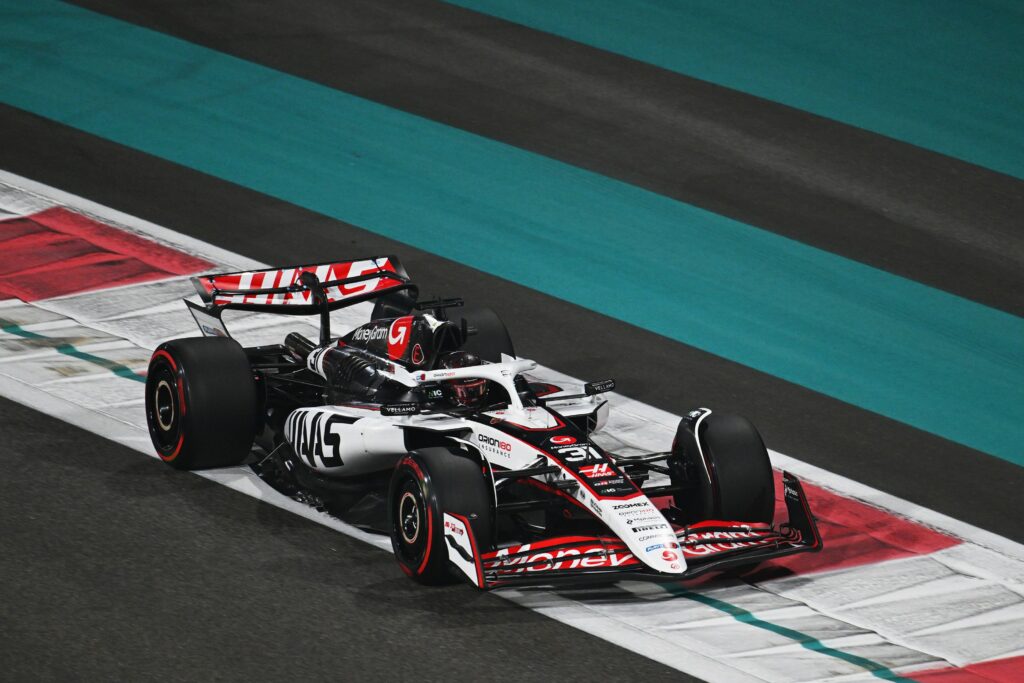
Despite failing to finish inside the top ten even once in 2021, Haas’s decision to focus its resources on the new rules and the development of the VF-22 throughout the season paid dividends in the early races of 2022.
The American outfit scored in the first two races of the season, and Kevin Magnussen secured a stunning fifth-place finish in Bahrain. Although the pickings got a little slimmer once their rivals started finding their feet, the 2022 São Paulo GP saw Haas become the only team outside the top four to top qualifying in this era.
Bagging just a dozen points and finishing last, Haas’s 2023 campaign started to fall apart at the seams from the very first round. The severe tyre degradation they endured negated their strong one-lap pace, and an unsuccessful development path further compounded their woes over the course of the underwhelming season.
With Ayao Komatsu taking over the reins ahead of the 2024 campaign, Haas finally experienced a change in fortunes and produced their second-best season since coming into F1. In fact, they would’ve placed sixth in the constructors’ standings if it weren’t for Alpine’s unanticipated double podium at Interlagos.
Apart from its decent pace over a flying lap, the VF-25 also led the midfield pack several times during the 2025 season. With Ollie Bearman’s fourth-place finish in Mexico City matching their best-ever result set in 2018, Haas undoubtedly managed to finish the cycle on an encouraging note.
In spite of the occasional highs, there’s one unflattering word that encapsulates Haas F1’s performance under the ground effect regulations: anonymous. As such, they have ended up in an unremarkable ninth place in our end-of-era rankings.
8th – Racing Bulls
Total points: 198
Best finish in the Constructors’ standings: 6th
Worst finish: 9th
Racing Bulls, formerly known as AlphaTauri, reversed the progress that had been made in the previous two years and finished on just 35 points in 2022. They were the sixth-fastest team in qualifying trim but failed to capitalise on that pace on the Sundays, with just ten points finishes throughout the season.
As the Faenza-based squad continued to grapple with the regulations in 2023, the mid-season axing of Nyck de Vries and Daniel Ricciardo’s injury at Zandvoort meant that the utmost potential of the AT04 remained unfulfilled. They made some noticeable progress in the final stages of the campaign thanks to the Singapore floor upgrade and the incorporation of a few Red Bull rear suspension parts. However, that momentum was only enough to climb to eighth in the standings.
2024 was a year of major rebranding for RB, and the team underwent yet another change in their driver line-up. The lack of consistency impaired their progress, and they were unsuccessful in their attempts to demote Haas to eighth in the constructors’ table.
Racing Bulls overcame an early driver swap to become one of the strongest midfield competitors of 2025, with a trip to the rostrum at the Dutch GP being the highlight of their season. Producing a single-seater that arguably was the easiest to set up was no mean feat when teams have struggled to come to grips with the extremely narrow performance windows of the ground effect cars.
Despite finishing behind Haas twice in the standings, Racing Bulls kept the American F1 team honest, and their peaks were relatively higher. Moreover, the accomplishment of never finishing dead last in the constructors’ championship in the last four years has granted them eighth place in our rankings.
7th – Williams
Total points: 190
Best finish in the Constructors’ standings: 5th
Worst finish: 10th
Williams ended the 2022 season as the slowest team by all metrics: in qualifying trim and in the standings. The car’s aerodynamic weaknesses, coupled with internal challenges like high staff turnover, financial struggles, and infrastructure limitations, further hampered their in-season development.
With Logan Sargeant scoring only once during the 2023 campaign, the Grove-based squad’s total tally of 28 points was particularly laudable since they were practically a one-driver team. Alex Albon made the most of the unruly FW45 and single-handedly dragged Williams to seventh in the constructors’ championship, ahead of Racing Bulls.
Williams’s struggles in the following year didn’t stem from a single source. Apart from dealing with a major car design overhaul, excessive weight, frequent crashes, reliability troubles, chassis drama, and a driver swap, they also battled with under-invested facilities and outdated working practices on their way to ninth in the standings.
Team principal James Vowles ultimately opted to sacrifice immediate results for long-term recovery as they started undergoing a fundamental rebuild and fostering a winning culture to become a 21st-century force.
The British outfit’s endeavours bore fruit immediately, and they established themselves as the undisputed leader of F1’s midfield pack in 2025. While Albon was the more consistent driver of the two, Carlos Sainz was responsible for their biggest highlights of the season—podium finishes in both Grand Prix and Sprint race formats.
Ultimately, Williams were second only to McLaren when it came to gains in performance made during the ground effect era. Despite having the misfortune of running the slowest car overall in 2022, their ascent to fifth in the F1 constructors’ championship in 2025 is a testament to their forward momentum, and we recognise the team’s efforts by ranking them seventh.
6th – Alpine
Total points: 380
Best finish in the Constructors’ standings: 4th
Worst finish: 10th
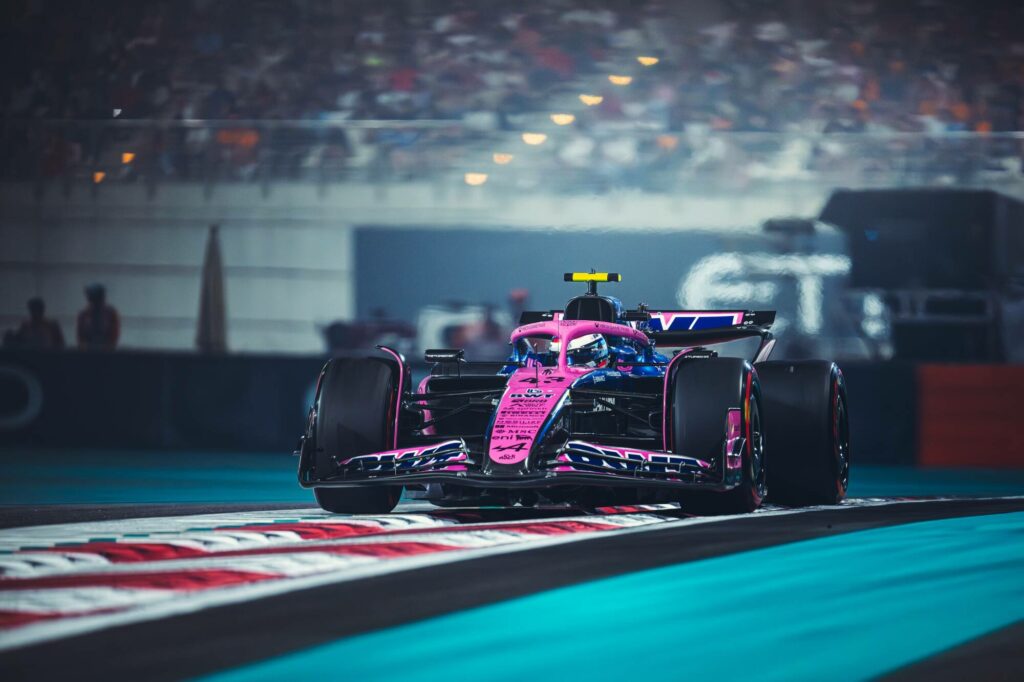
If recency bias shaped our assessment, Alpine’s dire 2025 season probably would’ve seen them languishing in last place in our rankings. However, we cannot disregard the fact that the French team finished the first year of the ruleset in fourth place, ahead of McLaren.
Despite producing a three-figure points campaign for the second year in a row and racking up two podiums, Alpine mostly flew under the radar when it came to on-track performance in 2023. Aside from the team reportedly losing about half a second per lap on average because the Renault power unit was lagging behind its rivals, organisational disarray and leadership turmoil plagued their season.
Although Alpine claimed a hard-fought P6 once more at the end of 2024, the total points scored had nearly halved in comparison to the previous year. With a string of high-profile departures disrupting the internal stability yet again, a sluggish car and a series of missed opportunities had left the team stuck in ninth place before the fortuitous double podium in Brazil salvaged their underwhelming campaign.
In addition to the substantial horsepower deficit, the difficult A525 and a driver swap early on further compounded the Enstone-based outfit’s final season with a works Renault power unit. Their meagre haul ultimately amounted to just 22 points.
While it remains to be seen whether a switch to Mercedes engines from 2026 can help turn their fortunes around, it’s indisputable that Alpine gradually slid backwards, and their respectable showing in the first two years of F1’s second ground effect era isn’t enough to justify a better rank than sixth.
5th – Aston Martin
Total points: 518
Best finish in the Constructors’ standings: 5th
Worst finish: 7th
The first year of the new ground effect era saw Aston Martin struggle from the get-go due to a poorly designed car. The mid-season revamp, significantly inspired by the development of Red Bull’s RB18, propelled the British marque into the battle for sixth place. Unfortunately, their performance gains weren’t sufficient, and Sauber beat them in the standings on countback.
With an aggressive development target and wholesale changes to the car, Aston Martin started their 2023 campaign with a bang. They emerged as Red Bull’s closest challengers, and Fernando Alonso secured six podiums in the first eight rounds. However, with the Silverstone-based squad unable to find an answer to their aerodynamic inefficiencies and teams like Mercedes, Ferrari, and McLaren gaining the upper hand in the mid-season development battle, they finished the season in an underwhelming fifth place.
While Aston Martin had hoped to replicate their success from early 2023, a draggy package and misguided development direction hindered their progress across 2024. The AMR24 showed some potential at the start of the season, especially in qualifying, and this form allowed them to retain fifth place in the championship. Unfortunately, a series of failed upgrades saw them finish the season without any top-three results.
Since Alonso did the heavy lifting once more and Adrian Newey had minimal to no involvement in the development of the AMR25, their total haul of 89 points wasn’t good enough to leapfrog Racing Bulls in the standings in 2025.
Barring the first third of the 2023 F1 season when several rivals had a slow start, Aston Martin’s trajectory throughout the ground effect era has been rather precarious. They are invariably an upper-midfield competitor who masqueraded as a top team for a brief period of time.
4th – Mercedes
Total points: 1861
Best finish in the Constructors’ standings: 2nd
Worst finish: 4th
Winning eight straight constructors’ titles, Mercedes rocked up to the 2022 pre-season testing with a radical design philosophy dubbed ‘zero pods’. However, winning just one race and not competing for either championship was in no way acceptable for the Brackley-based outfit.
The battle for P2 in the teams’ championship went down to the wire in 2023; Mercedes came out on top, but barely so. Even after ditching their infamous zero-sidepod concept, they never managed to get on top of the other limitations that made the W14’s performance extremely erratic. Since they no longer had a dominant car to mask their inadequacies, it became increasingly apparent that they were lagging behind operationally as well.
2024 was yet another underwhelming season for the Silver Arrows, as they dropped from second in the constructors’ table to fourth, over a hundred points adrift of Red Bull. Apart from a mid-season winning streak when they stood on the top step of the podium thrice, the W15’s inconsistencies resulted in an up-and-down campaign.
Mercedes’s runner-up spot in 2025 was a noticeable upgrade on last year’s fourth place, even if they were 364 points behind the champions. While the 2 victories and 10 more podiums highlight their improved consistency, it’s worth noting that Red Bull, as a one-car team, nearly pipped them for second position.
In the end, the fact that Mercedes was the only top F1 manufacturer to not challenge for a championship during the ground effect era somewhat depreciates their worth in our rankings. Irrespective of the progress they made in the past four years, the German squad never quite came to grips with the regulation cycle and became a secondary character in the story of their customer team’s return to glory.
3rd – Ferrari
Total points: 2010
Best finish in the Constructors’ standings: 2nd
Worst finish: 4th
Following two winless seasons, Ferrari came out with their guns blazing at the beginning of 2022. But the implementation of the TD39 clipped their wings, and they lost out in the development race to Red Bull. Additionally, reliability concerns and operational mishaps had derailed both their title campaigns before they gained any meaningful momentum.
With Mattia Binotto getting the boot, Fred Vasseur inherited a flawed car in 2023. Nonetheless, the Maranello-based squad managed to secure the only non-Red Bull victory of the year in Singapore, and the floor upgrade introduced at Suzuka provided them with the much-needed performance boost to contend, albeit unsuccessfully, for second in the standings.
Despite a strong start to the campaign in 2024, the accelerated upgrades Ferrari brought to Barcelona induced bouncing in high-speed corners and prompted them to lose momentum. However, a crucial upgrade package helped them find their footing once again from the Italian GP onwards. In a season that saw the Scuderia with a bigger performance advantage on race day than in qualifying, they ultimately fell short of lifting the constructors’ trophy by only 14 points.
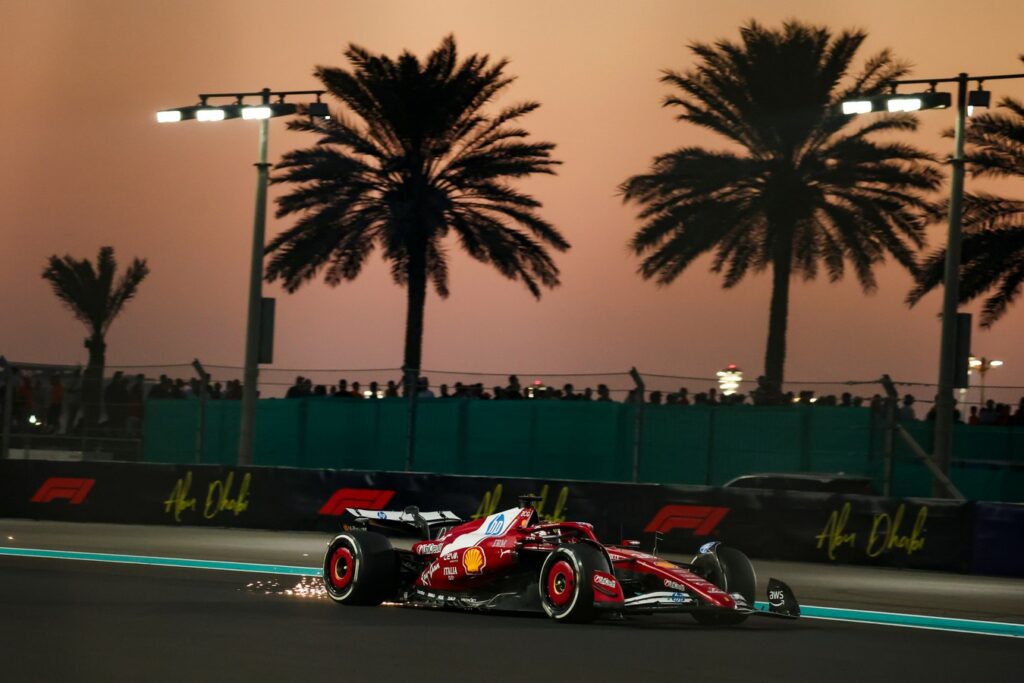
As Ferrari changed 99 per cent of their car ahead of the final year of the regulations, the SF-25 missed the mark and was unable to contend for the top positions. Coupled with the ride height problems they encountered from the second round, halting the development of the 2025 challenger early on to redirect resources to Project 678 further compounded their woes in the remaining races.
In spite of scoring the second-most points in the ground effect era, Ferrari ultimately underachieved. Nonetheless, the higher peaks and comparatively more consistent campaigns have persuaded us to rank the Italian team above Mercedes.
2nd – McLaren
Total points: 1960
Best finish in the Constructors’ standings: 1st
Worst finish: 5th
McLaren struggled in 2022 due to significant early-season brake cooling issues that hampered testing and the first few races. Furthermore, the MCL36’s fundamental aerodynamic weaknesses, especially in traction zones, and a misjudgement in team structure and allocation of resources resulted in them falling short of their own expectations and finishing behind Alpine in the standings.
The Woking-based squad had a challenging start to the 2023 season, with the MCL60 initially one of the slowest cars on the grid. However, a comprehensive technical restructure and a significant three-part upgrade package introduced before the summer break drastically enhanced their competitiveness. The car became a consistent podium threat, frequently challenging the top teams just behind the dominant Red Bull.
Following an incredible turnaround at the 2024 Miami GP, a total of 21 podium finishes, including 6 race wins, helped McLaren secure their first constructors’ title since 1998. Nonetheless, it’s worth highlighting that Ferrari managing to drag the battle to the season finale doesn’t reflect well on the British team given the superior machinery they boasted for the majority of the campaign.
McLaren carried that momentum into the final year of the regulation cycle and sealed the constructors’ championship with six races to spare. However, it’s necessary to emphasise how they had nearly squandered the other opportunity, as Max Verstappen came within 2 points of clinching the drivers’ title. Trackside issues like misjudged strategy calls and slow pit stops proved costly, and mistakes on the part of the drivers cropped up at times too.
Despite securing more wins than Ferrari since 2022, McLaren were only the third-highest points scorer. Ultimately, they still lacked the finesse that Red Bull demonstrated on far more occasions across the past four seasons.
1st – Red Bull
Total points: 2659
Best finish in the Constructors’ standings: 1st
Worst finish: 3rd
The RB18 being overweight and not so responsive at the front meant that Sergio Pérez could go toe to toe with Verstappen in the early races under the 2022 regulations. However, the Dutchman became practically unstoppable once Red Bull got on top of the car’s initial flaws, and the Austrian team cruised to their fifth constructors’ title.
The RB19’s sound mechanical platform and superb aerodynamic philosophy allowed the Milton Keynes outfit to deliver statistically the most dominant season in the sport’s history—winning 21 out of 22 races in 2023. Moreover, Verstappen’s title charge was so comprehensive that he could’ve single-handedly won the constructors’ championship.
A combination of Red Bull taking a wrong turn with car development and rival teams, particularly McLaren, making dramatic progress meant that they slipped to third in the 2024 standings. Nevertheless, the ample cushion Verstappen built in the early rounds played a consequential role in him securing his fourth consecutive drivers’ title despite coming under heavy pressure mid-season.
It became evident from the very first race that McLaren were the clear favourites to seal both championships in 2025, which they did. But the introduction of a key floor upgrade at Monza and an efficient Red Bull team capitalising on the many mistakes of the Woking-based squad led to Verstappen almost pulling off the greatest comeback in F1 history.
Red Bull were undoubtedly stronger in the first half of the ground effect era than in the latter. While they could’ve done more to assist their struggling drivers in the second seat, a win rate of 60 per cent since 2022, the display of sheer dominance during the 2023 season, and unparalleled operational efficiency still make them the irrefutable number one team.