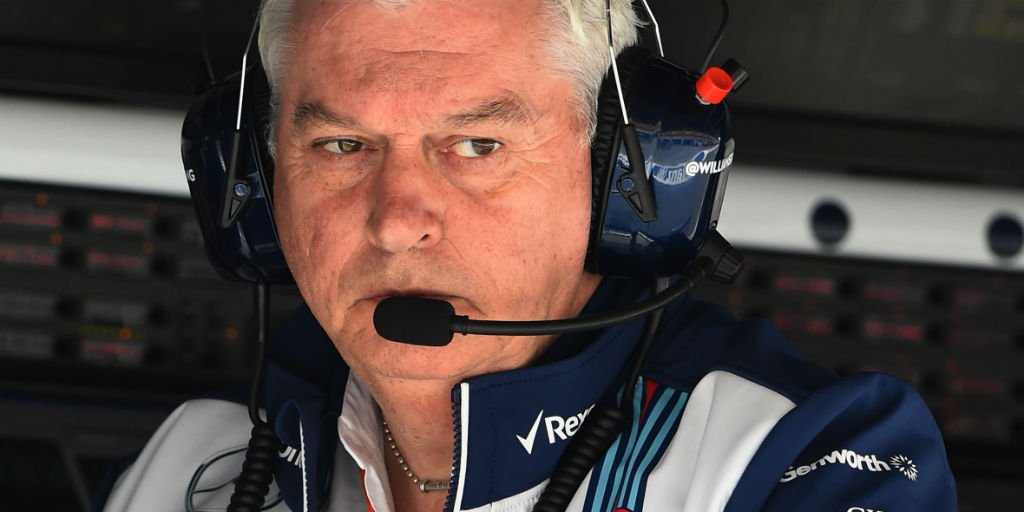
With a new season around the corner, the entire sport of F1 is anticipating how the new regulations will turn out. Pat Symonds was (partially) responsible for the 2026 aerodynamics and engine rules as CTO of F1. In Autocar’s podcast ‘My Week in Cars’ the current executive engineering consultant of Cadillac F1 has revealed some behind-the-scenes of the decision-making process.
Manufacturer involvement a must for FIA
One of the main things in drafting the 2026 engine rules, at least for the FIA, was to involve the manufacturers, Pat Symonds said.
“Now, with the ’26 power unit, the FIA said, we want to involve the manufacturers more. And unfortunately, I think it’s like when you get a committee to design a racehorse, you end up with a camel.
“And I think that’s happened a little bit. Because one of the briefs for the ’26 engine was to remove the MGU-H.
“Because that was something that certainly improved the efficiency of the engines massively, but it was quite complex.”
The MGU-H, an abbreviation for ‘Motor Generator Unit – Heat’, was one of the two energy regeneration units of the turbo-hybrid engines.
Symonds explains: “So what it is; attached to the turbocharger is an electric motor. Which is capable of spinning the turbocharger up to get rid of lag. But more importantly, it’s capable of acting as a generator.
“So the turbocharger can drive the motor, produce electricity, which goes into the battery. Very efficient way of recovering all that waste heat that’s in the exhaust.”
All in all, a complex piece of technology which prevented new manufacturers from entering the sport. Hence it’s removal, according to Symonds.
“It was decided to remove that, really to try and encourage new manufacturers into the sport. Which in some way was successful.
“And you know, we’ve got Ford come in. We’ve got Audi come in. We’ve got Cadillac come in. Porsche almost came in, sort of faulted at the last minute.”
MGU-H originally to be replaced with front-axle recovery
To prevent the increase of the role of the internal combustion engine in the power unit, an alternative was needed. The working group suggested ‘front-axle recovery’, but an undisclosed F1 team was against that. And thus Symonds feels the 2026 engine rules became a “camel”.
“Once you remove that energy source, if you keep everything else similar. That would increase the power of the motors and things.
“The idea was to replace it with recovering energy from the front axle. And if you did that, everything balanced out quite nicely. You weren’t short of energy, you could have a lot more electrification on the car.
“But unfortunately, because of this sort of committee approach to things, one team was very much against front axle recovery.”
Four-wheel drive not on the table
Pat Symonds reveals that while talking about the 2026 engine rules, then FIA president Jean Todt misunderstood front-axle recovery for four-wheel drive.
“I think the president of the FIA at times, Jean Todt, thought we were talking about four-wheel drive, which we weren’t. We were talking about energy recovery.
“Maybe drive when you’re on the straight, but certainly not in the corners. So not a four-wheel drive classic car.”
So the front-axle recovery never came to be, resulting in a ‘camel’ rather than a ‘racehorse’, as Symonds put it.
“And so because of this sort of very democratic approach, one of the times when democracy is not good, we ended up with this camel. Yeah, we’ve ended up with a power unit that’s sparse on energy. And OK, there are ways around it, but they’re not good ways around it.
“So I wouldn’t say that ’26 power units ended up the way I wanted it. The chassis, the aerodynamics, yeah, I think they’re pretty good. The active aero is a good step forward, I’d say.”