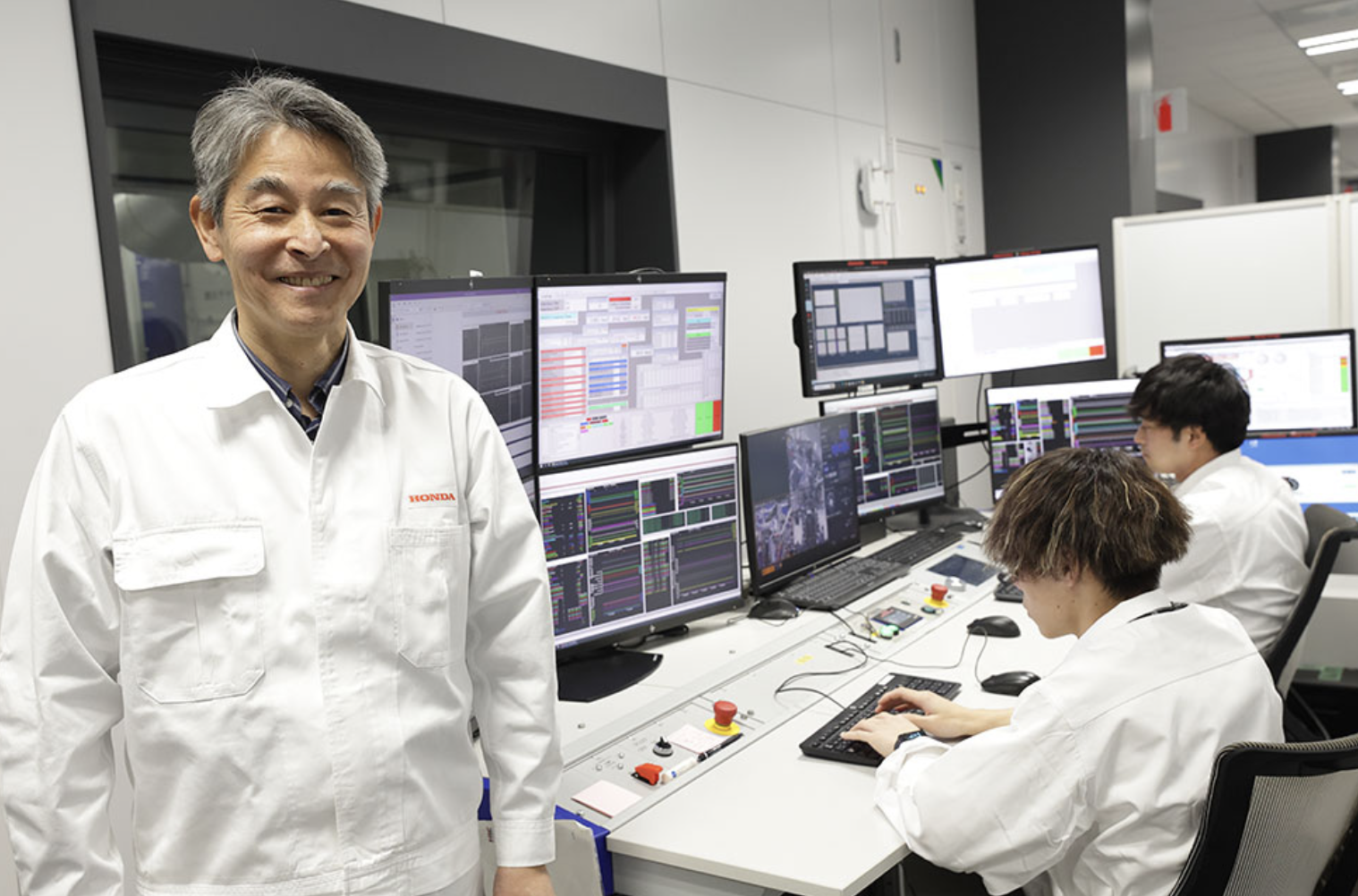
Honda’s chief engineer Tetsushi Kakuda has spoken about the new power unit regulations ahead of the 2026 F1 season.
2026 marks a huge change in Formula 1 with the introduction of new technical regulations. These span multiple areas, including new power units. The hybrid element of the power unit has an increased significance, and teams will also be required to switch to sustainable fuel blends.
Honda has been a long-term partner of Red Bull Racing until they parted ways at the end of 2025. This year, Honda is remaining on the grid as Aston Martin‘s F1 engine manufacturer.
Ahead of the upcoming season, Tetsuchi Kakuda has answered some questions about the new power unit.
Main challenges of 2026 for Honda with a new F1 power unit
With the changes in place, there are bound to be some challenges ahead. Tetsushi Kakuda spoke about how difficult it was to redesign the new power units to fit the regulations.
“In terms of difficulty—honestly, everything. Other than the basic architecture of a V6 turbo internal combustion engine (ICE), everything is new, so it was essentially a complete reset. The basic structure, such as engine mounting distances and positions, does change, but overall it’s not dramatically different from before. However, the internals are completely different: the combustion system and the fuel have changed, so the requirements are entirely new. In that sense, it really is a new engine.
“With the elimination of the MGU-H, we have to rethink how we use the turbocharger. The compression ratio is more restricted, variable intake systems are no longer allowed, and deciding what kind of engine to build has become a completely new challenge.
“On the electrical side, output increases significantly, and the amount of energy flowing in and out of the battery and the control electronics (CE) becomes enormous to match the motor. That means we have to develop an optimal battery and CE capable of controlling it optimally. In short, this is a power unit that requires entirely new development across the board.”
The removal of the MGU-H
The MGU-H has been replaced with the new MGU-K. This is set to be nearly three-times as powerful, delivering large amounts of electrical energy to the wheels. Tetsushi Kakuda was asked if this change had helped to simplify the power unit’s structure.
“In terms of mechanical complexity, having an MGU-H does make the PU more complex. However, under the new rules the amount of electrical energy is much larger, so even small differences can translate into clear performance gaps. That’s what is different from before. So even if the system is simpler in structure, the level of difficulty remains very high.
“Energy management will also be a differentiating factor, particularly in deciding where to use the limited amount of energy. In principle, it’s best to use as much as possible on the straights, but depending on the car’s characteristics, you might choose to use it between short corners. That would then reduce the energy available on the straight, for example.
“There are also cases where electrical energy is used to shape torque characteristics or achieve peak power, depending on how the turbo and engine are designed. With the MGU-H gone, turbo lag becomes a major issue, and using electrical energy to compensate for that is certainly an option. However, electrical energy is limited—you can’t use it anytime, anywhere—so how you use it becomes extremely important.”
The use of electrical energy in F1 2026
In the new technical regulations, there is a bigger emphasis on using electrical energy. However, it is often in short supply. Because of this, the generation and usage of the energy is a challenge Kakuda needs to overcome.
“Exactly. The key point is how efficiently you generate the limited electrical energy and how you use it. It’s not just about power assist—this will vary depending on ICE characteristics, the circuit, race conditions, and even the driver’s style. That requires extremely fine control, which makes it a very challenging area.”
Durability and reliability for Honda
All teams are going to be looking for a power unit that is durable and reliable. However in the early stages, there are often teething problems with new technology.
“With reliability, we certainly experienced firsthand how difficult the MGU-H was. This time, we don’t have those unknown rotational speeds or extremely complex mechanisms, so I don’t expect failures on the same scale. That said, there are still definite challenges.
“For example, with the increase in electric output, the effects of high torque on the MGU drivetrain become a difficult area. Thermal management and temperature control of the battery and motor are also areas where each PU manufacturer may take a different approach, and that will inevitably affect reliability.”