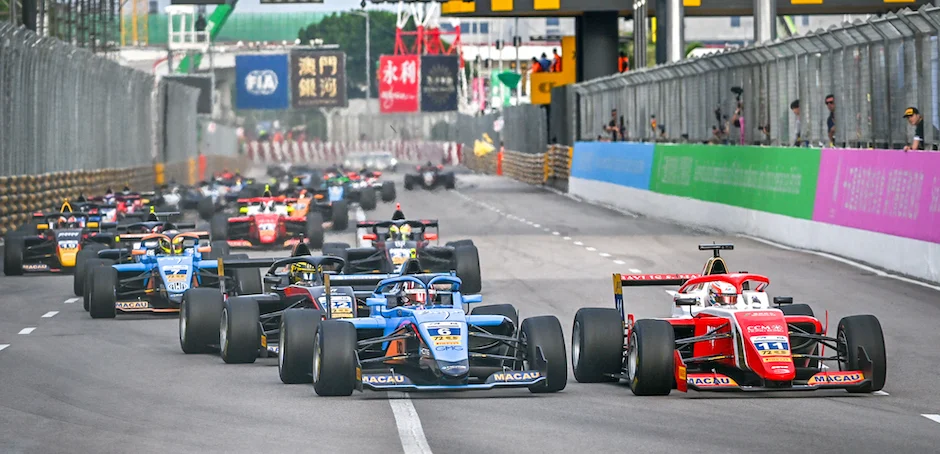
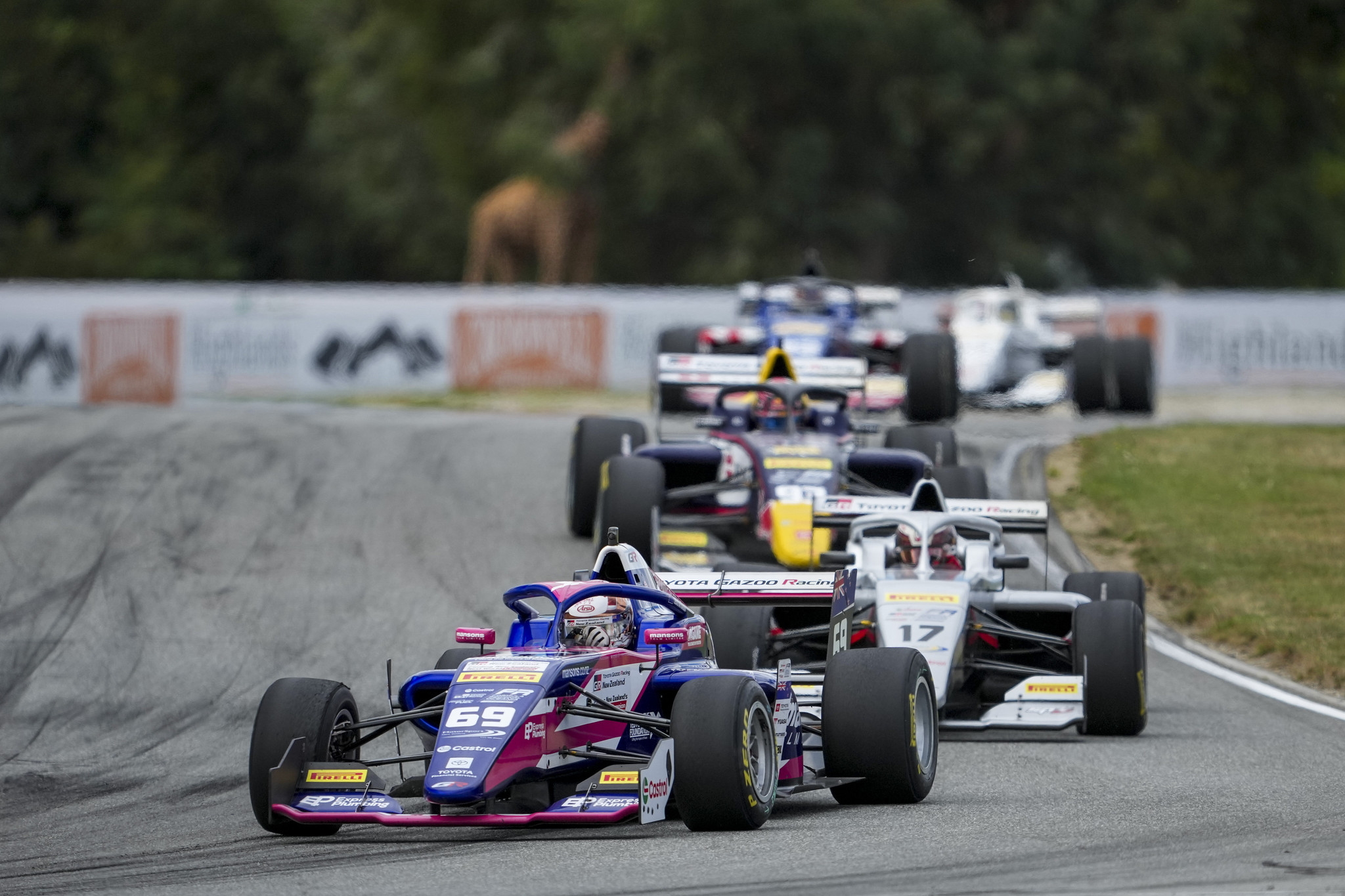
The New Zealand Grand Prix stands as one of global motorsport’s rare independents. While most national Grands Prix folded into the Formula One World Championship, New Zealand chose a different path. As a result, alongside the Macau Grand Prix, it remains one of only two national Grands Prix still held outside Formula One.
Since its debut in 1950, the event has reflected the changing face of single-seater racing. Yet, despite shifting formulae, venues and generations of drivers, the race has always retained its prestige. Now, as the 70th New Zealand Grand Prix approaches at Highlands Motorsport Park, the event once again sits at a historic crossroads.
Origins and early international prestige
The Grand Prix began at Ohakea in 1950, immediately establishing international intent. Soon after, Ardmore Circuit hosted a golden early era, attracting elite drivers from Europe and Australia. Consequently, names such as Stirling Moss, Reg Parnell and Jack Brabham all added lustre to the winner’s list.
During this period, Formula Libre machinery dominated. Moreover, New Zealand’s summer calendar offered northern hemisphere drivers a rare off-season battleground. As a result, the event quickly gained a reputation as a serious international contest rather than a domestic exhibition.
The Tasman Series years: A golden age of the New Zealand Grand Prix
The race reached its competitive peak during the Tasman Series era of the 1960s and early 1970s. At that time, the New Zealand Grand Prix formed a cornerstone of a championship that rivalled Formula One for talent during the European winter.
Importantly, six Formula One World Champions claimed victory during this era. Jack Brabham, Jackie Stewart, Graham Hill and Bruce McLaren all triumphed, often in cutting-edge machinery. Meanwhile, circuits such as Pukekohe Park Raceway became synonymous with high-speed, high-risk racing.
Therefore, the Grand Prix did not merely host stars; it actively shaped careers and technical progress.
Transition and survival after Tasman
After the Tasman Series faded, Formula One drivers largely withdrew from extra-championship events. Consequently, the New Zealand Grand Prix entered a more modest phase. However, rather than disappear, it adapted.
Throughout the 1980s and 1990s, the race embraced Formula Pacific, Formula Atlantic and later Formula Holden. In doing so, it prioritised relevance over nostalgia. Drivers such as Ken Smith, Craig Baird and Greg Murphy carried the torch locally, while the event continued to move between venues including Manfeild, Ruapuna and Teretonga.
Thus, even during quieter years, the Grand Prix preserved continuity and national importance.
Revival of the New Zealand Grand Prix through the Toyota Racing Series
A significant resurgence arrived in 2006 with the Toyota Racing Series. Crucially, the championship’s winter timing attracted ambitious young drivers from Europe, Asia and the Americas. As a result, the New Zealand Grand Prix regained its international flavour.
Future Formula One drivers, including Lando Norris, Lance Stroll and Daniil Kvyat, used the event as a proving ground. Meanwhile, repeat winners such as Nick Cassidy highlighted the race’s role in driver development rather than celebrity. Accordingly, the Grand Prix rebranded itself as a gateway to higher formulae, especially Formula 3 and beyond.
The modern era: Formula Regional Oceania
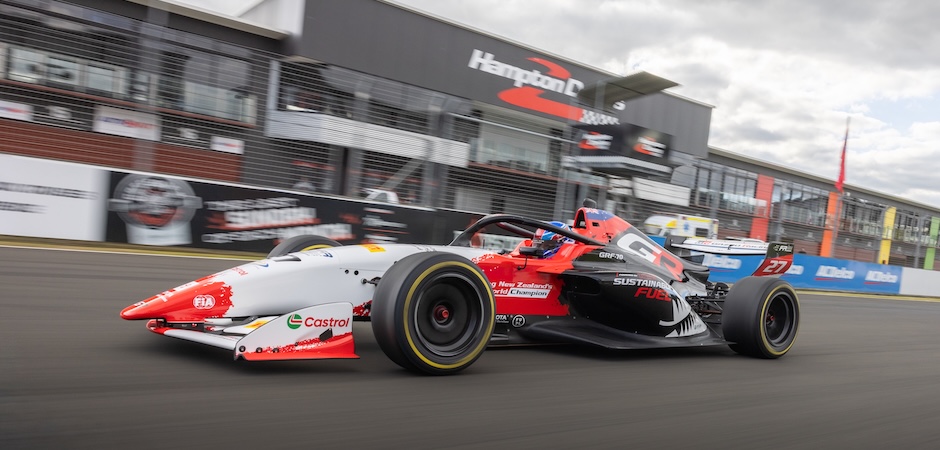
From 2023 onwards, the New Zealand Grand Prix has served as the signature race of the Formula Regional Oceania Championship. This alignment places the event firmly within the FIA’s modern single-seater ladder.
Recent winners, such as Laurens van Hoepen and Liam Sceats, underline the championship’s competitive depth. Furthermore, the use of Tatuus Formula Regional machinery ensures technical parity and close racing.
Even during disruption, including the COVID-19-affected 2021 event, the Grand Prix delivered drama. Shane van Gisbergen’s pitlane-to-victory drive exemplified the race’s enduring unpredictability.
Circuits that shaped the legend of the New Zealand Grand Prix
Over seven decades, the New Zealand Grand Prix has visited eight circuits. Nevertheless, Pukekohe Park Raceway remains its spiritual home, having hosted the event 29 times. Manfeild, later renamed Circuit Chris Amon, also played a central role in the modern era.
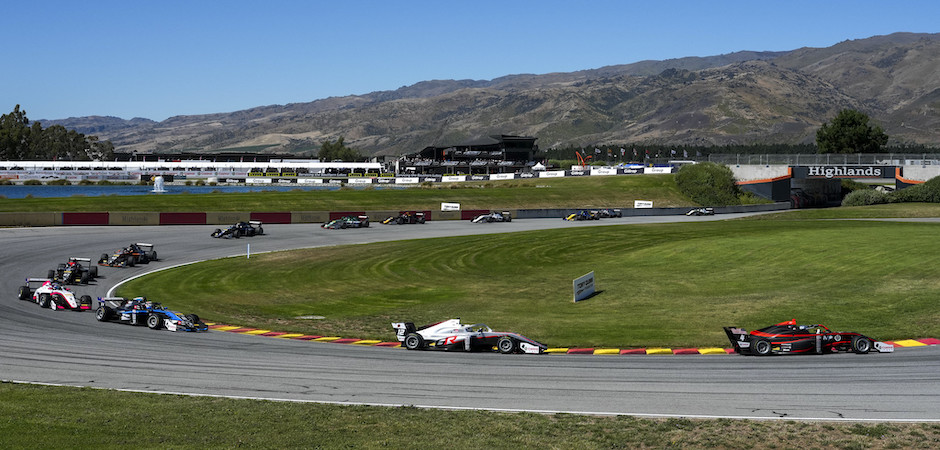
More recently, Hampton Downs and Highlands Motorsport Park have carried the mantle. Each venue has added its own character, from Pukekohe’s sweeping speed to Highlands’ elevation changes and technical demands. Therefore, the race’s identity has evolved alongside New Zealand’s motorsport infrastructure.
Records, rivalries and national pride
Statistically, New Zealand dominates its own Grand Prix, with 32 victories by home drivers. Australia and the United Kingdom follow, reflecting historic Tasman ties. On the technical side, Italian constructor Tatuus now leads all manufacturers, highlighting the modern era’s spec-chassis reality.
Yet, beyond numbers, the race consistently balances national pride with international ambition. That balance explains its longevity.
Looking ahead to the 70th New Zealand Grand Prix
In 2026, the New Zealand Grand Prix reaches its 70th running, a milestone few races outside Formula One can claim. Highlands Motorsport Park will host the event, and it will serve as the final round of the 2026 CTFROT Round, ensuring championship stakes and heightened intensity. The 2026 New Zealand Grand Prix will also see the return of 2024 winner Liam Sceats, whose participation was announced just after Round 3 of the 2026 CTFROT.
Symbolically, the moment unites past and future. The race honours a lineage that includes Moss, Brabham and McLaren, while simultaneously spotlighting the next generation of global single-seater talent.
Ultimately, the New Zealand Grand Prix endures because it adapts without forgetting its roots. As the lights go out for the 70th time, the event will once again prove that prestige does not require Formula One branding—only history, relevance and great racing.