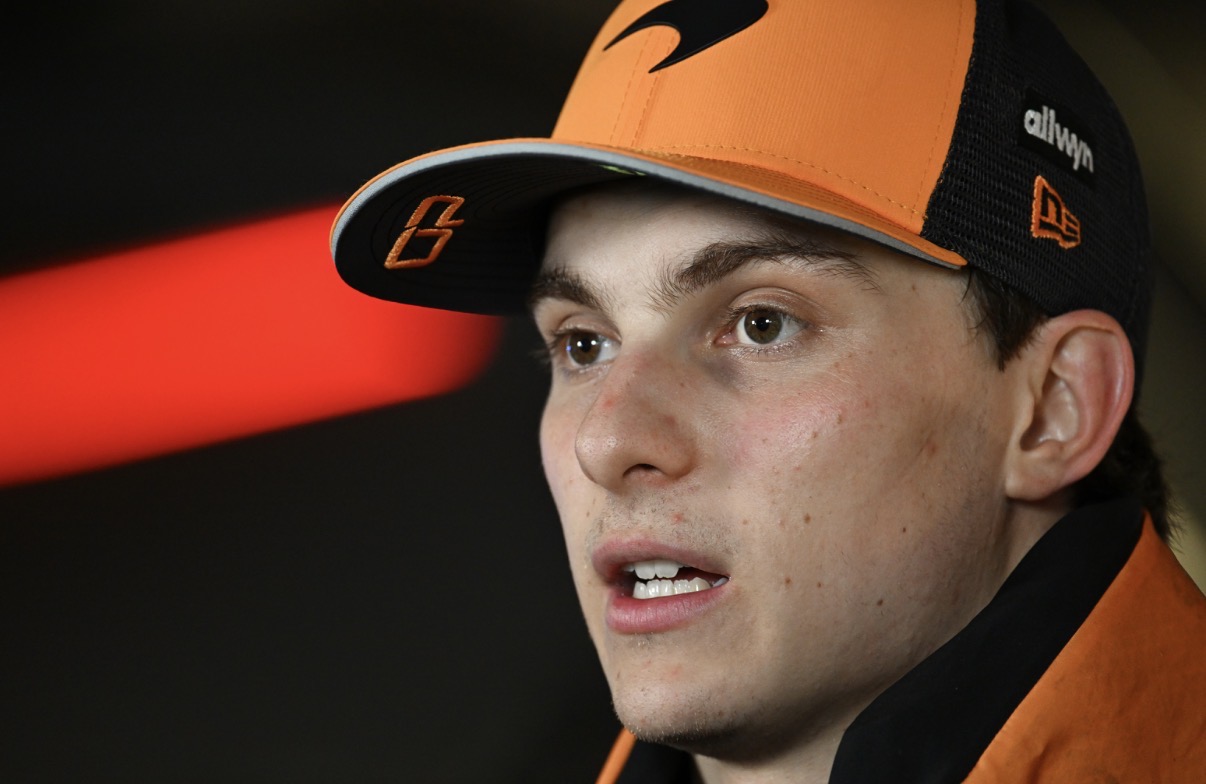
Oscar Piastri has addressed concerns that F1’s evolving technical regulations for 2026 could change the nature of driving in the sport with some fearing that traditional driver qualities such as bravery and instinct could be replaced by system management and multitasking.
As Formula One prepares for new regulatory changes that place increased emphasis on energy deployment and management within the cockpit, questions have emerged about whether drivers will still rely primarily on pure racing skill.
However, Piastri does not share this concern. The McLaren driver explained that managing complexity has always been central to success in Formula One and that the sport has never been solely about driving flat out.
Managing complexity has always defined great drivers
Piastri made it clear that Formula One drivers have always needed to handle multiple challenges simultaneously, even if outsiders do not always see these demands during a broadcast.
“Being a good racing driver has always been about managing lots of different things,” he told Sky Sports.
He pointed out that every driver on the Formula One grid is capable of driving at an extremely high level. Reaching Formula One already requires exceptional speed and skill. The difference between drivers often comes from how effectively they manage situations during races.
The small details separate good from great
Piastri further explained that marginal improvements often determine results at the highest level of motorsport.
“What can really bring you to the top is being able to do those one percent things better than everyone else.”
In modern Formula One, performance gaps between teams and drivers are extremely small. That means tiny advantages whether in tyre management or decision making can determine positions at the finish.
Many of these details go unnoticed by viewers, yet they are constantly on a driver’s mind during a race.
Piastri: Energy management adds another responsibility in F1 2026
With future regulations expected to increase the importance of energy recovery and battery deployment, drivers will need to carefully balance when and how they use available power.
“Adding in managing the battery… that’s largely going to be up to us as drivers.”
He emphasised that drivers will still make these decisions themselves while racing. There is no one else inside the car making these choices. Drivers must decide when to conserve energy and when to use it aggressively, all while defending or attacking on track.
From Piastri’s perspective, this responsibility is simply an extension of challenges drivers have always faced.
New techniques may feel unusual at first
During the discussion, concerns were raised about techniques that may initially feel unnatural, such as lifting off the throttle during qualifying laps to gain an energy advantage later on.
Piastri acknowledged that some changes could take getting used to.
“There’s probably going to be some things that are going to be unnatural.”
However, he also noted that drivers have rarely been able to drive without compromise even in qualifying. Tyre performance limitations often prevent drivers from pushing at maximum pace every moment. Managing tyre temperatures and grip levels has long required drivers to adapt their approach.
For Piastri, these new adjustments simply continue Formula One’s long history of drivers adapting to technical changes.
Managing things is nothing new in F1: Piastri
Piastri explained that Formula One has always involved managing certain restrictions rather than driving without limits.
“It’s always been about trying to manage something, and this is just going to be a new thing to manage.”
Whether managing tyre wear or mechanical reliability in previous eras, drivers have always needed to balance performance with preservation. Energy management, in his view, becomes just another factor within that equation.