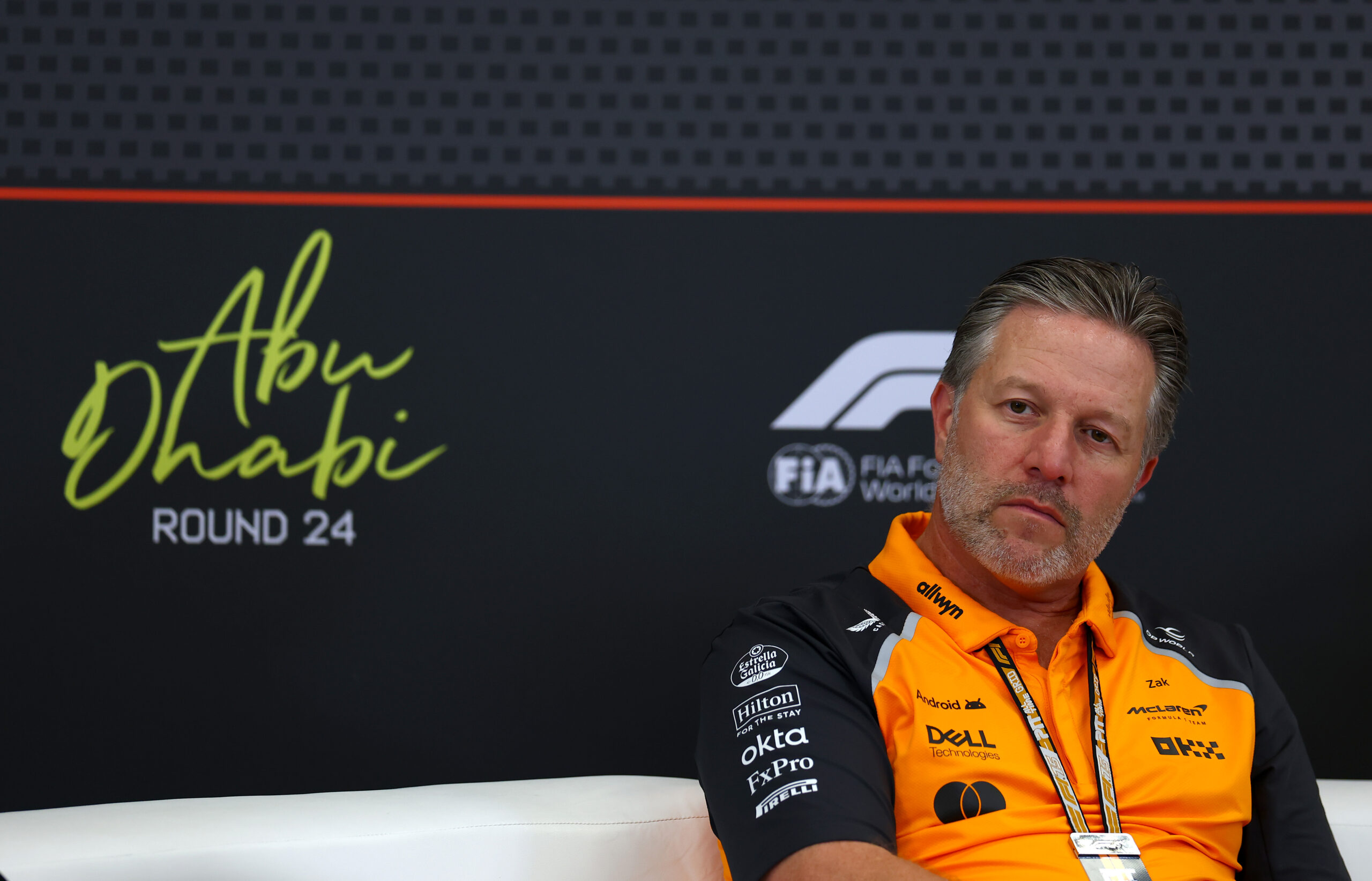
As the 2026 season approaches, the F1 paddock has transitioned from a state of curiosity to one of intense political friction. Rival manufacturers are lobbying for an immediate rule change regarding power unit (PU) compression ratios after allegations of rule breaking. McLaren CEO Zak Brown has offered a firm defence of his team’s engine partner: Mercedes.
In a measured assessment, Brown characterised the brewing controversy as a standard byproduct of a major technical shift.
The ‘compression ratio trick’ controversy involving McLaren’s 2026 F1 PU supplier Mercedes
The technical dispute centres on the 2026 F1 rulebook’s cap on compression ratios. The limit drops to 16:1 from the previous era’s 18:1.
Allegations have surfaced involving Mercedes High Performance Powertrains (HPP) and Red Bull Powertrains. They suggest the use of materials that expand under the extreme heat of race conditions.
This would allow the units to return to an 18:1 ratio during a Grand Prix. They would remain compliant during the FIA’s ambient-temperature parc fermé inspections.
The controversy gained significant traction following the reports that Red Bull turned Mercedes in to the FIA after failing to replicate the trick themselves. Brown framed the move as a classic paddock manoeuvre.
“It’s typical politics of Formula 1,” he said. “The engine has been designed and totally compliant within the rules. That’s what the sport is about. [This case is] no different to things like double diffusers that we’ve seen in the past, where they’re compliant within the rules.”
Regulatory compliance and competitive storytelling
From McLaren’s perspective, the Mercedes 2026 F1 PU has met every required technical benchmark. Brown suggested that the frustration from rivals stems more from their own technical hurdles. He dismissed the idea of a genuine breach of the rules.
“I don’t believe there’s a significant advantage as being represented by the competition. But of course their job is any perceived advantage, they’ll make some story out of it,” Brown asserted.
He credited the engineering team at Brixworth for their diligence in interpreting the new-for-2026 engine ruleset.
“The reality is the engine is completely compliant, passed all its tests, and I think HPP has done a good job.”
Brown emphasised that finding an advantage within the literal wording of the regulations is fundamental to the sport. He framed the situation as an engineering success rather than a legal grey area.
Prospective outlook: Melbourne stability
Despite reports of intense lobbying for the FIA to fit new sensors or conduct race-spec simulations, Brown remains confident that the grid will remain intact for the season opener.
He dismissed rumours that the Mercedes-powered cars would sit out the opening race.
“I can’t imagine that you wouldn’t have Mercedes teams on the grid in Australia,” he stated.
While the CEO admitted that the team is not the primary party in engine-specific regulatory talks, he expressed total certainty in their participation.
“We’re not only privy to those conversations and so I wouldn’t even know from a power unit point of view what would be required to change the regulations. But we’ll have all the Mercedes teams on the grid in Australia, I’m sure.”
The objective remains clear for McLaren: hit the ground running with a PU they believe is both innovative and entirely legal.