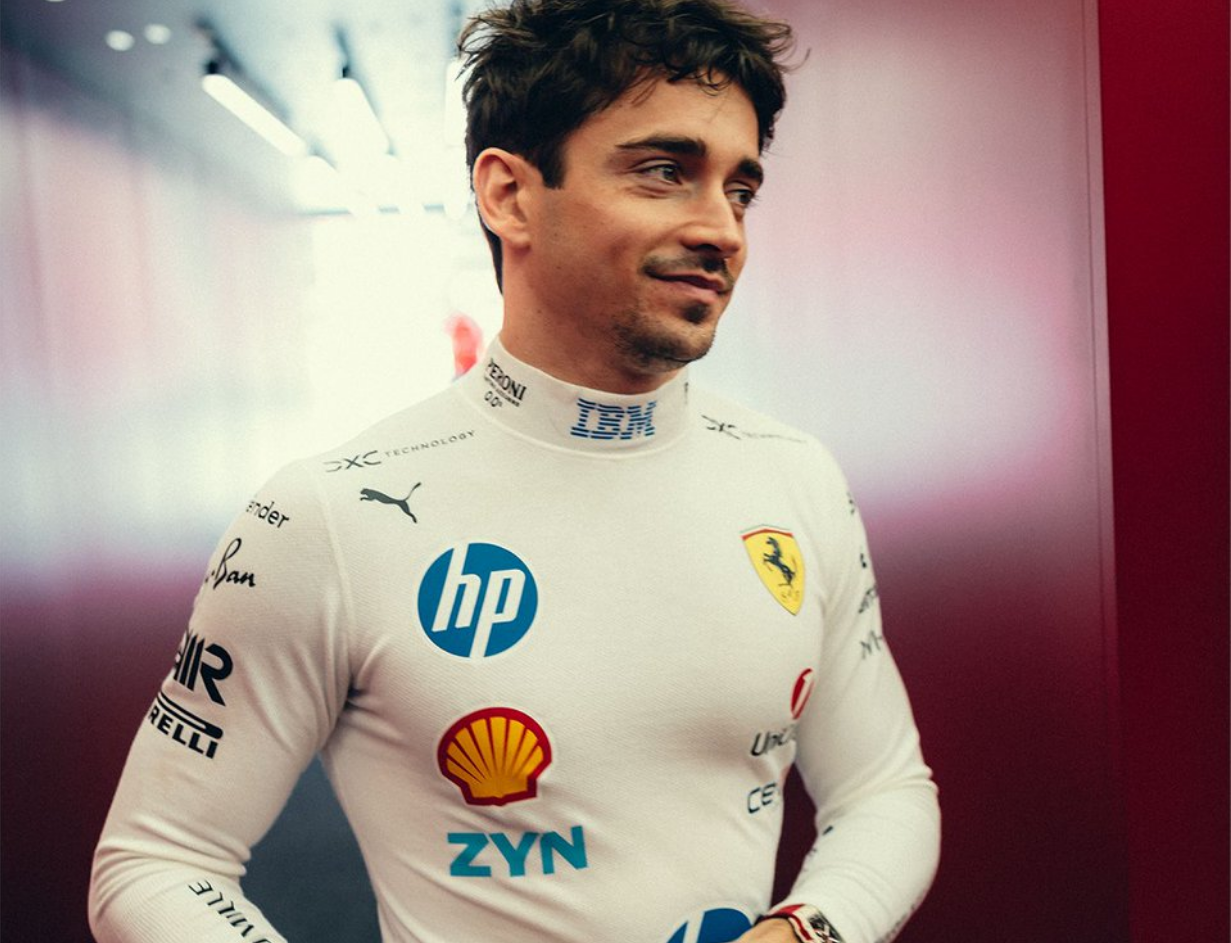
Ferrari driver Charles Leclerc gave his thoughts on the feel and technical complexities of the 2026 F1 cars after completing the first three-day pre-season test in Bahrain.
While Ferrari’s early pace and reliability has been encouraging—with Leclerc topping the timesheet on Day 2 of Bahrain testing—there has been much debate about the actual enjoyment of driving and the feel of the cars themselves.
Aspects of the 2026 F1 regulations have already left drivers and teams divided. Max Verstappen expressed his dissatisfaction during the first set of tests in Bahrain, criticising the increased workload and reduced satisfaction of driving under the 2026 regulations, likening the new-gen F1 cars to “Formula E on steroids”.
In turn, Lando Norris hit back at Verstappen’s comments, though even he conceded that compared to previous generations of cars, the latest iteration of F1 machinery “doesn’t feel as pretty and beautiful to drive.” McLaren, meanwhile, are already warning about potential safety risks, calling on the FIA to revise aspects of the 2026 regulations, particularly concerning the race start procedure, before the season opener.
Leclerc’s Ferrari teammate, Lewis Hamilton, remained skeptical, highlighting the complexities of the new systems and the challenges drivers will have to face this season as they get to grips with the cars.
Leclerc describes 2026 Ferrari challenger as a major departure from previous F1 machinery
Asked what he makes of the new cars, Charles Leclerc said in his print media session: “It’s getting better, it’s getting better. But yeah, the starting point was extremely different to whatever I’ve been used to in my career previously. I think it’s a huge change for Formula 1.
“It’s different. There’s a little bit less of attack, which is what I loved with previous F1 cars. Now it’s different, but it’s getting better.”
He explained that extracting performance now requires a broader understanding of the systems baked into the car.
“Obviously, we are still trying to find our marks with these new cars,” Leclerc said. “So many different things, so many new systems that we as drivers need to understand in order to extract the maximum out of those. So, a lot of work, but it’s getting better.”
The “fun” factor
Asked where he stands in this debate, Charles Leclerc admitted that the cars themselves are not as satisfying to drive as in the past, but added that he’s relishing the challenge of getting to grips with the complexities and challenges of the 2026 regulations.
“I mean, fun… It’s not the most fun I’ve had driving a car, but it’s the way it is, and I find the fun in a different way,” he said.
“I think the challenge of really developing this whole new system is in itself something that I’ve enjoyed and something that I find very interesting.
“So in that, I kind of find some fun into just experiencing different things and things that might have not worked in the past, but now that it’s all different, it’s cool to be able to think a bit outside the box and to try and find other ways in trying to maximise the performance of the car. But the actual pleasure of driving the car is different.”
Increased mental workload behind the wheel for F1 2026
The increased number of complex tools and systems means drivers now spend more time managing the car’s energy recovery and deployment strategies rather than simply driving on instinct. As Hamilton wryly commented, “it’s like you need a degree to fully understand it all.”
Charles Leclerc acknowledged that maximising the performance of these new-gen F1 cars currently requires a more cerebral approach from the drivers.
“As drivers in general, you always have to adapt and to change your driving style. This year is more of a change than we’ve been used to in the past, and more than anything, I think it’s more the amount of work there is when you are inside the car, the percentage of driving is a little bit less,” he said.
“Now it’s more about thinking about everything else that you’ve got to think of when you are in the car to maximise all the systems around you.
“So you’ve just got to think actively a lot more compared to in the past. But then driving-wise, again, it’s something that we are used to. And when you go from qualifying to race, just like last year, you will change a lot your driving style. So this year is just a different way of driving.”
Leclerc: Energy management the key to unlocking extra performance
When asked about the specifics of the energy management tools at his disposal in the Ferrari, Leclerc was careful not to give away too much but hinted that this will be a key area for extracting performance across the F1 2026 season.
“I mean, this is a big part of where each team is trying to get an advantage,” he noted. “So it will be very… I cannot go into the details of what we have and what are the things we need to manage, because we are all fighting to try and put the load more on the system rather than the driver.
“It’s different across the paddock for sure. And we’ve all had different approaches in what I need as a driver and what I would prefer not to have my head on, because it’s just too difficult to optimise as a human being, not having all the sensors that the car might have.
“So it’s a balance, but it’s interesting, because it’s a process we are definitely quite involved in. It’s not only about… I mean, obviously, there’s the hardware, which is all the engine and the power units we have, which plays a huge and a very important role, but all the software side of it.
“And this is very important, that integration with the driver, and it’s very personal for each and every single one of us. There’s a lot of work on that, to try and make it feel as natural as possible from race one onwards.”