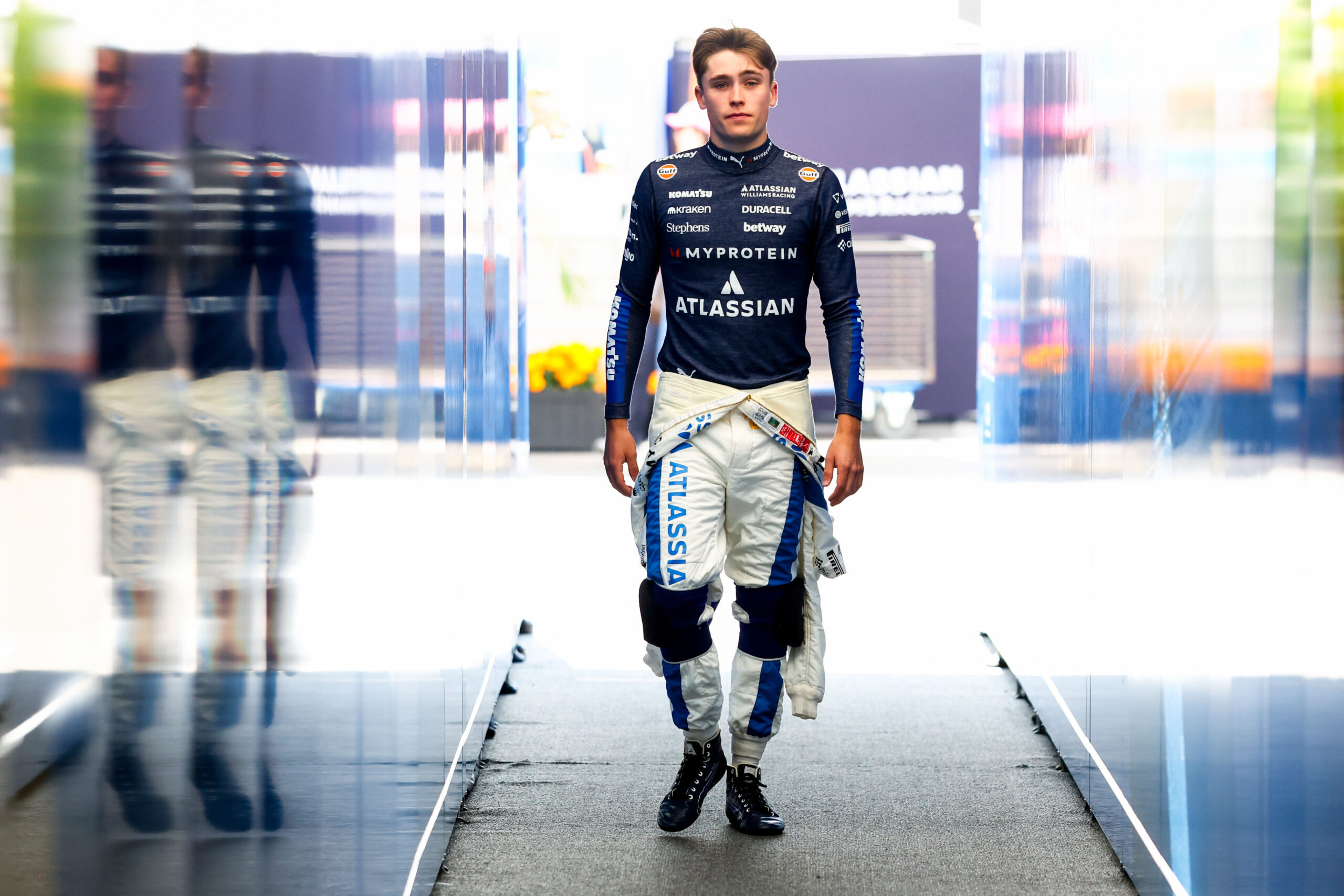
Hitech TGR’s Luke Browning’s 2025 rookie season in FIA F2 has unfolded as a year of rapid development, close competition and moments of standout performance. The step into the championship is widely regarded as one of the most demanding transitions in junior motorsport, yet Browning established himself early as a consistent front-runner. Now, as the season reaches its final round, he offers a detailed look at the challenges, breakthroughs and lessons that have shaped his rookie campaign.
At a virtual media roundtable attended by Pit Debrief, Browning broke down the phases of his season — from the early adjustment to F2 machinery, to standout race days, to the finer margins that ultimately separated him from the championship lead.
Learning F2’s demands and adapting to its complexity
From the earliest laps of the season, Browning faced the technical and physical demands that distinguish F2 from the categories below it. The car requires precision on braking, sensitivity in tyre behaviour and careful management of balance across fuel loads. Browning relied heavily on his ability to read changing conditions — a hallmark of his junior career — as he adjusted to the new environment. He recalled that this adaptability helped anchor him as he settled into the championship.
“I think honestly I’ve always been very quick to adapt to new machinery or even different conditions. Usually changing conditions, wet conditions helped me, got in my favour. It’s just been a bit of a trait of the past I think and when you get into Formula 2, talent only takes you so far.”
Understanding the depth of competition
As he gained experience across different circuits and conditions, Browning also grew increasingly aware of just how competitive the grid is. The field features multiple race winners, experienced returnees and champions from other categories, all operating within tenths of one another.
He summed up the strength of the field candidly: “So there’s 22 drivers here that are all, you know, all very close and many of them can make it to F1 as we’ve seen over the past years with how much they’ve been promoted.”
This recognition shaped Browning’s approach. In a championship where margins are razor-thin, execution across every stage of the weekend becomes essential — from out-lap preparation to tyre warm-up, to reading track evolution during Qualifying.
A strong start that exceeded expectations
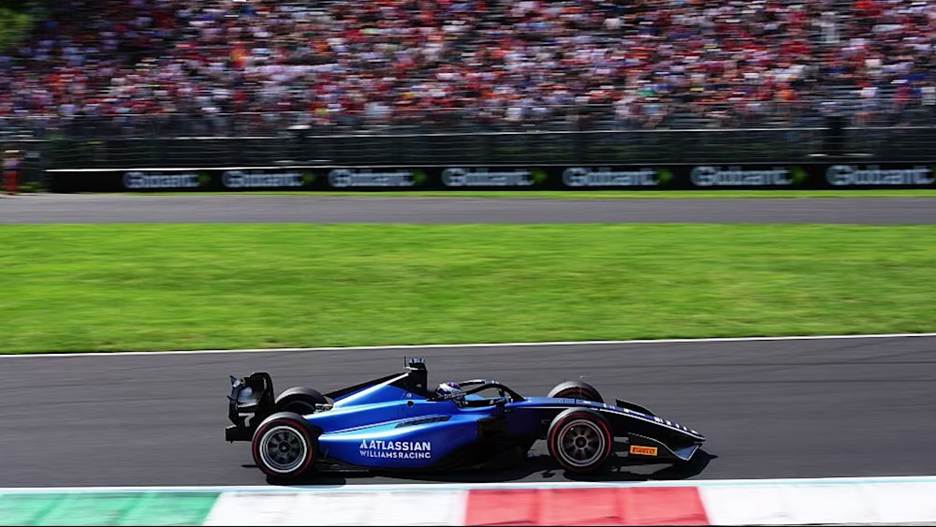
Despite arriving as a rookie, Browning and his inner circle carried confidence into the opening rounds. The target was to compete at the front; the reality, however, exceeded even those early expectations as he placed himself within the championship battle almost immediately. Reflecting on the early phase of the season, Browning described how the momentum built.
“And I think coming into this year we thought… the expectation was to be up there but honestly to fight, to lead the championship like we have, especially in the early rounds of the championship in my first full season, we were super proud of and I think that’s probably the reason why Williams have given me this opportunity to do the FP1s but there’s some exciting stuff coming up next year too.”
In a field where experience typically pays dividends, Browning’s assertive entry into the championship highlighted both his preparation and his ability to maximise sessions from the outset.
When Qualifying misaligns: understanding the finer margins
However, while Browning produced several strong qualifying results, he also experienced sessions where small details shifted his starting position significantly. In F2, the field often fits within a single second, and small shifts in tyre behaviour or driving rhythm can instantly reshape the order. Browning explained how those margins manifest behind the wheel.
“Yeah, so I think anyone that drives Formula 2 or is in the paddock or is well versed on it knows how many things have a massive effect on the pace and the Qualifying performance and the execution and how easy it is to just not quite get it right and if you’re 20% over on your tyre warm-up or you just have a small under rotation on the front left or you push a little bit before the tyre is in or you don’t quite get it right with the balance in the day or you make a little mistake.”
“I think it just makes a massive difference and yeah, I think that’s the reason why you see sometimes someone leading the championship, qualify down in P15, 16, 17 is because one of those things just hasn’t quite been aligned coming into the weekend. So, yeah, it’s been like that sometimes for me. It’s not through a lack of pace but just a lack of execution.”
Defining moments: Silverstone and Monza
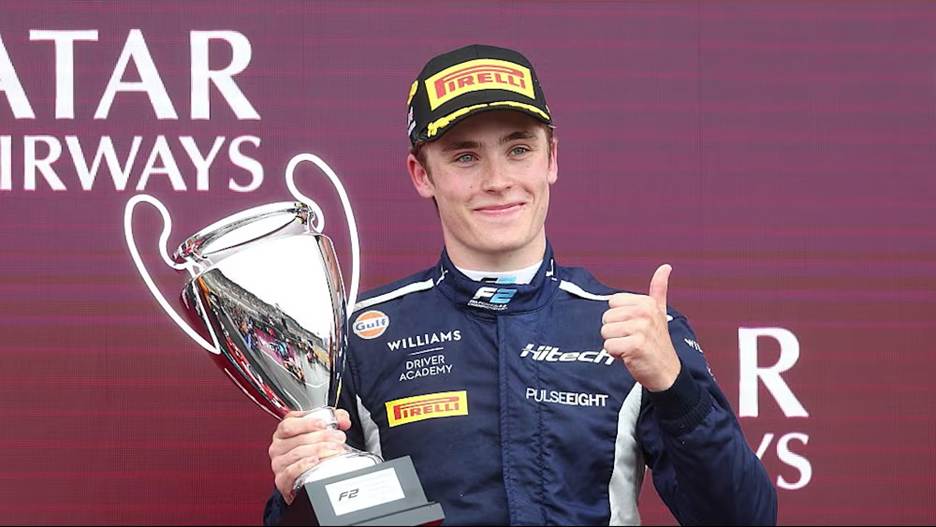
Despite some difficult moments, Browning can reflect positively on his season. Every F2 season contains race weekends that come to define a driver’s identity, and for Browning, two stood out above the rest: the wet-weather charge at Silverstone and the controlled victory challenge at Monza.
“I think what was really special about this year for me, which I think really shows who I was as a driver, is being the hero for the British fans at the home Grand Prix, that Feature Race that came from outside the points and I was lapping a second quicker than most people in the grid in the wet, around my home circuit I knew so well. I think it showed talent because after all, all the cars are equal in the wet.”
What Browning wants this season to represent
Of course, while standout moments create lasting images, Browning places equal emphasis on his ability to extract points consistently. Across a long season, this balance — combining high peaks with dependable execution — is crucial. He described the identity he hopes this campaign reflects.
“I think that was probably one of the most standout things for me and what I’d like to be remembered by is my wet weather prowess but I think equally the ability to execute and just optimise what I have in terms of the points.”
This goal aligns directly with the demands of F2. Championships are rarely won through heroics alone; they are built through minimising losses, capitalising on opportunities and approaching every race with clarity.
Understanding setbacks and maintaining clarity
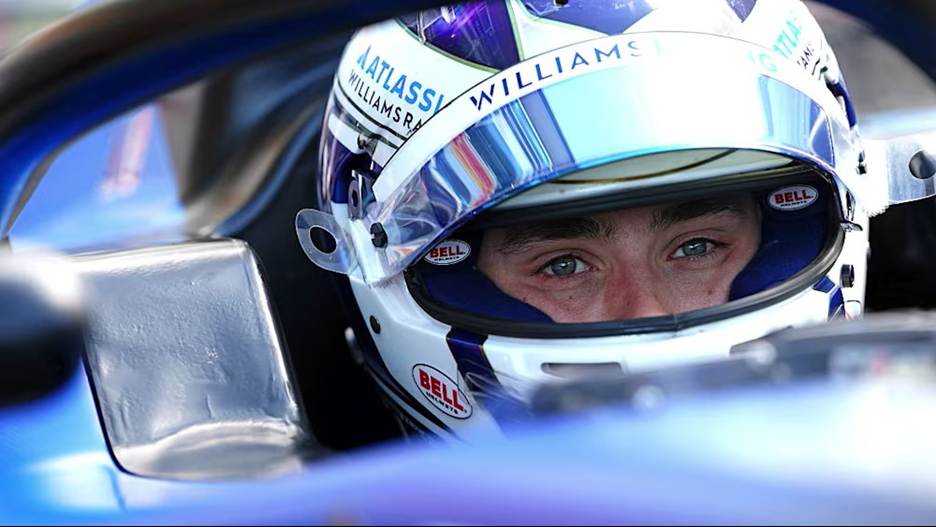
However, like every F2 driver, Browning encountered weekends where external factors — Safety Cars, the timing of yellow flags or shifts in track conditions — played a decisive role. Rather than dwell on those moments, he examined them through the lens of what he could realistically influence and where circumstances simply did not fall his way.
“You know, for the pace that we’ve had this year, the points and situations that I’ve been in, I’ve almost optimised everything as a driver that I can and I think not always do you have the luck to win the championship.”
Two weekends in particular illustrate the contrasting nature of his season. Qatar showed how instantly a well-managed race can change, while Monza showcased his ability to control a race at the front. Together, they became useful reference points when assessing how his rookie year unfolded.
“You need pace and luck and we didn’t have so much luck this year, especially with the Safety Car coming out when we were looking on for a podium last weekend in Qatar. These things happen but I think dominating in Monza was a good highlight and I think not an easy one on a circuit that’s so easy to overtake and just doing this in your first year, I think it takes guys years and years to perfect this championship and still don’t achieve it and although I’ve not managed to perfect the championship, we got bloody close at times and I think I’m very proud of that.”
The combination of those experiences — one shaped by timing, the other by execution — framed how Browning viewed the season as a whole and set the stage for an honest evaluation of the final championship picture.
Evaluating the decisive gap in the title fight
As the campaign moved into its closing phase, Browning was one of a few drivers challenging Invicta Racing’s Leonardo “Leo” Fornaroli for the title. However, despite his best efforts, he was able to close the gap, and Fornaroli clinched the 2025 F2 championship title afte a P2 finish in the penultimate Feature Race in Lusail.
However, the points gap between them reflected not just outright speed, but how cleanly each weekend unfolded. When asked what ultimately stopped him from overturning that deficit, Browning responded with a clear and structured assessment.
“Honestly, it’s a lot of things as you can see. At the end of the day, it’s just a result, right? So the reason why we didn’t is because we didn’t have as good results as him.”
From there, he expanded on the mixture of ingredients that shaped the battle across the year.
“Why was that? There’s loads of different reasons for it. Sometimes I made mistakes, sometimes we get a Safety Car when I’m on for a podium in the Feature Race and sometimes it’s just outright luck that stuff is out of your control. So this year, it was a combination of all and I think Leo had one of the cleanest seasons.”
Finally, he turned his attention directly to his rival’s execution and consistency.
“He did a great job in being consistent but I can’t think of now one thing that went against him this year and sometimes to win a championship, you just need to have a season like that and it was well deserved.”
A campaign built on growth, consistency and rising confidence
Browning now enters the final round with the benefit of a complete season’s learning behind him. He leaves little ambiguity about the foundation he has built — one shaped by pace, resilience and clear development across every phase of the season. As he prepares for the finale, Browning holds not only the results of the year, but a refined understanding of what it takes to compete at the front of the F2 field.