Creventic has confirmed a wide-ranging set of sporting and technical regulation updates for the 2026 Michelin 24H Series season. Notably, the changes will take effect ahead of December’s Michelin 12H Malaysia, signalling a proactive shift towards improved competition, enhanced safety, and reduced operational costs.
Moreover, the revisions focus heavily on sporting regulations, while a select number of technical updates aim to standardise safety and performance across all classes. As a result, teams and drivers must prepare for a more structured and strategically demanding racing environment.
Driving time rules take centre stage as Creventic unveils comprehensive 2026 regulation changes ahead Michelin 24H Series
To begin with, Creventic has introduced significant changes to driving time requirements. These adjustments directly impact race strategy and driver rotation.
The organisers have increased the minimum combined driving time for AM-Spirit and AM drivers to one sixth of a race duration. At the same time, they have extended the maximum stint length to two hours and 30 minutes, thereby allowing drivers to complete double stints on a single set of tyres—even during short CODE 60 interruptions.
In addition, officials have capped maximum driving time at four hours within any six-hour period. This rule also applies to drivers competing across multiple entries during a race weekend.
Furthermore, Creventic now requires drivers to complete at least two racing laps to qualify for championship points. This measure prevents teams from exploiting standings through minimal participation.
Digital communication and race procedures updated
Alongside driving regulations, Creventic has modernised communication protocols. From the 2026 season onwards, the Michelin 24H Series App will serve as the official communication channel between race control and teams. Consequently, team managers must remain vigilant and responsive throughout events.
At race starts, officials will now measure stint time for pitlane starters only after the car exits the pitlane. Meanwhile, night practice requirements have shifted, with only AM-class drivers needing to complete mandatory laps.
Additionally, tyre usage rules have tightened. If a tyre stint lasts under 50 minutes during a CODE 60 period, teams cannot change tyres unless switching between slicks and wets. This adjustment aims to limit unnecessary pit stops and control costs.
Revised penalty system enhances fairness
Creventic has also refined its penalty system to improve race flow and fairness. Small penalties under 10 seconds will no longer require in-race serving if their combined total remains below that threshold. Instead, officials may add them to the final race time.
However, stricter enforcement applies to larger penalties. If a team accumulates more than 30 seconds in penalties, it must serve them before the race concludes. Failure to comply will result in the penalty being doubled and added to the final time.
As a result, teams must now manage penalties more strategically to avoid costly consequences.
Tyre blankets and grid formation adjusted
In a further effort to control costs, Creventic has restricted tyre blanket usage. Teams may no longer use tyre warmers between qualifying sessions or on the starting grid.
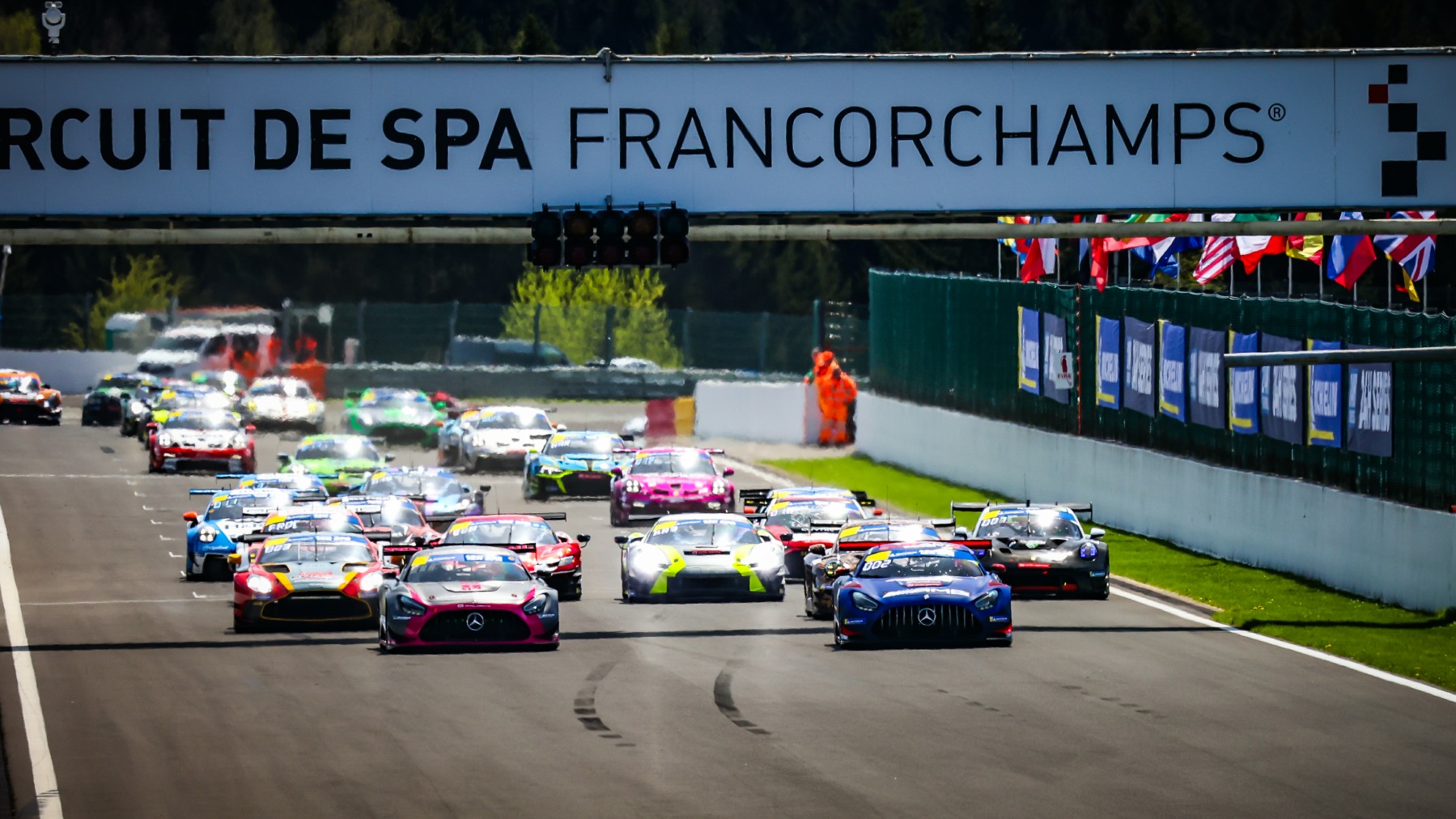
Simultaneously, organisers have restructured grid formation. Instead of a mixed grid based purely on lap times, classes will now line up sequentially—starting with GT3, followed by GTX, 992, GT4, and TCE-TCX. This approach ensures clearer race organisation and safer starts.
Additional sporting clarifications introduced ahead of 2026 Michelin 24H Series by Creventic
Beyond major updates, Creventic has introduced several clarifications to streamline race operations. For instance, teams must request approval to use race numbers outside their class range. They must also confirm any class changes at least three hours before race start.
Moreover, wet qualifying sessions now allow tyre changes across all remaining sessions once officials declare conditions as wet. Officials have also clarified procedures for split races, including permitting radio battery replacements between parts.
Notably, cars that skip mandatory promotional events will face Parc Ferme conditions during the activity. Meanwhile, organisers have discontinued the Ladies Cup division after the 2025 season.
Technical regulations focus on safety and standardisation
Turning to technical updates, Creventic has introduced nine key changes, including several specific to the Porsche 911 GT3 Cup (992) class. These cars will now follow regulations aligned with the Porsche Mobil1 Supercup.
Importantly, only FIA Standard 8865-2015 fire extinguisher systems will be permitted across all classes. Additionally, teams may use both Evo 5 and Evo 6 AIM dataloggers when required for Balance of Performance.
Officials have also mandated a new external location for Pboost sensors to protect them from heat and vibration damage. Furthermore, they have defined standard positions for roof antennas and introduced flexibility for certain cars regarding window nets, subject to scrutineer approval.
Creventic states vision for the future with changes introduced ahead of 2026 Michelin 24H Series
Ultimately, Creventic aims to balance performance, safety, and affordability through these updates. Casper de Kort, Sporting and Technical Coordinator at Creventic, stated:
“With these updates to both the Sporting and Technical Regulations we aim to maintain the well-established platform of fair competition, take a further step with safety, and provide additional clarity for all teams ahead of the 2026 season.
“The adjustments, particularly around driving times, tyre usage and key technical items are designed to enhance both the racing experience and operational consistency across all classes. We believe that the changes will help to reduce budgets required, opening the series to a wider group of teams and drivers which means deeper fields and more competition.”
A more competitive 2026 season ahead
In conclusion, Creventic has taken decisive steps to refine the Michelin 24H Series. By combining stricter sporting rules with targeted technical updates, the organisation has created a framework that promotes fairness, safety, and accessibility.
As teams prepare for the upcoming season, these changes promise closer racing, smarter strategies, and a more competitive endurance landscape.