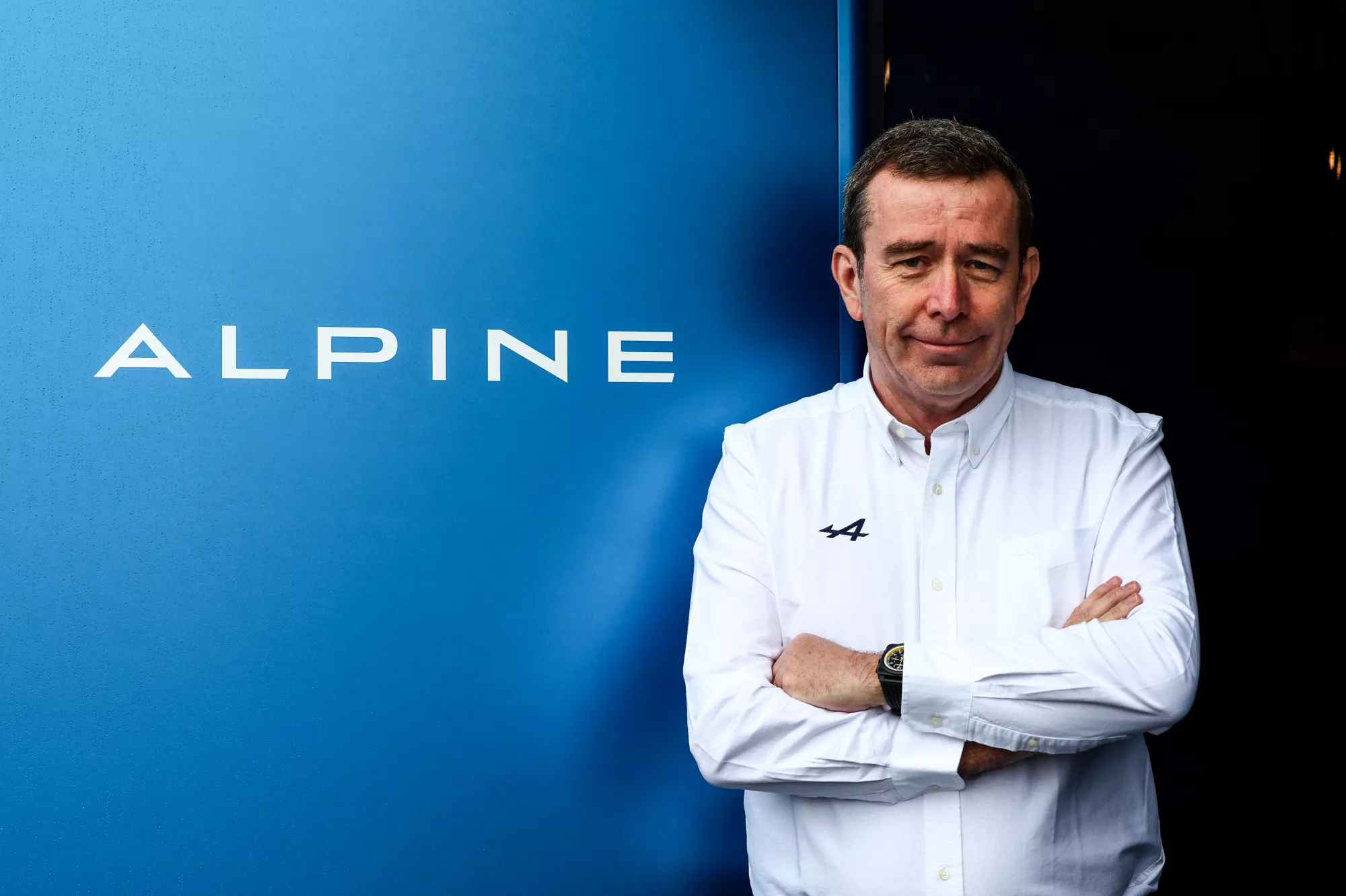
As reported by Sportscar365, Alpine has initiated a significant restructuring of its motorsport division, confirming that Bruno Famin has stepped down from his role as vice-president of motorsport just weeks before the start of the new FIA World Endurance Championship season.
The timing of the decision is notable. Not only does it arrive on the eve of a new campaign, but it also comes amid confirmation that Alpine will withdraw from the championship at the end of 2026. As a result, the team now faces the dual challenge of maintaining competitiveness while preparing for an orderly exit from top-level endurance racing.
Bruno Famin’s influence on Alpine’s modern era
Bruno Famin played a central role in shaping Alpine’s modern motorsport identity. Appointed executive director of Alpine Racing in 2022, he oversaw a broad portfolio that extended beyond endurance racing.
Under his leadership, Alpine’s Hypercar programme was launched and developed into a competitive operation. At the same time, he remained involved in the brand’s Formula One efforts and contributed to the rally raid activities of sister brand Dacia.
When he stepped into the vice-president of motorsport role in 2023, Famin continued to guide the endurance programme through its critical early phases. His tenure coincided with the team achieving three podium finishes and a breakthrough victory at Fuji, milestones that helped validate Alpine’s Hypercar project.
However, despite these achievements, Alpine has now opted for a leadership transition at a crucial juncture.
Axel Plasse expands his role as Famin departs Alpine WEC programme
Responsibility for the programme now shifts to Axel Plasse, who strengthens his influence within the organisation. Having joined Alpine Tech in September, Plasse effectively replaced Famin as head of the Viry-Châtillon facility, now rebranded under Alpine Tech.
Importantly, Plasse had already been supervising elements of the endurance programme. Therefore, this transition represents more of a consolidation of leadership rather than a complete reset.
Acknowledging Famin’s contribution, Plasse stated:“We would first like to thank Bruno Famin for the work he has done and for the commitment he brought to the Alpine endurance program. He played a key role in establishing the project and supported the team from its early development phases, which have resulted in three strong podium finishes as well as a notable victory in Fuji.
“I have been already supervising the program as VP Alpine Tech and now I will also take on Bruno’s responsibilities, working more closely supporting the team alongside [team principal] Philippe Sinault.”
This closer collaboration with Philippe Sinault is expected to streamline decision-making as Alpine navigates its final seasons in endurance racing.
Intensive testing programme signals serious intent
Despite the organisational changes, Alpine’s on-track preparations continue at full pace. Recently, the team completed an extensive test at MotorLand Aragón, running its 2026-spec A424 Hypercar across a simulated endurance format.
The session featured both entries and all six drivers, including new signings Antonio Felix da Costa and Victor Martins. Their inclusion reflects Alpine’s commitment to refining both performance and driver integration ahead of the season.
Moreover, the Aragón test built upon earlier running at Le Castellet and Portimão, forming part of a structured development programme aimed at maximising performance in the car’s final evolution.
Further testing is already scheduled at Circuit de Spa-Francorchamps on 7–8 April. This will serve as the final major preparation step before the championship begins with the 6 Hours of Imola later in the month.
Sinault offered a detailed and optimistic assessment of the Aragón test, emphasising both the technical progress made and the value of extended running time.
“Our test at MotorLand Aragon was an important step in our preparation, building on the work completed at Le Castellet and Portimao. Running the Alpine A424 in its 2026 configuration over a 24-hour endurance format allowed us to complete an intensive program with both crews together for the first time.
“We focused particularly on aerodynamics and tire understanding, benefiting from representative top speeds and varied track conditions. The outcome is positive, with over 3,000 kilometres completed and all six drivers contributing to valuable correlation work with our simulations.
“While the postponement of the Qatar round is unfortunate, it gave us additional time to prepare for the season start. We remain fully mobilized, with further simulator work and another test planned at Spa-Francorchamps early April as we continue to refine our package.”
A defining period for Alpine
Looking ahead, Alpine faces a defining period. On one hand, the team must extract maximum performance from its Hypercar programme across its final WEC campaigns. On the other, it must manage internal transitions and long-term strategic changes.
The departure of Famin signals a shift in leadership philosophy, while Plasse’s expanded role suggests a more integrated technical and managerial structure. Crucially, continuity remains in place through Sinault and the existing driver line-up.
Therefore, while uncertainty surrounds Alpine’s long-term future in endurance racing, its short-term objective is clear: to end its WEC journey on a competitive high.
With preparations intensifying and leadership now firmly defined, Alpine enters the new season determined to make its final chapter count.