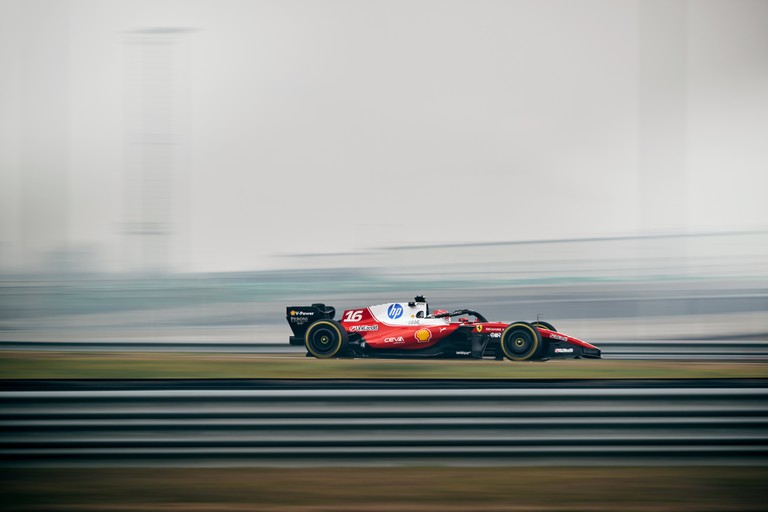
As Ferrari pulled the wraps off their 2026 F1 contender, chassis technical director Loïc Serra shared some insights on the the new active aero system replacing the former DRS system. Part of sweeping changes in technical regulations this year, the system allows both front and rear wings to be opened on the straights at all times.
“The challenge is on the technical side”
Serra explained how implementing active aero on the new Ferrari his poses some engineering challenges in putting together the 2026 F1 car.
“What’s quite different, or where the complexity is coming from, is on the hardware side, because effectively, at these speeds, when you’re talking about parts moving at these speeds, where the challenge is, is on the technical side. So you have to have a solution that delivers to targets, reliability and performance-wise, and that’s effectively where the challenge is.”
“You will have the drag reduction where it matters”
Serra anticipates that the active aero system, applied correctly, will make the cars more efficient overall.
“You will have the downforce where it matters for lap time, and you will have the drag reduction where it matters for lap time as well. So in the grip limited phase, there will be focus on the downforce. And in the straight line, where you are not grip limited, it will be about drag reduction and maximize the drag reduction there.”
With these new systems, Serra emphasized the role of simulation work in development in the absence—until now—of a physical example.
“Simulation is very much central to our development”
“You don’t have a previous year a car you can rely on for that work. So simulation is very much central to our development. And there are two aspects of it. So the first thing is on the simulation side, the engineers use the simulation to add raw performance. This is the job for the people at the factory. We’re adding raw performance.
“And effectively, that raw performance needs to be usable by the driver in the best possible way. And that’s where they play a big role. Because with their help, we can make sure we have the tools available, or we develop the tools available for the drivers to make the most of that raw performance. Because it’s all about the human and machine interaction. So this is where their role is crucial, and even more so when the regulation is brand new.”