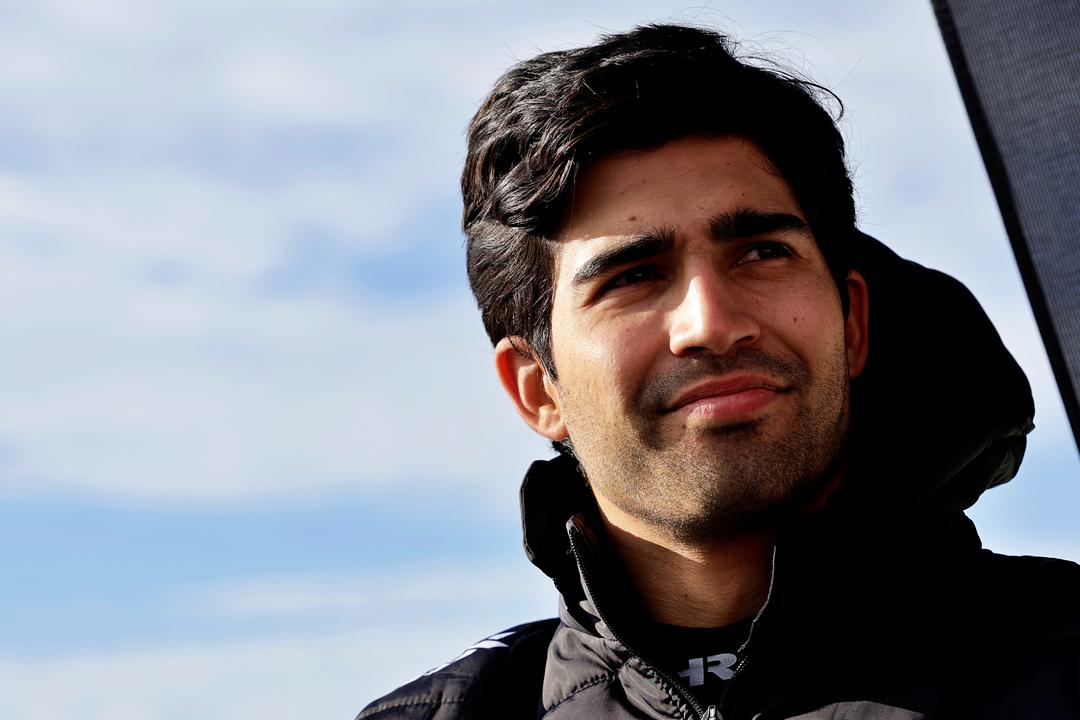
Juan Manuel Correa’s journey through the junior racing ranks highlights both the ambition and challenges inherent in forging a professional motorsport career. Like many drivers, Correa began his motorsport journey in karting, where early success and natural talent laid the groundwork for a step up to F4 and a future in single-seaters. However, key moves and unexpected opportunities shaped the trajectory of his development, forcing him to adapt quickly to new environments and higher levels of competition.
Those formative years required Correa to confront the realities of international racing far earlier than most. Competing in new championships, adjusting to unfamiliar tracks, and mastering the technical demands of single-seaters created a steep learning curve. Yet rather than hindering his progress, these experiences strengthened his resilience and honed the skills that would define him as a driver.
In an exclusive interview with Pit Debrief, Correa discussed how his early experiences in karting and F4 shaped his approach to racing, both on the technical and mental side, and how they ultimately set the stage for a career marked by ambition, adaptability, and perseverance.
The spark of karting: How childhood dreams set Correa on his path to IndyNXT
For Correa, racing began as a playful exploration rather than a structured career plan. Like many young drivers, he first approached karting with curiosity, excitement, and a hint of fantasy. Growing up in Ecuador, he watched Formula 1 closely, absorbing the speed, skill, and drama of the sport. His early mindset combined both innocence and determination, a mix that often characterises prodigious talent in motorsport.
“Yeah, I wouldn’t say when I started in 2008, it was professional. It very much started off as a hobby. In my naive mind, I will admit though that I was convinced I was going to become a professional driver. I dreamed about getting to F1 back then because that is the category I mainly grew up watching in Ecuador, where I’m from. So yeah, in my mind, I knew, and I had a lot of passion for it. I enjoyed it a lot. Never did I think that I was actually going to end up where I’m at right now. So, I’ve been blessed, I’ve been lucky to have this opportunity.”
Even at this early stage, Correa’s awareness of both passion and luck foreshadowed the tenacity he would later exhibit in international racing. The mix of a dream with the humility to recognise the role of opportunity reveals how formative experiences shape long-term ambition in motorsport.
The move to Miami: New challenges outside the comfort zone
A turning point came unexpectedly when Correa’s family relocated to Miami in 2011. While the move was motivated by personal family reasons, it would ultimately transform Correa’s racing trajectory. He entered a new competitive environment, faced unfamiliar tracks, and raced against some of the most talented young drivers in the United States. The relocation forced him to push his limits and adapt quickly.
Correa explained the significance of this move, saying, “But when it started to get more serious for me, I would say it was when we moved to Miami with my family in 2011. It wasn’t for my racing, it was for personal matters of the family, but that was actually one of the best things that could have happened for my career because it allowed me to come out here to the US and start racing at a much higher level, bigger championships.”
Adapting to this new reality required courage and persistence. Correa embraced the challenge, recognising that growth only comes when you leave your comfort zone.
“I had to get out of my comfort zone, and that was what made me improve a lot. And after a couple of years racing here in the US, I ended up winning a lot of the championships in the US, so I became very competitive at this level as well.”
His early U.S. racing success proved pivotal, providing both confidence and visibility in the international karting community. It showed that Correa could thrive outside familiar surroundings and push his performance against some of the best young drivers globally.
How a defining victory at Rotax World Challenge turned a dream into a goal
While success in the United States provided momentum, Correa’s international breakthrough came when he competed in the Rotax World Challenge representing Team USA. It was a moment that crystallised his ambition and signalled the transition from hobbyist to professional contender. This victory, unexpected yet transformative, marked the start of his serious commitment to a racing career.
“And that’s when I got the opportunity to race Rotex World Challenge, the world finals basically representing Team USA. And I ended up winning that race which was completely unexpected and that was really the moment for me where this changed from, ‘okay this is a cool thing, like yeah sure I want to be a race car driver,’ to like ‘okay I’m actually going to sacrifice my life for this. I’m going to stop going to a normal school, I’m going to move to Europe, and my life is going to change drastically.’”
The victory not only validated his talent but also demanded life-altering decisions. Correa recalled the timing vividly, saying, “And that was 2013, so I was 13, 14 years old and that’s when it all changed.”
For a young teenager, the moment required immense courage and maturity, setting the tone for the sacrifices and dedication that would define his professional journey.
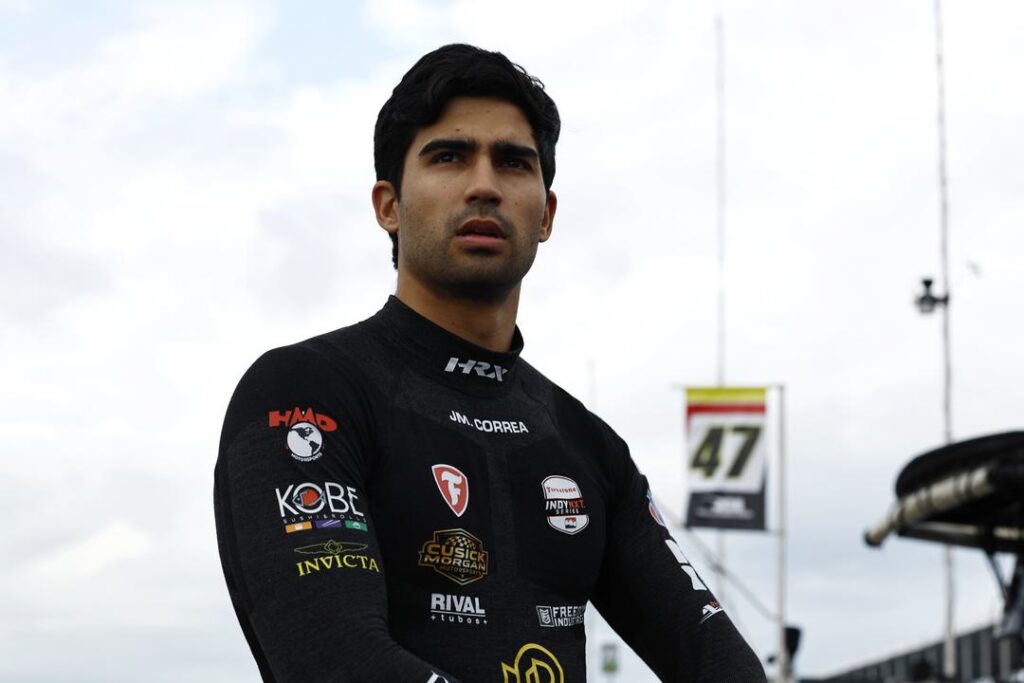
The transition from karting to F4: Correa on learning, adapting and developing the skills needed for success
The transition from karting to single-seater racing is often underestimated. Moving into ADAC F4 and Italian F4 in 2016 after years in karting, Correa had to adapt to cars with entirely different dynamics, handling, and race strategies.
He explained the critical differences, saying, “Yeah, those years are very important because it’s where you build a base. You know, karting and formulas are very different. People think like, ‘oh like it’s just a natural step from karting to formula,’ and I don’t really feel that’s the case to be honest.”
Karting provides instinct and basic racecraft, but single-seaters demand a new technical understanding and strategic approach.
Correa elaborated, “I feel like karting teaches you the basics, the race craft, kind of the racing instinct side of things, and most of the time a good karting driver is going to transition well into formula, but not always honestly.”
Formula 4 with PREMA: trial, error, and growth
Building on this foundation, Correa’s early Formula 4 years with PREMA became a period of hands-on learning. The focus shifted from instinctive driving to understanding the nuances of car behaviour and performance. Every test session, every lap, and every minor mistake became a lesson, helping him refine his technique and develop resilience under pressure.
“So those first few years in formula for me was in Formula 4 with PREMA. They were good times. I learned a lot, it was a lot of testing, a lot of trial and error. Yeah, I mean, I enjoyed those times a lot. It was good fun and I think it laid a baseline for kind of the driver that I have become.”
These formative seasons were instrumental not only in technical development but also in cultivating mental toughness. By embracing errors as part of the learning curve, Correa gradually transformed uncertainty into confidence and instinctive control.
“But to be fair, after so many years in formula now, I think my approach to formula racing and everything has changed drastically and now it’s more like second nature to me, whereas in those first years it took a while for me to get used to the driving style.”
This period with PREMA laid the groundwork for Correa’s later success in higher categories. The combination of technical mastery and mental resilience forged during these early years became the foundation of a professional racing career built to withstand the challenges of international competition.
Advice to the next generation of drivers
As a driver who has faced many highs and lows on his path to Indy NXT, Correa’s advice to the next generation of racing talent is grounded in his own experiences. He encouraged young drivers to stay grounded and look beyond just the dream of reaching Formula 1.
“I would tell them to always look at the big picture and be realistic in what their chances are of getting to F1,” Correa said. “Because I know most of them have driven with F1, but it’s very difficult. And I can tell them from personal experience that there is a lot more to motorsports than just F1.”
His message underscores the importance of persistence, adaptability, and understanding that motorsport offers more than one route to success. The key is to remain focused, accept challenges as learning opportunities, and always keep an open mind to the possibilities beyond the highest tier of racing.