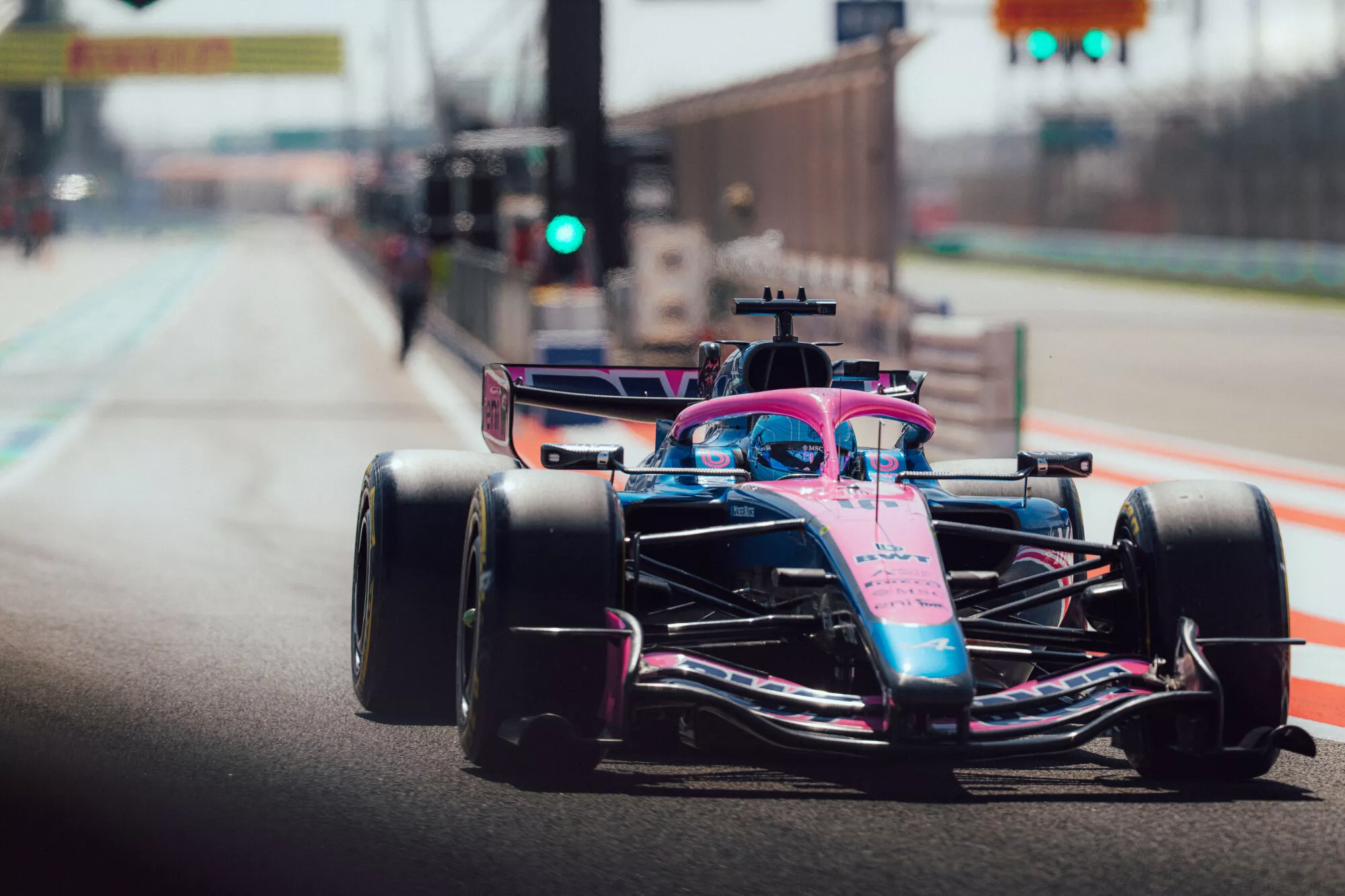
Pierre Gasly discussed the complexities facing drivers during F1 2026 pre-season testing in Bahrain. The Alpine driver addressed energy management challenges under the new regulations. His preparations highlighted significant unknowns about how racing will unfold with different power unit manufacturers.
Alpine and the rest of the grid worked through understanding modern hybrid power unit deployment during Bahrain testing. The sessions focused less on outright lap time and more on comprehending energy deployment, engine mapping, and race simulations.
Understanding F1 2026 energy deployment across different manufacturers
A major focus of Gasly’s F1 2026 preparations has been understanding how energy deployment will differ between power unit manufacturers. When asked about how racing might look under the new regulations, Gasly explained the challenge of understanding competitor strategies. He emphasised the difficulty processing all variables.
“There is so much to take into consideration at the moment that it’s difficult to really work my head around this because with ICE (internal combustion engine) you know pretty much the deployment of the other guys so I know what the engine is going to be like. So I can’t go racing knowing that if someone decides to commit a bit more in that straight he will suffer from this in the other straight.”
Experience with Alpine revealed predictability when racing against identical power units. However, different engine manufacturers create significant unknowns. Each power unit features unique deployment philosophies and software strategies.
“What’s harder to figure out is what other engine manufacturers are doing. They might deploy more in a straight, less so in another. And I think this will create bigger differences in itself than the actual racing situation where once you have both cars full power with the straight line mode on there’s not much slipstream or car speed difference. I don’t think it’s going to be enough to actually make a move just from that system itself,” Gasly stated.
Slipstream and overtaking challenges
Pierre Gasly expressed skepticism about overtaking opportunities during his 2026 F1 preparations. The uncertainty extends to actual racing scenarios, with teams needing competitive situations to understand the full picture.
“Yeah, let’s see. Off in mind we’ll go to Australia and we’ll see what it is but it doesn’t look easy to me in terms of what we’re taking into consideration because also the DRS was a net gain. We gained 7 tenths for free,” he stated.
Gasly highlighted a fundamental shift in how energy deployment affects racing. Previously, tools like DRS provided significant advantages without major trade-offs.
“Now it’s not a net gain anymore. If you deploy more your energy is going to cost you somewhere else where you’re going to lose potentially more time. Yeah, let’s see,” he concluded. The new system forces constant balancing between attack and conservation. Deploying energy aggressively in one section creates vulnerability elsewhere.
Driver capacity versus automated systems
When asked if driver mental capacity would make bigger differences given the complexity, Gasly provided a nuanced response. For identical power units, driver understanding does matter according to Gasly’s F1 2026 assessment.
“For ICE tools, yes. For the same engine, same car, someone that has more capacity to figure out all this situation and how to get on top of the old management etc,” the Alpine driver stated.
However, testing revealed significant limitations on driver control. Much energy deployment operates through automated systems managed by engineers.
“Yes, but at the same time today there’s quite a lot of stuff where we don’t have the control over it. Where we are more like on the passenger side in what we can do inside the car. So again, I think this thing is going to evolve but it’s not a case of like, oh yeah, I’m going to recharge my battery now and I’m going to deploy it because I decide to and this and that,” Gasly stated.
Gasly explained that drivers cannot simply decide when to recharge or deploy energy under the new regulations during the F1 2026 season.
“So there might be some engines that allow that, some others that don’t. So I still think it’s not going to be as straightforward as, oh yeah, this guy has more capacity so he’ll be able to be better. It’s not sure that he’s got the tools to actually do the stuff he wants.”
Unanswered questions heading into the 2026 F1 season opener
Gasly acknowledged the numerous unanswered questions heading into the season opener. Teams need proper racing scenarios to understand how systems behave.
“Again, I know there’s so much we want to answer now but there’s so much that we need to discover first in proper racing scenarios and racing situations. But what I suggest is to qualify on pole and life will be a lot easier starting from there,” Gasly concluded.
Pre-season testing highlighted significant complexity and unknowns facing Gasly in the 2026 F1 season. Energy management challenges and differences between power unit manufacturers create unpredictability heading into the opener. Alpine and Gasly will continue to learn how to maximise their package before racing begins in Australia.