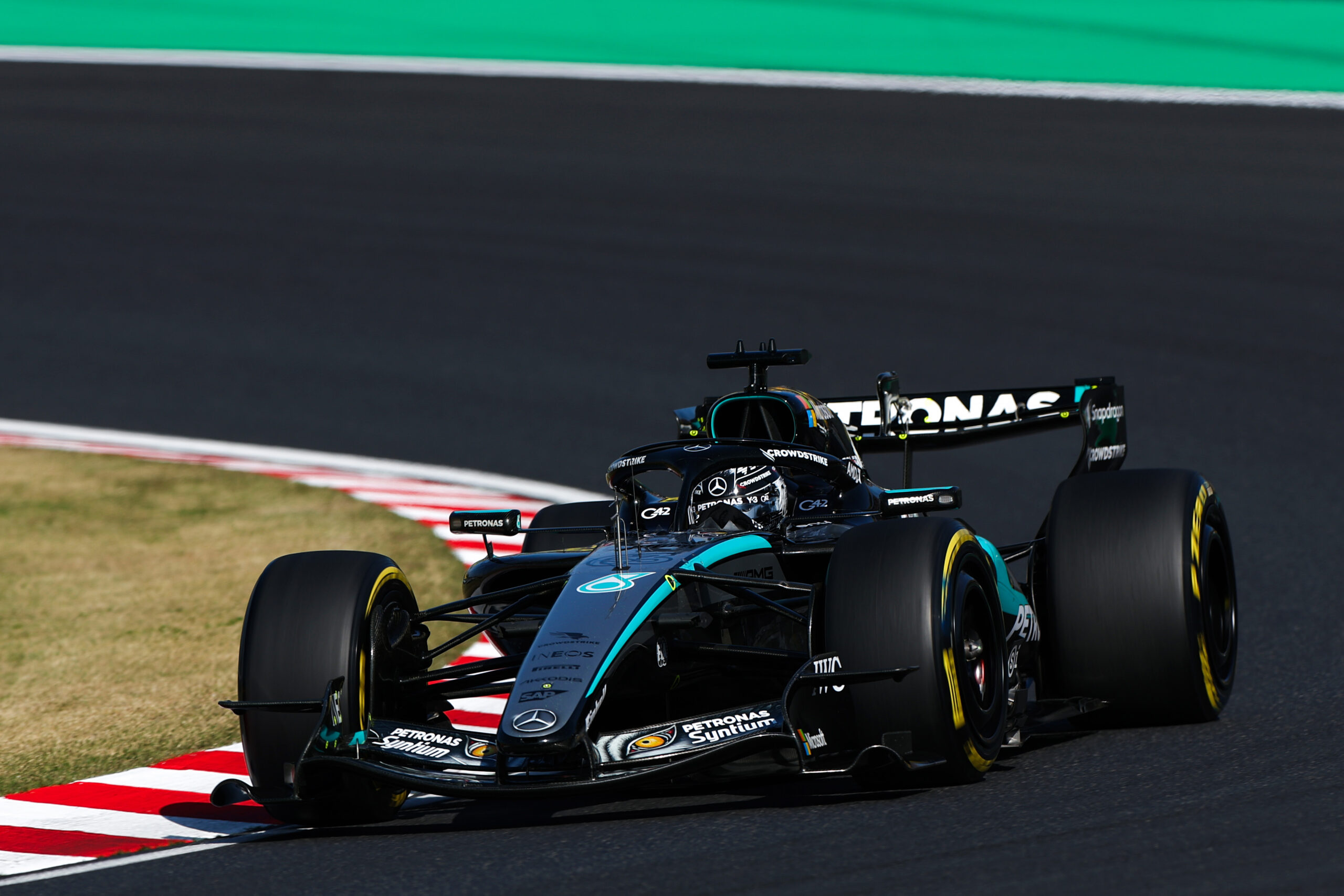
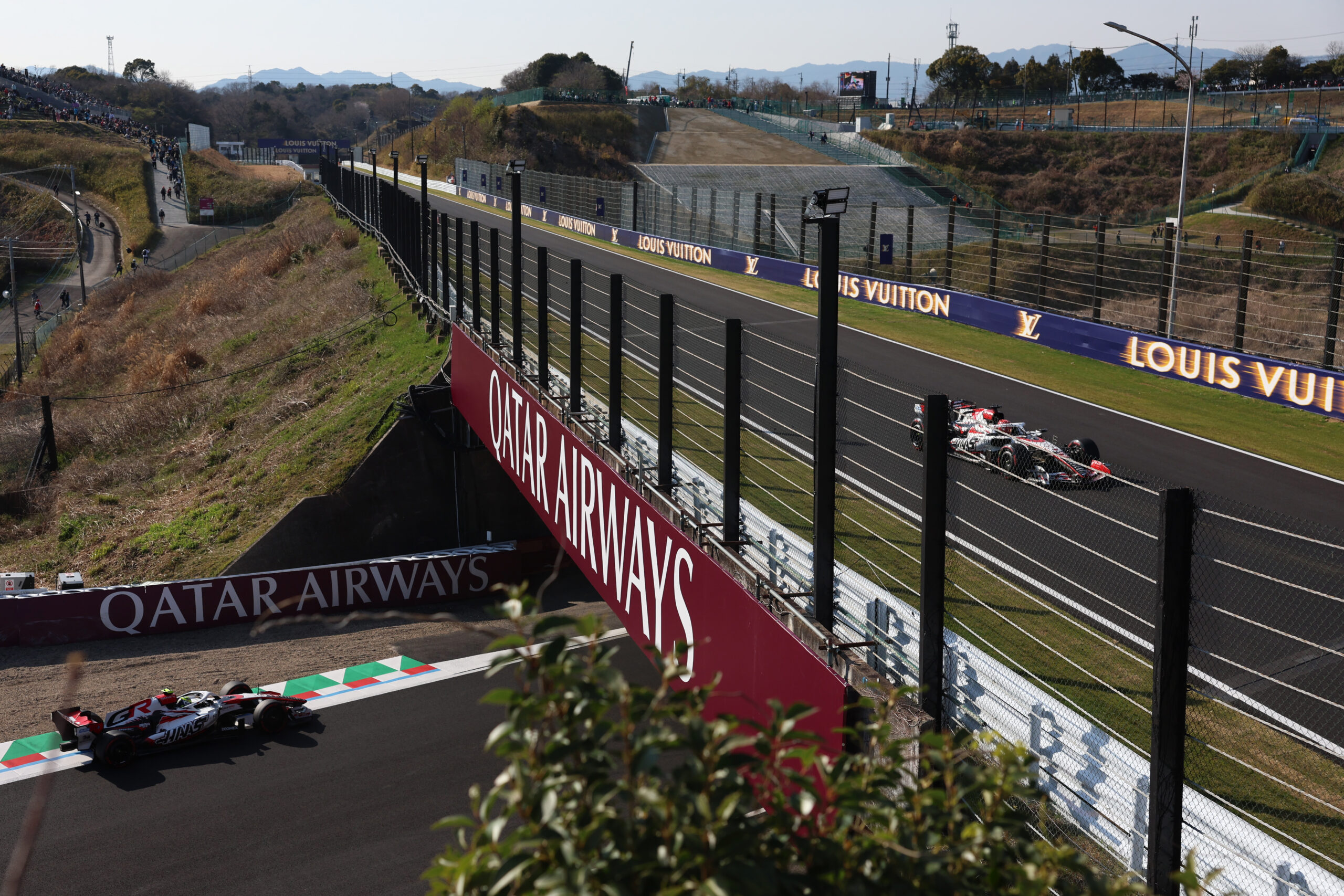
Ollie Bearman, Esteban Ocon and engineer Hoagy Nidd shared their thoughts after a productive Friday for Haas, with steady progress being made as the team continues to adapt to F1’s new technical regulations ahead of the 2026 Japanese GP.
Bearman recovers after FP1 struggles
Friday began on a challenging note for Ollie Bearman, who struggled in the opening session of the weekend as Haas trialled new components.
“It was certainly a better session. FP1 was very challenging,” Bearman admitted. “We had a few new bits on the car, and basically they probably didn’t quite perform as expected, so we were trying to kind of catch up throughout FP1. We kind of ran out of time.”
The British driver later found pace and confidence in the afternoon session after some setup adjustments.
“But we had a good few hours between P1 and P2 to figure out where we were, and then FP2 was a much cleaner session on my side. Nothing changed, it’s just setting up the car in the way it liked to be set up,” Bearman explained. “In FP1 the car was quite far from optimal. I was much, much happier, though, in FP2.”
“Today has been positive overall,” Esteban Ocon added. The Haas drivers appeared quite evenly matched across the day, both recording P9 finishes—Ocon in FP1 and Bearman in FP2.
“It was a strong start as we were able to test everything that we wanted to in FP1 and FP2. There’s some margin to improve further tomorrow, so I’m looking forward to seeing what we can do. It’s still a pure pleasure to be driving around this track and driving a Formula 1 car.”
Super clipping still “a painful feeling”
The 2026 regulations have introduced new challenges for drivers, particularly in managing energy recovery and the phenomenon known as super clipping. Bearman described how these changes have changed the driving experience at fan favourite circuits like Suzuka, home of the Japanese GP.
“It’s tough, particularly the amount of clipping that we’re doing,” Bearman noted.
“I mean, it’s still, you know, the step is probably a bit better with the less energy recovery in qualifying, but still you slow down a lot at the end of the straight, and that’s always a painful feeling. Some of those corners which before were balls to the wall are not the case anymore, but that’s what we’re having to get used to.
“There’s still a skill in getting everything out of it. It’s okay. It’s a new reality, but it’s still fun to drive on a track like this.”
Bearman also reflected on how drivers tackle Suzuka’s first sector in the new-gen cars.
“Yeah, it’s still nice,” he said.
“I mean, at the end there’s a bit of a kind of special regulation for some sections of track where you’re allowed to basically not deploy the MGUK, so just working on the ICE if you want, and that means that for us as drivers things are a bit more normal, let’s say, we don’t have to do any weird stuff, which is nice.
“But yeah. It’s still a bit less power than what we’ve been used to in the past.”
Nidd: Technical refinements working as intended
From a technical perspective, Haas’ Head of Car Engineering, Hoagy Nidd, described Friday practice sessions as “pretty good”, with setup refinement and aero tweaks showing promise.
“Both drivers quite happy with today,” Nidd told the media.
“So, FP1, few issues for Ollie [Bearman], but we managed to get over those across the break. In FP2, both drivers pretty satisfied with how it went. No major cause for concern, just a few little things to work out with energy management and stuff like that. But I think it’s the same for everybody.”
Asked about the technical tweaks introduced by Haas for the 2026 Japanese GP weekend, Nidd replied: “Yeah, so it’s a fairly subtle change. You can see it visually if you compare our wings to the last event. So it’s just what we call the SLM linkage.
“It’s the bit that actually actuates the wing and pulls it up. We just tidied it up. No problems with it today. It all functioned as expected, it’s quite a nice job.”
This area remains a focus for development as teams continue to search for performance gains under the 2026 F1 regulations. “It’s hypersensitive this year,” Nidd said.
“So, yeah, the name of the game is to make sure it seals well and that you can get nice, clean, tidy airflow into the front floor. That’s where we made the change and what we’ve been working on.”