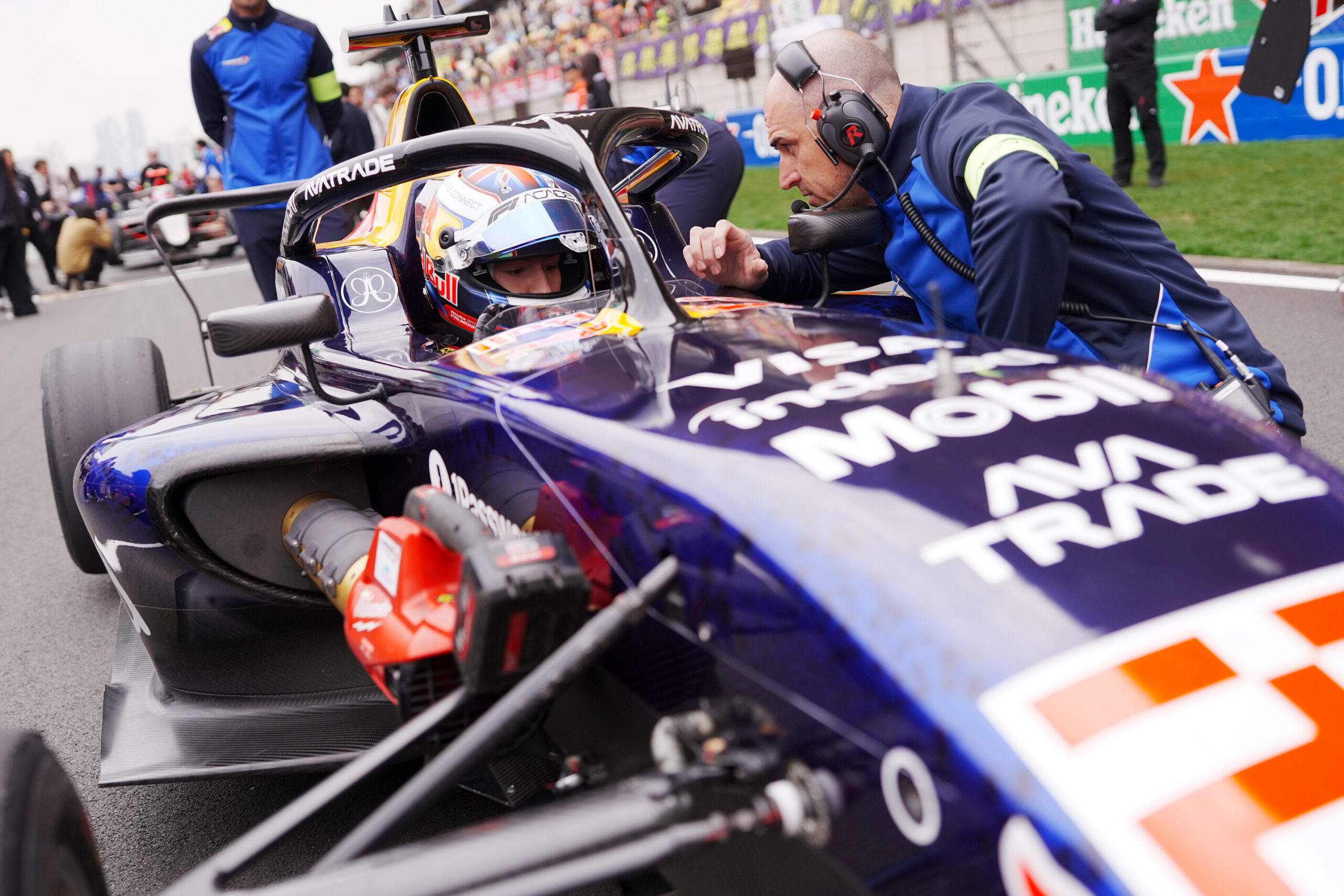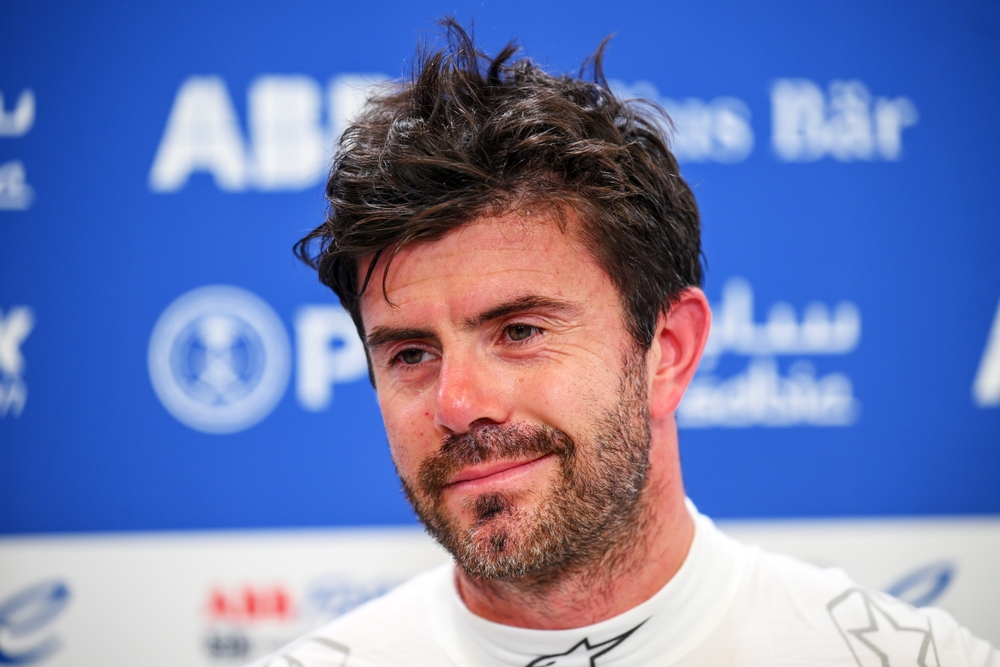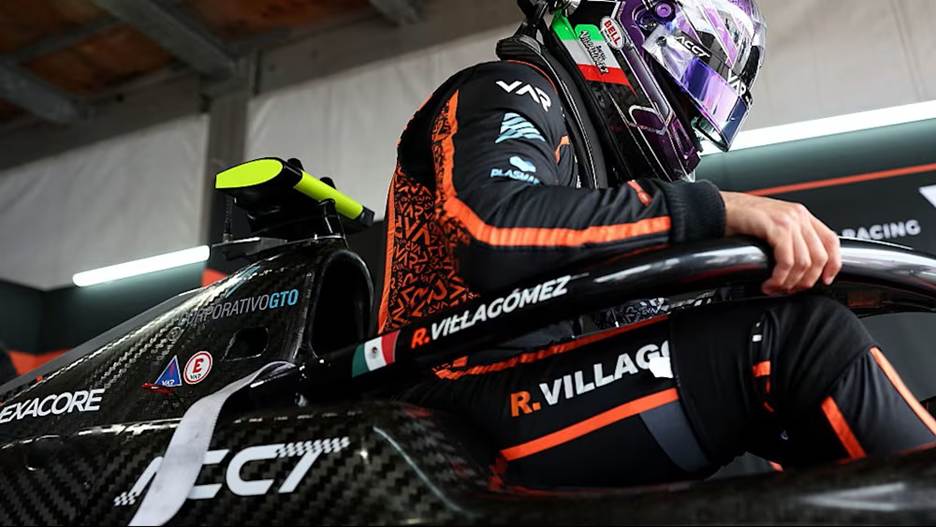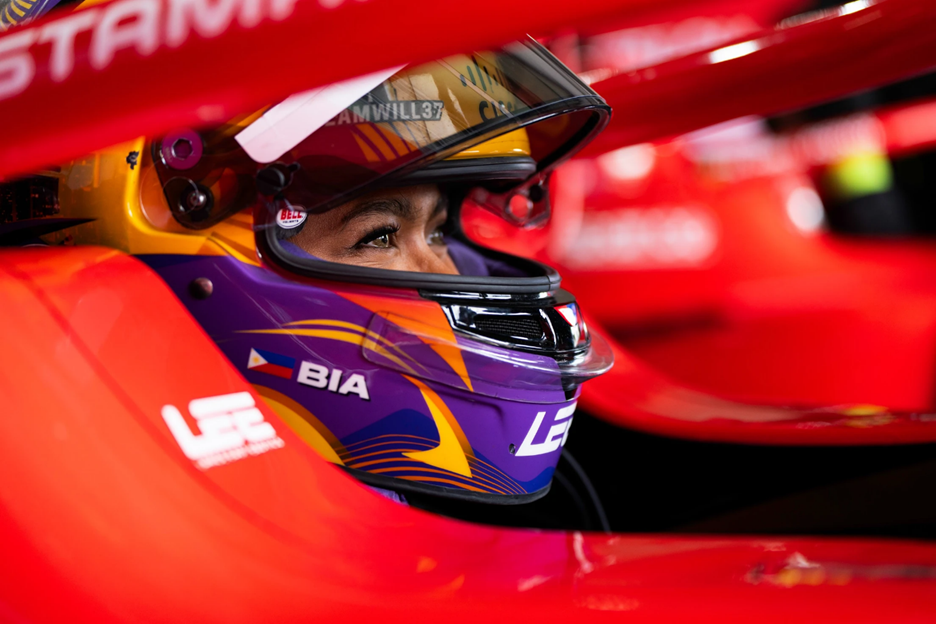
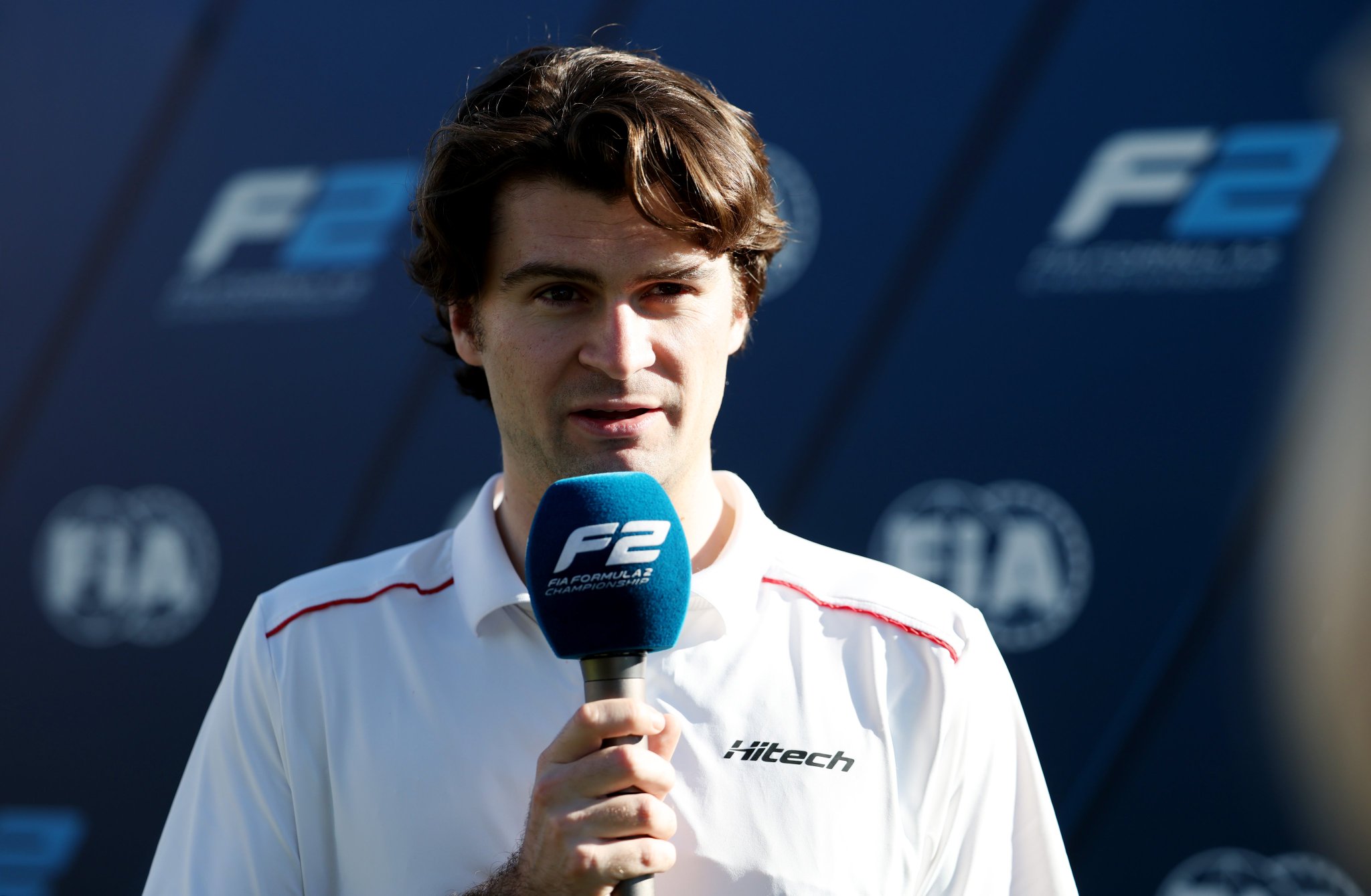
Ahead of his first F2 race weekend, Colton Herta prepares for the challenge that awaits him in 2026 with Hitech, a team that has delivered strong results in recent years. The British outfit finished runner-up in the 2025 Teams’ Championship with 278 points. However, in 2026, Hitech fields Herta alongside returning driver Ritomo Miyata, who joins from ART Grand Prix.
During Thursday’s virtual media session, the American spoke to Pit Debrief and other media outlets about the transition to F2, how he has settled with the team and the challenges that lie ahead this season.
Preparation ahead of his first F2 weekend
The nine-time IndyCar race winner has had plenty to adapt to ahead of his first F2 weekend. After taking part in last year’s post-season test and this year’s pre-season test with the team, Herta now heads into his Formula 2 debut ready for the challenge. Reflecting on his preparations for the weekend, the 25 year-old said: “I mean, the training is fairly similar.”
“If you look at both the cars, power steering, power, and downforce is relatively similar enough. So that’s all kind of the same. If anything, it’s just going to be quite easier just because of the races are, you know, the Sprint Races are less than half, and then even the Feature Races are half of what I’m used to.”
“So it’s going to be, that’s probably going to be the weird part is the race is being over so quick. But yeah, I don’t think it’s too different.”
Finding confidence with more time on track
Like his fellow rookie Rafael Câmara, who was also in attendance at the virtual media session, Herta described the transition to F2 as the complete opposite of IndyCar when asked about how he’s adapted so far.
“Yeah, a little bit different than Rafa [Câmara]. I think how you find lap time in the F2 car is almost the complete 180 to the IndyCar and how you drive it. So I think there’s been a big kind of transition for me. And driving style is quite different.”
“So still not, I would say like 100% confident. But after, you know, those six days of Abu Dhabi and Barcelona, definitely feel closer and kind of starting to be a bit more confident with the car and what I should be doing.”
Over the three-day test in Barcelona, the American driver completed a total of 205 laps. While he acknowledged there is still room for improvement, Herta noted how he’s managed to close the large gaps to the rest of the field and now only needs to work on fine-tuning minor details.
Herta added: “So yeah, I mean, obviously, we’re always trying to find lap time, make ourselves better. But I think those big chunks that I was finding earlier on in testing are kind of gone. And now it’s kind of to the refined point.”
Racing against young talents like Câmara
When Pit Debrief asked Herta what has impressed him most about the competition in F2 and what he can learn from young talents like Câmara this year, he replied: “Yeah, I think it’s slightly impressive, obviously, like what Rafa [Câmara]’s done. But a lot of these guys are, you know, they’re so young, but so talented and won’t make mistakes. And really, just the raw speed is probably the most impressive thing.”
“You know, I don’t really know Rafa personally. But I’ve seen what he’s done, obviously, in the past in Formula 3 and whatnot, and how impressive he’s been with that. And I’ve seen what he’s been able to do in the F2 car too. So yeah, I think the speed, the track knowledge, those sort of things.”
However, since they aren’t teammates, Herta only highlighted what he sees as Câmara’s strongest qualities.
“Obviously, you said what I can pick up on, you know, he’s not going to be helping me.”, Herta joked.
So I don’t think I’ll be able to pick up on much compared to him. But, you know, I think that’s kind of seems like where his expertise is from the outside.”
A new era of change for Herta
The bold decision to pursue his ambition of becoming a Formula 1 driver took many by surprise. The American had already built an established career in IndyCar, boasting 9 race wins, 16 pole positions and 116 race starts. Making the move to Europe to race in F2 marks a clean slate for Herta.
When asked about the challenges he expects to face, the 25 year-old said: “I think there’s going to be a lot of challenges coming from what I’ve done before. Obviously, a lot of new tracks, new car, new tyre, new engine, new country. Basically, everything is new.”
“But, you know, I think like for me, the biggest, the most important thing is to learn as much as I can outside the car. The track time is still limited. You know, I really need to come into the car as prepared as possible and kind of cut down on that learning period, using sim and data and onboard to try to do that.”
The decision behind joining Hitech
Ahead of the 2026 F2 season, Cadillac and Herta expressed confidence in Hitech, hoping the team will provide a platform for the American to succeed and earn the Super Licence points he needs. When asked what makes Hitech consistently deliver strong results year after year, Herta simply said: “I think at the end of the day, like the most important thing with any team anywhere is people.”
He credited the team environment that Team Principal Oliver Oakes has built at Hitech, noting it as a factor that drives motivation and performance — something he particularly values about the team.
He continued: “They come straight from college or university and this is kind of their first job in racing, they get brought up the ladder in Hitech. So it’s pretty cool to see that aspect. I think Ollie [Oakes] does a really good job of making sure people are comfortable and they get what they need, you know, which in turn just drives performance through the roof. But yeah, I think at the end of the day it’s achievable. They’re very committed and I like what they do. They’re very good at it.”
The excitement of racing at Albert Park
Year after year, racing at Albert Park is an experience many drivers eagerly anticipate. From the track itself to the fans and atmosphere, it’s something many have enjoyed since F2’s inaugural race in 2023. Having spent most of his career racing in America, Herta is excited to compete on a new circuit in a new country.
“Yeah, I think it’s cool to be racing in a new country for me. Never raced here in Australia, so that’s a new one and exciting one. I’ve been watching this race on TV for a long time, it’s cool to be a part of it. Overall it seems like a street circuit that kind of supplies really good racing. I think it’s got great potential for an exciting race.”
“The forecast is always unclear, so as a race fan that makes it, but you don’t know what you’re going to get each year. But like I said to start off with, the most important bit is you can overtake and that’s what drivers want to see.”
Herta turns to Miyata for advice
Like Herta, his teammate Miyata made the move to Europe to continue pursuing his single-seater career. However, as the Japanese driver enters his third F2 season, Herta believes Miyata’s experience will be extremely valuable in supporting his development this year.
“I mean, it’s been great so far. He’s going to be, I think, pivotal in my year and my growth and my production throughout the year. You know, I kind of touched on limited practice time and needing to be ready when you get in the car. But having a guy like that on race weekend, that’s kind of been through the ringer here going on his third season. So he knows the technique, he knows what to expect on race weekends.”
He added: “And he’s definitely going to be a good guy to kind of look at the data with and go over and see what he has to say about the car, the track and the tyres and what he expects. So there’s a whole bank of knowledge there to tap into for me.”
A different approach to DRS?
Unlike IndyCar’s push-to-pass system, F2 uses a simpler approach: DRS. While push-to-pass requires strategic planning, DRS can only be activated within designated zones and when a driver is within one second of the car ahead.
“I think it’ll be different this year, because of the tyre compound switch. That could make passing a little bit more, more interesting.”, Herta said.
“But you know, as far as using it, I think DRS is quite a bit more simple and straightforward. Right, because with push to pass, you can use it whenever you can use it to defend, you can use it on in laps, on out laps, you know, obviously to overtake.”
“The thing that I do like about DRS is that you have to be within a second. So there’s no defending DRS with more DRS. So that’s going to be something that’s different. But overall, I think it’s pretty straightforward.”