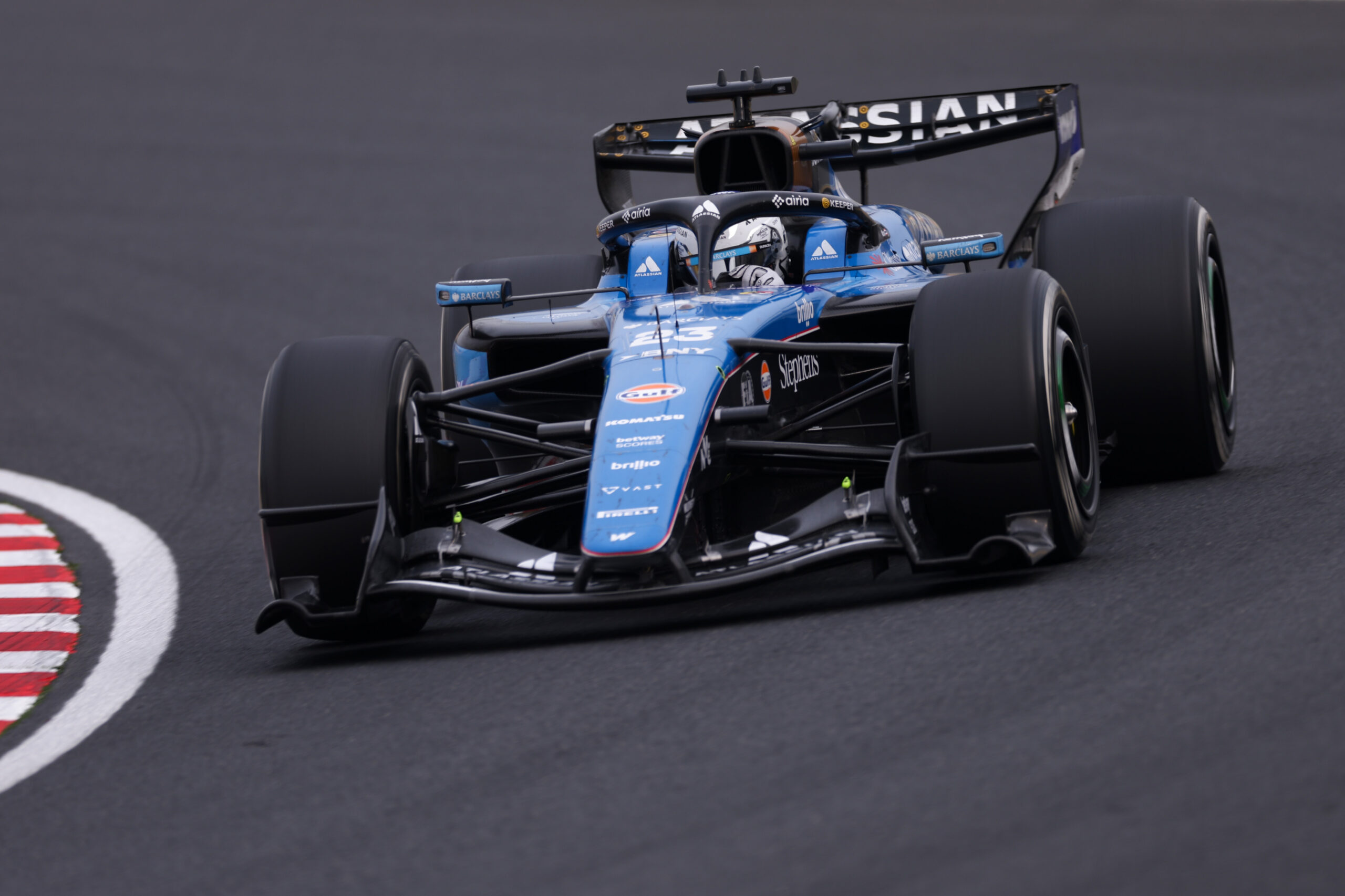
Because a sample size of 1 is not representative, I decided to await the Japanese GP to write down my opinion regarding the 2026 F1 regulations the FIA delivered up. Regulations on which all and sundry have an opinion, not in the least the drivers themselves. I don’t necessarily want to join those that are stuck in the persistent no phase of their toddler years, but I would be lying if I would call the current ruleset a spectacular success.
The rules in a nutshell: the chassis
So, everyone is angry at the FIA to some extent, but why? What are the rules and why do they face so much backlash?
The regulation changes of 2026 were marketed as “the biggest ever” by the FIA and Formula 1. And in my opinion they weren’t wrong. In the chassis department the ground effect was dropped, measures to make the cars lighter and smaller were implemented. Furthermore, active aerodynamics were introduced. This would makes a nice segue into the changed engine regulations, but more on that later.
The general consensus on internet is that these chassis regulations are fine. The cars seem more nervous, look nimbler and seem to be able to follow each other better. All ingredients the ‘true F1 fan’™ loves to see. So the issue is with the engine regulations.
The rules in a (slightly larger) nutshell: the engine
The engine regulations for 2026 actually entail more than just the internal combustion engine (ICE) and should therefore be called power unit regulations. I am however not a semantics expert, so if I say engine I mean power unit (PU). If I mean the internal combustion engine specifically, I will use ICE.
So, the rules. The previous iteration of the regulations consisted of a 1.6 litre four-stroke V6, supplemented by an electrical part, the Motor Generator Unit – Kinetic (MGU-K). This electric motor added 120 kW of power to the power of the ICE. This yielded a total power of 800 kW at the end of 2025. Additionally, the MGU-K could be utilized to regenerate energy for the battery, for example during braking.
For 2026 they decided to increase the electrical part to 350 kW, with the goal to attract more car manufacturers. With the entrance of Ford, Audi and Andretti Cadillac, this commercial goal was met.
Identifying the issue
The main issue with this power increase is that the FIA kept the maximum energy stored the same: 4 MJ. So, time for a bit of physics.
From our high school physics class we know that:
So, per second the MGU-K consumes 350 kJ of energy to propel the car. A small bit of arithmetic then reveals that the battery will be empty in:
At Spa-Francorchamps, this takes you from La Source to the top of Raidillion…
For comparison, from 2014 unti 2025 a driver had 33,33 seconden worth of full power from the PU. Which meant that at the end of Kemmel Straight one still had a bit of battery left. It would even be sufficient for the full throttle part of Baku. In short: the battery has too little energy to cover any significant full throttle section with full power.
Add to this that the MGU-K can regenerate a maximum of 350 kW worth of power, and that the maximum amount of regenerated energy per lap may not exceed 9 MJ. This is a little over twice the capacity of the battery. So at tracks that (normally speaking) have a high percentage of full throttle the problem becomes obvious. Moreover, there is more complexity to the actual regeneration limits. Since this is already turning into a fairly long and complicated long read, we will save that exercise for another time.
I understand that the FIA is reluctant to increase the battery. They do be heavy, so increasing them would sabotage their target of weight reduction. But I also cannot shake the notion that the FIA either didn’t make the above calculation, or they gambled on the teams to engineer the issue away.
Active aerodynamics
Because the FIA wasn’t completely oblivious, they did add active aerodynamics to the chassis regulations. In short this means that the front and rear wings flip back on the straights. Which is similar to the DRS of yesteryear (requiescat in pace). The reduced drag was intended to help the electrical part of the drive train.
Obviously, this sounds better in theory than it is in practice, especially because it creates a higher top speed rather than slows down the depletion of the battery.
Super clipping
To counter this the teams fall back on super clipping. As the name suggests, this is the better (?) version of clipping. During the previous iteration of the regulations this was often called de-rating. But what is clipping?
When the battery is empty at the end of a straight, and sufficient regeneration is not possible in the following sequence of corners, the ICE can help out by using part of its power to charge the battery.
With the previous regulations a few tenths of a second was often enough. And with a lower amount of power required, the drop off in speed wasn’t as dramatic.
With the current regulations this is different. Clipping has to be done more and for longer periods of time, hence super clipping. And because the ICE is producing less power than before, there is not enough power to sustain the top speed. This explains why drivers lost up to 70 km/h of top speed coming out of 130R at Suzuka. And this stings with the fans, and many drivers.
Additionally, it was the major cause of the crash of Ollie Bearman in Spoon. The Brit approached with full power (+ a little boost), whereas Franco Colapinto was super clipping, meaning he was a lot slower. Add a less then ideal defensive move by the Argentinian, although the accident was not on him, and the result is that the Haas driver was limping out of the car.
RIP qualifying
The biggest damage is done in qualifying. Because the regeneration and deployment of electrical power is planned to the T, the possibility of making a difference as a driver is gone. One mistake with wheelspin out of Spoon, or a tiny delay with regeneration and an improvement is off the table.
In addition, the Esses at Suzuka or the fast chicane of turns 9/10 at Albert Park are now misused as regeneration zones, instead of corners where drivers like Charles Leclerc and Max Verstappen can make a difference. Technically it is very impressive, but sport is made interesting and captivating by the human aspect of it.
So qualifying has boiled down to a game of ‘who is best in following instructions’. In my opinion, this is the worst part of these rules.
More action during the races
The rules do, however, cause more action during races. Because there are (sometimes big) differences in available power between drivers, it is relatively easy to overtake and re-overtake. However, a lot of fans find this “artificial” and “unauthentic”.
And I can relate to that. For drivers the possibilities to defend are slim to none when someone has more energy at their disposal. Leclerc and Piastri managed to defend somewhat during the Japanese GP, but in general there was little the drivers could do.
Fans that watched before the dawn of Drive to Survive will remember that DRS caused a similar ruckus. The difference is that DRS could be countered by the defending driver, for example by playing with the dirty air coming of your car, or deploying extra available electrical power. Today, if you don’t have the energy, you are powerless.
So yes, there is more action during the races, but more overtakes does not equal better racing per se. And if the net result is insignificant, it also does not add to the excitement of the race.
The bottom line
A big part of the readers will now be like: “Nice story Ewout, but what is your opinion?” Well, buckle up!
As I wrote before, I don’t want to blindly follow the moaning mob, but all in all, the current ruleset is trash. Qualifying has been castrated, and the action during the races is dictated by the inevitabilities of power management, rather than the tactical application of it by the drivers.
Regarding safety, I fear that the FIA has forsaken one of its most important tasks. The incident between Bearman and Colapinto luckily ended well, but approaching each other with these speed differences is a disaster waiting to happen.
Yet there are some positives to these engine regulations. The direct transmission of electrical power has re-introduced the old-fashioned power slide, and the abandonment of the MGU-H means that getting a proper getaway became a skill again.
Add to that a proper functioning set of aerodynamic regulations, and we do have plenty of potential in these regulations. But that does require the FIA to make some adjustments.
Possible solutions
So, the rules are proper trash, now what? A lot of folks call for the return of V10 engines in F1, although most still crawled around in nappies during the years those were used. And of course, this is a solution that is easier said than done with all commercial and political interests.
Increasing the battery capacity is another solution that sounds good on paper, but if we want a deployment comparable to 2025, the battery needs to be three times as large. And therefore probably three times as heavy. So next to the additional development this requires, a larger battery is not easily fitted into the current cars, and a heavier car yields different results in the crash tests.
There are actually some things the FIA can easily change: the parameters regarding the regeneration and deployment of electrical energy. If, for example, the power of the MGU-K were to be reduced from 350 kW to 250 kW, a longer full throttle period can be achieved. Reduce it further to 200 kW, and the issue is gone at most tracks.
In addition, the rules for regeneration could be relaxed. If combined with an increase of fuel flow to the ICE, and thus its power, then the super clipping could be demoted back to just good old regular clipping. This will of course pose a reliability risk. The FIA could mitigate that by allowing the drivers to use more PU components.
Wisdom wishes to the FIA
Finally, it would make my engineer’s heart very happy if they allowed front axle regeneration. According to Pat Symonds this was removed from the regulations because Jean Todt certain people thought it meant four-wheel drive. Adding this would mean that more kinetic energy could be recovered, and that the regeneration burden is not only carried by the rear axle. Incidents such as Verstappen’s crash during Q1 in Melbourne would also be prevented. It is of course not developed within a few weeks but would make a very nice addition to 2027. That is, if these regulations aren’t dropped entirely.
So, in short, there are plenty of parameters the FIA could tinker with during this unexpected spring break. Which leaves me to wish the regulators lots of wisdom for solving this conundrum, where none of the options will satisfy all parties involved.