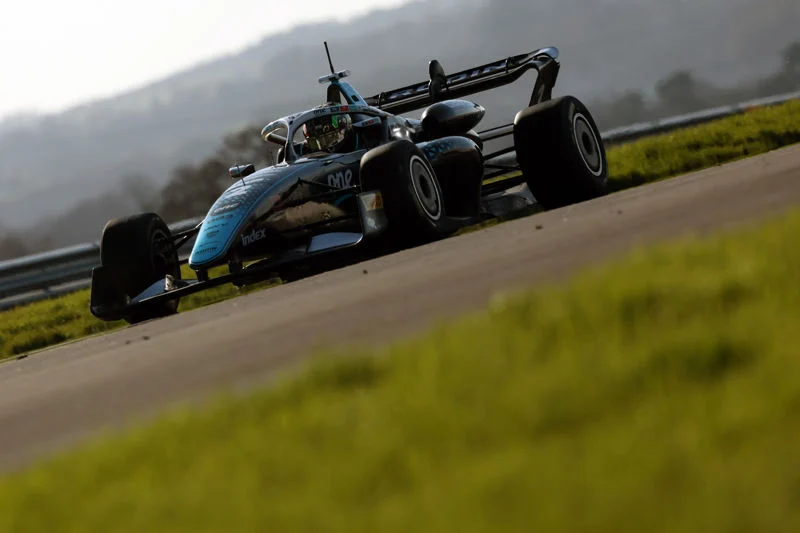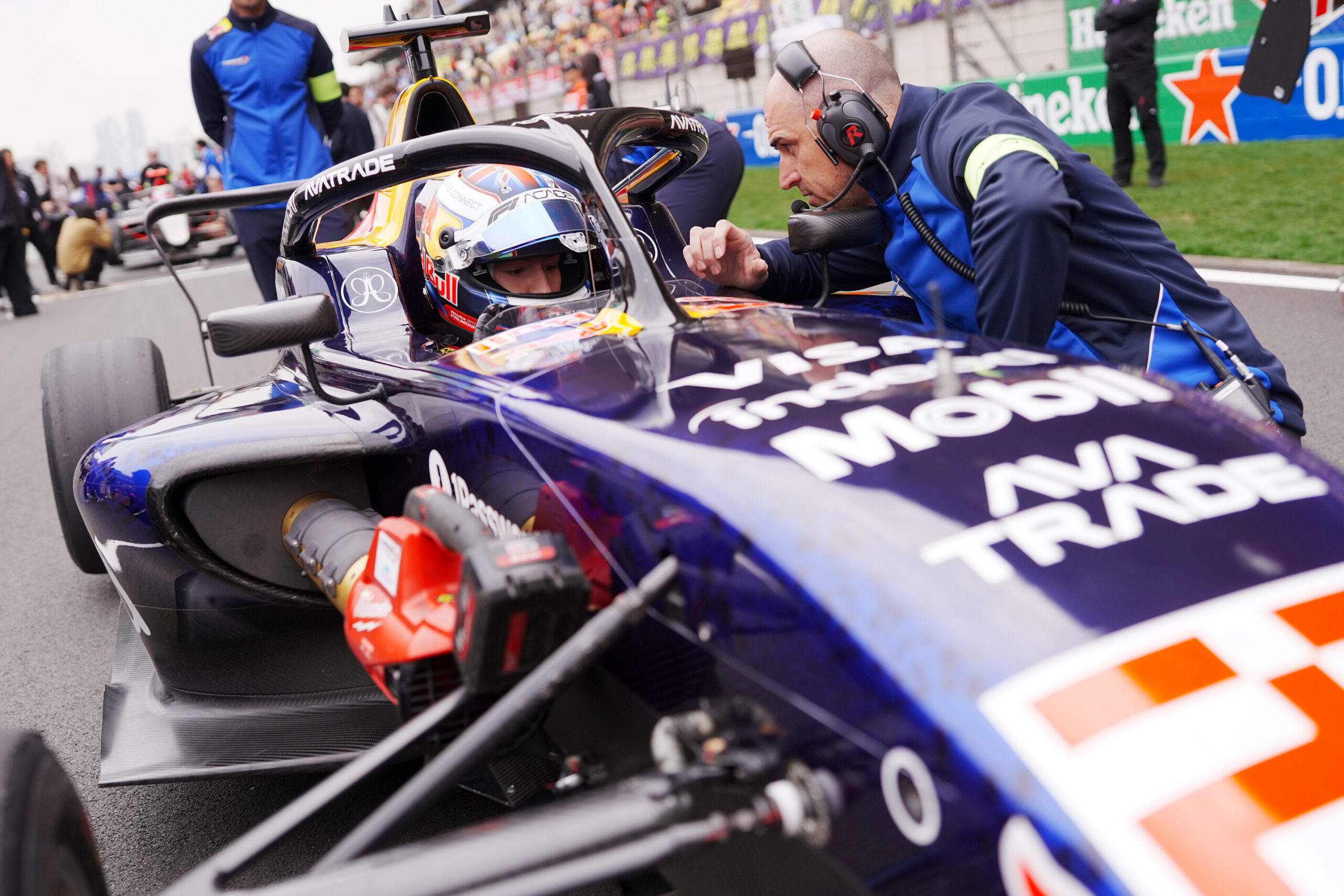
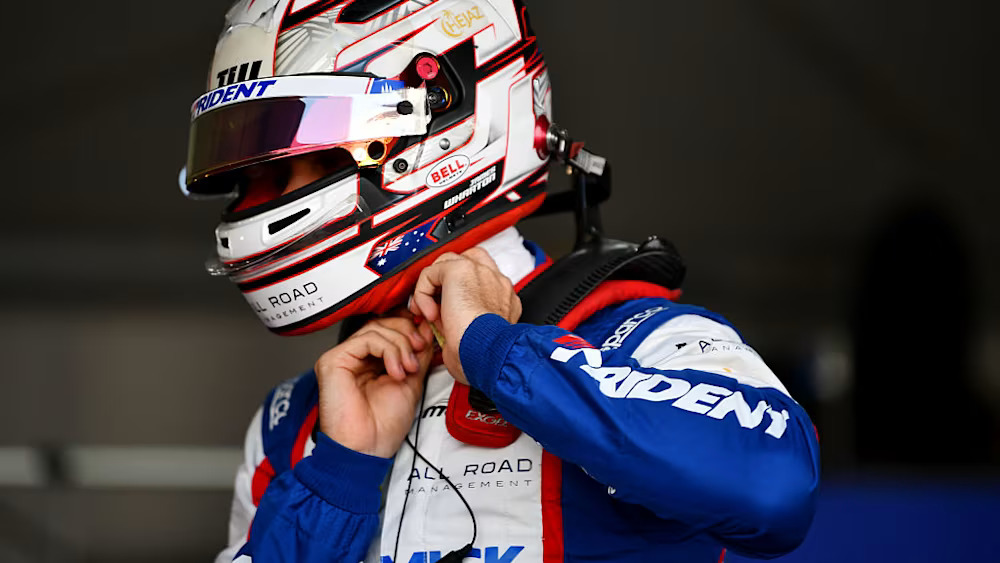
With the 2025 Formula 3 season concluding at Monza in September, many drivers were left with an extended break ahead of the 2026 campaign. After completing the final Formula 3 post-season test at Imola, James Wharton received a late call-up from Trident to debut for Round 13 of the F2 Championship in Qatar, held at the Lusail International Circuit.
It proved to be a challenging weekend for both the Australian and the team. Wharton encountered issues in Qualifying, retired from the Sprint Race after sustaining collision damage, and could manage only P19 in the Feature Race.
Despite the on-track difficulties, Wharton reflected positively on his Formula 2 debut with Trident, taking valuable experience from the weekend and leaving Qatar encouraged by the opportunity to compete at the next level.
“Doing a race weekend in F2 before being in F2 is the most amazing thing as a driver,” said Wharton. “Having the experience of a whole race weekend before moving to F2 is something that I am happy to take under my wings.“
Positive about the experience gained on track
Across the weekend, Wharton ticked off several major firsts with Trident, including his first F2 Qualifying session and first pit stop in the category. While the results ultimately weren’t on his side and were unable to showcase his underlying speed, he remained positive about the experience gained.
“Overall it was an amazing experience, to do my first pitstop, to do my first quali in an F2 car. But at the same time it was a weekend where the luck was not our side, and we did not show our true potential.“
“We didn’t show the true pace we had all weekend, so with the competitive side of myself, my first weekend in F2, I didn’t have many expectations, but we had a lot of pace and we were just not able to show it.“
A series of issues compounded the challenge, including problems in qualifying and delays during the Feature Race pit stop, preventing Wharton from capitalising on the speed he felt was available.
“From being super unlucky in quali with an issue and in the Feature having a slower pitstop than we should have. Overall, it was a tough weekend from a luck point of view, but from an opportunity and learning point of view I am super happy.“
Gratitude towards Trident

Despite the frustrations, Wharton was quick to express his gratitude to Trident for entrusting him with the opportunity in F2, describing the experience as a defining moment in his development.
“It meant the world and I can’t thank the team enough for giving me the opportunity. A new track learned, a new category learned, so can’t wait for my F3 season now, to start on the right foot and hopefully I can make that step in my career after next year.”
Wharton received the call-up from Trident just a week and a half before the race weekend, prompting him to immediately board a flight back to Milan to begin his preparations.
Fortunately, and something Wharton was particularly grateful for, he was able to speak with current Formula 2 driver Dino Beganovic and 2026 Formula 1 rookie Arvid Lindblad, gaining valuable insight into their experiences and what to expect before stepping into the car.
“There have been a couple of people that I have been able to speak to, like Arvid and Dino who have been in the category and understand how the weekend is going to go,” he said.
“It’s hard to know how the weekend will go without having done it yourself. When people tell you what’s going on, it’s very easy to understand, they can only do so much, but it’s very nice to speak to people.”
Impressions of the F2 car
When asked on his initial thoughts on his first experience behind the wheel of the car, Wharton said “High speed is crazy fast compared to F3. But in the slow speed corners, it’s really technical, and you have to be very precise in your driving, because the car is heavier.“
That added weight, Wharton noted, fundamentally changes how the car reacts to driver inputs, placing a premium on precision across every sector of the lap.
“So every input is changing the car balance a lot. That means you have to be super precise in the quali laps and in the races, long runs are super difficult with high deg, and also you are managing the way the balance is.
The technical demands of the F2 car stood out as one of the biggest challenges, with Wharton emphasising how even small inputs can have a major impact on performance.
“The car is heavier than F3, so every input you do is making a massive difference, whether you are on the brake or on throttle. Everything can change from the way the car is reacting, so a very technical car and you have to be precise to be fast.”
Looking forward to the future
Despite the challenges that came with stepping into unfamiliar territory, Wharton remains encouraged by the positives he took from his F2 debut with Trident.
“I have to take the positives,” he added. “The speed is there, in a brand-new category, and I need to have confidence in myself that I am good enough to drive anything and drive with the best in the world.“
That belief, Wharton explained, is something he is determined to carry forward into his second Formula 3 campaign, with the intensity of Formula 2 having sharpened both his focus and self-assurance.
“So I have to bring that confidence into the next season and having that experience in a faster car and in a more intense environment is going to make F3 a bit simpler for me.“
With the pace already evident, Wharton believes the step back into Formula 3 machinery will allow him to approach laps with greater clarity and composure.
“I will be able to have a bit more time in the laps, make things a bit slower, so it will give me sometime in F3 and take some confidence from the pace I had.”