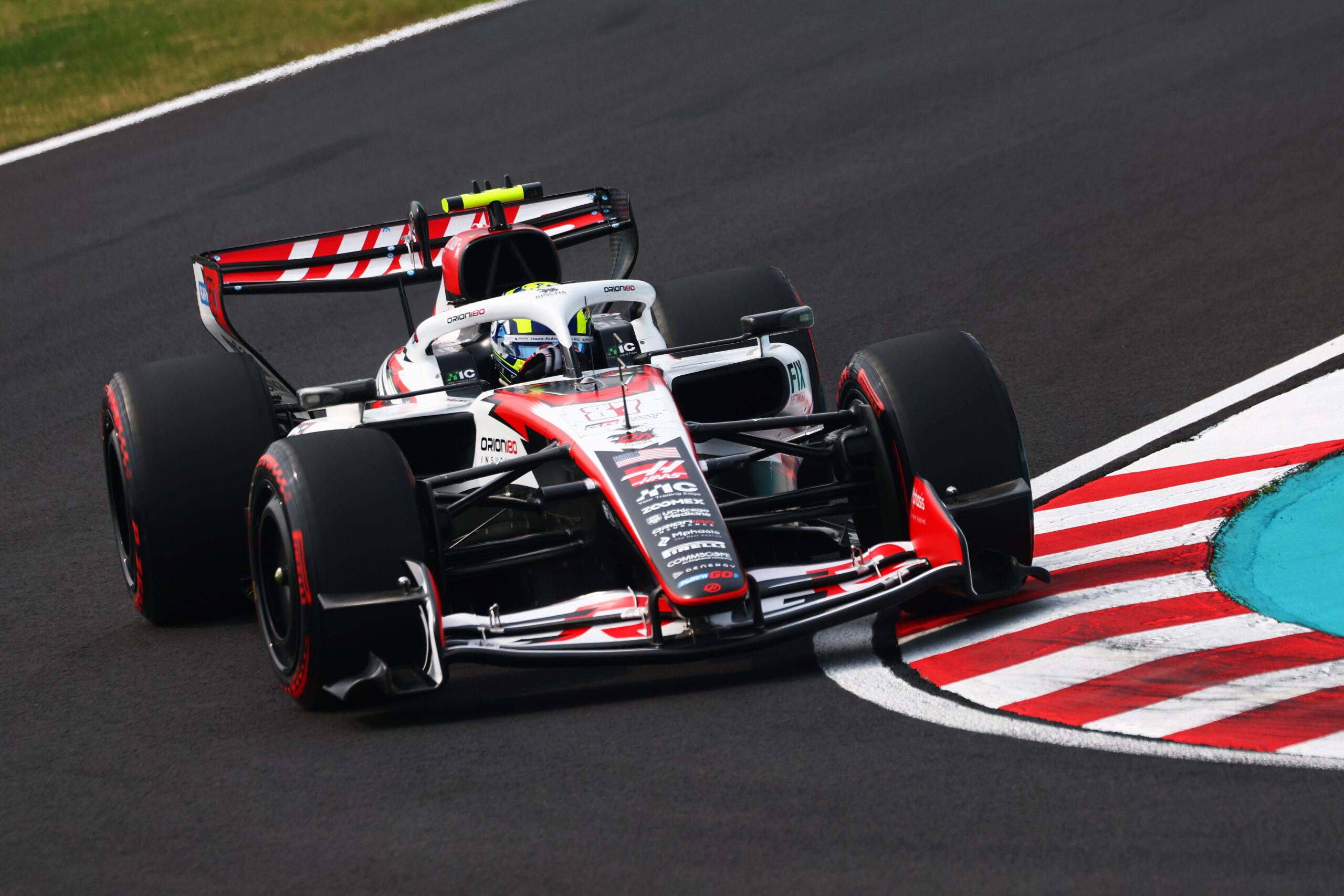
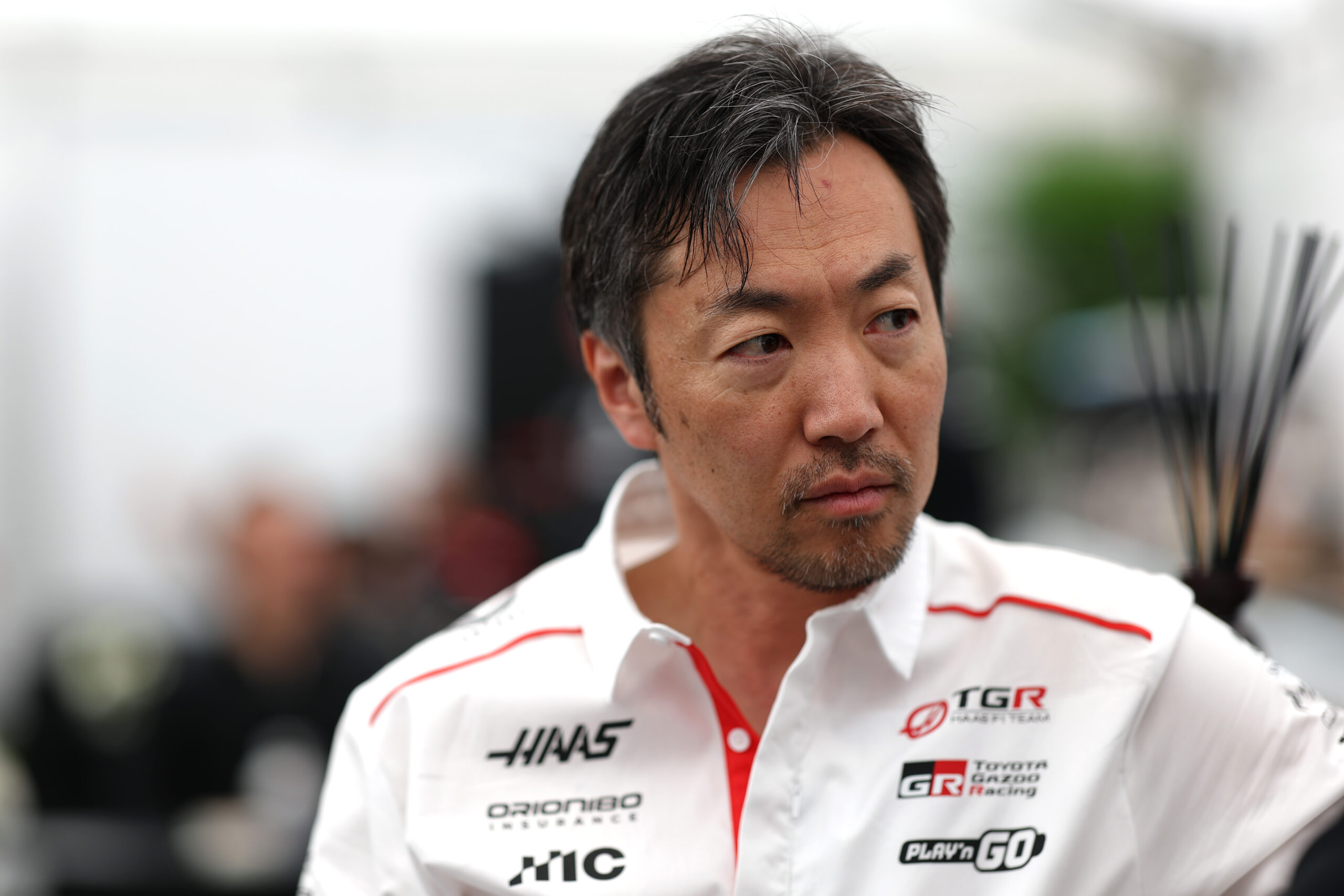
Following Ollie Bearman‘s massive crash at the 2026 F1 Japanese GP, Haas’s Team Principal Ayao Komatsu reflected on the incident as a racing misjudgment shaped by extreme closing speeds.
The incident took place on Lap 22 when Franco Colapinto’s Alpine suddenly lost power, creating a significant speed differential as Bearman approached from behind. This forced the Brit to take avoiding action before suffering from a 50G impact crash against the barriers. Luckily, Bearman came out with no large injury.
“It’s a lesson”: Komatsu on the Japanese GP incident
Speaking about the incident after the 2026 F1 Japanese GP, Komatsu shared his view in a print media session, emphasising the high closing speeds under the new regulations and their role in the crash.
“Yeah, accident, because leading up to that turn 13, Colapinto, he was always doing something consistent. It’s not his fault at all. But it’s just that we are deploying more through there, so even with normal laps, we had 20 kph advantage. That’s why he wanted to go for that. He used the boost button, but then that meant speed delta is 50kph. So I’m sure you guys saw on the onboard, the closing speed was massive. He just misjudged it. So it’s one of the things I think we talked about. With this regulation, closing speed could become an issue.”
Komatsu continued: “So unfortunately, that was one of those incidents. Of course, he’s kicking himself. He’s saying, like, I should have done better. No excuse. But you look at it, that 50 kph difference in closing speed is massive. So it’s a lesson. So I’m sure we’ll talk about it in terms of our future, how we can improve. So it’s part of it. I’m just glad that he didn’t have a big injury. He hit his knee hard, but he’s ok.”
A close look at closing speeds
When further asked about whether he believes the incident was a mix of driver error and the new rules, Komatsu said:
“Error is a bit strong word, to be honest. You could say small misjudgment, but it’s scary though, that closing speed. When I look on the GPS lap before, it’s totally understandable and the correct decision to go for it there, but it’s just huge. This is only the third race in this regulation, so that’s something he never experienced.”
Notably, the 2026 F1 regulations allow speed difference between full-push cars and cars ‘super-clipping’ to exceed 100km/h.
“So I don’t even call it error. It’s just something I think we should be aware of as an F1 community and maybe see what we can improve to mitigate that, because it could have been a lot worse. So I’m really glad that he didn’t break anything and his knee’s been swollen up but it’s nothing bad.”
Komatsu also addressed how such accidents could be prevented in the future, adding:
“I need to think about it more. I don’t want to give you a knee-jerk reaction answer, but obviously with different PUMs [power unit manufacturers], there’s a very different deployment. Some people got much higher speed in Turn 1 or into Turn 16, but this is why with Ollie going into Turn 13, he knew he had the advantage, so he went for it. But when you use the boost button, the difference is huge. So we need to think a bit more. I don’t want to give you some answer which doesn’t look at the global view.”
Colapinto not at fault
In the end, Komatsu made it clear that Franco Colapinto was not at fault for the incident, as he shared:
“No, no, no. He didn’t move. As far as, I mean, I didn’t study for half an hour. The bit I saw, he didn’t do anything different, and then lap before his speed was exactly the same. So we knew what we were dealing with.”