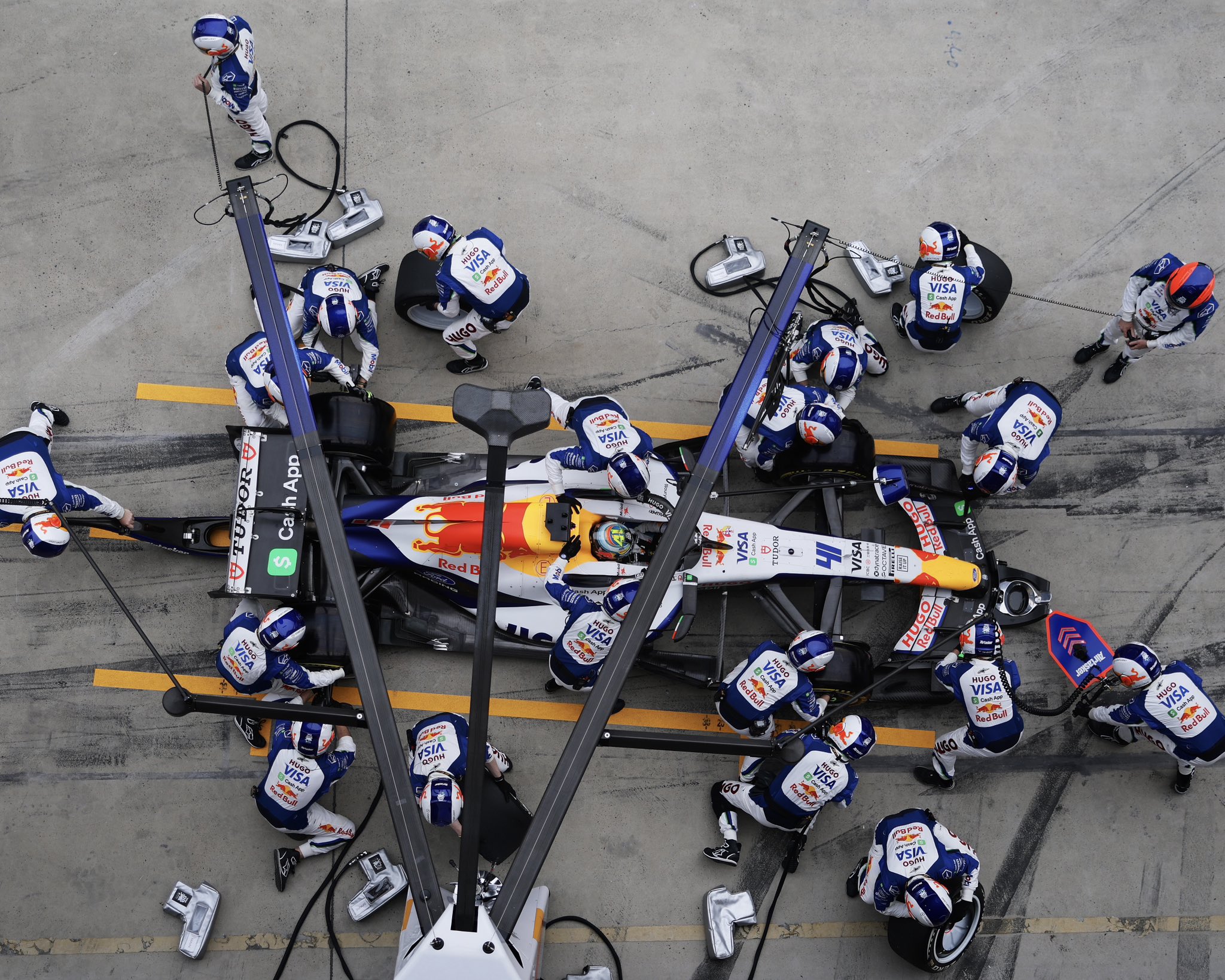
The 2026 F1 season continues to provide a steep learning curve for the grid’s rookie, Arvid Lindblad, at the 2026 Chinese GP. Driving for the Racing Bulls, he entered the Chinese GP coming off an impressive P8 finish at the season opener in Australia.
However, the Shanghai International Circuit and the unpredictable nature of the weekend forced his second race to become a significantly demanding test. Last Sunday he finished P12.
Adapting to the complex step up from Formula 2
Transitioning from Formula 2 to Formula 1 is never a simple task, but Lindblad has faced an increased challenge due to the evolving technical regulations of 2026.
After a strong race in Melbourne, the 2026 F1 Chinese GP presented a different set of difficulties. Starting from P15 on the grid, the rookie fought through the midfield to cross the line in P12. While he finished outside of the points this time, the weekend offered insights into his ability to manage the car under pressure with limited preparation in the print media pen.
Lindblad’s weekend at the 2026 F1 Chinese GP was hindered by significant track-time deficits. Technical issues limited his participation in FP1 to just two laps and the retirement on Lap 12 in the Sprint race after a spin on the opening tour robbed him of the opportunity to find a rhythm.
However, the rookie remains focused on finding performance gains in preparation for the upcoming Japanese Grand Prix.
“Yeah, it’s been obviously a big step from F2 on almost all sides. Australia went well, I felt comfortable. This week I think just by the nature of it being a new circuit, a completely different format and all the issues that we’ve faced with doing only two laps in P1 and having to stop early in the sprint, I think it’s just made it difficult to build during this week and I’ve been always a little bit on the back foot.
“Yeah, it is what it is, I’m just going to focus on improving for the next race.”
Lindblad on the evolution of racing dynamics at the 2026 F1 Chinese GP
As the conversation progressed, Arvid Lindblad offered an interesting perspective on the specific nature of the wheel-to-wheel racing throughout the 2026 F1 Chinese GP weekend.
Following the season opener, there were questions regarding how the 2026 electrical systems and energy management would impact the nature of overtaking. Discussing the driving perspective, Lindblad noted a visible shift in the racing dynamic during the 2026 F1 Chinese GP.
The Racing Bull driver explained that the racing felt more natural than in Melbourne, specifically regarding how the electrical systems influence the flow of the race. Rather than the constant “pass and repass”, he observed that the Shanghai International circuit produced more “genuine overtakes”.
This suggests that the 2026 power unit regulations may behave differently depending on the circuit layout.
However, the rookie remained cautious about whether this trend will continue throughout the season. He pointed out that because the Shanghai International Circuit is a completely different type of track, they will have to wait for the next several events to see if this improved racing feel remains consistent.
“Yeah, I think so. I think it was, I can agree, it was a bit more normal, there was a bit less of this sort of, energy passing if you want to call it, sort of pass and repass. I thought there was more genuine overtakes.
“Yeah, I mean I think we’ll see, it’s a completely different circuit so we’ll have to see at the next events what it’s like, but for sure I think it’s been a bit more authentic than Australia.”