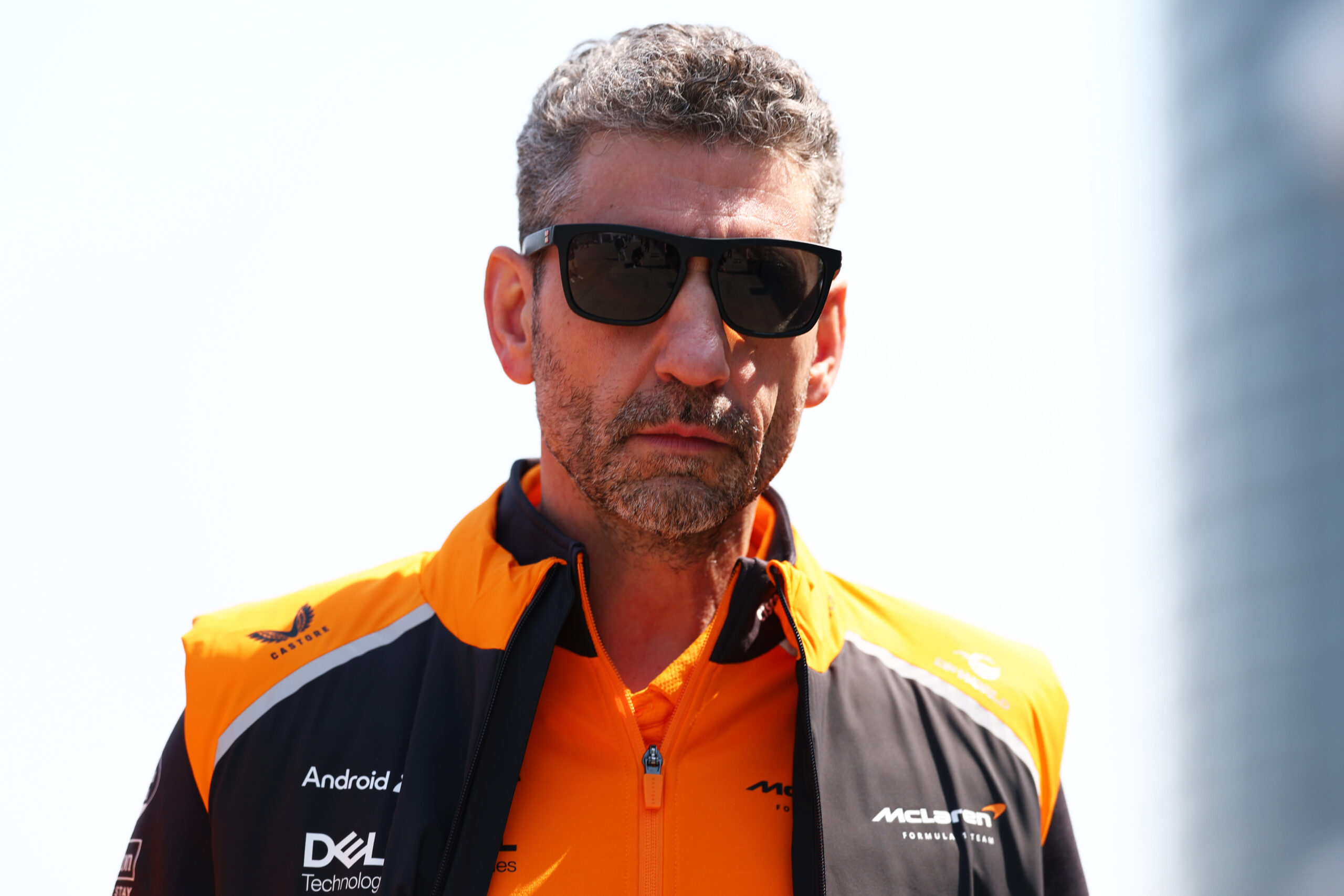
The 2026 Barcelona pre-season testing week ended on the 30th of January, marking the first time this season’s F1 teams put their new cars on track. McLaren team principal Andrea Stella shared his thoughts on the shakedown and what the team learned during the session.
Talking to the McLaren website, he also outlined McLaren’s focus for the 2026 F1 season ahead of the upcoming pre-season tests in Bahrain.
Andrea Stella’s thoughts on how things went at the Circuit de Barcelona-Catalunya
The McLaren team boss explained that they were able to collect a large amount of data. They began to understand how the new generation of single-seaters behaves on track, not just in simulators.
He reflected that more laps would have been beneficial, but noted that the difficulties they faced helped them better understand how to operate McLaren’s new car for the upcoming 2026 F1 season.
He added that pushing the design phase to the limit made the shakedown very tight in terms of preparation. However, the work done on track and at Woking allowed them to make up almost all the lost time.
“Of course, we would have liked to have done more laps, but even the difficulties that slowed us down on the first two days were important in helping us to better understand how to operate the car.
“We were well aware that by pushing the design phase to the limit, we would arrive at this shakedown very tight in terms of preparation, but thanks to the work done on the track and at Woking, we managed to make up almost all the lost time: it was a bit like building an aeroplane while in flight, but we did it.”
McLaren Team Boss Andrea Stella on the MCL40’s On-Track Behaviour
Andrea Stella explained that what they saw on track matched their expectations and the simulations.
He highlighted that the learning curve is very steep for everyone, including drivers and teams. Every lap provides valuable insights into performance.
The Italian also explained that these cars are completely new for the 2026 F1 season. The team boss believes they need to work hard to develop the car and improve the overall performance of the package.
“After all, it was natural to expect such a scenario, considering that these cars are totally new, from A to Z.
“We know that the MCL40 is a good starting point, but now we have to work hard to develop it and, through our knowledge the car, improve the overall performance of the package, both for the immediate future and to further define the development lines during the season.”
Thoughts on reliability and what stood out during the three days of testing
He explained that the teams showed a high level of preparation for the debut of the new generation of cars. Teams that feared a repeat of the hybrid power unit issues from 12 years ago quickly saw their concerns vanish. He added that many teams covered a good number of kilometres, even though the engine was on track for F1 for the first time.
“In terms of the power unit, we saw that even those who brought the engine to the track for the first time managed to accumulate a good number of kilometres.”
During the discussion, McLaren F1 team boss Andrea Stella said the main reliability issues were caused by the complexity of the new 2026 car system.
He added it reminded him of a few years ago, when early winter tests often ran late into the night. He added that he is confident that as teams get to know the cars better, everything will return to normal.
“I would like to applaud our team who worked with extraordinary commitment, day and night, to allow us to almost completely make up for the time lost at the beginning.
“It was a bit like going back a few years, when the very first winter tests regularly went on into the small hours, but I am sure that as the teams get to know the cars better, everything will return to normal.”