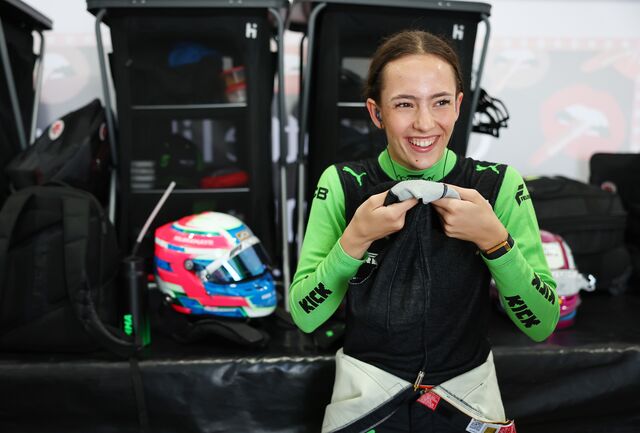
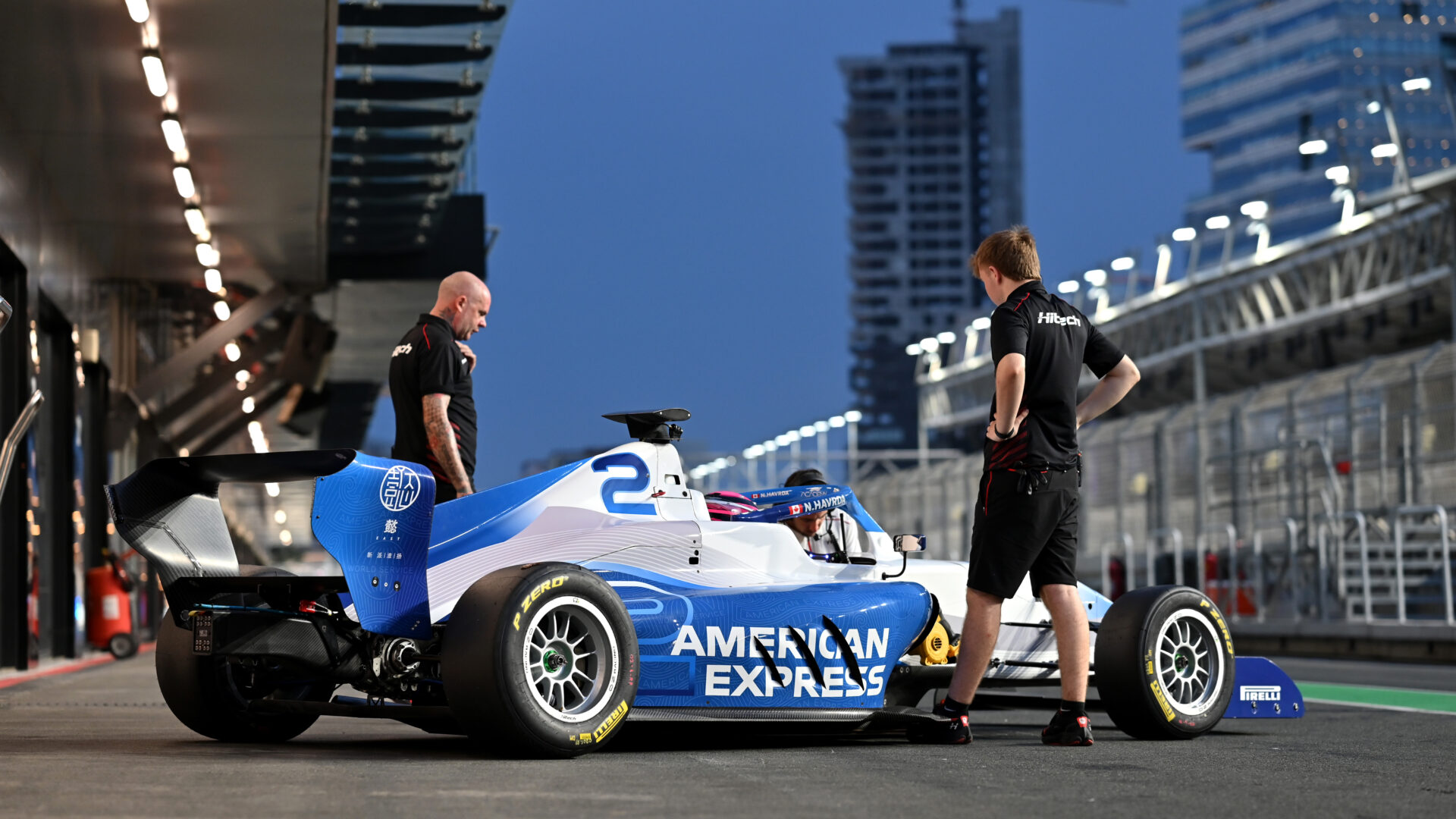
Reflecting on her time before F1 Academy in an interview with Fast Forward Podcast, Nicole Havrda shared her experiences attending her first F1 Grand Prix, her other sporting passions, and the ongoing support she has received from her family throughout her career.
Her first F1 experience
Havrda initially had no interest in pursuing motorsports as her career of choice. Back in 2018, she was set to be a dentist, which was something she was really focused on, but a trip to the 2018 F1 Austrian Grand Prix while on a family holiday through Europe introduced her to a world she had never experienced before, sparking her passion for racing.
“So, then I was going to be a dentist in school. I was really focused. I was really focused on that, and I, I feel like, for me, I always have, like, a goal, and, like, I’m very, like, futuristic about it, like, I want to do this, this, and that, and I always plan it out. But anyway, so, like, when I went to the Grand Prix, I was, so my dad actually brought me there because we were going for a road trip through Europe. We have family in Prague.“
Exactly where she wanted to be
At the time, motorsport was not widely discussed in Canada and was not as popular as it is today, which initially made Havrda disinterested in attending the Grand Prix. But as soon as she got to the fence, she knew it was where she wanted to be.
“But, yeah, so we went for a road trip. We stopped in Austria because my dad was, like, oh, I just want to watch F1 Grand Prix. I’ve never watched, so he wanted to watch. And, you know, I was, like, I told my mom, I was, like, can I just stay at the hotel? I don’t want to go.”
“And I think, you know, I was never into it. F1, the TV show wasn’t out, so I was, I didn’t know anything about it. No one knew about motorsports. No one talked about it, nothing, like, in Canada, it’s, like, no one knew about it back then. Even America, it was, like, Formula One?”
“But, you know, just, I was, like, oh, whatever, I’ll just go to it. So I ended up going. And just, you know, walking up to the fence, I was, like, oh, this is, like, exactly what I want to do. Because I feel like I just felt a rush of adrenaline that I never got in swimming.“
Swimming in her early years
The Canadian spent much of her early years as a competitive swimmer, but she quickly realised that the rush of adrenaline at the track far surpassed anything in the pool. Havrda still keeps up with swimming today, enjoying it for the physical benefits it provides on her journey in F1 Academy.
“Because swimming, I feel like I did it for so long that I just swam back and forth. But, like, doing it every single day, two hours a day, was, like, a lot. Yeah. And it was just, like, I didn’t tend to have, like, that adrenaline rush or anything.”
“But I definitely still swim nowadays, just because I enjoy it for, like, you know, physical. Yeah, it’s so good for the shoulders. Like, people do not understand. Because of the stroke. When I was swimming, my, like, shoulders grew so much. I look so weird. Like, I was top heavy. It’s so weird because, like, you’re always, like, it’s always, like, your arms are moving. And I mean, you’re still kind of using your arms and your shoulders now.“
A valuable stepping stone
Not only does swimming provide general physical benefits for Havrda, but she also noted that it serves as a valuable stepping stone before racing, helping her prepare for the physical demands of motorsport. While simulator sessions contribute to Havrda’s preparation for F1 Academy, they aren’t physically taxing in the same way; nonetheless, they still require focus, determination, and significant mental energy.
“So it helps a lot, actually, for racing because it’s so, like, neck physical as well as, like, arms because it just, like, follows all the way to your, like, forearms and your wrist, basically. Yeah. So just, you know, got that rush. It’s a good stepping stone, then, the swimming. Yeah, it was actually a really good stepping stone. It just, it really helped. And especially, like, being athletic all my life helped into racing. So it wasn’t something new that I had to be athletic now. Because it definitely, it definitely takes quite a lot, like, doing a morning training, an evening training, sim sessions in the middle.“
“Like, some people say, like, sim sessions aren’t physical. Like, it’s not physical, but it’s, like, I sweat when I’m on the sim. And the energy needed to have the focus and be so locked into it. It takes a lot. Like, people don’t notice it until they do it. Especially mentally, it’s so much. Like, I’ll actually be, like, drained by the end of, like, three hours on the sim. I would just have a headache from concentrating for that long.”
Her determination started back at the hotel
Upon returning to her hotel after the race, Havrda initially found it challenging to get involved in karting or any motorsport activities. Being fairly young at the time, she had little to no experience behind the wheel, which made breaking into the sport even more difficult, as well as there being no existence of F1 Academy for Havrda’s to begin her journey.
“That was confusing because I didn’t know what to do. Like I literally started emailing from the hotel there. I was like emailing like some car places, like, you know, the local racetrack and like how to get into it, like driving a car, learn this, like learn how to drive a manual because I was quite young. I didn’t know.”
Karting in Canada
Adding to her initial confusion, racing wasn’t particularly popular on the West Coast of Canada. With only a handful of major racetracks in the country, Havrda and her family had to spend long hours traveling to reach the circuits when she first started karting. She recalled how her parents would take turns driving these long distances, highlighting their unwavering determination to support her budding racing career.
“I was very confused. And especially being on the West coast of Canada, racing is not a big thing. Like I know in America, it’s a little bigger in Europe is big. Um, but in Canada is there’s nothing. There’s like, I believe there’s two big racetracks, um, in British Columbia. And, uh, for karting, there are a few, but they’re quite small and they’re not noticed as much.“
“So like I literally had to travel six hours every weekend to go karting. And that’s how I started in karting. And then I had to travel even more. So like, I remember when I got into cars, we would, my parents and I, we would take the motor home and drive 24 hours down to California. And my parents are crazy. They drove straight like direct. So they would swap every three hours. I don’t know how they did it, but they just wanted to get there. They were like so determined and stuff.”
Her parents continued support
Now that Havrda is living on her own following her journey into F1 Academy, she reflects on how much she valued her parents’ company during those early years. Even though she no longer lives with them, she emphasised that their support has remained unwavering, providing her with confidence as she continues her motorsport journey.
“I wouldn’t be able to like do it if it wasn’t for what they do. And like how much they give me. I know like a big thing, like right now, even like going to live on my own, I’ve realized how much I actually like miss them and what they’ve, you know, having them around all the time. And just like, I mean, they still support me as much. I think that’s like a big thing.“
“And like being able to call my mom and all that kind of stuff is super nice. Um, but just like sitting for a second and realizing how much they’ve done for me is huge and how much they’ve driven. Like the amount of times we went to California was crazy too. It’s like, they’ve driven like so many hours and just like, also obviously money as well. They’ve obviously spent a lot of money on the racing and a lot of emotions.“
The emotional impact of her racing journey
Furthermore, she reflected on the emotional impact of seeing her parents moved by her racing journey. While she noted that it is somewhat normal for her mother to cry, witnessing her father shed tears carries a deeper significance for her, highlighting just how much emotion is tied to her early experiences and their support.
“It takes a lot of emotions. I’ve never, it’s funny to see, like, I, I see my mom cry. That’s like, that’s like normal. Like I’m not normal, but like, it’s just, I’ve seen her cry. But then when my dad starts crying, it’s like something else. It’s like, Whoa, like this is like emotional, which it’s pretty cool to see that because it shows how much emotion really is in it. And it does take, you know, a lot out of us as a family. Yeah, of course.“