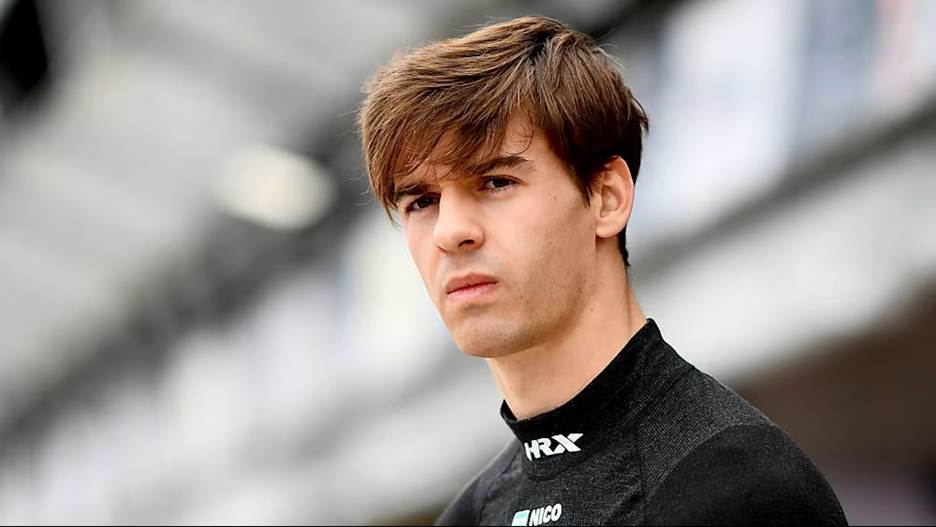
Nico Varrone has embarked on one of the most significant transitions of his racing career, moving from a successful endurance racing path into FIA Formula 2 for the 2026 F2 season. The Van Amersfoort Racing driver kicked off his rookie campaign earlier this month in Melbourne, showing flashes of speed despite a challenging race result. He ran near the front of the field in the Feature Race before circumstances caused him to drop to 17th, but the performance demonstrated that he has the pace to compete at the top.
This move marks a major shift in his career. Varrone has spent much of the last decade mastering endurance racing, where he achieved remarkable success, including a victory at the 24 Hours of Le Mans in 2023. While his time in endurance cars helped him develop resilience, stamina, and racecraft, Formula 2 presents a different set of demands: sprint race intensity, high-pressure qualifying, and highly competitive grids where fractions of a second can determine the outcome.
A career shaped by timing and opportunity
Varrone’s path to Formula 2 differs from many of his rivals, as financial limitations in his early career prevented him from staying in single-seaters. This led him into endurance racing, where he forged a rewarding career and gained experiences that many young drivers never encounter.
“My career is a bit different from other drivers here,” he said. “When I was younger, I couldn’t keep up with the money and the sponsorship need to keep going in single seaters.”
Despite this unconventional path, Varrone built a track record of success, winning significant races and achieving professional milestones that gave him confidence and credibility within motorsport.
“Luckily, I ended up in endurance racing and it gave me a really nice career, winning some great races and doing some great things. I was really happy and I loved it.”
When the opportunity to move into Formula 2 arose, Varrone recognised the moment as one that could not be missed.
“But when the F2 chance comes, it is something you need to do. If it comes, you need to go for it because it doesn’t happen two times. If it was not now, it was not going to be in three or four years.”
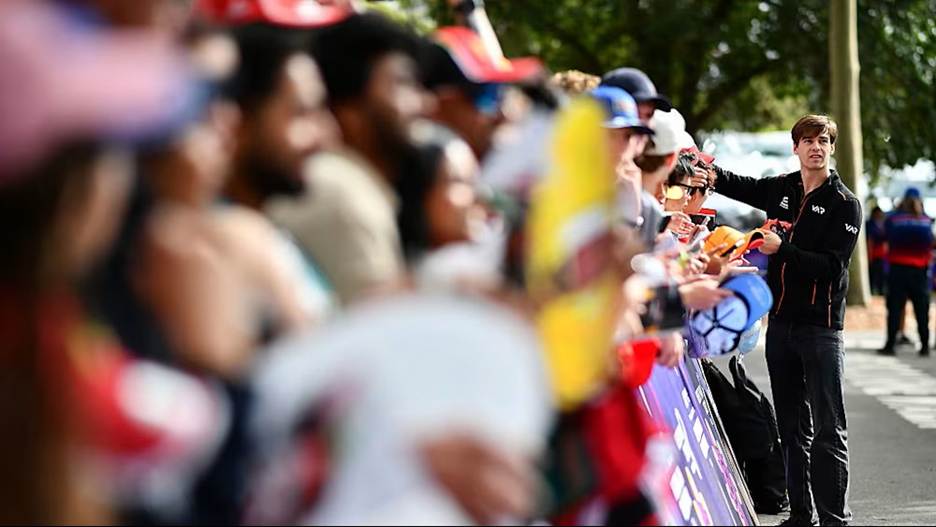
Varrone embracing the challenge for the 2026 F2 Championship
Seizing the F2 opportunity required both courage and commitment. Varrone understood that success would demand learning not just a new car, but a new way of racing, with rapid adaptation to the demands of single-seater performance.
“When the chance came up, I said I’m up for it, I’m up for the challenge. I know it’s going to be a big change for me in a lot of things. Not only driving the car, but there are a lot of stuff that I need to learn.”
For Varrone, the decision to switch disciplines was guided by a philosophy of seizing opportunities when they appear.
“I think in life if you don’t go for it, you never know what will happen in the end. I would never want to go all my life without taking that chance. That’s how I decided. Some people were willing to help me with sponsors to get here and then I was like let’s go for it.”
Adapting to a single-seater environment
Transitioning from endurance racing to Formula 2 has demanded a complete rethinking of driving style and technique. Varrone has had to adjust to a car that, while still a race car, behaves differently in key areas, particularly in terms of tyre performance and responsiveness.
“It’s a really different car,” he explained. “You have to drive it really differently in a lot of ways. It’s still a race car, but the little things that make a lot of difference are the tyres.”
Even the feel inside the cockpit has been an adjustment. Early testing sessions allowed him to start developing a natural connection with the car, but he acknowledges that more work is needed.
“Also, for me, the feeling in the car is different. It was quite nice to have three days in Abu Dhabi to get a feel for it.”
Additional pre-season testing in Barcelona helped him continue refining his technique.
“The three days in Barcelona were also great, so that we can keep chipping away and trying to feel more natural with the car. That’s what I’m missing at the moment.”
Varrone’s approach has been methodical, focusing on building comfort and confidence while understanding the nuances that separate a competitive Formula 2 driver from the rest of the field.
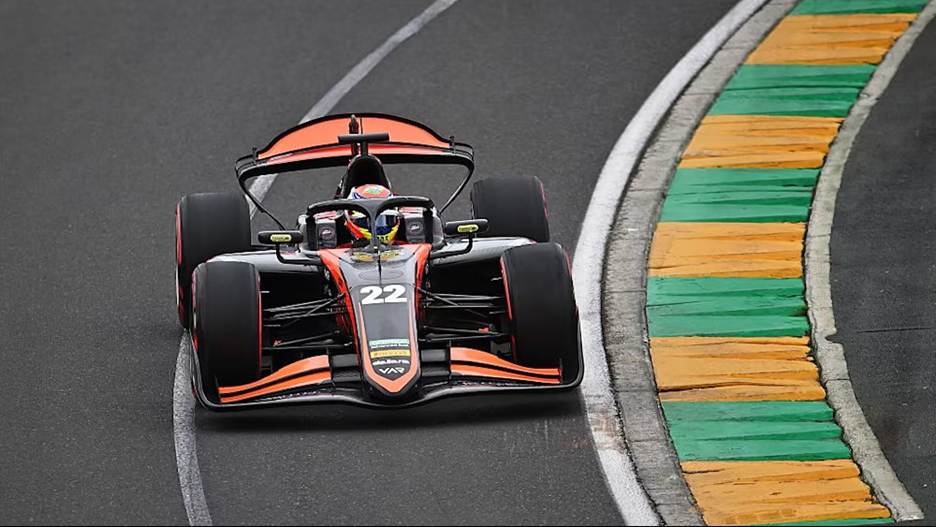
Varrone to balance endurance commitments with F2 preparation in 2026
The transition to Formula 2 has not meant leaving endurance racing behind. Varrone remains active as a factory driver for Corvette, which has added a unique layer of complexity to his preparation for the 2026 season.
“It’s been physical training, but also, I’m still doing endurance races,” he said of his winter. “I’m a factory driver for Corvette, so I had the Daytona 24, and we did that with the GT in GTD Pro. My January was filled with that.”
The combination of endurance racing, training, and relocation to Europe has made for an intense off-season.
“There was not a lot of time to have time off. I tried to keep training, but obviously, racing 24 hours keeps you in the loop and practicing, even if it’s in a different car.”
His move to Madrid was part of a broader personal and professional shift designed to facilitate his Formula 2 ambitions.
“So I’ve been up to that, as well as training, racing, and also moving to Europe, to Madrid, where I’m staying now, all in one go, so it’s been great. A lot of big changes.”
Varrone has embraced these challenges as opportunities to grow and push himself outside his comfort zone.
“It’s a year of changes, which feels really nice. In a lot of ways, it’s busy, but we like it like that. Good things come from changes and going out of your comfort zone.”
Setting clear goals for a rookie season
With a busy winter behind him, Varrone has approached the 2026 season with a pragmatic focus: be as competitive and fast as possible, and let the results follow naturally. He understands that Formula 2 does not provide extensive time to learn, making each session and race essential for development.
“It’s difficult sometimes in these championships,” said Varrone on setting goals for 2026. “Mostly, you don’t have a lot of running to set goals because you never know. It’s difficult to know where you are at until the races.”
He is focused on learning quickly while establishing himself among the frontrunners.
“For me, it’s about learning. Also, I will not have two years here to show. It’s a bit of a mixed thing. I just want to be competitive.”
Varrone emphasises that speed and consistency will naturally produce results if pursued correctly.
“I always say in racing if you’re competitive, if you’re fast, if you’re one of the guys in the front, then the results at some point will come. You don’t need to force it.”
This philosophy underpins his rookie season approach: develop pace, refine technique, and focus on competitiveness above all.“That’s my goal. Try to be as competitive as possible, as fast as possible. For sure, the races or the results are a circumstance of things that have to go your way and sometimes, that don’t go your way. That’s the goal. Be competitive.”