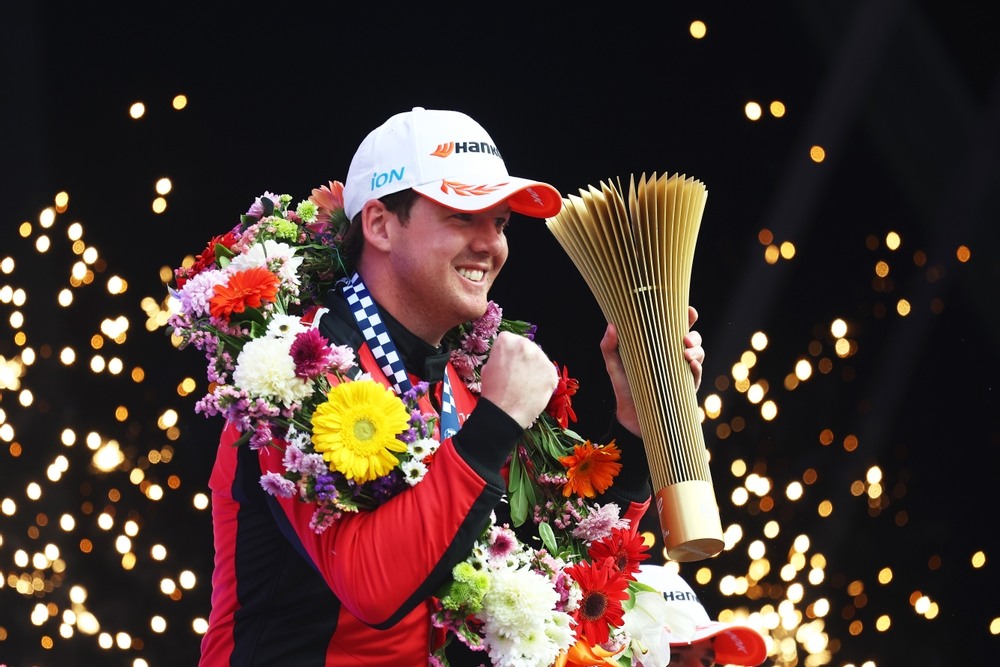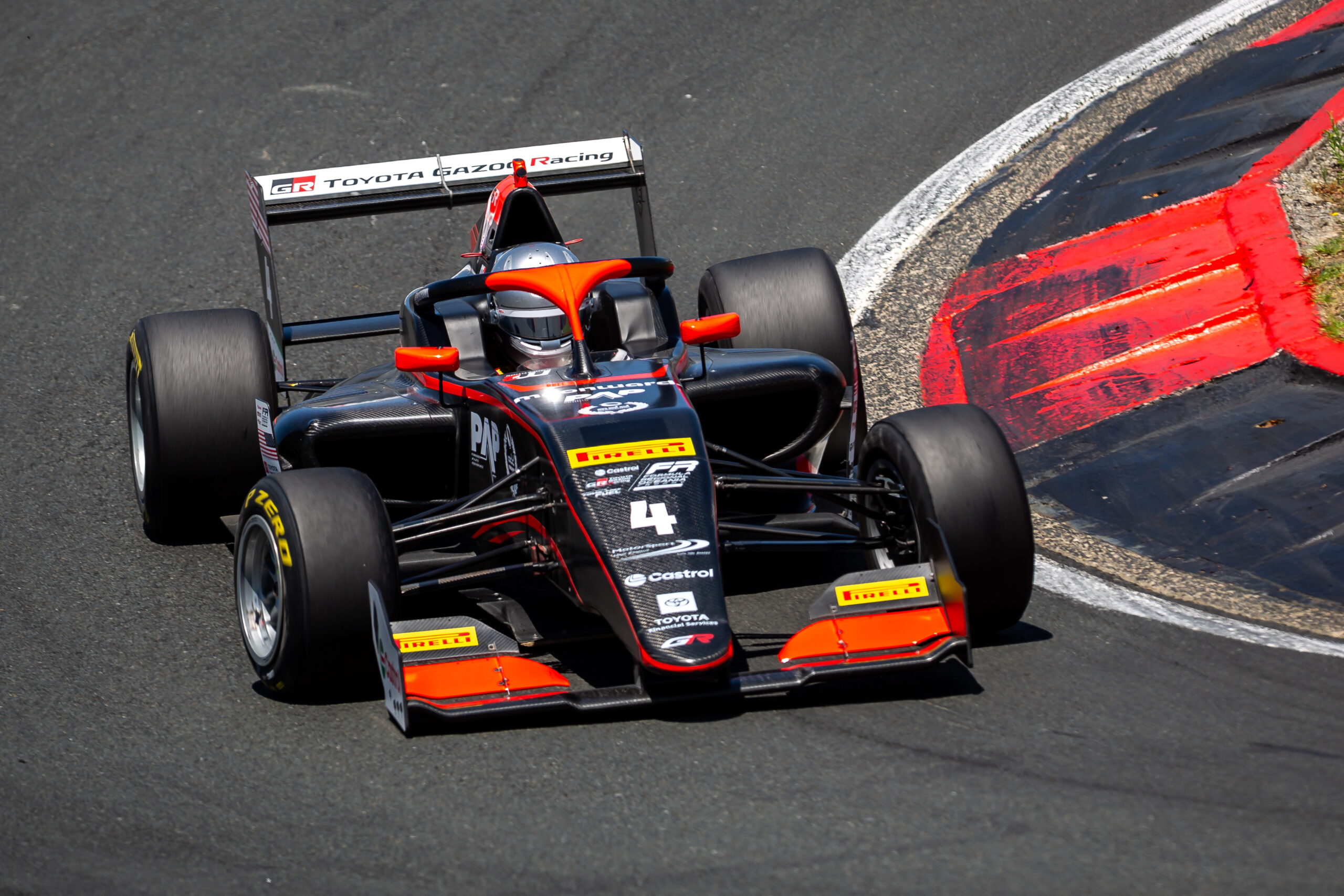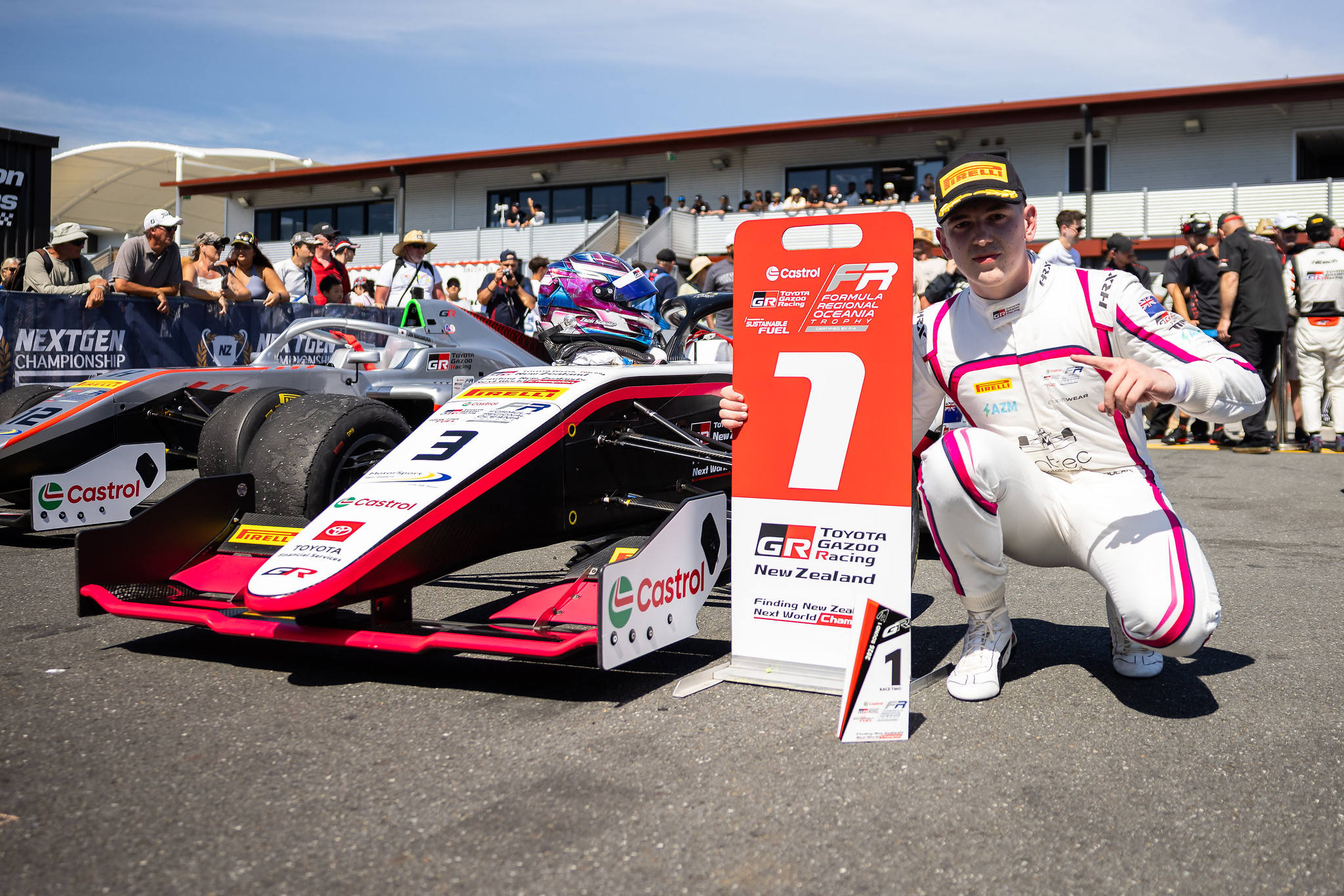
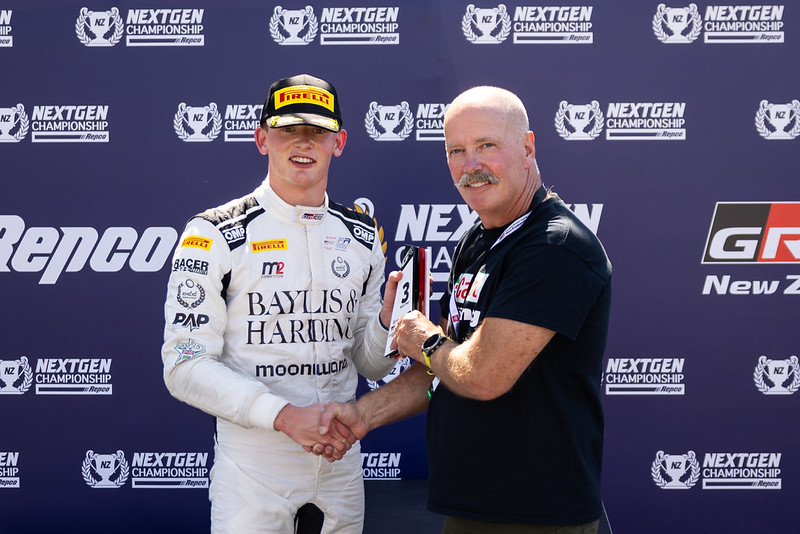
Freddie Slater delivered a strong performance in Race 2 of the 2026 Castrol Toyota Formula Regional Oceania Trophy (CTFROT) at Hampton Downs, climbing from sixth in the opening race to claim a well-earned third place. Driving for M2 Competition, the Kiwi showcased resilience, composure, and defensive skill on one of New Zealand’s most challenging circuits. His weekend highlighted the difficulty of adapting to Hampton Downs’ old-school layout and the intensity of racing at the start of the season.
After a demanding opening day, Slater’s improvement in the afternoon race emphasised not only his talent but also his ability to learn quickly from mistakes and adapt strategies under pressure. While the results alone tell part of the story, the driver’s reflections provide insight into both the mental and physical demands of racing at the front of the field.
A mixed start in Race 1
Slater admitted that Race 1 had not gone entirely to plan. After a solid Qualifying session, he acknowledged that there had been room for improvement and that a few early errors had compromised his race. These mistakes served as a reminder of how unforgiving the 2026 CTFROT grid can be, where even minor lapses can result in lost positions and valuable championship points.
“Yeah, I think not too bad. I think Qualifying was okay. I think we just didn’t maximise enough from my side. And then Race 1, just made a few wrong decisions on lap one at the end of the day. That was just a mistake on my side. And then, yeah, Race 2 was a good result. Pace didn’t really show it, though. We had to fight quite hard for that one. A lot of pressure from behind and just kind of no pace to answer with,” he explained.
Even with a disappointing start to the day, Slater maintained focus and positivity, recognising that the first race was a learning opportunity. The mistakes in the opening lap gave him and his team valuable data, which they could use to adjust his car setup, race strategy, and approach for the afternoon encounter.
Embracing Hampton Downs
Despite the challenges, Slater highlighted his enjoyment of racing on Hampton Downs, a track with a rich history and a reputation for demanding precision. The circuit’s technical corners, elevation changes, and tricky surfaces test every driver, forcing them to balance aggression with control.
“So, we’ve got some digging to do to try and find some more pace. But at the end of the day, it’s been a really fun experience so far. You know, these tracks are proper old school. It’s like going to Oulton Park and places like this, and it’s places I enjoy. So, it’s very cool to get this sort of experience,” he reflected, emphasising how much he appreciates circuits that require both skill and concentration.
Hampton Downs is notoriously unpredictable, and Slater underlined the difficulty of extracting the perfect lap. The combination of bumps, changing wind conditions, and technical corners means that drivers constantly adapt their line and throttle input, often within the same lap.
“I just feel like around here, there will never be the perfect lap. There’s always a bump catching you out. There’s always wind changing. When everybody says they’re doing a perfect lap, I like to say most of the time they’re lying, because around here, I feel like there’s always a little bit more margin on the table to extract. So, it’s one of them tracks that you need to drive at 99 percent to get the best possible result. But if you’re 101 [percent], it’s normally quite a decent shunt,” he said.
Defending under pressure in Race 2
Race 2 confirmed the circuit’s challenges and the importance of defensive driving. Starting from a mid-grid position due to the reverse-grid rules, Slater immediately came under pressure from faster cars behind him, including championship contender Ryan Wood. He explained that maintaining position required constant focus and quick decision-making.
“I think it would have been a bit more relaxed with a bit more pace, but it wasn’t. So, the only way to stay in front and finish on the podium was by defending. So, having Ryan [Wood] behind me and attacking me all the time, having other people catch up on him as well was not easy,” Slater said.
Maximising the result
Ultimately, Slater credited his own focus and the team’s support for extracting the maximum possible outcome from the weekend. While acknowledging the need for more pace, he expressed satisfaction at how he and M2 Competition had managed the races.
“But, yes, the things we’ve got to do sometimes to extract the maximum result. So, I think we maximised everything we could in race two especially. So, from my side, I’m pretty happy with Race 2, but we’ve got some work to do,” he concluded.
His performance highlighted the balance between skill, strategy, and resilience in early-season racing. By defending effectively, making minimal mistakes, and adapting to track conditions, Slater ensured that his weekend ended on a high note.