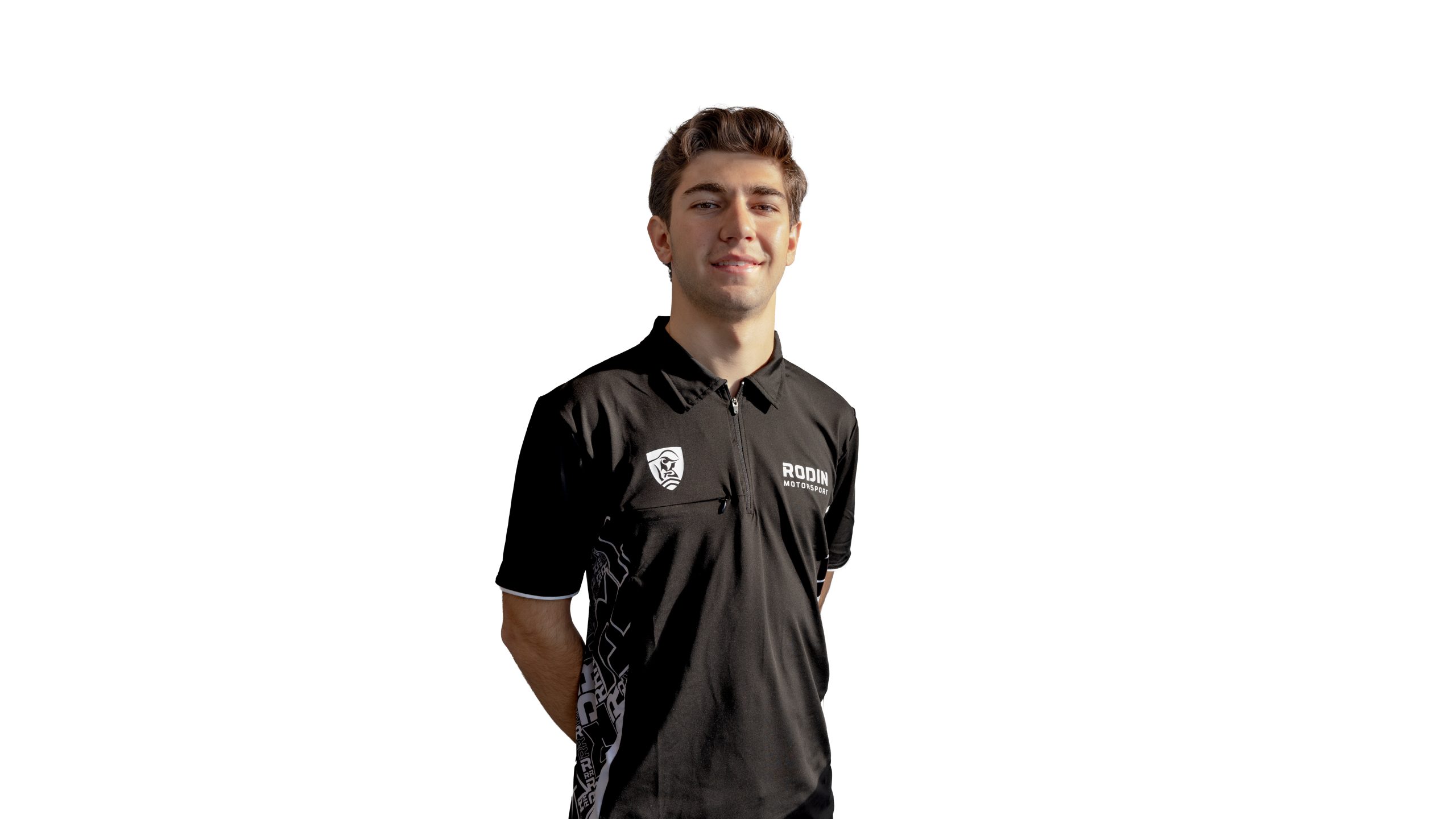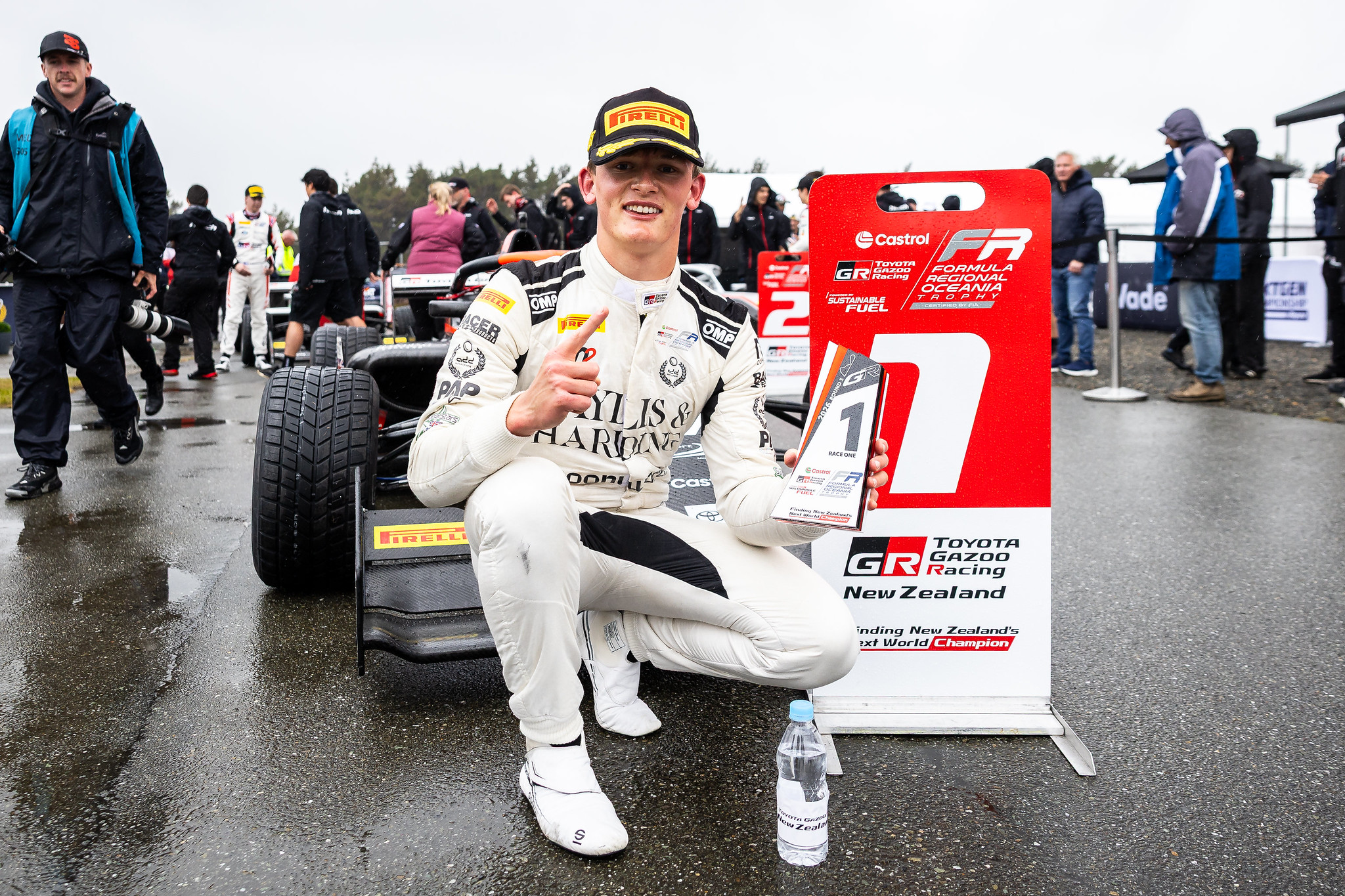
M2 Competition’s Freddie Slater produced a controlled and assured drive to secure his first victory of the 2026 Castrol Toyota Formula Regional Oceania Trophy (CTFROT), mastering treacherous wet conditions at Teretonga Park. The M2 Competition driver kept his composure through multiple safety car periods, changing grip levels and constant interruptions to emerge as the standout performer in Race 1 of Round 3.
The win marked a significant milestone in Slater’s season and underlined his ability to execute under pressure, particularly in one of the most unpredictable races of the championship so far.
During a press conference after the race, Slater reflected on both the result and the work done behind the scenes to make it happen.
“Yeah, definitely,” he replied when asked if he was pleased to have a first win in the series. “Also, we spoke about it last night and it happened today. So the team gave me a great car this morning to put ourselves up there and then a bit of luck into T1, very close with the cars behind and then managed to open the gap after the safety cars as well. So very good pace and very, very looking forward to tomorrow. We were impressed with both of those safety car restarts.”
Qualifying chaos sets the scene
The dramatic race followed an equally eventful Qualifying 1 session, heavily affected by rain, low temperatures and minimal grip. Three separate red flags, all at Turn 1, repeatedly halted running and left many drivers without a representative lap time.
Jin Nakamura set the fastest time but caused the final red flag, earning a three-place grid penalty. Similar penalties for Nolan Allaer and Fionn McLaughlin reshuffled the order, promoting Ernesto Rivera to pole position alongside Slater on the front row. With James Wharton absent due to FIA Formula 3 commitments, opportunities to find rhythm were already limited before the race even began.
Safety Car restarts prove decisive in Race 1
Just hours later, Race 1 delivered instant drama. Both front-row starters struggled off the line, and Rivera slid into the gravel at Turn 1, triggering a Safety Car before the opening lap had properly settled. From that moment, Slater controlled the pace at the front and made each restart count.
He explained how he approached the low-grip restarts and used track characteristics to his advantage.
“Yeah, I knew the goal. Obviously, there’s quite low traction, especially there. So I knew kind of how I had to play it to try and get the best advantage and especially with the long straight here, the slipstream is quite effective. So yeah, it was key to nail that and then it just meant I could focus forward and not look in the mirrors.”
Each restart allowed Slater to stabilise his lead, and by mid-race he had built a comfortable gap to the chasing pack.
The value of clear air
The interrupted qualifying session earlier in the day highlighted just how valuable clean air and visibility were in such difficult conditions. Slater emphasised that clear track made a dramatic difference to lap time, especially when reference points became hard to see.
Drawing on what many drivers experienced during the session, he underlined the scale of the advantage.
“Yeah, it’s massive. I’d say it’s almost a second or even more. To have clear track and actually see where you’re going, where the reference points are, makes a massive difference. So, when you get stuck, and especially a lot of people did Qualifying this morning, you saw what happened. The gaps in the top 20 [sic 18] of cars was huge. So, it’s very important to get clear space, but also finish a lap. So, tomorrow’s going to be even more interesting in Qualifying, so yeah, it’s just super important to have clear space.”
Adapting to ever-changing conditions
Beyond traffic and restarts, drivers faced a relentless challenge from the weather itself. Cold conditions meant tyre performance improved gradually, while intermittent rain ensured the track never settled into a consistent state.
Slater described how drivers had to mentally reset after every interruption and adapt to evolving grip levels.
“Yeah, especially with how cold it was as well. The tyres are just getting better every lap, so it’s kind of a constant improvement. And then also we had the red flag, so it’s like, out, do one lap, box, go back out, do one lap, and so on. So it’s kind of one of them things that you just kind of got reset as a driver. Every time you go out, the conditions were different as well. As we saw in the race, it started to rain, then it dried up, then it rained again. So you’re just always adapting in that second in lap time, between each lap. So not the easiest for us drivers, but yeah, good challenge.”
Slater claims a statement 2026 CTFROT victory at Teretonga Park
Despite a race shaped by incidents and safety cars, Slater never relinquished control at the front. He took the chequered flag ahead of Jin Nakamura and Kalle Rovanperä to claim a statement victory that strengthens his position in the championship.
With further Qualifying and racing still to come at Teretonga, Slater leaves Race 1 with confidence, momentum and proof that he can thrive when conditions are at their most demanding.