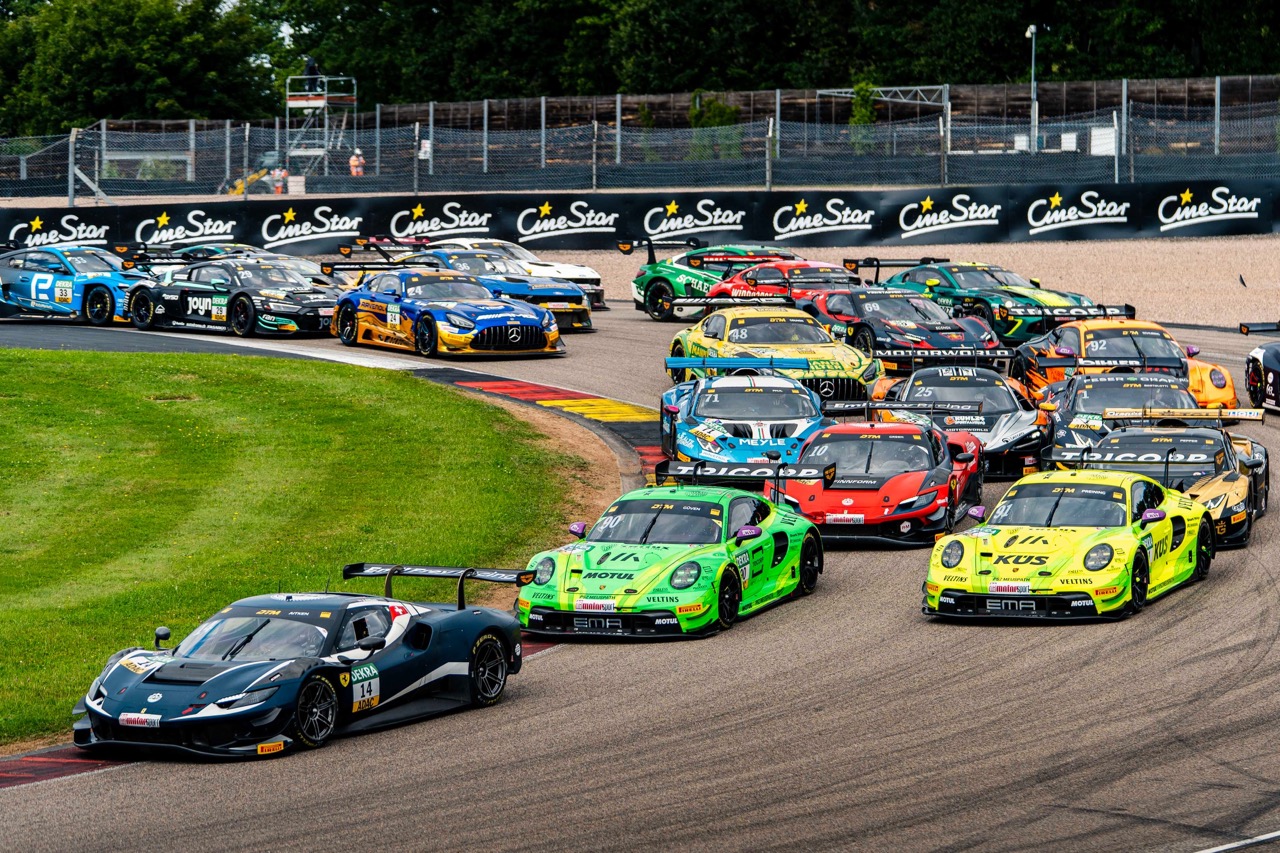
The 2025 DTM season did not allow a simple storyline to take hold. No driver controlled the championship for long. Instead, the series rewarded sustained management across 16 races, where raw speed mattered as much as tyre use, pit timing, and the ability to absorb pressure without blinking.
From the opening round through to the closing laps at Hockenheim, the title fight stayed compressed and unpredictable. Momentum arrived quickly and disappeared just as fast. A minor error rarely remained a minor error for long; it often spilled into the following weekends, shaping strategy, points, and mindset in a championship that offered very little recovery time.
The defining feature of the campaign was not only the tight GT3-era grid, but the number of genuine contenders who stayed in the picture deep into the season. That density raised the cost of every decision and narrowed the margins for everyone at the front. In that context, Ayhancan Güven secured the title less through dominance than through control—adapting to changing conditions, limiting damage on difficult weekends, and delivering clean execution when the championship demanded it most.
A winter of change
DTM entered the 2025 season already reshaped, with winter changes that shifted expectations before a wheel turned in anger. The series looked familiar on the surface, but the competitive ground had moved.
ABT Sportsline closed its long chapter with Audi and switched to Lamborghini, ending a partnership that had defined modern DTM for more than two decades. The move put immediate pressure on a team built on continuity because this championship offered no settling-in period. ABT added reigning champion Mirko Bortolotti and drew even more attention. The pace came in sharp bursts, but the switch rarely looked natural, and consistency stayed elusive.

Ford returned after decades away, with Haupt Racing Team bringing the Mustang GT3 to the grid. The comeback carried commercial weight and underlined DTM’s push for manufacturer variety. Early on, visibility and development mattered as much as results.
Across the DTM paddock, the intentions for the 2025 season were clear. Porsche strengthened its presence through Manthey. Mercedes-AMG relied on depth rather than one spearhead. BMW stayed experience-led. Ferrari committed to a programme built to fight for the title. Lamborghini, now spread across more cars and greater expectation, chased performance it could repeat.
The grid blended youth with proven names, and the rules added a new rhythm. Sunday races now required two mandatory pit stops, a change that reshaped strategy and race control. It influenced the title fight more than any winter update ever could.
A format that punished excess
DTM kept its sprint-race identity for the 2025 season, with 55 minutes plus one lap leaving little margin for recovery when anything went wrong. But the revised pit-stop rules changed the balance of power. Strategy stopped being a procedural necessity and became a central competitive factor.
Pit windows turned into pressure points. Teams had to anticipate traffic before it formed, read tyre degradation as it developed, and weigh Safety Car probability with growing sophistication. Drivers had to manage multiple stints without giving away track position. They also had to avoid unnecessary risk because one overreach could cost far more than it gained.
As the season progressed, Sundays in particular became exercises in restraint. Aggressive tactics often proved counterproductive, and a single operational mistake could undo an entire weekend. The championship demanded cohesion in response, binding drivers, engineers, and pit crews into one operational unit. And it made execution errors as costly as mistakes made on track at the limit.
An opening phase without hierarchy
The early rounds set the season’s theme, competitiveness without consolidation. Lucas Auer became the early reference, pairing pace with composure and stacking points in a way that kept Mercedes-AMG firmly in the frame. His approach looked measured for a reason. This championship would not reward isolated brilliance. It would reward the driver who managed the long game.
Güven replied with wins that confirmed Porsche could fight everywhere, yet neither he nor Auer found separation because the field would not permit it. Jack Aitken lifted Ferrari into contention with assured drives that mixed aggression with control, while Jordan Pepper kept Lamborghini close through consistency, even when dominance never arrived. Thomas Preining gathered points with quiet efficiency, René Rast reasserted himself once BMW hit form, and Maro Engel remained ever-present, so the standings compressed rather than stretched and the DTM title fight of the 2025 season expanded instead of narrowing.
When execution eclipsed speed
As the championship entered its middle phase, the emphasis shifted decisively from outright pace to operational excellence. Qualifying position still mattered, but races increasingly turned on pit sequencing, tyre management, and the ability to anticipate disruption rather than react to it. That shift mattered most under the two-stop Sunday format, where traffic and timing outweighed lap time.
Aitken emerged as one of the most complete performers of this period. He repeatedly converted Ferrari’s pace into tangible results. He remained a constant presence in the championship conversation. Pepper continued to apply pressure through discipline and opportunism. That approach kept him firmly within contention. Alongside Auer and Güven, they formed part of a crowded front group that refused to separate. Teams and drivers made gains one weekend and lost them the next through strategic missteps, circuit-specific demands, or the kind of penalty that arrived hours after the chequered flag and rewrote what had looked secure.
By the Nürburgring and Sachsenring phase of the season, the championship felt less like a straightforward contest of speed and more like an endurance test in sprint-race clothing. Momentum proved fragile. The cost of a single error often exceeded the value of a single win.

A title fight that would not settle
Even when individual drivers tried to take control, the championship refused to take shape. Balance of Performance swings, circuit specific demands, and strategic complexity kept any dominance short-lived. Drivers who looked set to build momentum often ended up defending it instead of extending it.
Consistency kept Pepper alive in the title picture without ever needing to control whole weekends. Speed arrived with restraint in Aitken’s case, and that balance kept Ferrari locked in the fight deep into the season. Steady points did the heavy lifting for Auer, who stayed in contention even when the Sundays were not the flashiest. Being ever present became Güven’s strength, always in the mix and rarely far from the action. Hovering in the background, suited Preining, close enough to matter without ever fully stepping into the spotlight. The wildcard label fit Rast, capable of brilliance yet increasingly exposed to how brutally the season punished misfortune.
The Red Bull Ring captured that volatility. It produced winners across manufacturers. It sent an extraordinary number of drivers to the finale with mathematical title hopes, reflecting a season defined by density rather than hierarchy.
Hockenheim: when the title fight of the 2025 DTM season became procedural
The final weekend at Hockenheim arrived burdened by accumulated tension, with scenarios multiplying and margins evaporating as the championship reached its decisive moment. Saturday offered no clarity because Preining’s victory tightened the standings further and ensured that Sunday’s race would decide the title directly rather than through calculation alone.
Sunday unfolded as a study in controlled chaos. Early incidents eliminated contenders, pit strategy became irreversible, and communication between race control and teams came under intense scrutiny as the field navigated yellow flags and evolving instructions. Within that environment, Pepper and Aitken remained active participants in the title fight on the road, yet the moment that ended their championship hopes came not through contact or mechanical failure, but through procedure.
Race control accused both drivers of overtaking Auer under yellow flags and issued three penalty laps to each, a sanction that reshaped the championship in real time and immediately placed their teams in dispute. With the penalties unserved amid claims of unclear signalling, the situation escalated decisively when black flags were shown, and although both crossed the line, officials ultimately disqualified Pepper and Aitken, removing two contenders from the championship equation and reshaping the final classification.
Amid the disorder, Rast’s challenge ended abruptly in what proved to be his final DTM race, as the three-time champion confirmed he would step away from the series, bringing an end to a career that had linked DTM’s modern GT3 era to its recent touring-car past. At the front, Güven remained composed, resisting desperation and positioning himself for opportunity rather than forcing the issue, before executing the decisive move late in the race that secured both victory and the championship, making him the first Turkish driver to claim a DTM title.

Aftermath and what the 2025 DTM season meant
Hockenheim did not end with uncomplicated celebration because the finale dragged the season’s defining tension into the stewards’ room, with post-race decisions and signalling arguments shaping the conversation as much as the racing itself. That atmosphere mattered when explaining why Güven won the title because he did not dominate the year so much as manage it, balancing aggression with restraint, collecting points on imperfect weekends, and then delivering the decisive win when the championship demanded absolute precision. Auer matched him for consistency and kept Mercedes-AMG in contention to the end, while Aitken and Pepper remained credible protagonists for long stretches, applying pressure whenever Ferrari and Lamborghini allowed them to do so, only for the finale’s procedural spiral to extinguish their chances.
In the wider frame, 2025 clarified modern DTM as a championship of process as much as pace, where pit execution, timing and rule discipline could swing races, and it also carried a sense of transition through Rast’s departure, with a three-time champion leaving a series that now punished errors faster than ever and rewarded those who stayed calm when everything around them turned noisy.