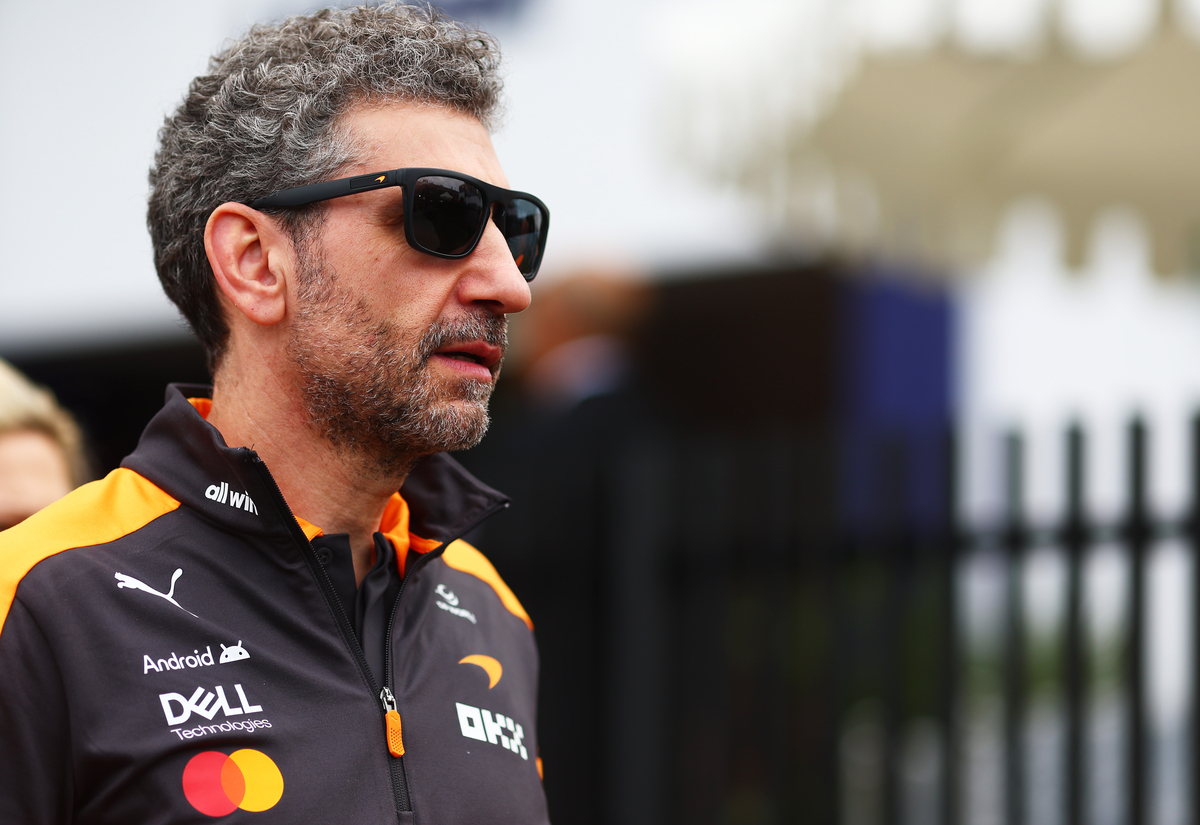
With safety issues becoming a major talking point in F1 yet again following the 2026 Australian GP, Andrea Stella shared his concerns over the race starts, the massive speed differentials between cars, and overtaking. Meanwhile, drivers Carlos Sainz and Pierre Gasly were vocal about the perils of the straight-line mode on Lap 1 and while attempting an overtake.
Pre-season testing saw the rise of a widespread concern regarding the noticeable difference in race starts between drivers and the risk of major incidents on the opening lap.
Without the presence of the previous MGU-H electrical motor in the 2026 cars, it takes an extended period of revving the engine to get the turbo all set for instant lag-free full deployment. Therefore, drivers now have to work out how long to rev the engine to spin the turbo and how much to rev it to have the right throttle input for the launch and avoid wheelspin or anti-stall.
Although the FIA introduced a new five-second ‘pre-start’ procedure at the end of the formation lap in Melbourne, a couple of near misses during the race weekend have further exposed safety headaches that require urgent resolution.
Franco Colapinto, in particular, was rather lucky to dodge a disastrous collision off the line on Sunday as he swerved across the path of Liam Lawson’s slow-moving Racing Bulls at the very last second.
F1 race starts still an issue for Stella after 2026 Australian GP
Speaking in a print media session after the F1 season opener at Albert Park, McLaren team principal Andrea Stella singled out the race starts as one of his three safety concerns pertaining to the current cars and racing in 2026.
Having previously expressed his apprehensions during pre-season testing, the Italian referred to Colapinto’s narrow escape on the first lap of the Australian GP and reiterated that the race starts in 2026 are still perilous.
Highlighting the massive speed differentials on the track between cars from different teams and engine manufacturers, Stella also urged the grid and the FIA to keep an eye on the tricky race starts and take further initiatives to reduce the imbalance.
“For me personally, I had three points of view that I wanted to double-check, let’s say, in terms of qualifying and now having had the first race.
“The first one was the start, and I think the concern remains. Today, the start was a bit of a near miss.
“There was a huge speed differential on the grid. We can hope for the best, or we can just do something further to make sure that we reduce this speed differential.
“This is a very technical matter. I don’t think we should go too far into ‘we should do this or we should do that’. My appeal, in a way, my call, is to say we should do more. Keep attention on the start because at some stage that will become a problem.”
How massive speed differentials escalate safety concerns in 2026 F1 season
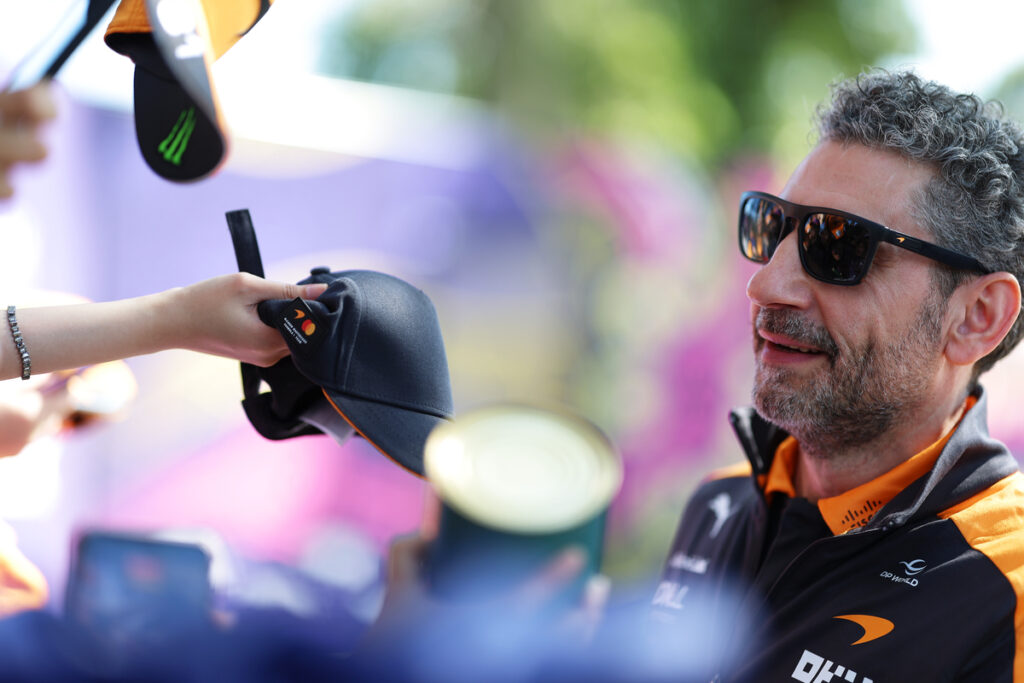
Moreover, Andrea Stella emphasised how the huge differences in closing speeds between cars on different energy levels can leave the door open for big collisions. Touching on Lando Norris’s grievances on the matter, the McLaren chief clarified that he found the issue to be particularly aggravating on the opening lap of Sunday’s race.
Acknowledging the unpredictability, Stella also agreed with Norris’s assessment that the 2026 F1 grid should take measures to address such crucial safety concerns and nip potentially catastrophic incidents in the bud.
“The second perspective was to do with the close following and the fact that there may be a large speed differential on track between cars. Today, in my view, this was mainly a point of concern in the first lap.
“Lando [Norris], in particular, made the point that it’s quite tricky when you have cars very close to you that may have still deployment ongoing or not to create this speed differential. This becomes quite unpredictable.
“Even from this point of view, I think Lando said that in his previous comments, we shouldn’t be happy because nothing happened. We should be always on the forefoot when it has to do with safety. That was the second point.”
Stella on the challenges of overtaking so far in 2026
While he conceded that the back-and-forth overtakes between George Russell and Charles Leclerc in the early laps of the 2026 Australian GP were thrilling to watch, Andrea Stella was quick to point out how they were primarily down to the use of battery rather than the wheel-to-wheel abilities of the drivers.
Underscoring the somewhat artificial nature of the passes, the 55-year-old also explained how overtaking becomes more challenging once the teams and drivers settle into a steady rhythm and start to follow similar patterns of energy harvesting and deployment.
Additionally, Stella maintained that the sport should take the aforementioned limitation under consideration before introducing potential tweaks to the new F1 regulations and claimed that the first round of the 2026 season validated his unease about the three safety concerns he had raised during pre-season tests.
“The third point was overtaking. It was definitely exciting at the start of the race when we had the overtaking, in particular, between a Mercedes and a Ferrari.
“For me, this still looks like a little bit of an artefact. It’s an overtaking which has to do with how we are using the battery. Actually, when the pace settles and everyone is on the same pattern from a deployment schedule point of view, then I think the overtaking becomes difficult.
“So, I think even from an overtaking point of view, this is something that we need to keep reviewing. The three points of attention, I think they still stand. The first race confirmed that this is the case.”
Sainz believes racing on Lap 1 is a big risk with SLM on
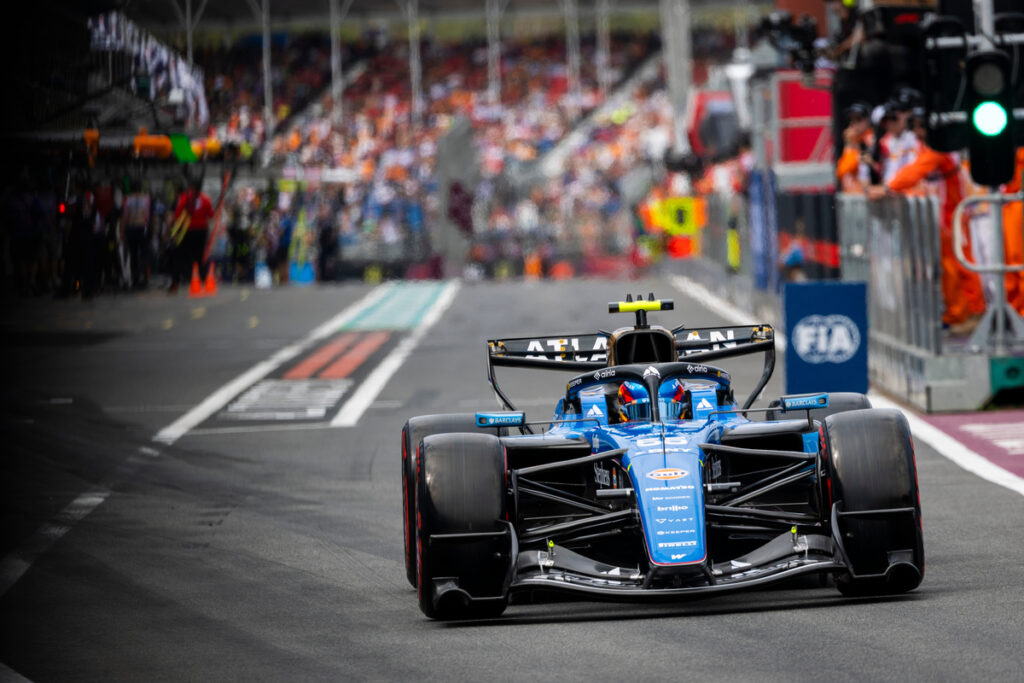
Under the brand-new technical regulations, ‘straight-line mode’ (SLM) is an active aerodynamics feature that has replaced the erstwhile drag reduction system (DRS). It allows both the front and rear wings to flatten to reduce drag and increase top speed on the straights.
At Albert Park, there were five designated straight mode zones last weekend, beginning with a run along the start/finish straight, then between Turns 2 and 3, between Turns 5 and 6, between Turns 8 and 9, and between Turns 10 and 11.
Following his P15 finish at the Australian GP, Carlos Sainz drew attention to one of his biggest safety concerns of the 2026 F1 season so far in the print media pen. He commented on how racing with the straight-line mode activated on Lap 1 was extremely risky with all the cars scrambling to gain positions.
Furthermore, the four-time race winner explained that it was quite difficult to control his Williams in the slipstream.
“I think the biggest worry for me about the racing is Lap 1. It felt like it was really sketchy with SLM on, everyone on the back straight.
“It felt really dangerous and very difficult to control the car in slipstream and SLM.”
Sainz flags overtaking with SLM active as one his safety concerns for F1 2026
Although he noted that the SLM functioned like the DRS from last year on the straights, Carlos Sainz insisted after Sunday’s race that it was dangerous for two cars in close proximity to navigate through the high-speed corners with the straight-line mode on.
In the end, the Spaniard doubled down on his opinion that racing on the first lap of an F1 race and overtaking in general constitute serious safety concerns at present when the SLM is switched on in the 2026 cars.
“And then when racing someone else… the same. If it’s straight line, it’s not bad, because it’s like DRS last year. But when there’s a bit of cornering and both cars are using SLM, it becomes like there’s cornering in Turns 7-8, on that back straight, it feels sketchy also.
“For sure Lap 1 and overtaking doesn’t seem to be very safe at the minute with the SLM active.”
Sainz’s take on active aero in F1 and the need for SLM in 2026 despite safety concerns
The FIA reversed their last-minute decision to remove the straight mode between Turns 8 and 9 at the 2026 Australian GP amid pushback from the teams.
In terms of whether the SLM should remain deactivated in certain sections of a circuit like Albert Park, Carlos Sainz asserted that the influence of active aerodynamics on a car’s on-track behaviour has given rise to a wider safety issue for the new era of F1.
The 31-year-old proclaimed that the use of potentially hazardous active aerodynamics in additional zones of a circuit currently serves as a tool to mask the limitations of the new power-starved engines and the extensive energy management problems they generate.
Despite the safety concerns, Sainz nonetheless added that they still need the SLM to satiate the energy requirements of the all-new F1 engines and go racing in 2026.
“We shouldn’t need to have active aero for racing, in my opinion. I think the active aero and the SLM is a plaster on top of the issue of the engine.
“And then when you come to circuits like these, that you’re energy starved, you end up having to use SLM in places where we shouldn’t, to protect the thing, the deployment. So, in the end, you end up having a dangerous situation like we have in Lap 1 and racing in general.
“So, the issue is not the SLM. The SLM, we need it, if not we would be… You guys saw we were doing lift and coast like crazy yesterday in quali, all teams.
“If you now remove SLM, we cannot even race with the deployment we have. So, we kind of need SLM. But it’s a plaster to a solution to an engine formula that for me just doesn’t seem to work very well right now.”
Gasly on sketchy SLM and how track position makes a difference
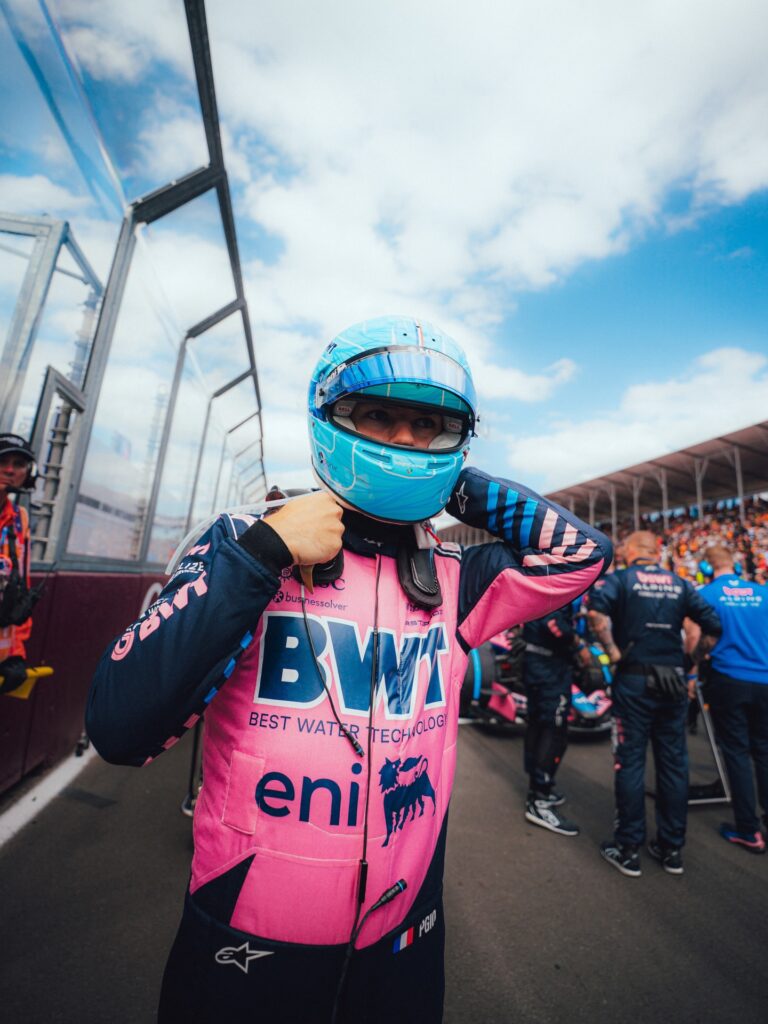
Pierre Gasly was another driver who made it very clear after his top ten finish at the Australian GP that there were several straight mode zones where the use of the SLM was pretty risky. Besides, he commended his fellow F1 drivers for making Sunday’s action look satisfactory in the print media pen.
Pointing at how the straight-line mode pushed the cars to their very limits in Melbourne, the Frenchman also questioned the degree of its utilisation and remarked that the impact of the SLM on a car varies according to its position on the track.
“You have the 20 best drivers in the world. That’s why we made it look alright.
“From Turn 2 to Turn 3, with the SM [straight mode], and from Turn 6 to Turn 9, was pretty sketchy. Do we need to go to that level of limit? That’s a question for next week.
“It’s a big difference when you’re in the pack or when you’re first or second.”