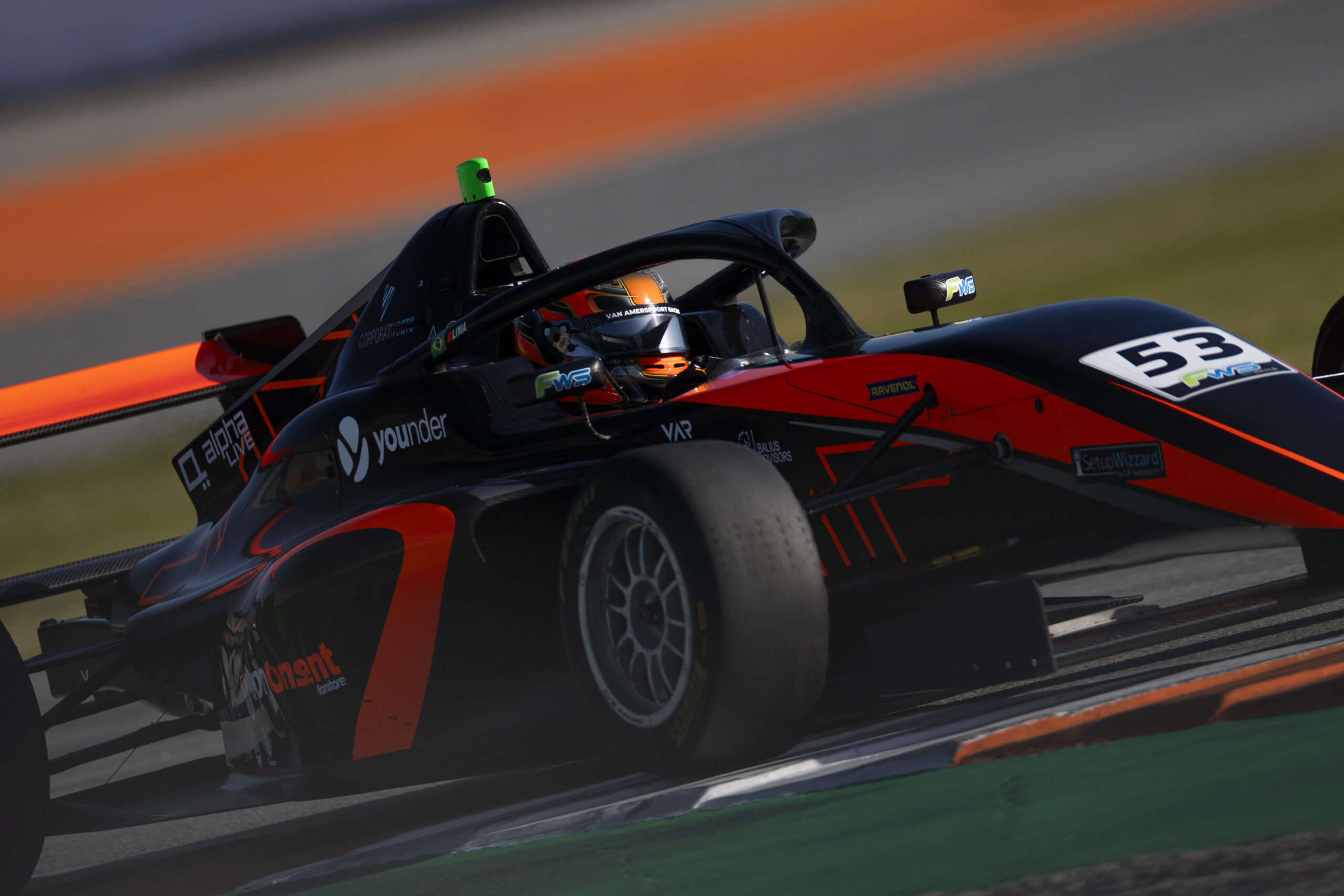
At just 15 years old, Pedro Lima is already navigating one of the most demanding pathways in junior single-seater racing. The Brazilian driver has built his reputation through rapid progression in karting and an impressive debut season in the Brazilian F4 Championship. Now, Lima has taken the next step in his developmental journey by moving to Europe with Van Amersfoort Racing for a busy 2026 F4 campaign.
Lima will compete across three championships this season — the Formula Winter Series, the Italian F4 Championship and the E4 Championship. Together, they form one of the most competitive proving grounds for young drivers aspiring to climb the international motorsport ladder.
However, Lima’s journey into professional racing began an ocean away from Europe. In an exclusive conversation with Pit Debrief, the young Brazilian driver reflected on how an early encounter with karting gradually evolved into a serious pursuit—even though motorsport was not his first sporting ambition.
Discovering racing: from football dreams to karting passion
Like many young athletes, Lima initially focused his attention elsewhere. Although he first tried rental karting at the age of eight, he viewed it simply as an enjoyable activity rather than the beginning of a career. At the time, football occupied most of his attention.
“So, when I was eight, I did rental karts, and I found it really fun, but I didn’t think anything of it. And yeah, because I liked football at the time, and I was focused on my career in soccer.”
Even so, those early laps left a lasting impression. Several years later, the memory of that experience encouraged him to return to karting and explore whether he might pursue it more seriously.
“So, yeah, I didn’t think anything about it, but the years went by. I was like 11, and I said, ‘oh, maybe I want to give it a chance. You know, like, I’m good. I remember, like, the last time I went, I was good. So, maybe why not just as a hobby?’”
At first, Lima approached karting simply as something enjoyable alongside his other interests. However, that casual decision to return soon changed everything. Once he began practising regularly, his natural speed quickly became apparent.
“And yeah. So, I started doing practices, and I was quite fast, quite good for the time, since it was the beginning. And yeah, I got in love with it and never left it.”
From that point onward, karting moved from the sidelines of his life to the centre of it. As his commitment grew, so too did his understanding of the sport — and the influences that shaped his ambitions.
Inspiration within the family
While Brazil has produced some of motorsport’s most celebrated drivers, Lima’s earliest inspiration did not come primarily from legendary figures within the sport. Instead, he found motivation much closer to home.
“Yeah. So, I think one of my biggest idols is my brother. He’s a drift driver. You know, he does competition in drift. So, yeah, I think he was one of the most inspiring persons in automobilism for me. He was the one that helped me. And yeah, he basically introduced me as well to this part of the racing. And yeah, I take him as a big inspiration.”
Watching his brother compete gave Lima a direct insight into the world of motorsport. It allowed him to see the dedication required to race competitively and helped transform his interest into a genuine ambition.
With that encouragement, karting evolved from a casual hobby into a serious pursuit. As his results improved and his experience grew, the next major challenge soon emerged — the transition from karting to single-seater racing.
Learning the transition from karting to single-seaters
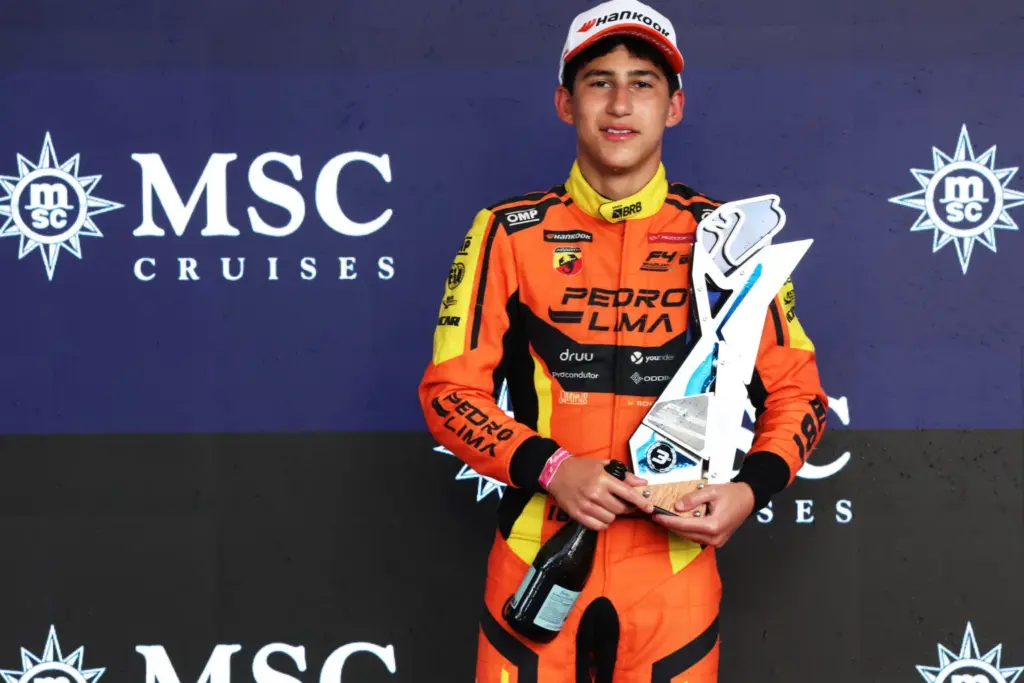
Moving from karts to F4 formula cars represents one of the most significant steps in a young driver’s developmental journey, and Lima was no exception. While karting teaches racecraft and instincts, single-seaters introduce a far greater level of technical complexity. Drivers must quickly learn about aerodynamics, car setup, tyre management and close collaboration with engineers.
For Lima, adapting to these new demands required time and patience.
“Okay. Yeah. So my transition to karting, to single-seaters was kind of hard at the beginning. It was hard to understand how things worked, but I could manage to, yeah, to understand more as the time went by.”
Gradually, that early uncertainty gave way to confidence. As he gained experience with the car and worked more closely with his team, he began to feel increasingly comfortable within the single-seater environment.
“And yeah, now I think I am at a good place.”
Despite the technical differences between karting and formula racing, many of the instincts he developed during his karting career continue to shape the way he approaches racing today. In particular, the close, wheel-to-wheel nature of karting helped him develop a decisive and assertive style on track.
“And yeah, I think one of the things that I learned most from karting was how to be aggressive at the times that need to be in overtaking and defending position mostly.”
That aggressive instinct often proves invaluable in junior single-seater championships, where races frequently hinge on decisive overtakes and strong defensive driving.
“I think I am pretty aggressive at that part. So, I think this is the thing that I most learned from karting.”
A breakthrough moment in Brazilian Formula 4
Lima’s transition into formula racing quickly produced a defining milestone. During his rookie season in the Brazilian F4 Championship, he achieved a remarkable feat by becoming the youngest race winner in the series’ history.
For Lima, the moment initially felt like a personal achievement rather than a historical record. Discovering the significance of the result added an extra layer of satisfaction.
“The moment felt really good. At the time, I didn’t know I was the youngest, but when I found out also, it was a good accomplishment, I think. And yeah, I was pretty happy, but I always thought that it was really hard, a journey.”
While the victory represented an important milestone, it also reinforced his belief that the next step in his development would require a greater challenge. Europe, widely regarded as the centre of junior single-seater racing, quickly became the natural destination.
“And I was in Brazilian F4 and it was going to be much harder here in Europe. So, when I first won, my first thought was, I’m not going to stay one more year here. I need to go to Europe. That was my first thought.”
Adjusting to the European racing environment
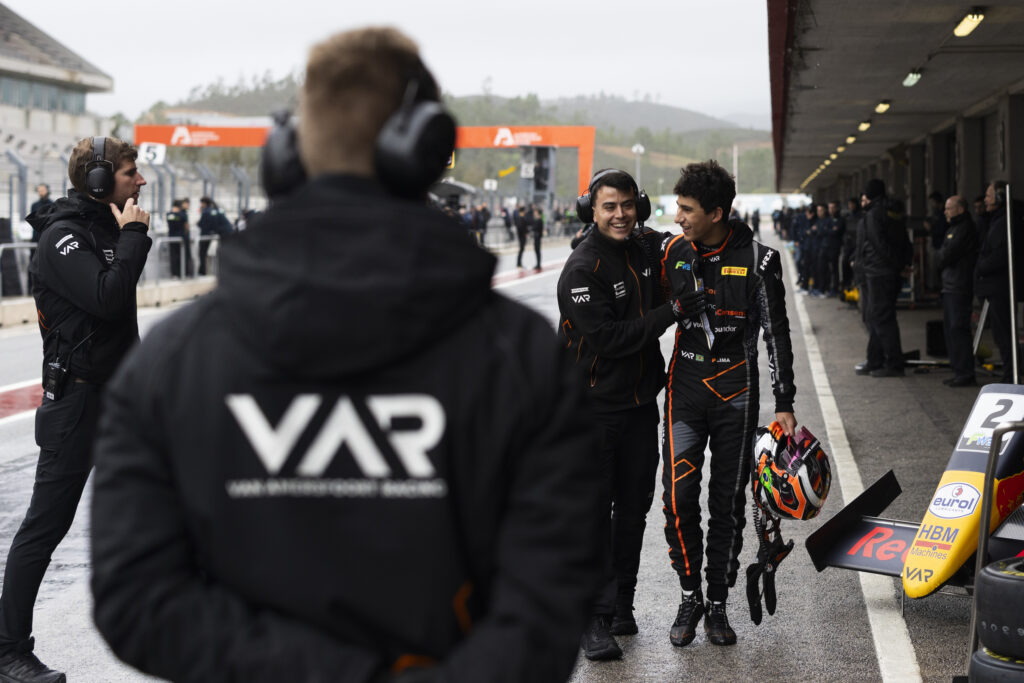
The move to Europe marked a significant turning point in Lima’s young career. Leaving his home environment behind meant adapting to a completely new racing landscape, one defined by unfamiliar circuits, different working cultures within teams, and some of the most competitive junior drivers in the world. The shift also required adjusting to a faster pace of development, where every session becomes an opportunity to learn.
Despite these challenges, Lima approached the transition with a clear understanding of what awaited him. Competing in Europe has long been considered one of the most demanding stages in a driver’s development, and he knew that the adjustment would take time.
“Yeah, the beginning was pretty hard. I had an expectation and, yeah, I think I matched the expectation. I knew always that it was going to be really hard.”
Rather than focusing solely on immediate results, Lima prioritises steady progress and consistency across each race weekend. Every session provides an opportunity to refine his understanding of the circuits and maximise the performance of his car.
Equally important is his collaboration with Van Amersfoort Racing, a team with a long history of developing young talent.
“And yeah, I am looking really forward to my results and being consistent, always. And yeah, expecting to get the most out of the team and out of the car.”
As he continues adapting to this new environment, Lima remains focused on the broader ambitions that drive his career.
Defining success in motorsport
For many young drivers climbing the junior ladder, reaching Formula One represents the ultimate goal. Lima shares that dream, yet he also approaches the concept of success with a practical perspective.
“For me, success in motorsport means that I managed to make it out of living. I managed to live out of motorsport, and I think that is already success for me. Of course, I want to get to Formula One and if I do, I’m going to live out of it, but yeah, I think that’s what means success to me.”
Beyond results or championship positions, he also hopes people will recognise the qualities he brings as a driver — particularly his ability to adapt.
“And I hope to be remembered in the beginning of my career as an easy-to-adapt person. I went through tough times, difficult times, practises, but I managed to adapt and not like so much pace and be in good positions since the beginning of the races.”
That ability to adjust, learn and improve quickly is something he hopes will define his reputation as a driver.
“So, yeah, I think this is what I wanted to be remembered as: a fast learner.”
A message to his future self
Although his focus remains firmly on the present, Lima occasionally reflects on where his journey might lead. When asked what message he would send to his future self decades from now, his response revealed both curiosity and perspective.
“I would like to ask if we did it, if we could, if we managed to do our dream.”
At the same time, he hopes that future version of himself will remember to appreciate the journey along the way.
“And yeah, I would say that for him to enjoy the moment that he’s in because Pedro from now just wants to, he wants to enjoy the moment that he’s in. So, yeah, I think that’s what I would say to him.”
As Lima continues his first full European campaign, the coming seasons will reveal how far that journey can take him. With a strong karting foundation, a record-breaking start in Brazilian Formula 4, and a growing presence in Europe’s junior categories, the young Brazilian has already demonstrated the determination required to pursue the highest levels of motorsport.