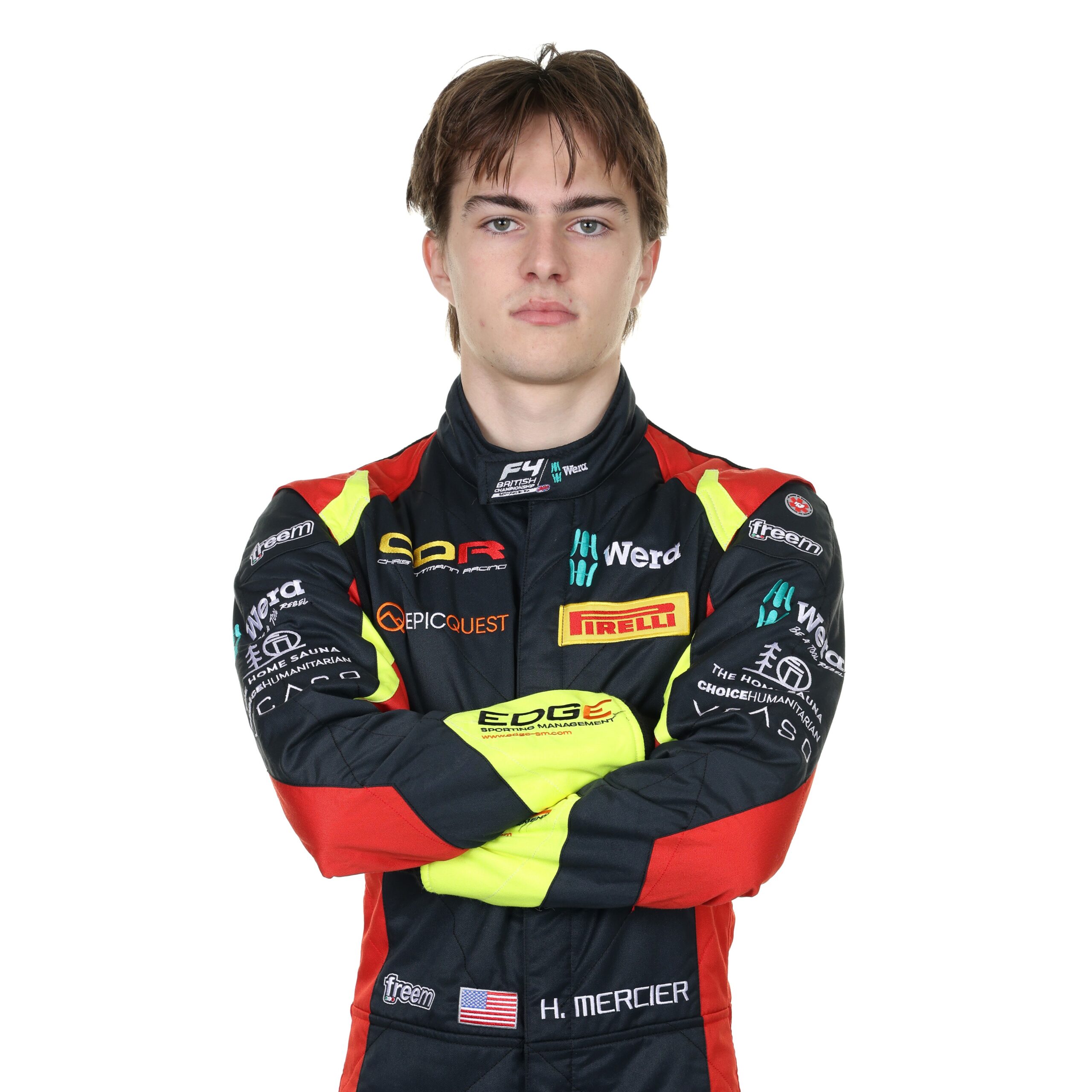
Henry Mercier’s motorsport journey continues to stand out for its pace, clarity, and intent. While many drivers spend years gradually progressing through karting, Mercier compressed that development into a short but highly formative period. His motorsport journey reflects not only natural ability, but also a strong mindset and an environment that enabled Mercier to grow rapidly within the sport.
As Mercier retraced the steps of his motorsport journey in an exclusive interview with Pit Debrief, it became clear that each phase—however brief—played a decisive role in shaping his trajectory. From early curiosity to competitive single-seater racing, Mercier has approached motorsport with a clear sense of direction and an emphasis on continuous improvement.
From a distant dream in the US to decisive action in Spain: how Mercier started his journey in motorsport
At the foundation of Mercier’s motorsport journey lies a familiar starting point: a childhood interest in racing. However, unlike many of his peers, that interest did not immediately translate into action. Instead, it remained an aspiration, shaped by circumstance and accessibility. Reflecting on that early period of his motorsport journey, Mercier explained how motorsport felt more like an idea than a realistic pursuit during his time in the United States.
“It was sort of something I always, since a little kid, wanted to do and had an interest in, but it was more of a dream. It was never something that I took action on or did in the US. I was always playing other sports, whatever that may be. As well, it wasn’t as accessible in the US at the time. It wasn’t a sport that kids went and did.”
Without early immersion in karting, he lacked the typical foundation many young drivers rely on. Yet, that changed completely when his environment shifted.
After moving to Spain, Mercier encountered a very different motorsport culture—one where karting was both visible and accessible. That exposure triggered a decisive moment in his motorsport journey, transforming interest into immediate commitment.
“But after moving to Spain, I realised it’s something that I can actually do and something that is available to me. So it was quite a quick decision to just want to do it. And from there, quite quickly, I think after starting, first getting my kart, within the next year I was already competing at a national level in Spain. And then two years later, I was already in F4, so it was going quite quickly. But yeah, it was good.”
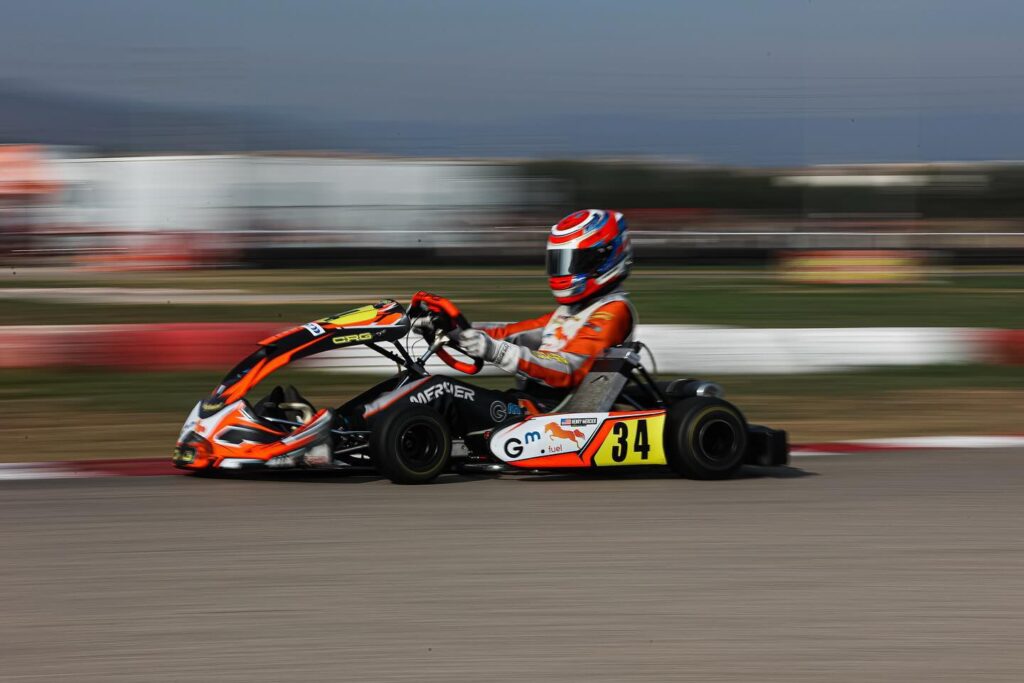
Early commitment and the beginning of a racing identity
As Mercier’s motorsport journey began to take shape, his mindset evolved just as quickly as his on-track performance. What started as a new experience soon became a defining ambition, shaping how he approached both training and competition.
Looking back, Mercier identified a clear and early shift in his thinking—one that turned a trial into a long-term commitment within his motorsport journey.
“I think from the beginning, like from the first time I started, I realised that it was what I wanted to do. I think it was quite quick where I shifted from ‘I want to try racing’ to ‘I want this to be my life.’”
This moment of clarity proved crucial. In motorsport, where progress often depends on dedication and resilience, establishing that level of commitment early in his motorsport journey gave Mercier a strong foundation.
Beyond ambition, Mercier also found fulfilment in the process itself. His motorsport journey became defined not just by racing, but by the pursuit of improvement—a mindset that continues to drive him forward.
“And what I enjoyed most at the beginning is just the constant working and improving—like, there’s really no end to it. Even after, I mean, it’s been short, but still five years of racing, you’re still learning new things. And I hope that in 10–20 years I’ll still be learning new things.”
That perspective naturally connects to the discipline required to succeed in motorsport, as Mercier himself identified..
“So I think that was what I really enjoyed, was the work you had to put into it and the commitment you had to put into it.”
Mercier on the balance between support and self-belief in his early motorsport journey
While individual determination plays a vital role in any motorsport journey, Mercier highlighted the importance of the people around him. His development did not occur in isolation; it was shaped by experienced individuals who guided him through each step.
As he reflected on this aspect of his motorsport journey, Mercier pointed to the strength of his support network as a decisive factor in his rapid progress.
“I think the most important part is I had really good people around me. I had people with a lot of experience, people who knew what they’re doing, who have been doing it for their whole lives. So I think that is, in my opinion, what helped me the most.”
This environment provided both technical guidance and structure, allowing Mercier to maximise his potential despite his relatively late start in motorsport. However, at the same time, he maintains maintains a balanced view of his own abilities within that framework.
“Of course, I as well believe that I was, from the start, good enough. But I think the most important part was the quality of people I had around me. And I’m very grateful for that as well.”
Lack of experience amid fierce competition proves the early challenge
However, even with strong support, Mercier’s motorsport journey included clear challenges—particularly when competing against drivers with far more experience. He openly acknowledged the gap created by starting later, describing how it influenced his early development in motorsport.
“I think the lack of experience—you know, you can be as quick as someone who’s been doing it since they were a kid, but it’s those moments that they’ve had repeatedly and had gone through for five, six years since they were five that I lacked. It really made a difference in their favour. So I think that was what I struggled with the most.”
This challenge added urgency to Mercier’s progression, pushing him to learn quickly and adapt in competitive environments.
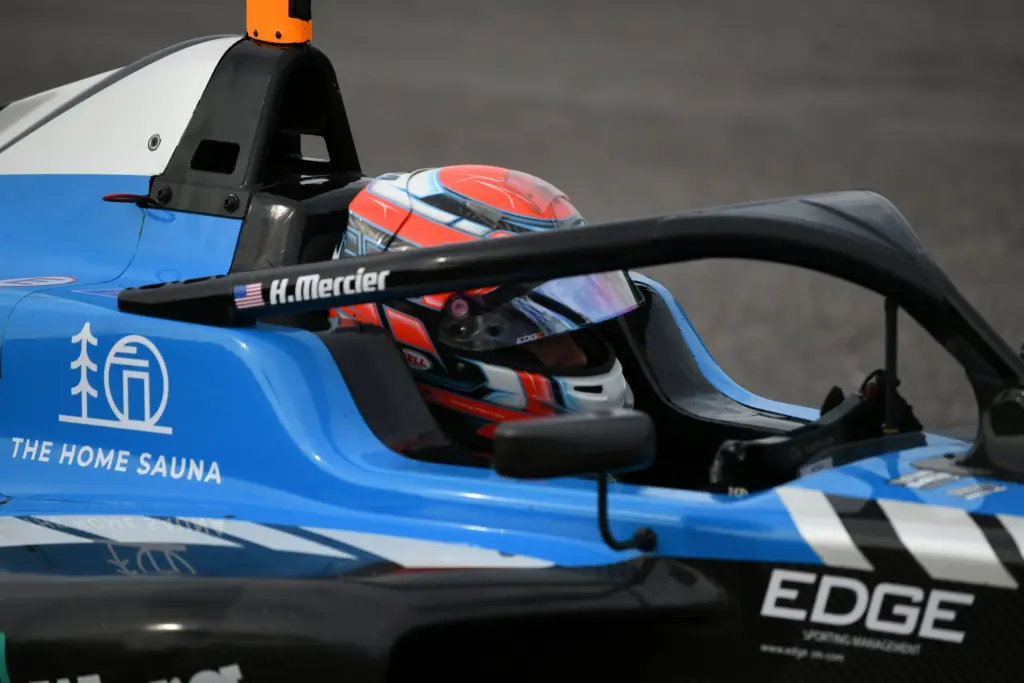
Mercier on the defining transition from karting to cars in his motorsport journey
Every motorsport journey includes pivotal transitions, and for Mercier, the move from karting to single-seaters marked the most significant step so far. This phase demanded not only technical adaptation but also a shift in mindset and responsibility. Describing this moment in his motorsport journey, Mercier emphasised just how profound the change can be for any driver.
“Well, I think, to be honest, it’s the biggest jump that you do in your motorsport career. No matter what you’re doing in cars, stepping out of karting and being in a full car on circuits is something you can’t really prepare any driver for.”
This transition fundamentally reshaped Mercier’s approach to racing, introducing complexities that do not exist in karting. The change extended beyond driving technique to include working within a structured team environment.
“Just the environment you’re in—you’ve got one mechanic in karting, whereas in single-seaters you’ve got a team of people all working on your car that are relying on you. And some of the—I mean, you’ve got aero, you have gears, you need more finesse, more technique—it’s just all things that you didn’t have in karting, because karting is just very raw.”
The first funnel and the adaptability required to survive it
Such differences reinforce the idea that progression in motorsport is not linear. Each step introduces new variables, requiring drivers like Mercier to adapt rapidly. At the same time, owever, Mercier recognised how this stage of the journey serves a broader purpose within motorsport.
“I think it’s also very good for bringing that funnel down of drivers, whereas you have thousands of drivers in karting, and it is good at making sure that the drivers who have that talent and have that ability can progress.”
Ultimately, as Mercier identified, adaptability becomes the defining factor in this phase of a motorsport journey.
“It was like how it really helps show the difference between an average driver and a good driver—that being able to change, especially every driver has to change so quickly. I mean, you don’t have as much seat time in single-seaters, and you’re just sort of thrown into the racing.”
Mercier reflects on his early motorsport journey
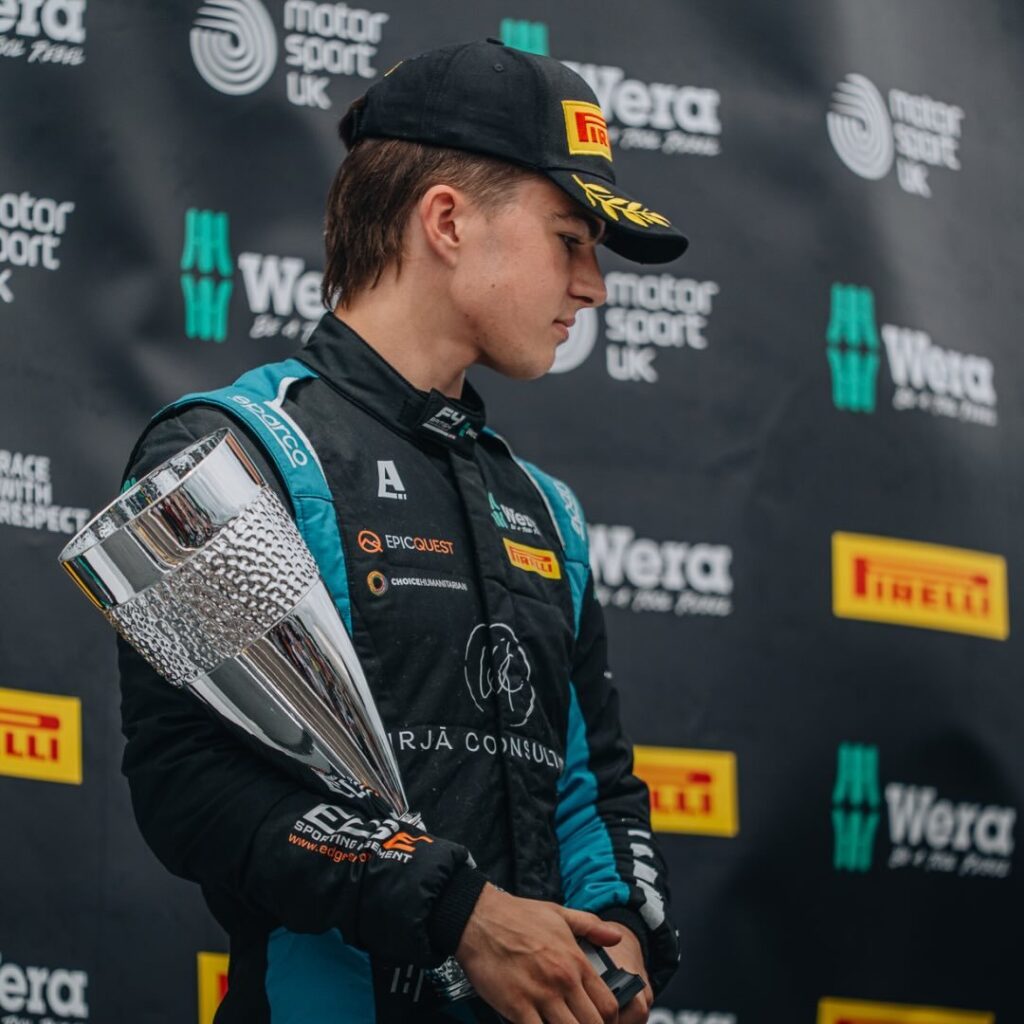
As Mercier reflected on his rookie season in British F4, he framed it as a period of transformation within his motorsport journey. While results provided validation, the deeper significance lies in how much he evolved as a driver. He described this progression as one of the most important aspects of his motorsport journey so far.
“I think what I’m most proud of was the change I took from the first race to the last race. I mean, I think I was a completely different driver from the first race to the last race. So I think that’s what I’m most proud of, is that improvement that I made on a personal level and on a performance level.”
This evolution reflects a broader theme in Mercier’s motorsport journey: the importance of development over time, rather than isolated results. Nevertheless, performance outcomes still played a meaningful role in reinforcing his progress.
“And of course, the results. I’m also very proud of being on the podium in my first season, fighting for top three in the rookies overall. I think that’s something that I’m very proud to do in my first season.”
Equally significant are the challenges he encountered, which added depth to his motorsport journey and provided valuable lessons.
“And of course, it did come with many challenges. I think I’m very grateful that they happened in the first season rather than now going into my second season. I’ve had those challenges and those difficult weekends behind me, so now I know how to make that not happen. So I’m very, very grateful that those challenges did happen.”
These experiences now form a crucial part of Mercier’s preparation for the next phase of his motorsport journey.
The importance of mindset and self-belief: Mercier’s advice to his younger self
As Mercier looks ahead, his reflections increasingly centre on the psychological side of motorsport. Confidence, perspective, and self-belief emerge as key themes in how he understands his journey so far. When considering what advice he would give his younger self at the start of his motorsport journey, Mercier focused on mindset rather than technique.
“I’d say don’t build up stories about other drivers in your head, because ultimately it just knocks your own confidence. You have to always think of yourself as—whether it be think of yourself as the best or just think of yourself—it all is very helpful. And I think it would have probably made my young career a bit more successful. So I think that would be it.”
This insight encapsulates a central lesson from Mercier’s motorsport journey. In a sport where margins are small and pressure is constant, mental strength can be just as important as raw pace.
As his motorsport journey continues, that balance between performance and mindset will remain critical. Mercier’s story so far shows that rapid progression is possible—but sustaining it depends on learning, adapting, and believing at every step.