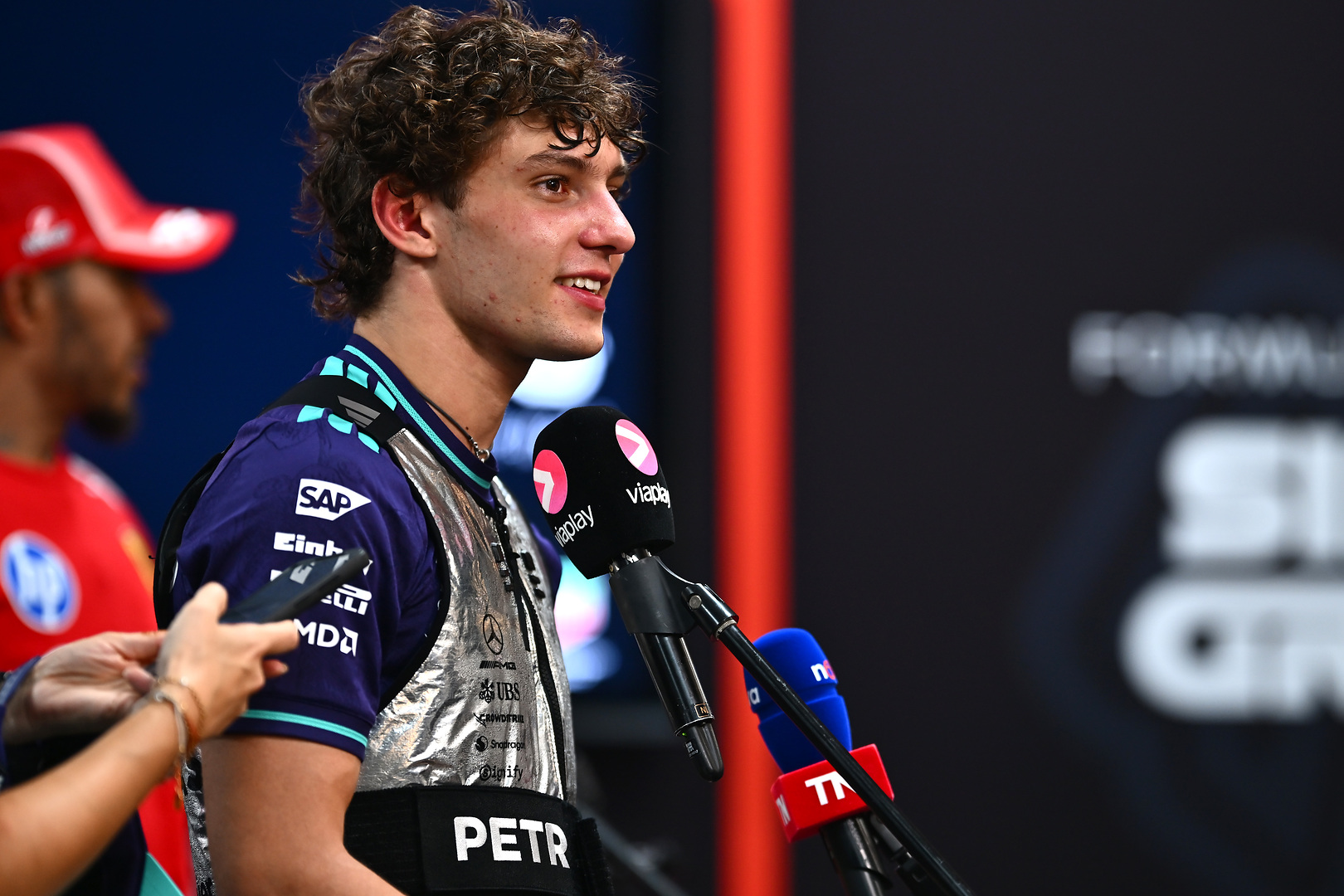
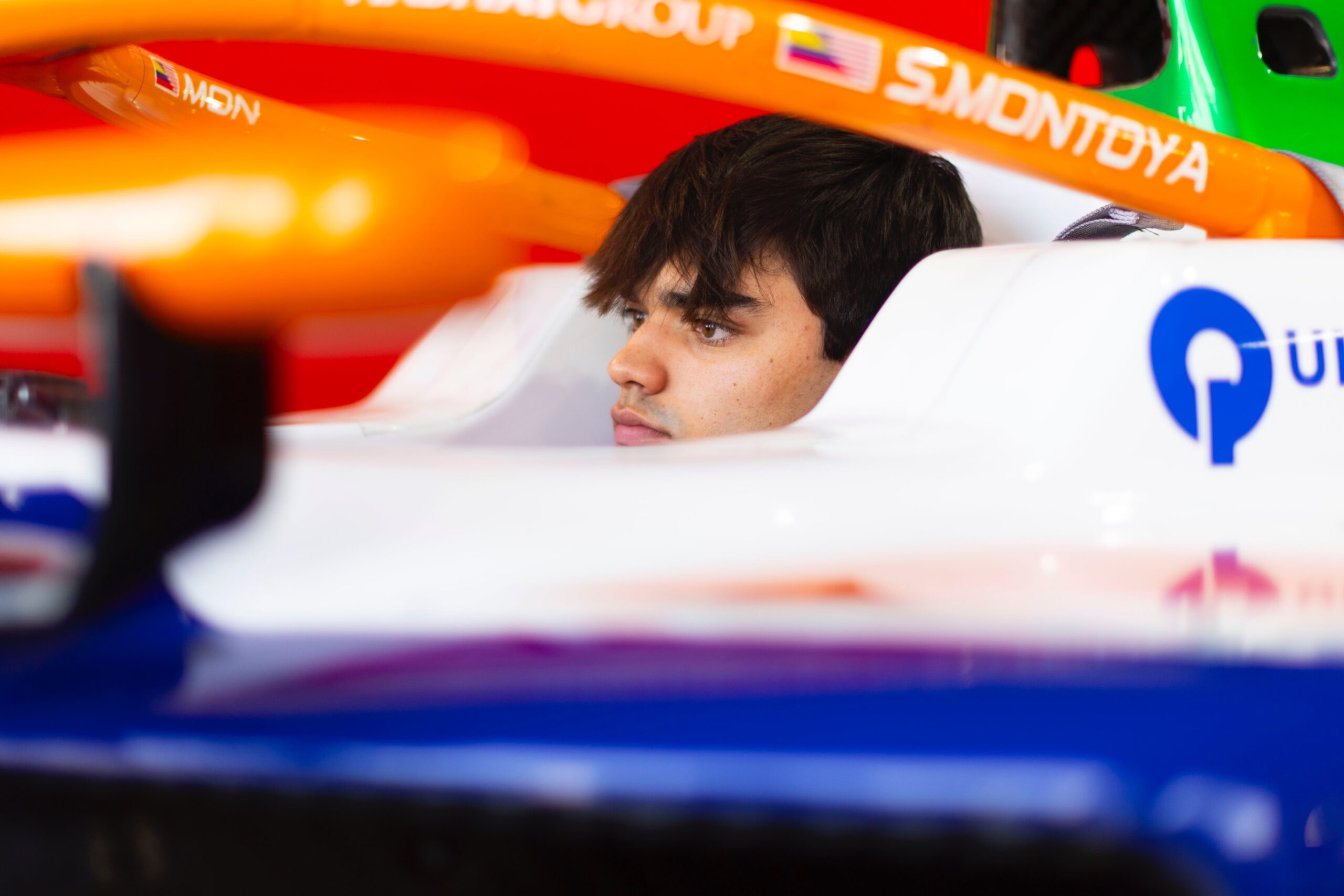
Sebastián Montoya returns to the 2026 FIA F2 Championship with PREMA Racing and a clear objective in mind: fighting at the front and building towards a title challenge. The Colombian driver continues to refine his approach behind the wheel, with a strong emphasis on car balance, adaptability and race execution.
Chasing the perfect balance in driving style
For Montoya, achieving the ideal balance in the car is central to unlocking performance. While many drivers favour aggressive setups, he highlights the importance of control and efficiency over pure oversteer.
“In a perfect world, I want a car that is as fast as possible. I brake, I don’t have to brake that much, I get off the brake, I turn, the thing turns, it grabs and I smash the power and I’m gone.”
He explains how his approach varies depending on corner type, adapting inputs to maximise speed through each phase.
“For a high-speed corner, everything is flat. For a medium speed corner, a little bit of overlap, a little bit of brake and then I just smash the brake for the slow speed corners, turn, smash the power and I’m gone.”
Despite the common belief that oversteer is key to performance, Montoya prefers a more measured approach for the 2026 F2 season.
“Surprisingly, I am not someone who likes a lot of oversteer. I think there’s a fine line, like everyone says the car has to be oversteery.”
“If you’re drifting sideways it’s not great because eventually you have to go forward. I think there’s a fine line, there’s a balance. Obviously, you can’t just be waiting for the front to turn all day.”
“But at the same time, if you can’t get off the brake, if you can’t carry the speed because you’re going to spin, the guy that gets off the brake can go quicker.”
Adapting between teams and philosophies
Montoya’s journey through different teams has required constant adaptation, particularly when transitioning between varying car philosophies.
“I think each team has its own philosophy. There’s good things and bad things with every car. But in the end, you see it in F2, different philosophies work, especially because the track changes so much, as do the tyres and the conditions.”
“Sometimes one’s better, sometimes another one’s better, but it doesn’t mean it’s wrong. You just need to adapt to it as a driver and do the best you can.”
Reflecting on his time in Formula 3, Montoya admits that not every package suited his natural style.
“For example, with Hitech in F3, it was a driving style that was not really natural to me, and that’s why I think it was so difficult.”
“So I had to force a lot to change my driving style. Then when I went to Campos, it was more of my natural way, but not fully.”
“Then obviously when you go to PREMA in F2 from Campos in F3, it was a big difference. Especially from what I had worked on all year with Campos.”
The move to PREMA in Formula 2 marked another significant shift. He also pointed to technical changes, including tyre construction, as key factors in his adaptation process.
“There were a lot of driving adjustments that I had to do last year.”
“With the new tyre, with the smaller sidewalls, like all these things make a big difference. I think I have had to make a lot of changes, but in the end, they’ve all worked, so I’m not complaining.”
Understanding the demands of an F2 weekend
Montoya has found the structure of Formula 2 weekends better suited to his approach, offering more opportunities to build performance across sessions.
“I think in F3, everything is a lot more like one lap, you have to go now, it’s so focused on quality, which is a little bit the same with F2.”
“It’s just that you have a little bit more time to process everything in F2. There is also a lot more information that you need to process, but I’ve enjoyed a lot more the F2 race weekends.”
Preparation plays a crucial role, with simulator work and data analysis forming the foundation of his weekends.
“Before the weekend, you do a lot of work with the team to help you prepare. I think every driver does it differently.”
“The biggest tool that you have is the simulator and data from the year before, and you just have to go off that in the end.”
He also highlighted the importance of building up performance across runs in qualifying.
“In F2 there are sometimes where you can do, instead of doing one lap, you do two or three laps, so you just kind of build up to that second run.”
“So when you get into the car for the second run, you’re able to perform at the highest level.”
Race management and tyre understanding
Managing tyres remains one of the defining challenges in Formula 2, requiring drivers to constantly balance aggression and conservation.
“So just the way of driving has to change a lot, but the philosophy is more or less the same. Like the way you have to manage the tyre energy, it changes quite a lot.”
Montoya credits simulator work and external support for helping him adapt quickly to these demands.
“Red Bull helped me a lot in that as well, and I understood it quite quickly. After a lot of work in the sim, it becomes a little bit easier once you jump into the car.”
Understanding the characteristics of both tyre compounds is key during races.
“In F2, I think you have to push at times a little bit more, especially on the prime, because it’s so hard, so you can really go for it.”
“But then there’s also a balance that you can’t burn it off.”
“Then you have the Option where you need to go as fast as possible, but then at the same time, you have to make it try to last either six laps, or if you’re doing it at the end, and you have to get through people.”
Consistency remains crucial, particularly in close racing conditions.
“But you can’t be setting fastest lap, fastest lap, and then drop three seconds the next lap.”
“So, it’s fun. I’ve really enjoyed it, especially because the racing is so close, it’s usually quite a lot of fun.”
The Colombian driver’s reflections underline the complexity of modern Formula 2 driving. From mastering car balance to adapting across teams and managing tyres, his development continues to trend upward. As his continues on his sophomore F2 campaign in 2026 season with PREMA Racing, Montoya’s growing experience and analytical approach could prove decisive in his pursuit of success.