Racing Bulls team principal Alan Permane has revealed that initial changes to the much-debated 2026 regulations could arrive in multiple stages over the next four rounds of the current F1 season.
As F1 entered a month-long break following the Japanese GP, the FIA and the sport’s key stakeholders have been holding a series of meetings to discuss the potential revision of the new regulations. The agendas pertain to not only adjustments to the energy equation in qualifying but also reducing the risks that massive speed differentials between cars currently pose.
Permane explains why the tweaks to 2026 F1 regulations won’t come in one go
Speaking in a media session with select outlets earlier this week, Alan Permane stated that it’s not feasible to introduce sweeping changes to the contentious 2026 F1 regulations at a single stroke.
The Brit emphasised how challenging it would be to test the approved tweaks in the limited time during the Sprint weekend in Miami. Remarking that the teams could try out some of the straightforward and less hazardous modifications in the upcoming round, he inferred that they would be able to run the more complex ones only after hitting the Circuit de Barcelona-Catalunya in June.
Noting that F1 and the FIA haven’t capped the number of prospective amendments yet, Permane also suggested that the process is open-ended and that they will keep pushing for more revisions until all parties involved are satisfied.
“I think they can happen in a lot more than [two stages]. There’s many suggestions that have been put forward. I think that we have a particularly tough time with Miami being a Sprint because there’s really little time to test anything.
“So, it may well be that we try some of the ones that are, let’s say, a little bit simpler and less risky in Miami, and then we try some more in Montreal, and then of course we go to Monaco where it’s almost impossible to test anything. So, Barcelona might be the first time when we try some of the more, let’s say, challenging ones.
“I wouldn’t say it’s necessarily two [updates]. I would say we should keep open minded and maybe this is a continuous thing, I don’t know, that would be driven by the FIA and by F1. But I don’t think we should limit ourselves. Certainly, we can keep working at it.”
Why making these decisions is difficult
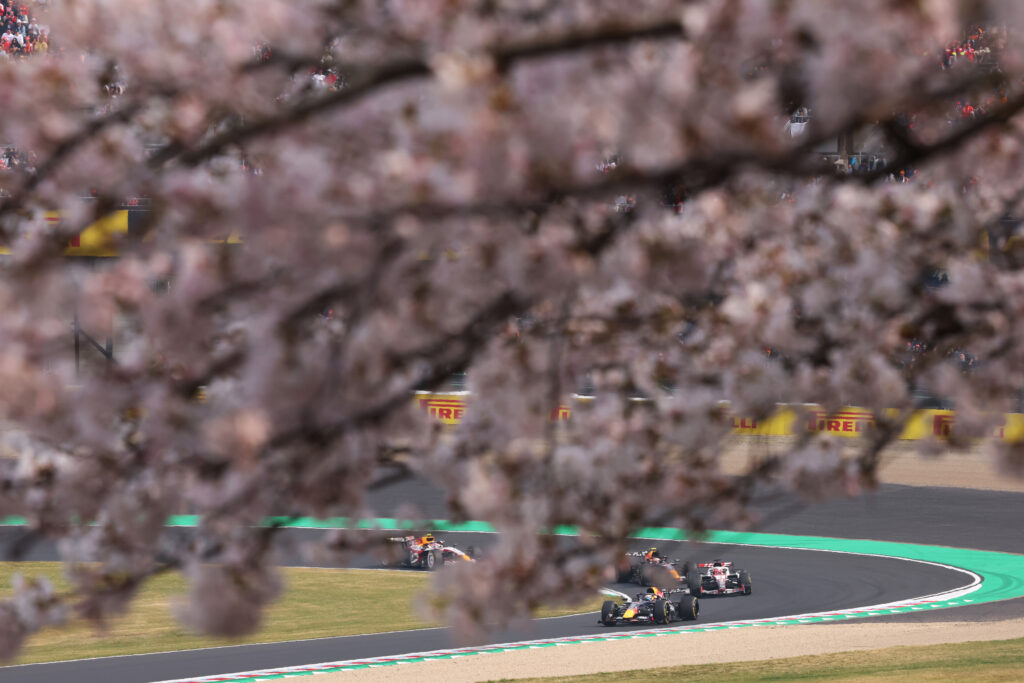
Alan Permane, who has been a part of the F1 paddock for over three decades, also drew attention to how the 2026 regulations have created a visible rift in the sport’s global fanbase. Acknowledging the concerns the drivers have raised thus far, he commented on how the new ruleset has displeased the die-hard fans all while garnering praise from the casual followers.
Admitting that the early races of the season have produced some eye-catching on-track spectacles, especially with the Ferrari drivers battling each other for podiums, Permane moreover explained how watching the replays has made him grasp the limitations of the current energy management requirements.
“It’s not an easy one. We obviously have to listen to the drivers. I think there are two groups, well maybe that’s simplifying a little bit. But I think the die-hard fans are very upset about it, you can see, but also, I think that maybe the casual viewers actually find it very exciting.
“I have to admit I think that some of the race battles have been immense and I got distracted myself on the pit wall watching the Ferraris race each other in Shanghai. I thought it was great. And even some of the stuff in Melbourne… I know it was a little bit that those first laps in Melbourne.
“I think when you replay it and watch them back, [it’s] ‘oh yeah, he’s using his energy there and then he’s getting overtaken here’. But actually, when you watch it live, I found it quite exciting.”
Viewpoints they have to take into account
Emphasising that F1 and the FIA have to take into consideration not only the opinions of the fans but also the drivers when it comes to the brand-new technical regulations in 2026, Alan Perman offered assurances that they are working hard behind the scenes to ensure that the introduced changes are satisfactory.
Referring to last Thursday’s technical meeting and the follow-up talk that will take place today, the 59-year-old stated that they will meet again four days later to consider the proposed recommendations and reach a consensus on the initial tweaks they would implement in Miami.
“But we have to listen to our audience, we have to listen to our drivers as well, and there’s lots of work going on as I’m sure everybody knows. And it’s still going on.
“There’s another meeting tomorrow [Thursday], there was a very productive one last week and there will be a further one next week where we will decide on what package of tweaks we’re taking through to Miami.”
Permane on the aspects of the 2026 regulations F1 and the FIA are discussing in the April meetings
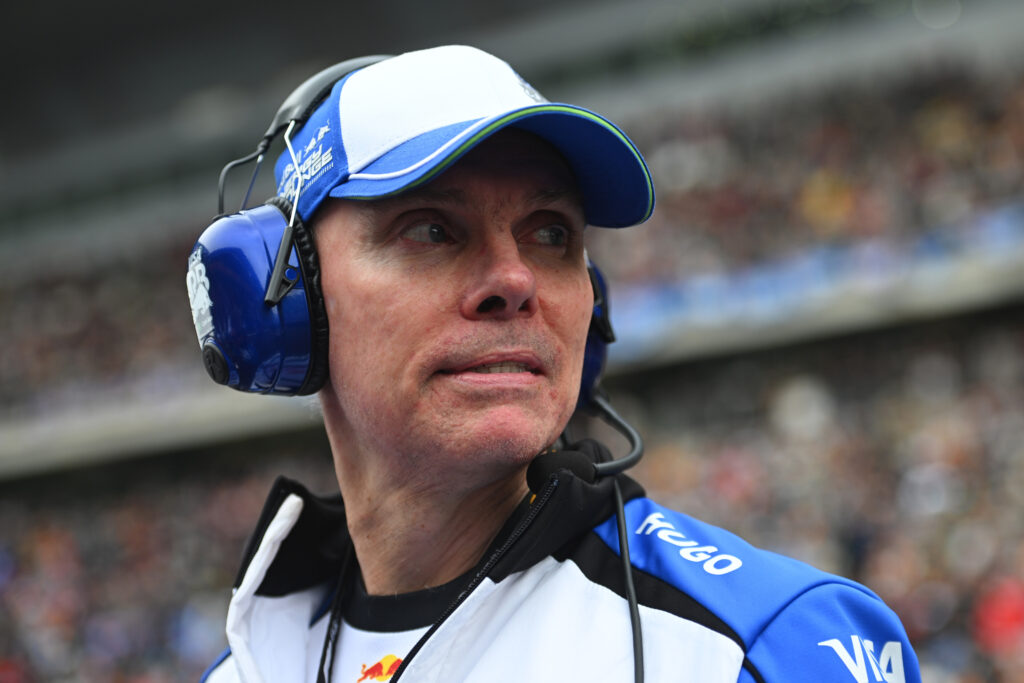
Furthermore, Alan Permane elaborated on the two pivotal issues that are up for discussion in the talks held with the FIA in April about potential changes to the 2026 F1 regulations.
Highlighting how the level of energy management now required on a flying lap results in the machine superseding driver input, the Racing Bulls team principal proclaimed that they are striving to make qualifying more flat-out and driver skill paramount once more.
Additionally, Permane touched on how Ollie Bearman’s massive 50G crash at Suzuka has brought the agenda of safety to the forefront yet again, leading to discussions about reducing the substantial closing speeds between cars following each other closely.
“There’s two main focuses.
“One is to make qualifying a bit more flat-out, a bit more let’s say driver-focused and not power unit-focused.
“And then the other objective is the safety with the [Franco] Colapinto and [Ollie] Bearman incident [at Suzuka], to try and reduce these closing speeds.”
What’s at stake?
Nonetheless, Alan Permane maintained that they have to strike a balance between the element of spectacle and F1’s authenticity when it comes to making tweaks in the area of energy management under the 2026 regulations.
Considering options such as removing the boost button and reducing the potency of the overtake mode to resolve the huge discrepancy in the closing speeds, the Brit expressed caution that such measures would also dramatically reduce the number of overtakes that F1 has witnessed so far in the season.
“But we need to be careful when we do that, that we’re not taking away some of the spectacle, or too much of the spectacle.
“Because one way to reduce closing speeds of course is to remove things like the boost, reduce things like the extra energy that’s available to the drivers when they’re within a second of the car in front, and that will no doubt reduce those closing speeds. But it’ll also likely reduce overtaking as well.
“So, we just need to be careful that we strike the right balance there I think.”