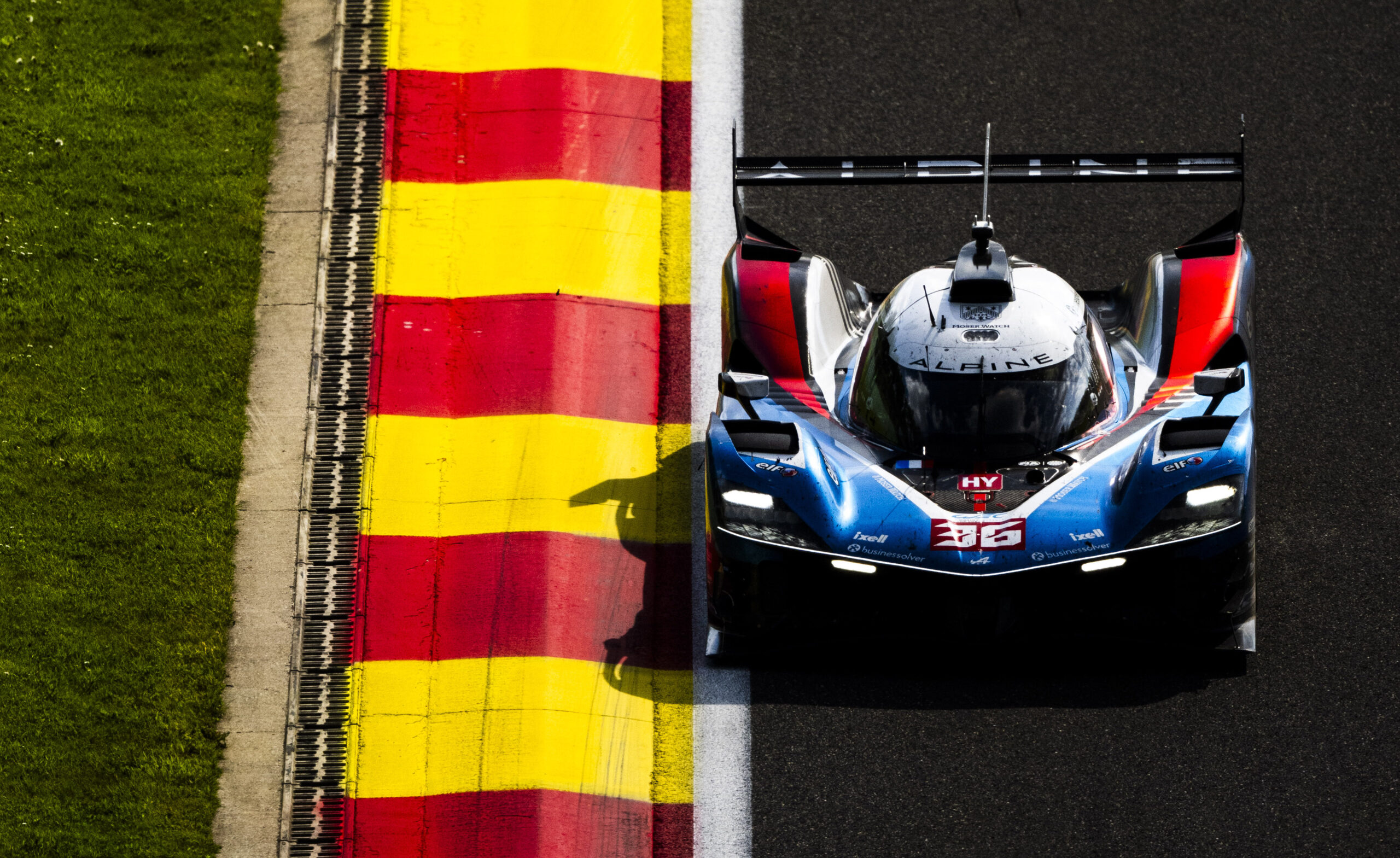
Alpine heads towards the 24 Hours of Le Mans with renewed confidence despite suffering a frustrating outcome at the TotalEnergies 6 Hours of Spa-Francorchamps. The French manufacturer delivered one of its strongest weekends since entering the FIA World Endurance Championship’s Hypercar category, showing competitive pace in every session and emerging as a genuine contender for a podium finish.
After securing an encouraging fourth-place result at the season-opening round at Imola, Alpine arrived in Belgium aiming to build on that momentum. Throughout practice, qualifying and much of the race itself, the A424 consistently ran among the leading contenders. However, a combination of unfortunate race interruptions, traffic-related setbacks and a costly late-race incident prevented the team from converting its potential into the result it deserved.
While the final classification did not reflect Alpine’s true performance level, the weekend nevertheless provided valuable encouragement ahead of the season’s biggest challenge at Le Mans.
Qualifying performance signals Alpine progress despite 2026 Spa disappointment
Alpine immediately demonstrated its intent around the challenging 7.004km Spa-Francorchamps circuit. Both A424 Hypercars featured prominently during the opening practice session, finishing inside the top five and underlining the team’s growing confidence.
The positive trend continued in FP2 when Jules Gounon topped the timing screens in the #36 machine. Alpine then carried that momentum into qualifying, where Charles Milesi delivered another standout performance by setting the fastest time in the opening phase.
The Hyperpole session further confirmed Alpine’s competitiveness. Both cars secured positions on the second row of the grid, marking the manufacturer’s strongest qualifying performance to date in the Hypercar category. The #35 entry missed pole position by only 0.078 seconds, highlighting just how closely matched the leading contenders had become.
As a result, expectations rose significantly within the team heading into race day. With strong starting positions and encouraging long-run pace, Alpine appeared well placed to challenge for a podium finish in front of a record Spa crowd of 101,606 spectators.
Strong start keeps Alpine in contention
When the six-hour race began, Ferdinand Habsburg and Frédéric Makowiecki quickly settled into the leading group and maintained their impressive qualifying positions.
Habsburg soon made one of the race’s key overtaking moves, diving past Loïc Duval’s Peugeot for second place at the Bus-Stop Chicane on lap 14. The Austrian immediately shifted his focus towards race leader Will Stevens in the Cadillac and steadily reduced the gap over the following laps.
Although Habsburg managed to close onto the Cadillac’s rear wing, Stevens successfully defended his position and prevented Alpine from taking the lead. Shortly afterwards, Ferrari driver Miguel Molina managed to move ahead of the #35 car, although Alpine remained firmly among the front-runners.
Meanwhile, Makowiecki continued to keep the sister machine in contention as the French squad demonstrated the pace required to challenge some of endurance racing’s biggest manufacturers.
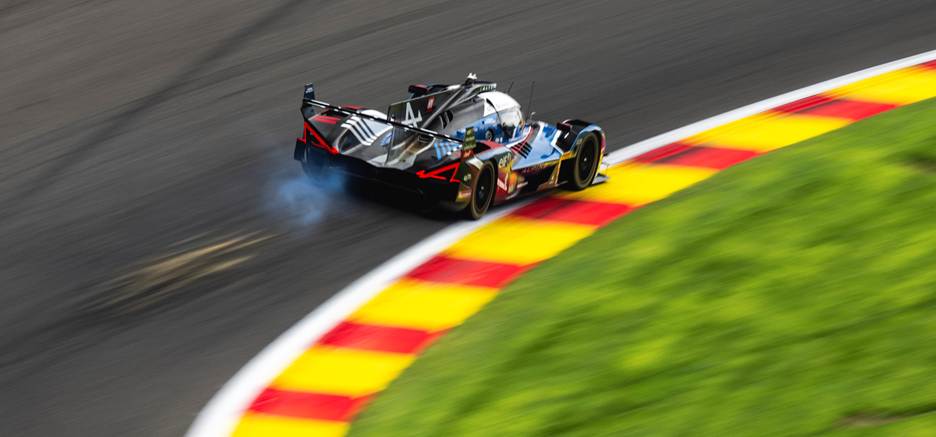
Da Costa leads as Alpine executes strong strategy
As the race entered its middle stages, António Félix da Costa took over driving duties in the #35 entry and continued Alpine’s strong performance.
The Portuguese driver kept the car at the sharp end of the field and even enjoyed a spell in the race lead. Thanks to a well-executed strategy and consistent pace, Alpine built an advantage of almost 20 seconds at one stage, placing itself in an excellent position for the closing hours.
The team appeared to be managing the race effectively while avoiding unnecessary risks. However, endurance racing often hinges on timing, traffic and race interruptions, and Alpine soon found itself facing fresh challenges.
After handing the car over to Milesi, the Frenchman became trapped behind LMGT3 traffic during a crucial restart in the fifth hour. Consequently, he lost positions to BMW’s Dries Vanthoor and Ferrari driver Antonio Fuoco.
Although the setback proved costly, Alpine remained firmly in contention for a strong result and entered the final phase of the race with realistic hopes of securing a top-five finish.
Late drama destroys promising result for Alpine at 6 Hours of Spa
Unfortunately for Alpine, the race took a dramatic turn during the final half-hour.
Having returned to the cockpit for the closing stint, da Costa suffered a high-speed spin on cold tyres at the top of Raidillon. The incident sent the #35 Alpine into the barriers and forced an unscheduled pit stop for repairs. The accident immediately ended the crew’s hopes of challenging near the front and dropped the car well down the order.
After the race, da Costa accepted full responsibility for the incident while expressing his appreciation for the efforts of the entire team.
“It was a disappointing end to a promising weekend,” da Costa rued while speaking to FIAWEC. “We were not the fastest car out there, but we executed a good, solid race, right up until the last 30 minutes. Unfortunately, I made a mistake and I want to apologise to the whole Alpine Endurance Team, who work tirelessly day and night to give us a competitive car. The responsibility lay entirely with me, but we take the positives and look forward to the 24 Hours of Le Mans.”
Habsburg also reflected on what might have been after spending much of the race among the leading contenders.
“I think we really deserved a better result given our strong performance,” agreed Habsburg. “We had such a good first half of the race, running consistently in the lead group. Everything seemed perfect until things became more chaotic, and we kept getting caught in tricky situations. It’s frustrating, but there were still many positives to take from the weekend.”
Virtual Safety Car hampers sister car
While the #35 crew experienced late heartbreak, the #36 Alpine faced a challenging race from much earlier in the contest.
Makowiecki lost valuable track position during the opening sequence of pit stops, placing additional pressure on the team’s strategy. Nevertheless, Victor Martins continued to fight hard and became involved in a closely contested battle with Peugeot pole-sitter Théo Pourchaire and reigning world champion James Calado in the Ferrari.
As the race progressed, Gounon adopted a fuel-saving approach designed to avoid an additional pit stop. However, the strategy suffered a major setback when a poorly timed Virtual Safety Car period occurred during a crucial phase of the race.
The interruption significantly reduced Alpine’s ability to recover lost ground in an exceptionally competitive Hypercar field. Consequently, the #36 crew eventually crossed the finish line in 11th position, narrowly ahead of the delayed #35 car in 12th.
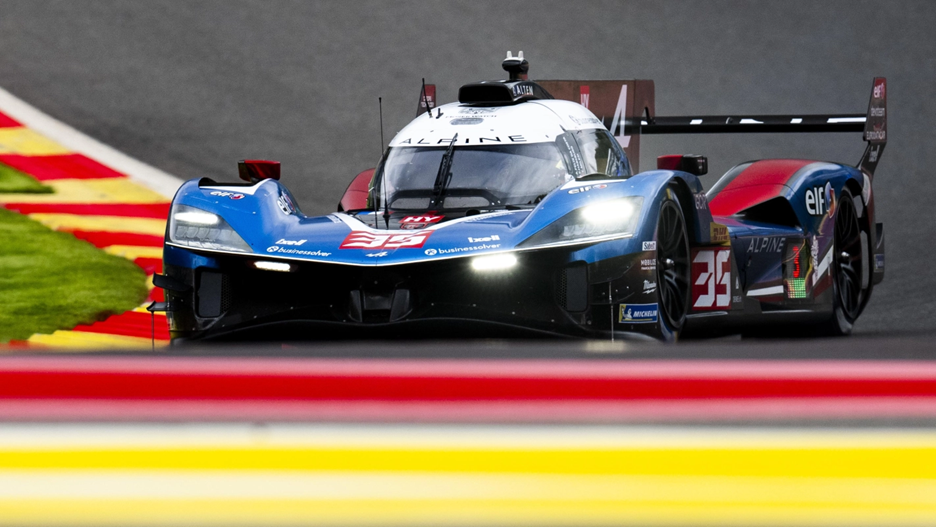
Team identifies areas for improvement
Despite the disappointing outcome, Alpine’s management remained encouraged by the pace displayed throughout the weekend.
Sporting Director Nicolas Lapierre acknowledged that several small errors ultimately prevented the team from achieving a much stronger result.
“We were obviously disappointed with our final positions in Belgium,” acknowledged Lapierre, “especially after our strong qualifying performance. We expected a better outcome given our pace over the weekend.
“Several minor mistakes at key moments proved costly, preventing us from challenging for the lead as the field closed up near the end of the race. That was frustrating, but it also highlighted exactly where we must improve ahead of our main goal this season – the 24 Hours of Le Mans.”
Lapierre’s assessment reflected a common theme throughout the Alpine camp: disappointment with the result, but optimism regarding the car’s overall competitiveness.
Le Mans becomes the main focus for Alpine after 2026 WEC disappointment in Spa
Team Principal Philippe Sinault shared similar sentiments and emphasised that both cars possessed the speed necessary to finish comfortably inside the top five.
“It was a disappointing outcome at Spa, as our efforts throughout the weekend went unrewarded,” echoed Sinault. “We were fighting for a podium, or maybe better.
“Both cars were capable of finishing in the top five, which was a realistic goal based on our performance, but the safety car significantly hurt the #35’s prospects, and we lost two positions when a backmarker delayed us at the re-start. That left us vulnerable after previously managing our race carefully, before António’s incident and the resulting damage ultimately destroyed our chances.
“The #36 faced a more challenging race. The first Virtual Safety Car period, which began while we were pitting, was especially costly. We lost positions, and it became extremely difficult to regain ground in such a tight field. Although frustrating, there are many positives to acknowledge, especially our pace and competitiveness. We now need to regroup for the season’s most important race.”
Those comments underline Alpine’s belief that the underlying performance level remains strong despite the setback in Belgium.
Confidence remains high as Alpine prepares for home race at the 24 Hours of Le Mans 2026
Although Spa ultimately delivered disappointment rather than silverware, Alpine leaves Belgium with plenty of reasons for optimism. The A424 demonstrated excellent one-lap speed, competitive race pace and the ability to challenge established Hypercar rivals throughout the weekend.
Importantly, the team consistently ran among the front-runners and showed that it can compete for podium positions on merit. While mistakes and race circumstances prevented a breakthrough result, the performance itself represented another significant step forward in Alpine’s development programme.
Attention now turns to the 24 Hours of Le Mans on 10-14 June, the most prestigious event on the endurance racing calendar and Alpine’s primary target for the season. The French manufacturer has yet to finish higher than ninth at the race with the A424, but recent performances suggest it could arrive with realistic ambitions of achieving a far stronger result.
The challenge for Alpine will now be to combine its growing pace with flawless execution. If it succeeds, Spa may be remembered not as a missed opportunity, but as the weekend that confirmed the team’s readiness to fight at the front on endurance racing’s biggest stage.