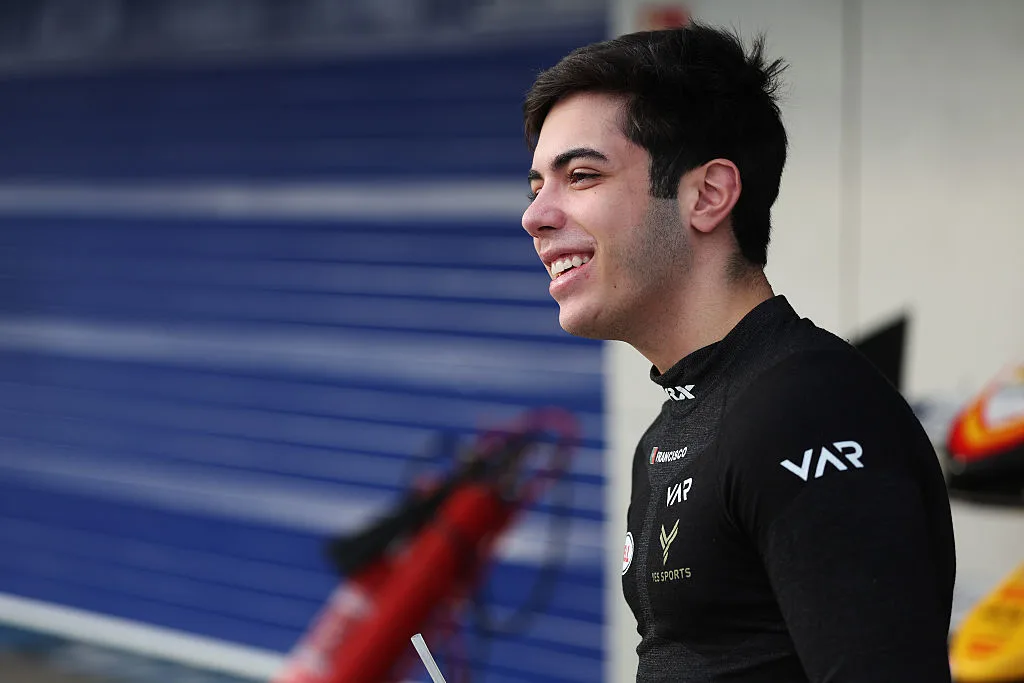
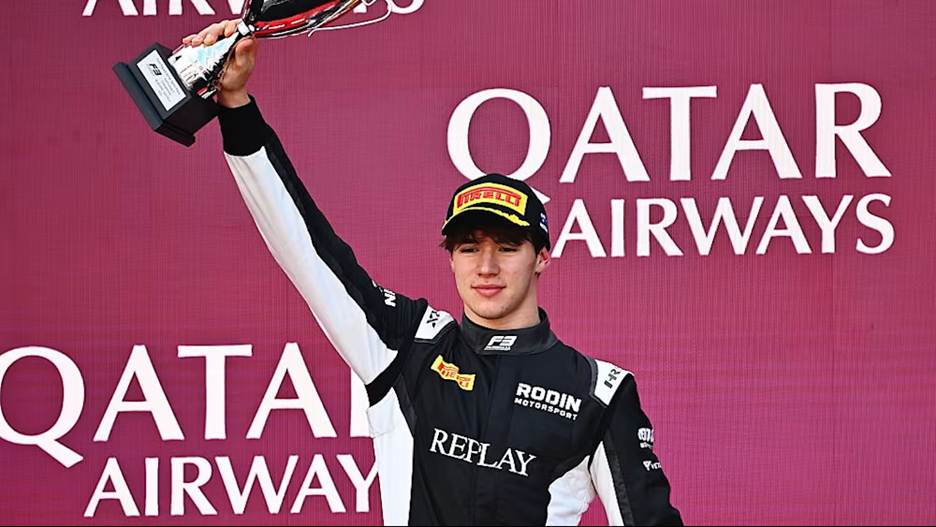
Brando Badoer continues to develop as a more complete racing driver in the 2026 F3 championship, entering his second season in the series and his fifth year in single-seater competition overall. With that experience behind him, the Rodin Motorsport driver has gained a sharper understanding of how to approach both performance and preparation in a highly competitive environment.
As he reflected on his methods for Formula 3, Badoer focused not only on outright speed but also on the finer details that define consistency over a race weekend. Moreover, his approach highlighted how experience across different teams and categories has shaped a more structured and analytical mindset.
Badoer on understanding the limits of performance as he enters the 2026 F3 season
For Badoer, performance begins with precision and control at the very edge of the car’s capabilities. However, he recognises that operating in that narrow window requires constant refinement, preparation, and awareness of track conditions. This mindset has become central to how he approaches both Qualifying laps and race stints.
He explained, “When I go racing, I like to drive a racing car as fast as possible. For that, you need to be as close as possible to the limit, which is always very difficult to reach. When you are over the limit, you’re slower, and when you drive under it, you’re also slower.
“So you need to get as close as possible to the limit by driving clean and studying a lot before an event. You need to know what the ideal lines are and the history of the track to understand how to go as quickly as possible and as close as possible to that limit.”
Furthermore, he underlined that preparation off-track plays an equally important role in achieving peak performance during race weekends.
Badoer on the importance of car balance and feel
Beyond driving technique, Badoer places significant importance on how the car behaves under different conditions. He believes that achieving a neutral balance provides the most consistent platform, even though slight variations in setup can influence ultimate pace.
His understanding of car behaviour has developed through experience across multiple categories, allowing him to identify what he needs from the car to extract performance efficiently across different circuits.
He explained what he prioritises in car setup, stating, “I think that the best car is a neutral car, and usually the car that goes faster is a slightly oversteering car. But what I’m always looking after is getting the car as neutral as possible to get to the limit.”
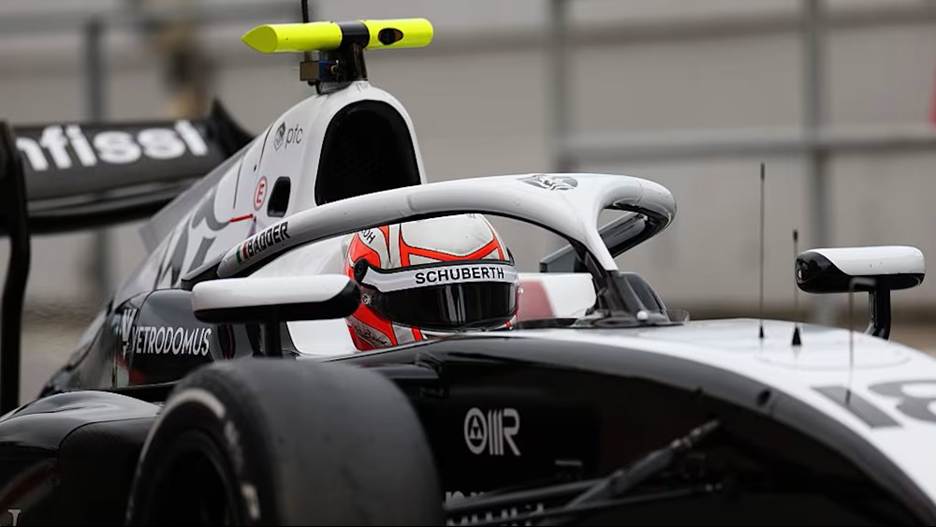
Badoer on learning to adapt across different teams as he settles in at Rodin Motorsport for 2026 F3 campaign
Throughout his single-seater career, Badoer has worked within several teams, each with its own engineering philosophy and working culture. As a result, he has developed a strong ability to adapt quickly to different environments while maintaining his own driving approach.
“The biggest difference from team to team is the nationality. I think because in every different country, there is a slightly different culture. But what’s common with each team is the goal is the same: to win. So you just need to learn the culture of the team and then get into it.
However, he acknowledged that while methods may differ, the ultimate objective remains consistent across all teams: performance and results.
“When you start learning this, you know how to deal with people that have the same goal as you. In the end, it’s not that difficult because you all work for the same thing, and that’s quite easy to do.”
Furthermore, he explained that engineering approaches can vary significantly, particularly in how teams structure their race weekends and develop car setups.
“Every team has its own philosophy. There are teams that generally like to set a more oversteery car, some a more neutral car, and some with more understeer.
“Also, the way the situation is handled during a weekend can be different. There are teams that start with a base and try to keep that base. Some teams are more open to exploring everything. Every team has its own philosophy. But as I said, their ultimate goal, together with the driver, is to go fast and to win races.”
Badoer on race execution and tyre management strategy
As Badoer continues to refine his racecraft, he places strong emphasis on managing a race across multiple phases rather than focusing solely on single moments of performance. In particular, he highlighted the importance of tyre management and timing during key stages of a stint.
He explained, “It’s all about a compromise. You need to often use opportunities to go forward, which are very likely to be on the first laps when there is a general mess. Those are the laps when you are really able to make places.
“Then normally there is a phase when you need to manage tyres, which is the second part of the race. If you do a good job on that part of the race, then you’re able to make places again in the last part of the race.
“So that’s normally the general rule. It depends on the race, on the temperatures, on the track, on the conditions, and if there is Safety Car or not. But normally that’s the philosophy behind how you reason a race.”
Moreover, his approach reflects a deeper understanding of how race strategy must remain flexible depending on evolving conditions.
Reflection, analysis and continuous improvement
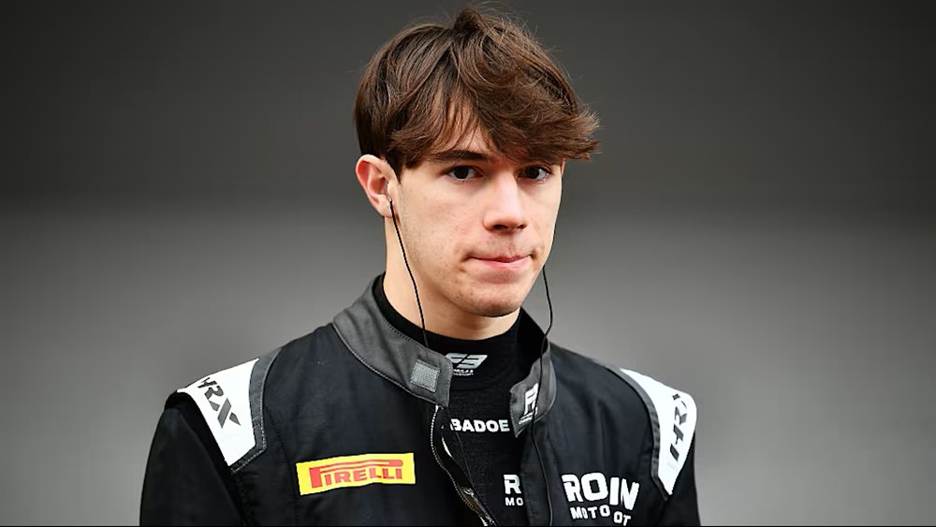
Looking back at his previous season, Badoer has adopted a highly analytical mindset, using detailed review work to improve his overall performance heading into the current campaign. Rather than simply moving on from past results, he actively studies them to identify areas of growth.
This structured approach has allowed him to refine both his driving style and decision-making under pressure, contributing to a more complete and confident approach for 2026.
He reflected on his development, stating, “I’m very analytical, I like to analyse things. I think last year was definitely a tough season, but very useful to learn a lot of things.
He continued, I used the winter to go through these things and to analyse them. I could learn a lot and definitely be more prepared for this year.
He concluded, “I think 2026 Brando is more prepared than the 2025 one. So, hopefully, it was a very useful opportunity to perform better this year.”