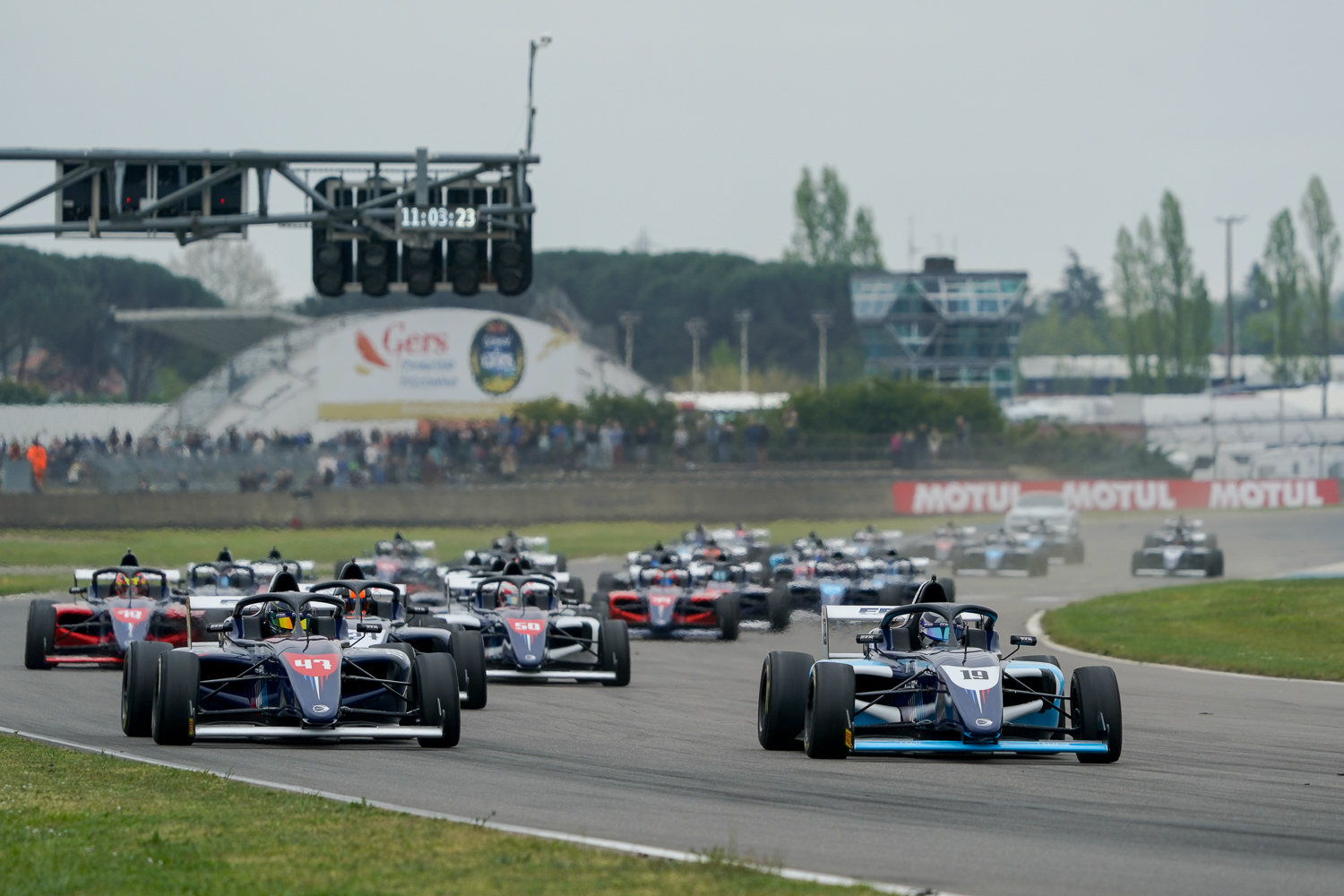
French F4 returns in 2026 with renewed intensity, as 32 ambitious drivers prepare to launch their campaigns at Nogaro. Once again, the championship positions itself as one of Europe’s most competitive junior series, combining affordability with a proven pathway to the top levels of motorsport.
Moreover, with a mix of rookies and experienced sophomores, the season promises unpredictable racing and compelling storylines from the outset.
A proven pathway to the top
Over the years, French F4 has built a reputation for developing elite talent. Notably, its centrally run structure ensures parity, as all drivers compete in identical machinery prepared by the FFSA Academy. As a result, performance depends heavily on driver skill rather than financial backing.
Furthermore, the relatively modest €200,000 season budget makes the series more accessible compared to other European F4 championships. This model has already produced several high-profile graduates, reinforcing its credibility as a stepping stone to higher categories.
Meanwhile, reigning champion Alexandre Munoz has progressed to Formula Regional Europe, highlighting once again how quickly drivers can climb the ladder.
What’s new for the 2026 French F4 season?
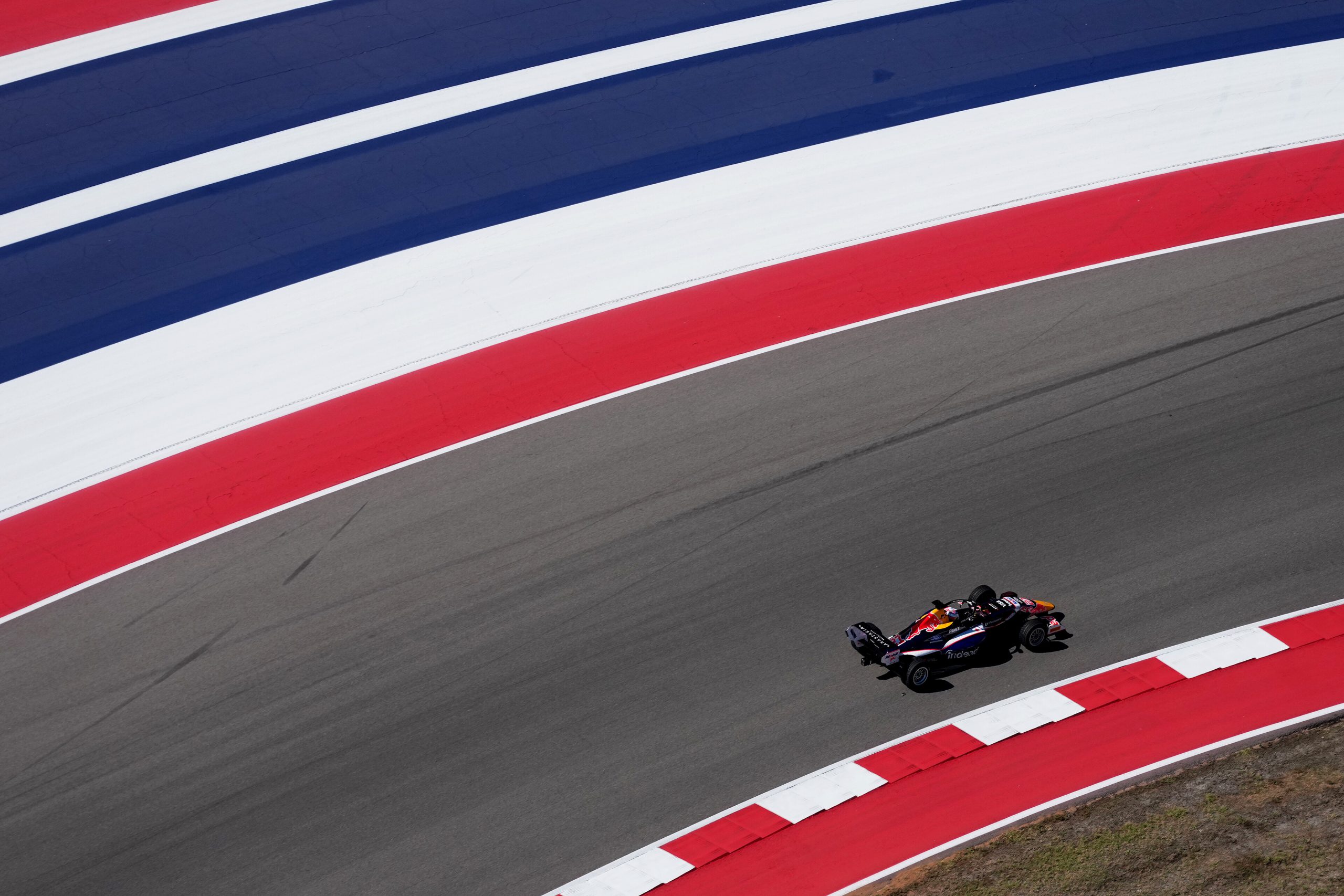
This season introduces a striking visual change. The Ligier JS F422 now features a darker blue base livery, while drivers enjoy greater freedom to customise their cars. Consequently, the grid will appear more personalised than ever before.
In addition, the championship launches the FFSA French Women’s F4 Championship. Unlike last year’s category, this initiative offers a dedicated platform exclusively for full-time female drivers, signalling a stronger commitment to diversity in motorsport.
At the same time, organisers have revised the points system for the reverse-grid race. The winner now receives 10 points instead of 15, thereby placing greater emphasis on performance in the main races.
2026 French F4 calendar overview
The 2026 calendar retains its six-round structure, although it features one key change. The Bugatti Circuit drops off the schedule, while Paul Ricard returns as the traditional season finale.
- Round 1: Nogaro (4–6 April)
- Round 2: Dijon-Prenois (15–17 May)
- Round 3: Spa-Francorchamps (19–21 June)
- Round 4: Magny-Cours (31 July–2 August)
- Round 5: Lédenon (18–20 September)
- Round 6: Paul Ricard (9–11 October)
Notably, the opening round follows a revised timetable, with races extending into Easter Monday. This adjustment adds an unusual twist to the season’s opening weekend.
Weekend format for 2026 French F4
Pre-event testing and preparation
Each race weekend typically begins on Thursday with optional test sessions. However, these sessions do not form part of the standard season package. Therefore, drivers must pay additional fees to participate.
As a result, teams and drivers with greater financial resources can gain extra track time, which often proves crucial for rookies learning unfamiliar circuits. Nevertheless, even limited participation can provide valuable data and confidence ahead of competitive sessions.
Practice and Qualifying structure
On Friday, drivers take part in a single 30-minute Free Practice session in the morning. During this session, they focus on learning track conditions, refining car setup, and preparing tyre strategies.
Later in the day, a 30-minute Qualifying session determines the grids for multiple races. Because the session remains short, drivers must quickly find pace and avoid traffic. Consequently, precision and timing play a decisive role.
Importantly, Qualifying results serve three purposes:
- They set the grid for race one
- They determine the reversed top 10 for race two
- They establish the second-fastest laps used for race three
Thus, one session influences the entire weekend, increasing its strategic importance.
Races
Race 1 takes place on Saturday morning and follows the standard Qualifying order. Therefore, it rewards outright speed and consistency. Drivers who perform well in Qualifying gain a clear advantage, while others must rely on overtaking skills to recover positions.
Race 2 occurs on Saturday afternoon and features a reversed grid for the top 10 qualifiers. This format introduces unpredictability, as front-runners must fight through the field while midfield drivers gain an opportunity to secure strong results. As a result, the race often produces the most overtaking and drama of the weekend. However, the reduced points allocation means that drivers must carefully balance risk and reward.
Race 3 takes place on Sunday morning and uses each driver’s second-fastest Qualifying lap to set the grid. This rule rewards consistency rather than a single standout lap. Consequently, drivers who manage tyres effectively and deliver multiple strong laps in qualifying gain an advantage. Moreover, the race often serves as a decisive factor in the weekend’s overall outcome.
Points system
The championship applies two different points structures:
- Races 1 and 3:
Drivers score points in line with Formula 1, with 25 points for a win down to 1 point for 10th place. - Race 2 (Reverse grid)
The winner earns 10 points, followed by 8 for second and decreasing to 1 point for eighth place.
Additionally, drivers can collect bonus points:
- 1 point for pole position (races one and three)
- 1 point for fastest lap in each race
Therefore, consistent performance across all sessions proves essential for a title challenge.
Notable sporting rules for 2026 French F4
Tyre allocation and management
Each driver receives two sets of fresh tyres for qualifying and all three races combined. Consequently, tyre management becomes a critical strategic element.
Drivers must decide whether to prioritise qualifying performance or preserve tyres for race pace. In many cases, those who manage degradation effectively gain a competitive edge, particularly in the longer races.
Engine rotation rule
One of the championship’s most distinctive rules involves engine allocation. Once a driver secures three race victories, officials require them to swap engines with another competitor, selected at random.
This regulation prevents any single driver from benefiting excessively from a particularly strong engine. As a result, it reinforces fairness and maintains close competition throughout the season.
Appeals and stewarding procedures
The series enforces strict but transparent stewarding rules. Drivers have one hour after each session to appeal decisions.
However, submitting an appeal carries financial implications:
- €700 to report an incident not initially investigated
- €3,200 to challenge an official decision
If the appeal succeeds, officials refund the fee. Consequently, drivers must carefully consider the strength of their case before proceeding.
Special case: Nogaro opening round
The season opener at Nogaro follows a modified schedule. Instead of the usual format:
- Practice and Qualifying take place on Saturday
- Races 1 and 2 occur on Sunday
- Race 3 runs on Easter Monday
This adjustment creates a unique rhythm for the opening weekend and tests teams’ adaptability from the very start of the season.
2026 French F4 drivers: A diverse and competitive grid
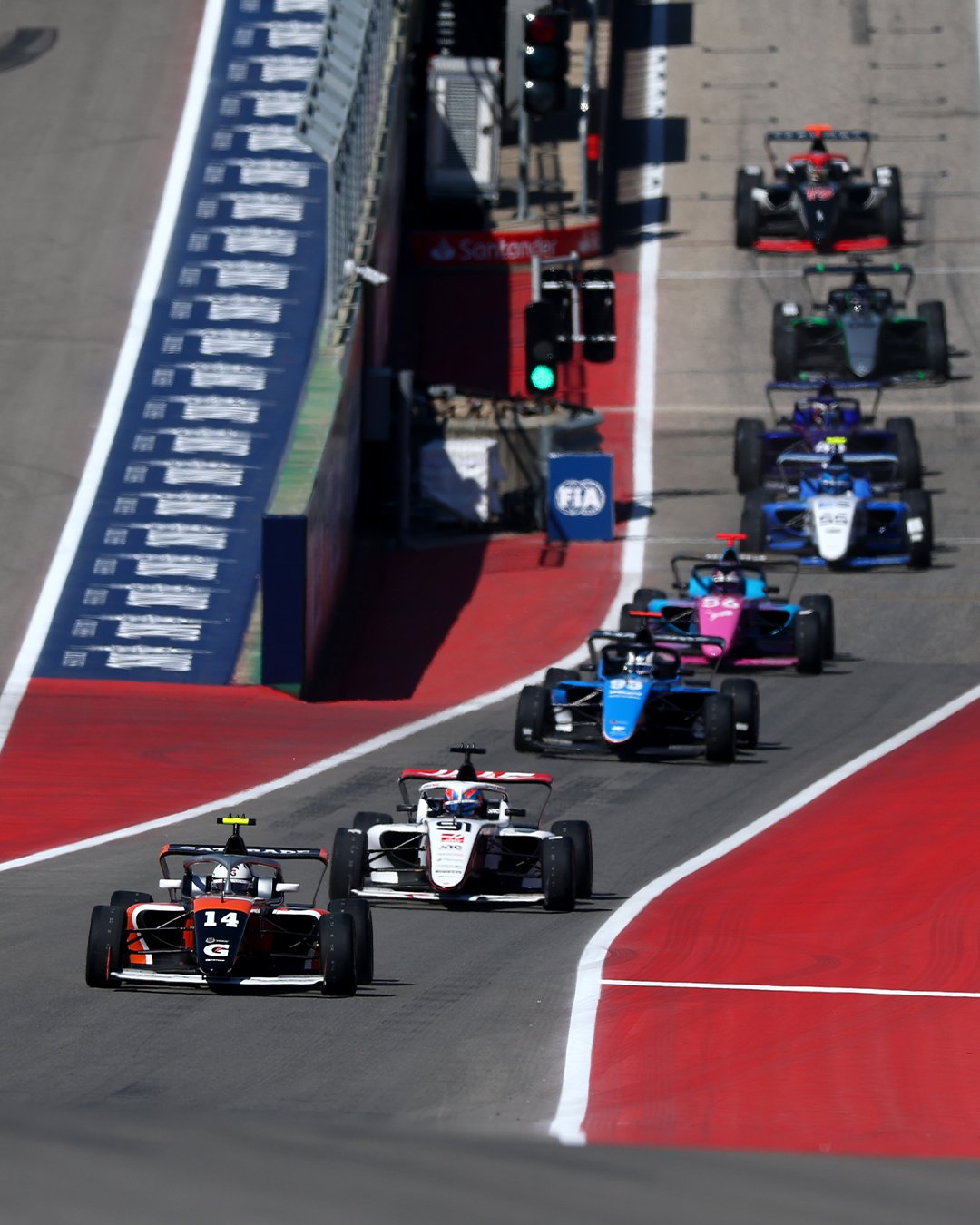
The 2026 French F4 season features a 32-car grid for the opening round, including 30 full-time drivers competing under the FFSA’s centrally run structure. Without traditional teams or alliances, all competitors race on equal footing, placing full emphasis on talent and development.
Although the grid remains stable, a few notable absences and late changes have already shaped the narrative. For instance, Welsh driver Skye Parker withdrew after pre-season testing, while Ginevra Panzeri stepped in as a last-minute replacement.
Overall, the line-up blends experienced returnees, highly rated karting graduates, and unconventional newcomers, ensuring a rich competitive mix.
Leading sophomores
Several second-year drivers enter the season as clear benchmarks, aiming to capitalise on their experience.
- Guillaume Bouzar (#19) – The standout favourite after finishing fifth in 2025 with six podiums. He showed excellent form in testing and now targets the title.
- Hugo Herrouin (#47) – A strong finisher in his rookie year, he impressed particularly at Spa and topped pre-season testing. He looks ready to fight at the front.
- Thomas Senecloze (#53) – After a promising start last season, he aims to deliver greater consistency across the full campaign.
- Annabelle Brian (#83) – The Dutch driver returns with F1 Academy ambitions and aims to convert her testing progress into stronger race results.
- Angelina Proenca (#23) – After a difficult rookie season, she focuses on climbing the order in her second year.
- Sofia Zanfari (#26) – The Moroccan driver continues her development and targets her first points finish.
- Héloïse Goldberg (#12) – Returning after a challenging debut season, she gained confidence with points in Chinese F4.
- Nicolas Pasquier (#21) – A surprise improver last year, he progressed from the back to the midfield and now seeks further gains.
Rookie prospects
The 2026 grid features an impressive group of rookies, many of whom arrive with strong karting pedigrees.
- Thibaut Ramaekers (#79) – One of the most exciting newcomers, the karting world champion has already shown front-running pace in testing.
- Oscar Goudchaux (#42) – A highly decorated karting driver, he impressed in testing and could challenge for podiums early on.
- Jimmy Hélias (#8) – Among France’s top karting talents, he finally makes his F4 debut after overcoming budget challenges.
- Kota Tsuchihashi (#50) – Backed by Honda, he follows a proven pathway and has consistently featured near the top in testing.
- Jules Avril (#88) – A three-time French karting champion, he brings strong credentials and race-winning potential.
- Wojtek Woda (#68) – Runner-up in the FIA Academy Trophy, he combines consistency with international experience.
- Lilian Soares (#10) – A regular frontrunner in French karting, he steps up with solid expectations.
- Tom Dussol (#27) – Transitioning from shifter karts, he aims to establish himself as a points contender.
Emerging talents and dark horses
Beyond the headline names, several drivers could disrupt the expected order.
- Maverick McKenna (#17) – After an encouraging guest appearance in 2025, he showed strong pace in testing and could fight for top-10 finishes or better.
- Matthéo Dauvergne (#29) – A Feed Racing finalist, he demonstrated consistency in pre-season testing and could score points regularly.
- Paul Gleizes (#30) – The youngest driver on the grid, he focuses on development but shows long-term promise.
- Lewis Francis (#13) – The only Australian on the grid, he brings solid international karting experience.
- Jack Iliffe (#95) – After limited appearances last year, he returns aiming for more consistent results.
- Sasha Beisemann (#99) – Returning to racing after a long break, he faces a steep challenge to regain form.
- Ginevra Panzeri (#28) – A late addition, she combines multiple racing commitments and enters with limited preparation.
International entries and unique backgrounds
The grid reflects strong international diversity, with drivers arriving from varied pathways.
- Kyler Cheezum (#4) – The American driver switches from USF Juniors testing to pursue his European ambitions.
- Clara Stiebleichinger (#5) – Transitioning from skiing, she continues her development after competing in Indian F4.
- Yuval Rosen (#9) – A former sim racer and software developer, he brings an analytical approach and seeks to maximise a rare opportunity.
- Isabella Abreu (#11) – One of the oldest drivers on the grid, she arrives with experience from Formula FARA in the United States.
- Shane Chandaria (#56) – The Kenyan driver enters as a history-maker after winning Indian F4 and aims to replicate that success.
- Autumn Fisher (#57) – A late starter from a gymnastics background, she continues her rapid progression in single-seaters.
Part-time entries and future additions
In addition to the full-time grid, several drivers will make selected appearances throughout the season.
Lisa Billard (#14) and Jade Jacquet (#44) – Both F1 Academy drivers will compete at least in Nogaro and possibly additional rounds as preparation for their main campaigns.
Meanwhile, Matéo Rivals could join later in the season after turning 15. As a leading karting talent, his arrival would further strengthen the field.
Where to watch
Fans can follow most of the action live on the FFSA TV YouTube channel, particularly races two and three. Commentary will come from Anthony Drevet alongside Maxime Pacquier, ensuring professional coverage throughout the season.
Furthermore, events supported by the SRO package should benefit from enhanced broadcasting, increasing the championship’s visibility.
A season full of promise
As the 2026 French F4 season begins, anticipation continues to build. The combination of equal machinery, diverse talent and evolving regulations creates the perfect environment for close racing.
Ultimately, while experienced drivers like Bouzar aim to capitalise on their advantage, a wave of talented rookies stands ready to disrupt the hierarchy. Therefore, fans can expect a thrilling campaign filled with emerging stars and intense battles from start to finish.