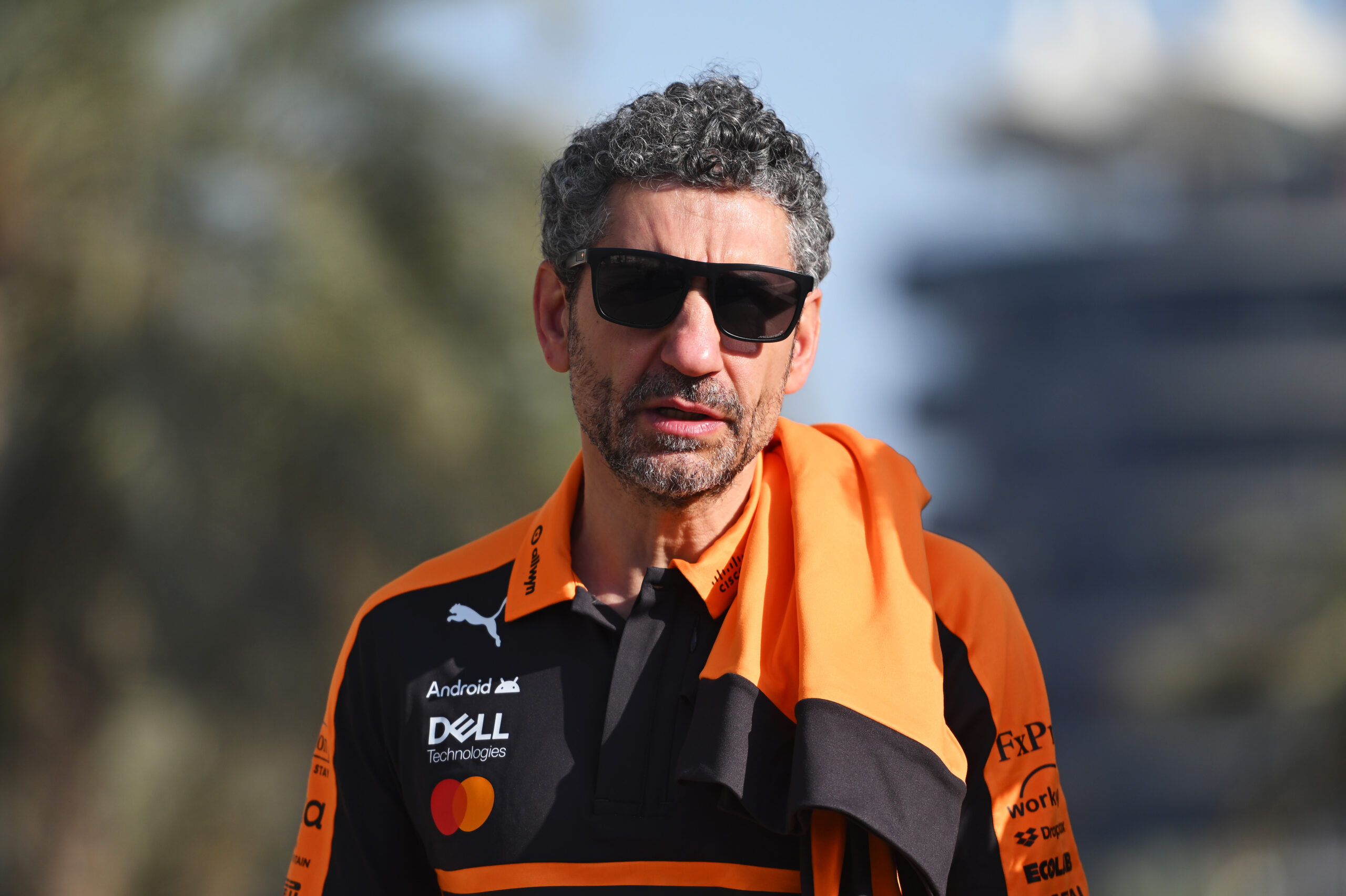
While many people in the Formula 1 sphere have been vocal about their opinions on the new rules and regulations of the sport, few have called on the actual F1 teams and the FIA for immediate action. Andrea Stella, McLaren Team Principal and Chief Racing Officer, has been very public in expressing his concerns around safety and performance.
Ahead of the 2026 Miami Grand Prix, the FIA have confirmed a set of new regulations in hopes of improving those two aspects as well as appeasing the teams and drivers.
Andrea Stella’s push for changes in F1
Andrea Stella has been a vocal advocate for changing some of the regulations in the 2026 season, pushing for adjustments from all the way back in February when the drivers and teams were in Bahrain for winter testing. Alongside the Italian’s clear concern about certain aspects of the 2026 regulations, many of the key team personnel and drivers have expressed very negative opinions on the changes.
As a result, the FIA has implemented a series of new measures ahead of the 2026 Miami Grand Prix, to enhance the quality and security of the sport.
In a media session at Woking, Stella was asked about his reactions to the immediate changes.
“Yeah, I think the changes that are implemented for Miami are a positive step in the right direction, tendentially address all these elements that we had already highlighted, as you reminded during the test in Bahrain.”
Due to the cancellations of the Bahrain and Saudi Arabian Grands Prix, teams have had time to continue working on the cars unlike during the summer break that takes place in August. McLaren is on track to bring a huge upgrade package for the F1 Miami Grand Prix.
McLaren aren’t the only team to bring upgrades to Miami. It seems as though the majority of the grid will be adjusting the cars and strategies around the new regulations as well as taking their learnings from the first three Grands Prix and adapting to what the stronger teams have in place.
The former Ferrari race engineer also discussed the attempts to fix safety concerns at the start.
“There’s some other aspects that will be under trial in Miami, like for instance related to cars that are slow off the grid and evaluating whether you can intervene with some support coming from the electrical engine such that the cars have a certain minimum amount of acceleration while on the grid, so there’s already something in the pipeline to further improve what’s been put in place for Miami.”
The reason behind the changes
Following the 2026 F1 Japanese Grand Prix, the FIA took to action to improve the safety measures of the sport. Ollie Bearman’s 50G crash was one that raised numerous concerns around the new regulations and became a statement for Formula 1 that something needed to change.
The first order of action is that the super clipping limit has been increased while the harvesting in qualifying has been reduced. This means that drivers should be able to recover less energy resulting in less electrical power to deploy during a qualifying lap.
Along with the changes to super clipping, the FIA has also implemented a new system aimed at helping to identify cars with a low acceleration rate on the start grid. This was something that Stella had been pushing for the FIA to change all the way back during the winter testing sessions in Bahrain as he laid out his worries about dangers at the start.
Another addition for Miami and onwards will be increasing the temperature for the tyre blankets for intermediates to improve grip and help with safety on track during wet sessions. Due to the unknown nature of these new regulations and how the teams are adapting to the 2026 car, it’s definitely an era of uncertainty and learning.
“I think Formula 1 as a community should remain quite open, that once we observe the outcome and the effect of this package of changes, we may have learned more about the new regulation and further tuning may be required, and we should have the openness and the proactivity to study this further improvement and put them in place.”
The continuation of minor upgrades, tweaks and regulation changes will continue to improve the sport and the FIA does not take safety lightly. The F1 Miami Grand Prix will be a test to see if the modifications are moving the sport in the right direction.